Sultans
The Ottoman Empire was ruled by 36 sultans across more than six centuries, each leaving a distinct mark on history. This category explores the lives, reigns, and political legacies of Ottoman rulers, from Osman I, the founder of the dynasty, to the final sultan Mehmed VI Vahdettin. The dynasty’s emergence is rooted in the broader story of how the Ottoman Empire was founded, mixing frontier warfare, marriage alliances, and gaza ideology. Discover how Mehmed II conquered Constantinople, how Suleiman the Magnificent expanded the empire to its zenith, and how later sultans navigated decline and reform. Articles cover royal succession, harem politics, military campaigns, court culture, and the relationships between sultans and their grand viziers; for the inner workings of the palace, see our piece on harem life: facts, myths and rules. We also examine governance through the lens of the Imperial Council (Divan-i Humayun), the body through which sultans exercised executive, judicial and legislative authority. From the dynasty’s nomadic origins to its dissolution after World War I, this section offers in-depth biographies and analyses of Ottoman sovereigns.
Ottoman Sultans and Art: Architecture, Literature, and Cultural Heritage
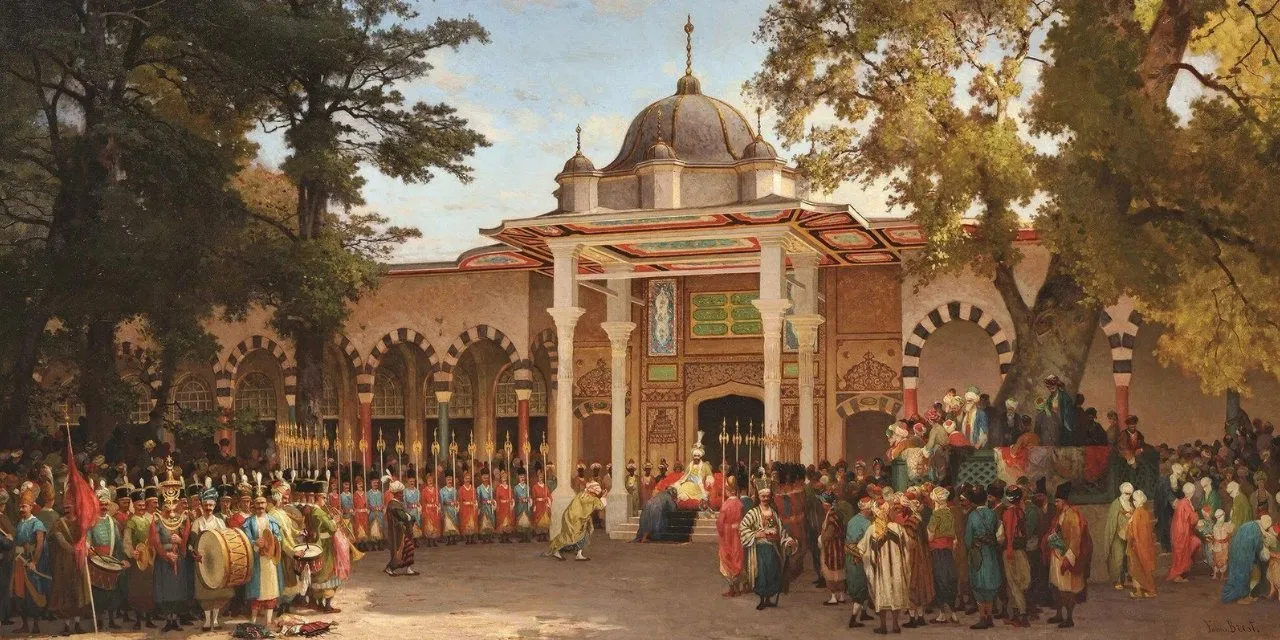
How did the Ottoman sultans support art? The Süleymaniye and Sinan, the poet sultans, Şeyh Hamdullah, the court ateliers, the şehnamecis and Selim III.
Ottoman Sultans and Art: Architecture, Literature, and Cultural Heritage →
Alexander the Great and the Ottoman Sultans: Historical Parallels
What parallels link Alexander the Great and the Ottoman sultans? Dhu al-Qarnayn, Ahmedi’s Iskendername of 1390 and Mehmed the Conqueror’s idea of world dominion.
Alexander the Great and the Ottoman Sultans: Historical Parallels →
Ottoman Sultans’ War Strategies: Stories of Victory and Defeat

How did the Ottoman sultans plan their wars? The conquest of Istanbul, Chaldiran, Ridaniya and Mohács, and the defeats at Lepanto and Vienna.
Ottoman Sultans’ War Strategies: Stories of Victory and Defeat →
Ottoman Sultans and Reform Movements: Efforts at Modernization
Which reform movements did the Ottoman sultans carry out? Modernization under Selim III, Mahmud II, Abdülmecid, Abdülaziz and Abdülhamid II, from the Nizam-ı Cedid to the constitution.
Ottoman Sultans and Reform Movements: Efforts at Modernization →
How Did Mehmed I Reunify the State after the Ottoman Interregnum?
How did Mehmed Çelebi defeat his brothers and reunite the Ottoman state after the Interregnum? Çamurlu, reconciliation with Byzantium, Sheikh Bedreddin and the timar order.
How Did Mehmed I Reunify the State after the Ottoman Interregnum? →
The Reign of Abdulhamid II: Despotism or Modernization in Reality?
The reign of Abdulhamid II is examined in historical balance through debates over despotism and reforms in education, telegraphy, railways, and diplomacy.
The Reign of Abdulhamid II: Despotism or Modernization in Reality? →
Why Was Sultan Suleiman Remembered as the Magnificent?
Why was Suleiman the Magnificent called “Magnificent”? His 46-year reign, conquests from Belgrade to Baghdad, law codes, poetry and patronage, and the origin of the epithet “Kanuni.”
Why Was Sultan Suleiman Remembered as the Magnificent? →
Ottoman Expansion in the Era of Orhan Gazi
How did the Ottomans expand in the era of Orhan Gazi? The conquest of Bursa, İznik and İzmit, the annexation of Karesi, the crossing into Rumelia and the first institutions.
Ottoman Expansion in the Era of Orhan Gazi →