The battles of Myriokephalon and Köse Dağ mark two opposite extremes in the history of the Anatolian Seljuks. In 1176 Kilij Arslan II made skilful use of the terrain and destroyed the Byzantine army in a narrow pass. In 1243, by contrast, Kaykhusraw II ignored his experienced statesmen and fell into a Mongol trap. In this article we compare the two battles in terms of leadership, strategy and consequences.
Quick Summary
- The Battle of Myriokephalon was won against Byzantium on 17 September 1176.
- The Battle of Köse Dağ was lost to the Mongols in July 1243.
- At Myriokephalon the sultan used the terrain; at Köse Dağ he gave up his advantageous position.
- The victory at Myriokephalon ended Byzantium’s hope of recovering Anatolia.
- Köse Dağ turned the Anatolian Seljuks into a state paying tribute to the Mongols.
Contents
- Short answer
- 1176: Why did Byzantium march on Konya?
- What happened at the Tzibritze Pass?
- 1243: The road to Köse Dağ
- What happened at Köse Dağ?
- 5 differences between the two battles
- Consequences: one opened a door, the other closed it
- Frequently asked questions
Why Did Myriokephalon and Köse Dağ Have Opposite Outcomes? A Short Answer
In both battles the Anatolian Seljuk state faced a large army. The real difference that decided the outcomes was the decisions of the sultans. Kilij Arslan II wore the enemy down and waited in a pass of his own choosing. Kaykhusraw II, instead of standing in the place best suited for defense, sent the elite units of his army down to the plain.
The difference between Myriokephalon and Köse Dağ is also clear in their consequences. The first confirmed that Anatolia would be a Turkish homeland. The second led the state to lose its independence.
1176: Why Did Byzantium March on Konya?
After the death of Nur ad-Din Mahmud in 1174, Kilij Arslan II seized the lands of the Danishmendids. He thus became an unrivalled power in Anatolia. Turkmen raids reached as far as Denizli, Bergama and Edremit.
The Byzantine emperor Manuel I Komnenos was troubled by this situation. He rebuilt the fortresses of Dorylaion, near Eskişehir, and Sublaion, at Homa, which the Turks had destroyed. He rejected the sultan’s offers to renew their treaty and decided to take Konya himself. His aim was both to restore Byzantine rule in Anatolia and to open the road to Jerusalem.
Manuel crossed into Anatolia in the spring of 1176. His army included French, German, English, Hungarian, Serbian, Georgian, Cuman and Pecheneg units. Because his allies were late, he could set out only in the summer months.
What Happened at the Tzibritze Pass Near Myriokephalon?
Moving south, the Byzantine army advanced via Alaşehir, Denizli, Honaz, Dinar and Uluborlu towards the ruined fortress of Myriokephalon. Meanwhile the Seljuk forces held the roads and wore the enemy down with raids. Crops and pastures were destroyed and water sources were fouled. Many Byzantine soldiers died of the diseases that broke out.
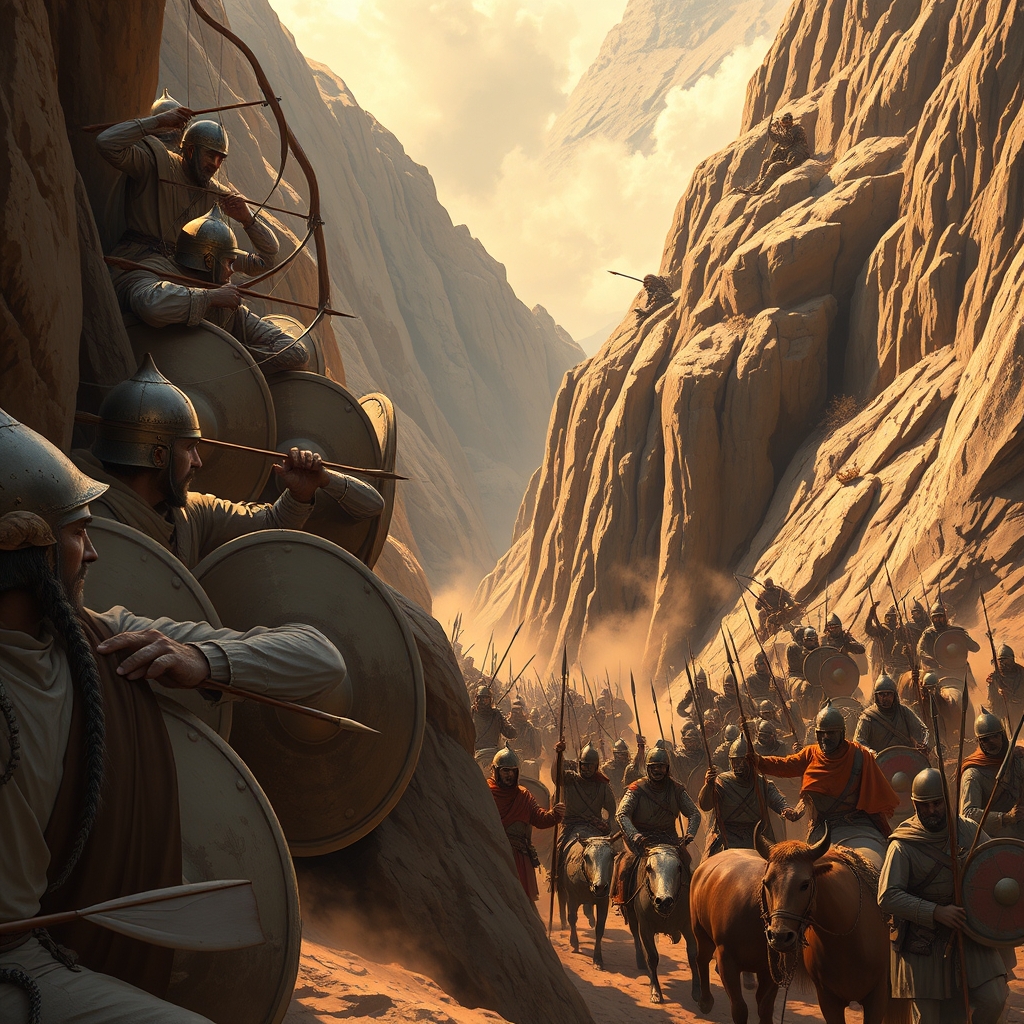
Kilij Arslan offered peace to the emperor once more. Manuel insisted on fighting despite the warnings of his commanders. The sultan then placed his army at the narrowest point of the Tzibritze Pass, north of Lake Eğirdir. The exact site of the Battle of Myriokephalon is still debated today; places such as Düzbel, Gelendost, Kumdanlı and Çivril have been proposed.
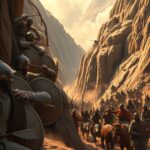
Entering the pass with all its baggage, the Byzantine army was met by a sudden attack from Turks positioned on the slopes. When the Turkish units closed the pass, the army, unable to find a way out, panicked. By the end of attacks that lasted until evening, the Byzantine army had been completely routed (17 September 1176). The emperor escaped only with difficulty, with the help of his guards.
Defeated, Manuel asked for peace. Kilij Arslan accepted on condition that the fortresses of Sublaion and Dorylaion be demolished and 100,000 gold pieces be paid. Why he settled for such modest terms after so great a victory is not known.
On his way back to Constantinople, Manuel demolished Sublaion but left Dorylaion untouched. Kilij Arslan responded by sending a force of 24,000 men to the Meander region. The sultan sent letters announcing the victory to the caliph and neighboring rulers, and the victory of Myriokephalon was celebrated across Islamic lands like a festival. The emperor, meanwhile, lost prestige with the papacy.
1243: The Road to Köse Dağ
In the seventy years between Myriokephalon and Köse Dağ, the picture changed completely. The Anatolian Seljuk state had reached its widest borders and was living through its richest period. On the throne, however, sat a weak ruler, Kaykhusraw II.
The Babai revolt of 1240 could be suppressed only by recalling the eastern army that had been held at Erzurum against the Mongols. This showed the Mongols that the state was not as strong as it appeared from outside. Baiju Noyan, appointed by Chormaqan Noyan, commander of the Mongols’ western army, took Erzurum at the end of 1242 and put its people to the sword. The sack of Erzurum caused deep grief and fear among the Seljuk population.
The sultan asked his vassal states for troops in return for money. All except the Ayyubids of Aleppo took the money but sent no soldiers. According to Ibn Bibi, the Seljuk army assembled at Kayseri numbered 70,000 men. The Mongol army is recorded as 30,000 strong.
What Happened at Köse Dağ?
Experienced statesmen proposed taking up a position with Sivas, full of provisions and weapons, at their back. They also wanted the passes to be held. The sultan, however, listened to the young commanders around him and ordered an advance. The army reached the heights of Köse Dağ, 80 kilometers northeast of Sivas.
This was the best place to stop an army coming from the direction of Erzincan. Experienced commanders argued against descending to the plain. According to the sources, the young commanders convinced the sultan that an elite force of 20,000 men would be enough to defeat the Mongols. The next day this force went down to the plain and attacked.
The Mongols used their well-known tactic of feigned retreat and encirclement. The elite Seljuk force was almost completely destroyed. The main army on the mountain was not sent to help. According to Ibn Bibi, the battle took place on 1 July 1243.
When night fell, the sultan changed his clothes and fled to Tokat with his jewels. In the morning the main army, realizing that the sultan and the commanders had fled, also broke up. Thinking this was a trick, the Mongols waited for two days. The sources say that the booty taken amounted to 300 camel-loads of gold and forty carts of armor.
Myriokephalon and Köse Dağ: 5 Differences Between the Two Battles
Putting the battles of Myriokephalon and Köse Dağ side by side explains why the same state once won a victory and once collapsed. The differences can be grouped under five headings.
1. Leadership
Kilij Arslan, an experienced ruler, tried to gain time even before the battle with offers of peace. Kaykhusraw, by contrast, brushed aside the warnings of his experienced statesmen.
2. Use of terrain
At Myriokephalon the Turks held the slopes of the pass and trapped the enemy in a narrow space. At Köse Dağ, instead of standing on heights suited to defense, the elite units were sent down to the plain.
3. Wearing down the enemy
Before Myriokephalon the Byzantine army had been left hungry, thirsty and sick. In 1243 the Seljuks attacked head-on without understanding the Mongols’ tactics.
4. The state’s internal situation
Kilij Arslan had just defeated his rivals in Anatolia and secured unity. Kaykhusraw’s state had been shaken by the Babai revolt and could get no support from its vassals.
5. Conduct after the battle
After his victory Kilij Arslan secured his borders. Kaykhusraw, after his defeat, fled first to Tokat, then to Antalya and the Meander coast, leaving the country open to Mongol plunder.
Consequences: One Opened a Door, the Other Closed It
The victory of 1176 was a turning point in the Turkification of Anatolia. Since their defeat at Manzikert, the Byzantines had hoped to recover Anatolia. At Myriokephalon this hope vanished completely, and Byzantium went on the defensive. Apart from the Aegean coast, rule over Anatolia passed to the Turks.
The consequences of Köse Dağ were severe. The Mongols plundered Sivas, Kayseri and Erzincan. The sultan’s mother, Mahperi Hatun, was captured by the Armenians on her way to Aleppo and handed over to the Mongols, though she was sent back after the peace. Vizier Mühezzebüddin Ali went with valuable gifts to Mughan, where the Mongol headquarters stood, and sued for peace.
Under the peace terms, the Seljuks were to give 3,600,000 dirhams, 10,000 sheep, 1,000 cattle and 1,000 camels every year. As a sign of vassalage, Batu Khan sent the sultan an arrow, a bow, a sword and a cap. The strongest state in the Middle East thus became a vassal state; the growing tribute impoverished both the state and its people. Even so, the news of peace was greeted with joy in Anatolia at the time, and the sultan, who had returned to Konya, welcomed his vizier with a ceremony.
Myriokephalon and Köse Dağ show two opposite fates that the same state met seventy years apart. For an overview of Seljuk wars, see our articles on Seljuk wars and the wars of the Great Seljuks.
Frequently Asked Questions
What do the battles of Myriokephalon and Köse Dağ have in common?
Both were major pitched battles that decided the future of the Anatolian Seljuk state. In both, the opposing side had entered Anatolia with a large army.
What is the difference between the battles of Myriokephalon and Köse Dağ?
Myriokephalon was won against Byzantium in 1176 and confirmed that Anatolia would be a Turkish homeland. Köse Dağ was lost to the Mongols in 1243 and made the Seljuks vassals of the Mongols.
Why was the Battle of Köse Dağ lost?
The sultan did not listen to his experienced statesmen; he abandoned the heights suited to defense and sent his elite units down to the plain. The Mongols’ tactic of feigned retreat and encirclement destroyed these units.
Conclusion
Myriokephalon and Köse Dağ offer a comparative lesson in victory and defeat suffered by the same state in the same land. Kilij Arslan’s patience, his wearing down of the enemy and his use of the terrain decided the fate of Anatolia in 1176. Kaykhusraw’s hasty decisions, by contrast, dragged the state into Mongol vassalage in 1243.
Sources
- TDV Encyclopedia of Islam, entry “Kılıcarslan II”
- TDV Encyclopedia of Islam, entry “Kösedağ Savaşı” (Battle of Köse Dağ)
- TDV Encyclopedia of Islam, entry “Keyhusrev II”
- Ibn Bibi, al-Awamir al-Alaiyya fi al-Umur al-Alaiyya.