The timar system was the arrangement under which the Ottoman state assigned the tax revenue of a district to a sipahi, a cavalryman who in return rode to war with mounted soldiers. The peasant worked the land and paid his taxes to the sipahi at the rate written in the law. In this article we explain how this order shaped the daily life of the peasant, what powers the sipahi had and why the system collapsed.
Quick Summary
- The state left the land tax to the sipahi, who in return joined campaigns with mounted soldiers.
- The taxes peasants paid and the rules they followed were set out one by one in the law codes.
- The sipahi could not demand more tax than the law allowed or put peasants to work as he pleased.
- A peasant who left his land uncultivated paid the “çift bozan” tax.
- A timar was not inherited from father to son; this was its most important difference from Western feudalism.
- Inflation after 1584 and firearms weakened the order; in 1827 the sipahis were absorbed into the new army.
Contents
- Short answer
- The order between peasant and sipahi
- 5 rules that shaped peasant life
- A peasant family’s land: the çift-hâne order
- The sipahi’s obligations
- Why was a timar not inherited?
- Why did the system collapse?
- 1827 and the Tanzimat: the end of the order
- Frequently asked questions
What Is the Timar System? A Short Answer
The word timar, used in Turkish as a synonym of “dirlik”, literally means “care, attention”. As a term it refers to a non-hereditary assignment of revenue made in the central provinces to support a cavalry force and the military-administrative order. The system carried traces of earlier practices such as the Byzantine pronoia and the Seljuk iqta.
The first documented record of the timar system goes back to the reign of Orhan Bey. The summary registers prepared under Murad II show that the system’s basic principles had already taken full shape in those years. These registers recorded one by one who would receive how much revenue from which village.
The figures show how much weight the system carried. Records from 1527–1528 list 37,521 holders of revenue grants; 9,563 of them were fortress guards and the rest were cavalrymen who went on campaign. Leaving Egypt aside, about half of all public revenue was set aside for these assignments.
The assignments were divided into three by size. A revenue unit below 20,000 akçes was called a timar, one between 20,000 and 100,000 akçes a zeamet, and larger ones a has. The has were reserved for the sultan, the viziers, the governors-general and the district governors.
The Order Between Peasant and Sipahi
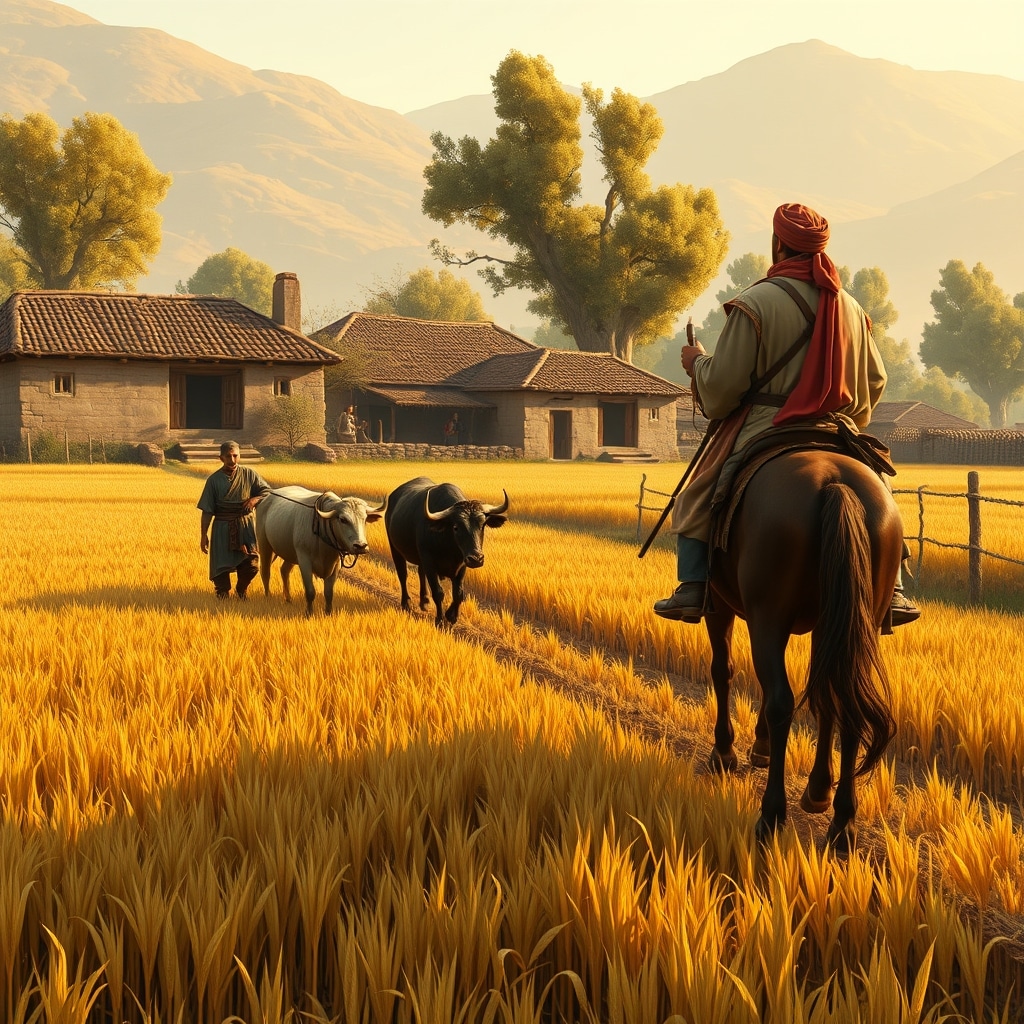
The sipahi was called “sâhib-i arz”, the master of the land. Yet this title did not mean ownership. The sipahi was the only person authorized to apply the laws on state land and on the reaya, the tax-paying subjects, to the land and peasants of the villages assigned to him. If he broke these laws, he was investigated and risked losing his grant.
Each revenue unit recorded in the register was called a “kılıç”, a sword. The farming households registered within its bounds were legally regarded as the reaya of that sipahi. The state often spread a sipahi’s share across different villages. The aim was both to keep order and to prevent the sipahi from turning a village into his private property.
In principle, the Ottoman government opposed the exploitation of peasant labor by local powers. It also did not want ties of personal dependence to form between the military class and the farmers. For the general place of the divide between the military class and the reaya in society, see our article on the social structure of the Ottoman Empire.
How Did the Timar System Shape Peasant Life? 5 Rules
Within the timar system, the peasant’s relationship with the sipahi rested not on oral custom but on written law. The rights of the reaya were laid down in detail in the law codes. The rules that most affected daily life can be summed up under five headings.
1. The law fixed the tax
The reaya paid no more tax than the law specified and no tax contrary to the law. They were free in matters of production. In this sense the Ottoman peasant was free, and the sipahi could not force him to work at will. For details of the tax burden, see our article on the taxpaying people of Ottoman villages and towns.
2. Who was entitled to the tithe and the çift resmi?
The lawgiver assigned personal taxes such as the çift resmi and the ispence to the sâhib-i raiyyet, the master of the peasants, and the tithe taken from the produce of the land to the sipahi who held rights over the cultivated land. The rate of the tithe varied by crop and region. Over time non-Muslim peasants came to pay the ispence instead of the çift resmi, while widows who headed households paid the bîve resmi.
3. Land could not be left idle
Leaving land unsown directly reduced the income of the state and of the timar holder. A peasant who did not work his land and so prevented a tithe from arising therefore paid a separate tax called “çift bozan”, the tax for breaking up a farm.
4. The peasant could not abandon his land
A farmer was forbidden to leave his land and go elsewhere. The sipahi had the right to bring back a runaway farmer within ten years, later within fifteen. This rule was meant to secure production and the sipahi’s income. Later laws gave the peasant more freedom in this area.
5. The sipahi could not put the peasant to work at will
The state kept some labor services inherited from pre-Ottoman times. Among them were giving straw for the sipahi’s horse, working on his farm and building projects, and helping carry the collected tithe to market. Under the Ottoman order, however, most of these services were turned into paid work.
A Peasant Family’s Land: The Çift-Hâne Order
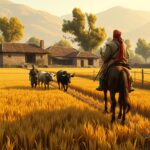
In regions where the state-land and timar order applied, peasants worked within a framework called çift-hâne. Agriculture relied largely on dry grain farming. Families were classified according to how much land they held.
A “çift” meant the land that a pair of oxen could plough in a year. Its size varied from district to district between 60 and 150 dönüms, depending on the fertility of the soil. Most peasants, however, held half a çift or less.
Besides the peasant taxes, villagers also paid extraordinary levies such as the avârız and taxes arising from buying and selling. People such as the blind, the disabled and the elderly, or certain groups who served the state, could be partly or fully exempted from taxes.
The Sipahi’s Obligations
The campaign season usually began in March or April. The çeribaşıs gathered the sipahis and joined the subaşı, and the subaşıs met the district governor. The governor-general inspected the units arriving from the districts before they joined the sultan’s army. For the general structure of this army, see our article on Ottoman military organization.
The military strength of the timar system was considerable. The Hasht Bihisht of Idris Bitlisi, a reliable source, estimates the timar army of Anatolia in 1473 at about 20,000 men and that of Rumelia at about 24,000. These figures include the auxiliary soldiers the sipahis brought with them.
Every timar holder had to bring a number of fully equipped horsemen in proportion to his income. These men were called cebelü. An ordinary sipahi equipped one cebelü for every additional 3,000 akçes of income. While the soldier of a sipahi with a small income wore simple metal armor, chain mail called “bürüme” was expected for incomes above 3,000 akçes.
During a campaign a roll call was held, and the names of those who failed to appear were sent to the capital. Failing to join a campaign, murder, theft or oppressing the reaya were grounds for losing the grant. A sipahi who lost his grant and did not join a campaign within seven years lost his sipahi status and became a taxpaying member of the reaya.
Why Was a Timar Not Inherited?
The basic difference between this order and Western feudalism was that the grant was not hereditary. Even so, Ottoman law accepted that the son of a deceased sipahi should receive an initial share from his father’s timar. As a rule, a sipahi’s son could not hold a grant of his own while his father was alive.
There were exceptions too. Selim I recognized the yurtluk and ocaklık rights of some Kurdish beys in Diyarbekir; these grants could pass by inheritance within the family. In Bosnia, because of the Austrian threat, a similar right was granted under Ahmed I and confirmed in 1644.
Being a Muslim was not a precondition for becoming a sipahi either. In line with the policy of istimâlet, which means winning hearts, the Ottomans applied the timar system flexibly according to conditions in the conquered lands. In the Balkan conquests, many holders of Byzantine pronoia were left in place as timar holders. In some districts the share of Christian sipahis reached as much as 35 percent.
Why Did the Timar System Collapse?
The economy played a decisive role in the decline of the timar system. After 1584 inflation reached 100 percent, while the value of the grants stayed the same. Sipahis could no longer afford the equipment and provisions needed for a campaign. Archival records show that many sipahis began to collect taxes from peasants by force, and that some joined bands of brigands.
The technology of war was also changing. During the Austrian wars of 1593–1606, the need for infantry with muskets increased the importance of salaried troops. On campaign, sipahis were increasingly replaced by paid soldiers such as the Janissaries and the sekbans. For the consequences of this turbulent period, see our article on rebellions in the Ottoman Empire and their causes.
The state also diverted a large part of the revenues to the treasury and to people close to the palace. The number of sipahis who joined campaigns fell from 14,867 in 1616 to 6,052 in 1655. In the Erzurum roll call of 1715, 2,119 grants were transferred to the treasury because their villages were in ruins or their holders failed to appear.
1827 and the Tanzimat: The End of the Order
Regulations issued in 1777 and 1791 tried to reform the order, but without significant results. After the abolition of the Janissary Corps, about 5,200 sipahis from fifty-three districts in Rumelia and Anatolia were turned into the cavalry of the Asâkir-i Mansûre in 1827.
The new fiscal arrangements of the Tanzimat era finally cut the sipahis’ ties to their regions. It was decided that the grants would be wound up on the death of the last sipahi. The timar system thus passed into history, while local problems concerning timar lands lasted into the Republican period.
Frequently Asked Questions
Why was the timar system important?
This order provided both the army’s cavalry and the tax and production order of the village at the same time. At the beginning of the 16th century, about half of public revenue was set aside for these grants.
What is the difference between the timar system and feudalism?
The most important difference was that the grant was not hereditary and that the sipahi’s authority over the peasant was limited by law. The peasant did not have to give more tax and service than the law prescribed.
Could a timar holder take as much tax as he wanted?
No. The types and amounts of taxes were written in the law codes. A sipahi who broke the law was investigated and could lose his grant.
Conclusion
The timar system was a framework that shaped the life of the Ottoman peasant, from taxes and land to migration and working conditions. The sipahi collected the peasant’s taxes but remained bound by the limits of the law, while the peasant was obliged to work his land. Inflation, firearms and the shift of revenues to the center upset this balance, and the order was wound up in the 19th century.
Sources
- TDV Encyclopedia of Islam, entry “Timar”
- TDV Encyclopedia of Islam, entry “Reâyâ”
- Ömer Lütfi Barkan, “Timar”, İslâm Ansiklopedisi (MEB).
- Halil İnalcık, The Ottoman Empire: The Classical Age 1300–1600.