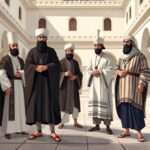
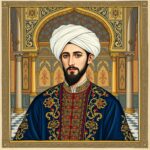
Ottoman clothing revealed its wearer’s profession, rank and religion from a distance. The shape of a headdress and the fabric and color of a kaftan set a vizier apart from a scribe, a soldier from a scholar and a Muslim from a non-Muslim. In this article we explain why clothing was a marker of status and who set the rules. We then look at the great change that began with the fez.
Quick Summary
- Clothing regulations began under Orhan Bey with the soldiers’ headgear.
- The law code of Mehmed the Conqueror set the ceremonial clothing of statesmen.
- The clearest sign was the headdress: kavuks such as the üsküf, the mücevveze and the selîmî showed rank.
- White was a privilege; the ceremonial robes of the grand vizier and the şeyhülislam were white.
- The color and fabric of non-Muslims’ clothing were regulated by imperial decrees.
- The fez replaced the kavuk in 1829, and the fez itself was banned in 1925.
Contents
- Short answer
- The origins of the rules
- Types of kavuk
- White and the dress of Sufi orders
- Palace tailors and fashion
- The ferace and women’s clothing
- The clothing of non-Muslims
- From the kavuk to the fez
- Frequently asked questions
Why Did Ottoman Clothing Vary? A Short Answer
Clothing was a language. It showed everyone a person’s place in society. The state prescribed separate clothing for the military class, the ulema and the scribal class. From the 16th century onwards, these regulations also covered the clothing of men and women, Muslims and non-Muslims.
Enforcing the rules was also someone’s duty. In the cities, matters of dress fell within the remit of the muhtesip, who supervised the market. Ottoman clothing thus became part of both tradition and the order of the state.
The Origins of the Rules: From Orhan Bey to the Law Code of Mehmed II
The earliest sources mention early regulations. Under Orhan Bey, his brother Alâeddin Bey changed the soldiers’ headgear from red to white. Special clothing that set soldiers apart from other groups thus appeared at an early date.
The organizational law code of Mehmed the Conqueror set out ceremonial clothing. According to the code, viziers, kazaskers and the defterdar received robes of honor and seasonal garments. Senior scribes came to the Imperial Council in kaftans with long sleeves. The pages of the Privy Chamber were given kaftans, caps and shoes, while the Janissaries received broadcloth and linings for their kavuks.
The code was also clear about headdresses. Viziers, kazaskers and defterdars dressed their servants in the mücevveze. Governors-general and district governors wore the üsküf. For the central government where these rules applied, see our article on the Imperial Council (Divan-ı Hümayun).
In Ottoman Clothing, the Headdress Told the Rank
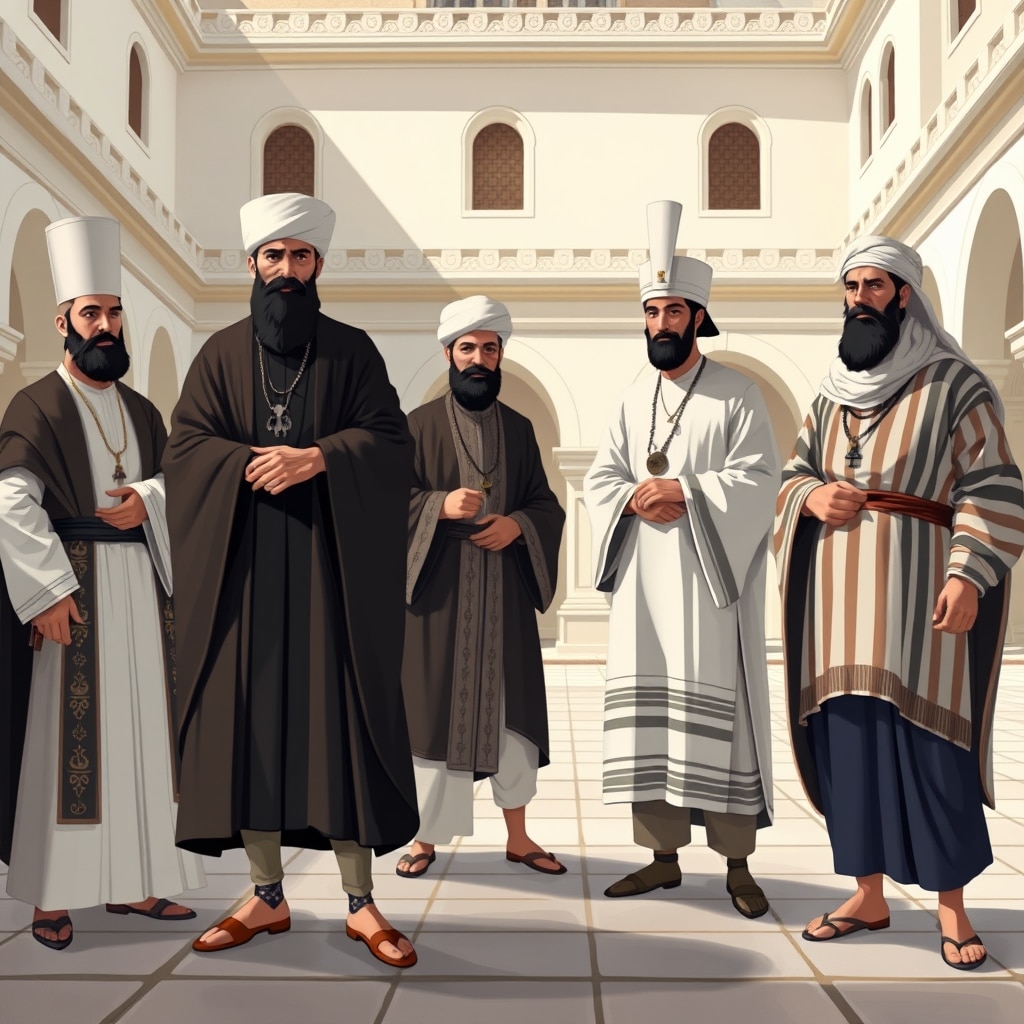
The most striking part of an outfit was the headdress. In this period the word kavuk usually meant a cap with a turban wound around it. The best known were the horasânî, the üsküf, the yûsufî, the selîmî, the kallâvî, the örf and the mücevveze.
Üsküf
According to Hoca Sâdeddin, the üsküf was invented by Süleyman Pasha, the son of Orhan Bey. The headdress became widespread under Murad I. This felt cap was decorated with heavy gold embroidery. Over time it became a headdress reserved for sultans and holders of high office.
Mücevveze
The mücevveze was a cylindrical kavuk, 30–35 centimeters tall, widening towards the top. White muslin was wrapped around it. A piece of red cloth shaped like a walnut was added on top, and the kavuk took its name from this piece.
Selîmî and yûsufî
The kavuk called selîmî, after Selim I, was about 65 centimeters tall. Sultans wore it until the abolition of the Janissary Corps. Viziers also appeared before the sultan in the selîmî. The yûsufî kavuk that the sultan wore at his accession carried three black aigrettes.
The Privilege of White and the Dress of Sufi Orders
Every group had its own dress. Costume albums and miniatures of ceremonies show this clearly. Like the grand vizier, viziers, bureaucrats and soldiers, the şeyhülislam, the kazasker and the nakîbüleşraf also dressed distinctively. In this order the color white symbolized a privilege.
The writer d’Ohsson draws attention to the ceremonial robes of the sultan’s two representatives, one worldly and one spiritual. The grand vizier’s gold-embroidered harvânî and the şeyhülislam’s ferve-i beyzâ were white. For the şeyhülislam’s place in the state, see our article on the şeyhülislam.
The clothing of Sufi orders was also a marker of identity. The shape and color of cloaks, robes and especially kavuks showed which order the wearer belonged to. These headdresses were named after the orders: the Rifâî kavuk, the Şâzelî kavuk, the Gülşenî kavuk and so on.
Palace Tailors and Fashion
Ottoman clothing also changed with fashions born in the palace. In the 16th century the palace tailors numbered more than 300. They made the garments of the sultan and the palace household. The fashions they created spread across the whole empire in various ways.
Today we can follow palace dress best through miniatures. The miniatures of Nakkaş Osman depicting the circumcision festival of Mehmed III and those of Levnî depicting the festivities for the sons of Ahmed III are reliable examples in this respect.
The sultan’s daughters are also known to have led the way in dress. In the 17th century Henry Blount compared the Turkish court to the French court. In his view the palace set the fashion in the Near East.
The wives and daughters of statesmen also carried Istanbul fashion to the provinces. This fashion reached as far as Buda, Belgrade, Damascus, Aleppo, Baghdad and Cairo. For other aspects of palace life, see our article on life in the harem.
The Ferace and Women’s Clothing
One of the best-known outer garments in Ottoman clothing was the ferace. The ferace was a loose, long garment open at the front. From the late 15th century both men and women wore it. Summer feraces were made of light silks, and winter ones of woolens such as sof and broadcloth.
Winter feraces were lined with the fur of lamb, hare, squirrel or lynx. This fur showed the wearer’s position and wealth. According to the municipal laws of Bursa, silk-lined feraces were reserved for Muslims, while non-Muslims used cotton linings. Prices were also recorded: the narh register of 1640 priced women’s and men’s feraces separately.
In the Tulip Era the ferace changed rapidly. First, collars a span long were added to collarless feraces. Then these collars grew down to the waist and the hem. The edges were decorated with lace and shiny ribbons.
These showy garments disturbed the palace. From 1725 the palace issued one order after another. These orders forbade ferace collars longer than a span. It was announced that the collars of women who did not comply would be cut off. The same ban was repeated in 1791, under Selim III.
Why Was the Clothing of Non-Muslims Different?
Many decrees were issued on the clothing of non-Muslims. These decrees continued from the mid-16th century to the Tanzimat. They set limits on the color, type and quality of clothing. The basic aim was that non-Muslim clothing should not resemble Muslim clothing.
A decree sent to the kadı of Istanbul in 1568 laid down detailed rules. The feraces of Jews and Christians were to be of dark broadcloth, their muslin turbans were to be wound simply, and their shoes were to be black. Another decree required Jews to wear red hats and Christians black ones. The kadı of Istanbul and the ağa of the Janissaries were held responsible for enforcement.
These rules are among the most debated topics in the history of Ottoman clothing. Some researchers regard them as a way of humiliating non-Muslims. Others interpret them as a regulation that protected their identity and recognized rights. There is also a different testimony.
Isaac Zarfati had settled in Turkey in the mid-15th century. Inviting the Jews of Europe, he wrote that here they could wear their finest clothes without being humiliated.
The clothing of foreign merchants and diplomats who came temporarily was not interfered with. For the legal status of non-Muslims, see our article on the Ottoman millet system.
From the Kavuk to the Fez: Mahmud II’s Clothing Reform
Dress was also a sensitive issue in periods of reform. The uniforms of Selim III’s Nizâm-ı Cedîd soldiers met with fierce reactions. Writers of the period felt the need to explain that these uniforms could not be considered a “sign of unbelief”.
The real change came under Mahmud II, and Ottoman clothing was transformed at its roots. The new army founded after the abolition of the Janissary Corps was dressed in Western style. With an imperial decree of 1829, Mahmud II put a dark red fez on soldiers’ heads. Civil servants were then required to wear the fez instead of the kavuk, the setre frock coat instead of the robe, and trousers instead of the şalvar.
The spread of the fez among the public also followed rules. Civilians were asked to wear a plain “dalfes” to distinguish them from officials; only the ulema could wind white muslin around it. When people resisted, tradesmen were allowed to wrap a printed kerchief or a band around it. After this the fez spread rapidly, and the first fez factory, the Feshane, was founded in Istanbul.
The shape of the fez also changed from sultan to sultan. Abdülmecid’s fez was small, Abdülaziz’s broad and Abdülhamid II’s tall. When Edmondo de Amicis visited Istanbul in 1874, he saw two separate groups. Traditionalists wore turbans and kaftans, while modernizers wore frock coats and trousers. The fez was banned by a law passed in 1925.
Frequently Asked Questions
Why did Ottoman clothing vary by status?
Clothing was a sign of one’s place in society that everyone could see. The military class, the ulema and the scribal class dressed differently. The shape of the headdress and the value of the fabric showed rank.
Who enforced the rules on Ottoman clothing?
In the cities, clothing fell within the muhtesip’s remit. In the decrees on non-Muslim clothing, the kadı of Istanbul and the ağa of the Janissaries were held responsible.
When did people start wearing the fez?
The fez was first given to soldiers by Mahmud II’s imperial decree of 1829. It then spread to officials and the public. In Turkey it was banned in 1925.
Conclusion
Ottoman clothing was a visible map of the social order. The shape of the kavuk showed rank. The value of fabric and fur revealed wealth, and color showed privilege or religious identity. While palace fashion spread from the cities to the provinces, the state set rules and enforced them. From 1829 onwards, the fez made clothing a symbol of modernization.
Sources
- TDV Encyclopedia of Islam, entry “Kıyafet”
- TDV Encyclopedia of Islam, entry “Kavuk”
- TDV Encyclopedia of Islam, entry “Fes”
- TDV Encyclopedia of Islam, entry “Ferace”
- Reşad Ekrem Koçu, Türk Giyim, Kuşam ve Süslenme Sözlüğü.