The Millet System was a historical model of governance in the Ottoman Empire that allowed non-Muslim communities to maintain their religious worship, communal administration, family law, education, and institutions similar to charitable foundations, while regulating these rights within the limits of the sultan’s authority, tax obligations, and public order.
Contents
- What Was the Millet System?
- Religious Rights and Freedom of Worship
- Legal Autonomy and Communal Courts
- Social Life, Education, and the Economy
- The Limits of Rights and Modernization
- Conclusion
What Was the Millet System?
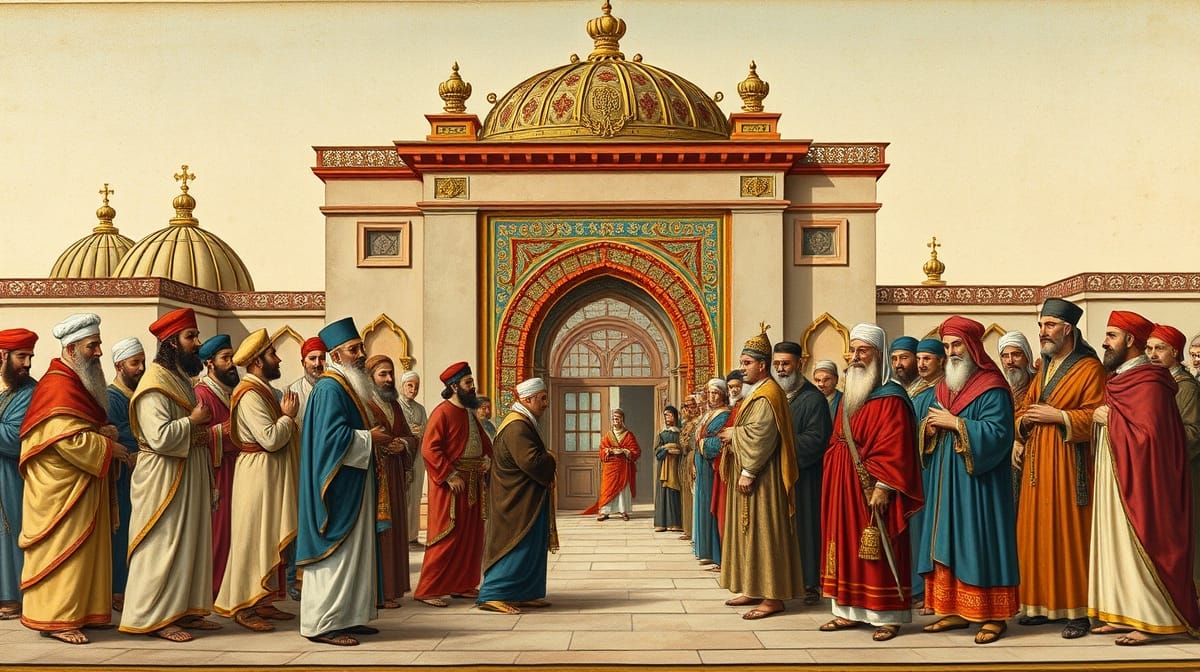
In Ottoman historiography, the Millet System is a concept used especially to describe the organization of non-Muslim communities on the basis of their religious identities. The word “millet” here does not mean a nation in the modern sense, but rather a religious community. While Muslims formed the dominant legal and political framework in Ottoman society, Orthodox Greeks, Armenians, Jews, and later Catholic or Protestant communities became recognized groups organized around their own religious leadership.
The roots of this arrangement go back to the dhimmi status in Islamic law. Dhimmis were non-Muslims living under the protection of an Islamic state; in return for the security of life and property, they showed loyalty to the state, paid certain taxes, and obeyed public order. According to Halil İnalcık, Ottoman administration preferred not to assimilate the communities of different religions and cultures that it conquered directly, but instead to organize them as administratively, financially, and legally controllable communities.
At this point, Mehmed II’s policy after the conquest of Istanbul marked a decisive turning point. The reorganization of the Orthodox Patriarchate after 1453 is considered one of the important examples of the Ottoman policy of keeping non-Muslim subjects within urban life, the tax system, and political loyalty. Yet it would be misleading to regard this order as a system of equal citizenship in today’s sense; the Ottoman model was a hierarchical imperial order that defined rights and obligations according to religious status.
What did “millet” mean in the concept of the Millet System?
Within the Millet System, “millet” referred not to ethnic origin but most often to sectarian or religious affiliation. When the Greek millet was mentioned, it could mean not only ethnic Greeks but Orthodox Christians in general. The Armenian millet referred to the community organized around the Armenian Apostolic Church. Jews likewise had a separate communal structure recognized around the institution of the chief rabbinate.
This structure enabled the Ottoman Empire to govern different communities living across vast territories without forcing them into a uniform cultural mold. As emphasized in articles of the TDV Encyclopedia of Islam, Ottoman administration often tried to secure stability by linking local traditions, religious institutions, and communal leaders to the state order. For this reason, the system was too complex to be explained solely by the word “tolerance”; it was a mechanism intertwined with law, taxation, politics, and social order.
Religious Rights and Freedom of Worship
One of the most visible rights of Ottoman non-Muslims was the right to practice their own religions and continue their worship. Churches, monasteries, synagogues, and communal spaces could preserve their existence within certain rules. This right was supported by covenants, imperial decrees, or local practices issued after conquest. However, matters such as the construction of new places of worship, the repair of existing buildings, or the ringing of bells did not enjoy the same degree of freedom in every period; they often depended on central permission or the attitude of local administrators.
The Millet System assigned religious leaders responsibilities not only in worship but also in internal communal discipline and representation. Patriarchs, chief rabbis, and bishops were the state’s interlocutors for their own communities. These leaders could help collect taxes from their communities, issue rulings in matters such as marriage and divorce, and serve as intermediaries in conveying state orders to their communities.
The powers of patriarchs and chief rabbis within the Millet System
In terms of the Millet System, leaders such as patriarchs and chief rabbis were not only clerics but also administrative representatives. The Greek Orthodox Patriarch, the Armenian Patriarch, and the Jewish chief rabbi held important positions in their communities’ relations with the state. This gave non-Muslims the opportunity to live under their own religious authorities; at the same time, however, it made communal leaders responsible to the Ottoman central authority.
The practical aspect of this arrangement was as follows: rather than dealing with every individual separately, the state established order through communal leadership. Communal leaders could both defend the rights of their communities and were obliged to implement the demands of the state. For this reason, while the system opened up an area of institutional representation for non-Muslims, it also turned them into communities supervised within their own religious hierarchies.
In Ottoman practice, religious freedom differed from the modern secular understanding of liberty; the rights granted to communities rested on the principle of recognizing groups rather than on individual equality.
Legal Autonomy and Communal Courts
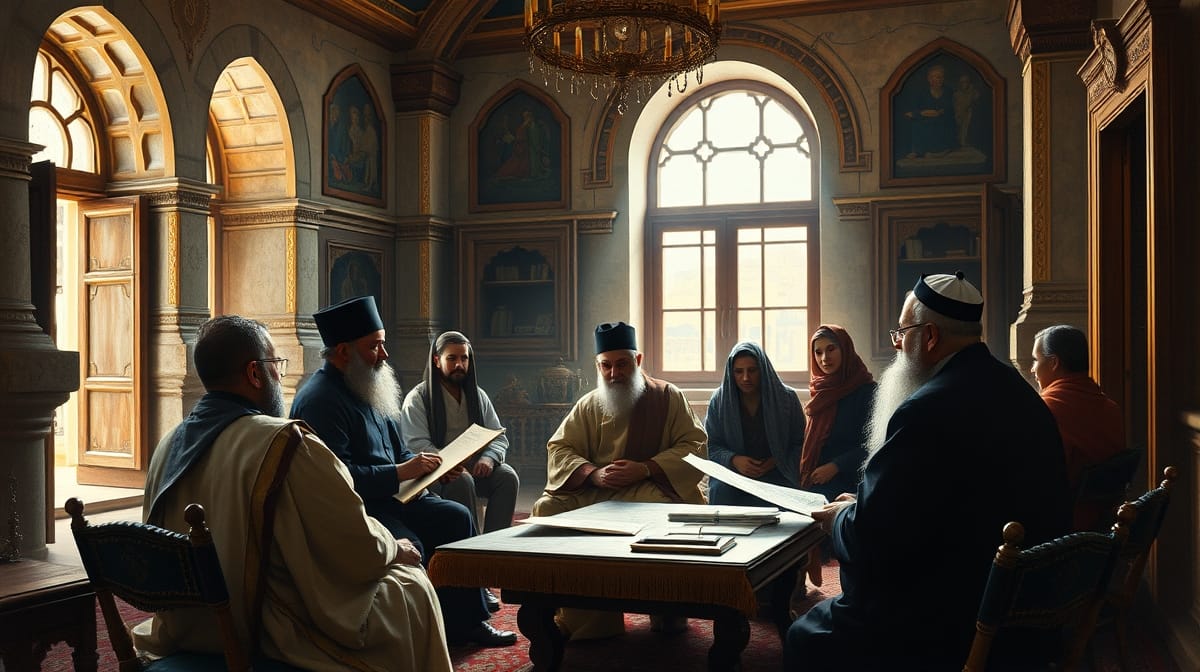
One of the most important areas granted to non-Muslims was family law and internal communal disputes. Communal courts or religious authorities could become involved in marriage, divorce, inheritance, wills, and certain personal matters. This meant that Christian and Jewish communities in particular were able to maintain their own religious laws to a certain extent.
At the same time, the Ottoman legal order was not monolithic. Sharia courts could be used by non-Muslims as well as Muslims. Non-Muslims sometimes preferred to apply to the qadi court instead of their own communal courts, because qadi registers carried the official recording power of the state and could produce more binding results in matters such as debt, sale, inheritance, or disputes. As also seen in Suraiya Faroqhi’s studies on Ottoman urban life, non-Muslims were frequently in contact with Ottoman courts in everyday legal transactions.
What did the Millet System provide in the field of family law?
The Millet System enabled non-Muslims to preserve their own traditions in marriage, divorce, engagement, inheritance, and personal matters tied to religious rules. For example, Jewish communities could maintain certain internal regulations under rabbinical authority, while Christian communities could do so according to church law. This shows that different legal cultures could exist simultaneously within the empire.
However, this autonomy was not absolute. Criminal cases concerning public order, land matters, tax obligations, and issues involving state authority were under the supervision of the Ottoman legal order. In cases between a non-Muslim and a Muslim, qadi courts played an important role. Therefore, while the system opened an area of internal law for communities, it kept ultimate sovereignty in the hands of the sultan and the state.
Social Life, Education, and the Economy
Ottoman non-Muslims had important rights not only in worship and family law, but also in education, trade, crafts, and neighborhood life. Communities could maintain their own schools, charitable institutions, and religious educational structures. These institutions organized around churches and synagogues helped communities preserve their language, religious knowledge, and cultural memory.
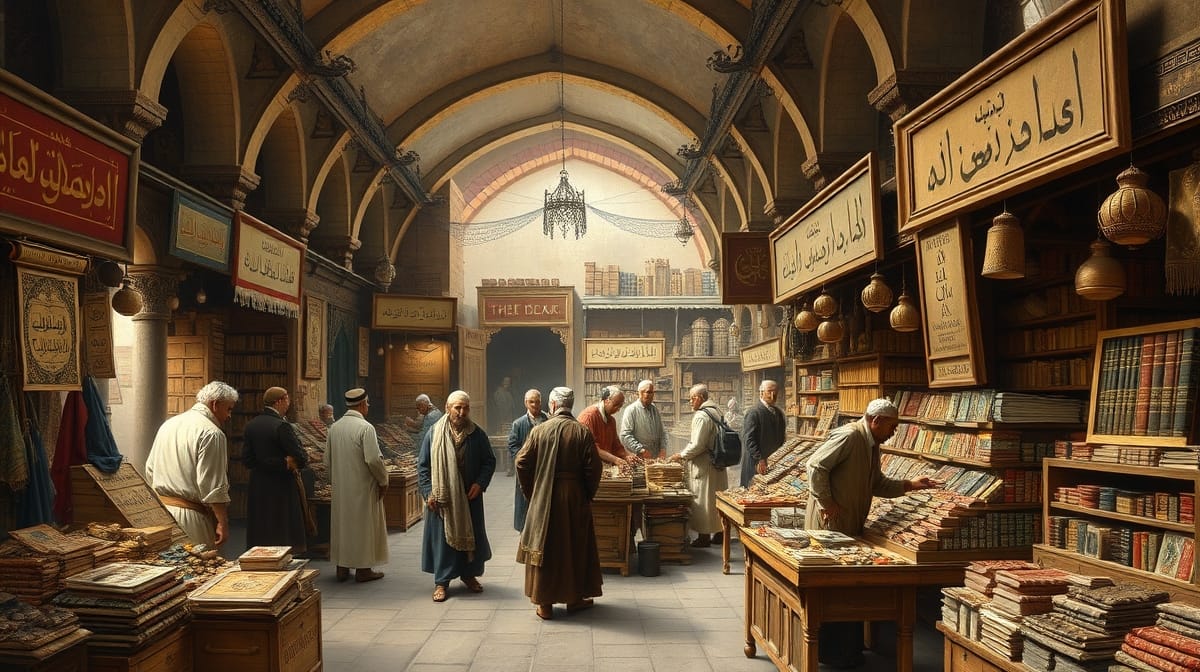
In economic life, non-Muslims were influential in fields such as urban crafts, trade networks, money-changing and finance, medicine, translation, and international connections. Especially in major port cities, Greek, Armenian, and Jewish merchants were among the important actors of the Ottoman economy. An Economic and Social History of the Ottoman Empire, edited by Halil İnalcık and Donald Quataert, shows that Muslim and non-Muslim elements in the empire’s economic structure existed in mutually dependent relationships.
This picture becomes clearer when considered together with commercial spaces in Ottoman cities and the guild order. Inns, covered bazaars, markets, and ports were areas where different religious groups operated within the same economic system. The Millet System did not seek to eliminate this diversity; rather, it tried to bind each community to the imperial order while preserving its religious and social identity.
Education and the preservation of cultural identity
The ability of non-Muslim communities to maintain their own schools and religious educational institutions was one of the important rights of the system. Armenian, Greek, and Jewish communities could transmit religious knowledge, language, tradition, and communal memory to their children. This contributed to the continuation of a multilingual and multicultural structure in Ottoman society.
Of course, educational institutions were not entirely unrestricted either. Curricula, relations with foreign states, missionary schools, and nationalist movements became subjects monitored more closely by the state, especially in the nineteenth century. As the effects of the French Revolution on the Ottoman Empire increased, communal schools gained importance not only as religious institutions but also as spaces where political identities developed.
The Limits of Rights and Modernization
Although the Millet System granted non-Muslims a broad communal sphere, these rights had clear limits. While non-Muslims were regarded as being under the protection of the state, they did not have fully the same political status as Muslims. In the classical period, taxes such as the jizya, limitations on access to certain public offices, and periodic rules concerning public visibility were parts of this hierarchy.
The jizya was a poll tax levied on non-Muslim men and was considered one of the basic elements of dhimmi status in Islamic law. In return, non-Muslims were generally exempted from military service, and their life and property were protected by the state. This arrangement should be evaluated not according to the modern understanding of equal citizenship, but according to the logic of governance based on differentiated statuses in early modern empires.
In the nineteenth century, this structure underwent major change with the Tanzimat and Reform Edicts. The Tanzimat Edict of 1839 claimed to extend principles such as the security of life, property, and honor to all subjects. The Reform Edict of 1856 aimed to establish a more egalitarian framework concerning non-Muslims’ state service, education, military service, and legal status. For this transformation, the Tanzimat and Reform Edicts were critical thresholds in the Ottoman understanding of governance.
The difference between the Millet System and equal citizenship
The Millet System was an order that granted rights to communities but did not regard individuals as equal citizens in the modern sense. Rights were given primarily through communal identity, and an individual’s status was determined by religious affiliation. After the Tanzimat, however, a transition was aimed from the idea of “subjects” toward the concept of “Ottoman citizenship.” As emphasized in Kemal Karpat’s works, nineteenth-century Ottoman modernization was a long process that redefined issues of population, citizenship, and representation.
This change was not easy. On the one hand, non-Muslims gained broader legal and political rights; on the other, nationalism, foreign interventions, and the process of imperial dissolution strained communal relations. Especially in the Balkans, nationalist movements were influential in transforming the old communal order into political nations. For this reason, the fact that the Balkan Wars represented a major rupture for the Ottoman Empire was the result not only of a military transformation but also of a social and administrative one.
The Main Rights Granted by the Millet System
To see the rights of Ottoman non-Muslims more concretely, it is necessary to evaluate the main areas together. Although these rights could vary from period to period, region to region, and community to community, the general framework may be summarized as follows:
- Right to religious worship: The opportunity to continue religious life in places of worship such as churches, synagogues, and monasteries.
- Right to communal leadership: Representation before the state through patriarchs, chief rabbis, and other religious leaders.
- Autonomy in family law: The application, to a certain extent, of their own religious rules in matters of marriage, divorce, inheritance, and personal law.
- Right to education and culture: The preservation of identity through communal schools, religious educational institutions, and charitable structures.
- Right to economic activity: Active participation in trade, crafts, money-changing and finance, medicine, and the urban economy.
- Security of property and life: Legal protection in return for loyalty to the state and tax obligations.
These rights were an important part of the Ottoman Empire’s ability to govern different communities. Yet the same list also shows the limits of the system: rights were granted not on the basis of individual freedom, but on the basis of the recognition of the community and the state’s need to preserve order.
Common Misconceptions About the Millet System
One of the most common misconceptions about the Millet System is to present this order as a fully modern model of tolerance. In Ottoman practice, the religious and social existence of non-Muslims was preserved, but this protection did not amount to an egalitarian citizenship regime. A second misconception is to see the system solely as an order of oppression. This is also incomplete, because non-Muslim communities were able to maintain their own institutions, leaderships, worship, and economic activities for centuries.
A more balanced assessment is this: the Ottoman model opened a broad living space for different religious communities under the imperial conditions of its age, but it did so within a hierarchical political order. The broad framework Caroline Finkel draws regarding Ottoman social structure in Osman’s Dream also shows that the empire possessed a state logic that both preserved differences and governed them strictly.
Conclusion
In conclusion, the Millet System was a historical model of governance in the Ottoman Empire that granted non-Muslims important rights in the fields of worship, communal administration, family law, education, culture, and economic activity, while limiting these rights through the sultan’s authority, tax obligations, public order, and the hierarchy of religious status.
Sources
- Halil İnalcık, The Ottoman Empire: The Classical Age.
- Halil İnalcık & Donald Quataert, An Economic and Social History of the Ottoman Empire.
- Suraiya Faroqhi, Subjects of the Sultan: Culture and Daily Life in the Ottoman Empire.
- Caroline Finkel, Osman’s Dream.
- TDV Encyclopedia of Islam, articles on Millet and related Ottoman institutions.




1 thought on “What Rights Did the Ottoman Millet System Give to Non-Muslims?”