In the Ottoman Empire, capitulations were initially diplomatic and commercial privileges granted to revive Mediterranean trade. Over time, however, their low customs rates, the legal privileges enjoyed by foreign merchants, tax losses, and the weakening of domestic producers’ competitiveness made the economy increasingly dependent on European markets, a process that became especially pronounced in the 19th century.
Contents
- What Were the Capitulations?
- Early Privileges and Ottoman Power
- How Did the Capitulations Affect the Ottoman Economy?
- How Did the Mechanism of Foreign Dependence Emerge?
- The Treaty of Balta Liman and the 19th-Century Break
- Conclusion
What Were the Capitulations?
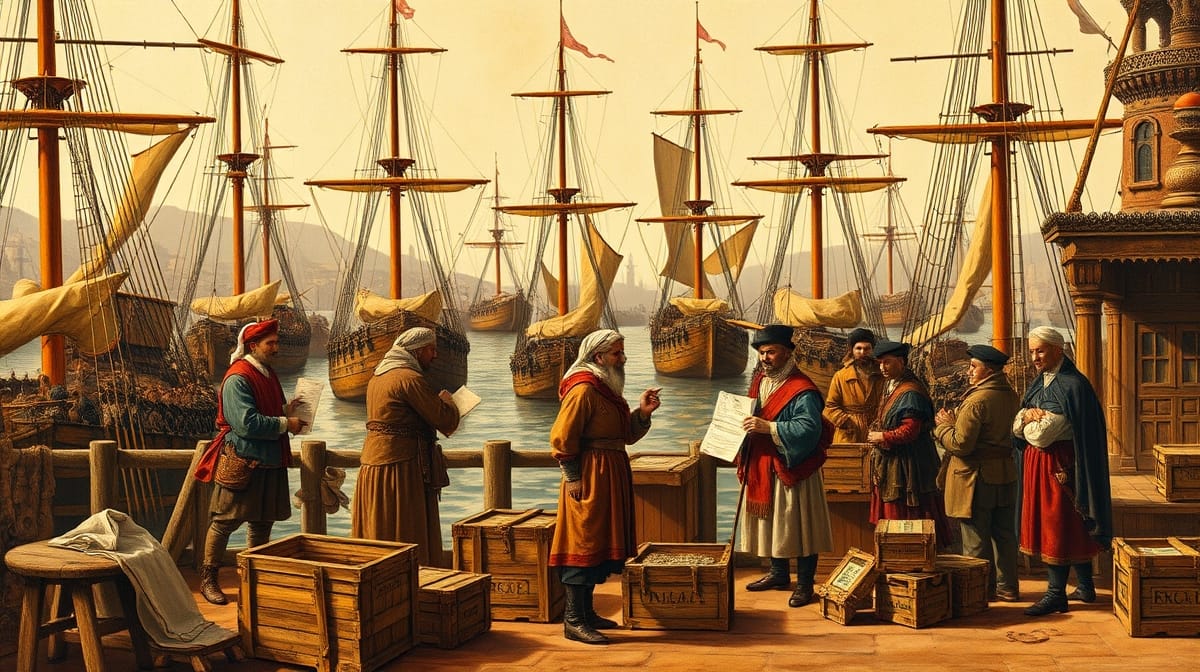
These privileges, often understood in Ottoman sources through the logic of an ahidnâme or deed of concession, were rights granted to the merchants of foreign states in the fields of trade, customs, residence, and jurisdiction. In the modern sense, they were not free trade agreements between equal states, but permissions granted by the sultan in line with his political objectives. In Halil İnalcık’s assessments, these privileges stand out, especially in periods of Ottoman strength, as a means of keeping trade routes active, increasing port revenues, and balancing rival European powers.
For this reason, it would be incomplete to explain the issue with a simple straight line such as ‘they were granted and the state collapsed.’ In the early period, relations established with Mediterranean merchants such as the Venetians, Genoese, and Florentines were connected to the empire’s desire to claim a share of maritime trade. Yet as the state’s military and financial superiority declined, the same privileges took on a different meaning; the Ottoman Empire was no longer the side setting the terms, but often the party whose bargaining power had weakened in the face of European diplomacy and commercial pressure.
What rights did the capitulations include?
These rights generally provided foreign merchants with low customs duties, the ability to have cases heard through their own consuls, freedom to trade in Ottoman ports, easier transport of certain goods, and the right to open resident agencies. The most critical point was that these rights affected not only the buying and selling of goods, but also the judicial and tax order. Over time, a French, English, or Dutch merchant could come to occupy a more advantageous position than a merchant who was an Ottoman subject.
This structure conflicted with the market understanding of the classical state order, in which the central authority exercised control. While the Ottoman administration tried to regulate the market through instruments such as price controls, guilds, internal customs duties, and market inspection, privileged foreign merchants could benefit from different legal and tax channels. In later centuries, this divergence created a dual structure within the economy.
Early Privileges and Ottoman Power
The first periods in which the Ottoman state granted commercial privileges were not times when the state was weak; on the contrary, they were periods when it was rising powerfully in the Mediterranean and the Balkans. Having become a decisive power over Black Sea and Eastern Mediterranean trade after the conquest of Istanbul, the state preferred to draw foreign merchants into the system in a controlled manner rather than exclude them completely. In this context, the new commercial order that emerged after the conquest of Istanbul shows that the Ottomans had begun to think on an imperial scale.
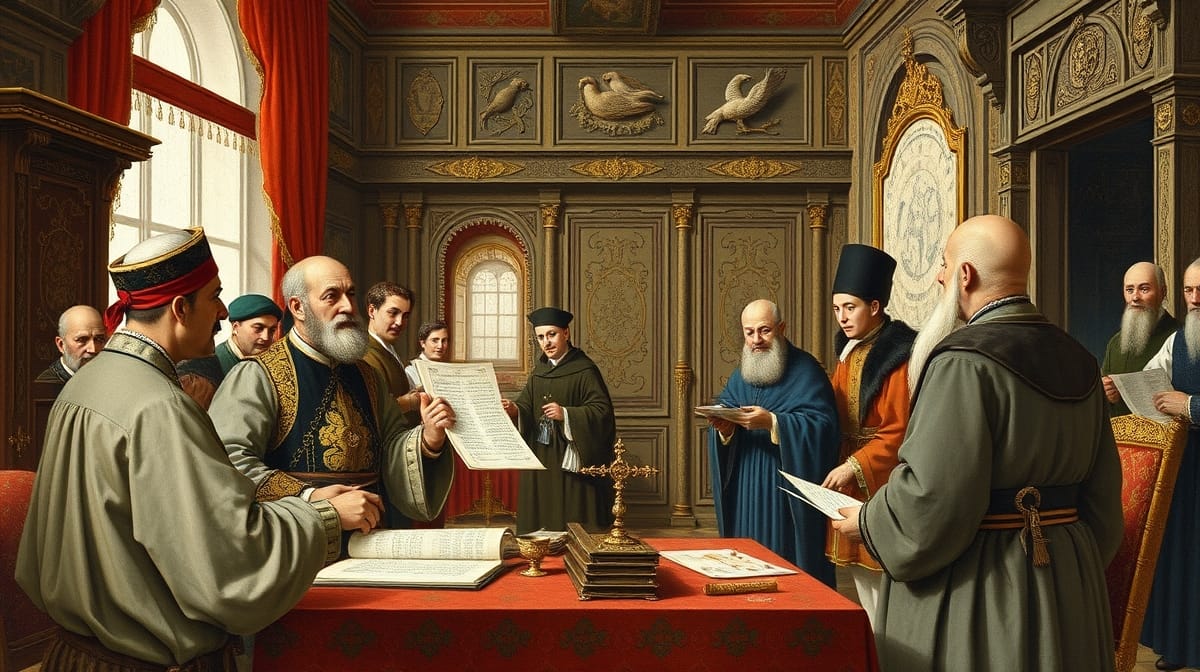
The privileges granted to France during the reign of Suleiman the Magnificent are traditionally associated with the date 1536; however, researchers emphasize that this process became institutionalized through longer diplomatic contacts and later renewals. The aim was not trade alone: turning France into a balancing force against Habsburg power, securing a political alliance in the Mediterranean, and keeping Ottoman ports attractive were also among the objectives. In this respect, early privileges were one of the empire’s confident diplomatic tools.
Why were the capitulations not considered a problem in the early period?
They were not considered a problem because Ottoman finances were strong, the productive structure was vibrant, and the state had the power to renew or restrict privileges when necessary. In addition, foreign merchants had to obtain permission to enter the Ottoman market; in other words, the relationship was less a one-sided dependence than an empire-centered relationship of control. Suraiya Faroqhi’s studies of Ottoman cities and trade networks show that domestic production and regional markets were still highly dynamic in this period.
Over time, however, the balance changed. The geographical discoveries, the rise of Atlantic trade, and the acceleration of capital accumulation in Europe reduced the Ottoman advantage on the old trade routes. This issue is particularly important in the context of the impact of the geographical discoveries on the Ottoman Empire, because as external trade routes changed, the place of Ottoman ports in the world economy also began to transform.
How Did the Capitulations Affect the Ottoman Economy?
This system affected the Ottoman economy through three main channels: it limited tax revenues, weakened the competitiveness of domestic merchants, and narrowed the state’s ability to regulate foreign trade. When these three effects operated at the same time, the state’s capacity to direct the market according to its own needs declined. Especially as the cost of wars increased and the central budget began to run deficits, low customs revenues became an even greater problem.
Tax losses and the problem of low customs duties
The Ottoman customs system could not generate the expected level of revenue because of the low rates granted to foreign merchants. While the state needed more money for wars, campaigns, and administrative expenses, the taxes it could collect from foreign trade remained limited. This was not merely an accounting issue; the loss of tax revenue also narrowed the state’s ability to invest in military technology, renew infrastructure, and support domestic producers.
Moreover, some non-Muslim merchants who were Ottoman subjects began to obtain patents from foreign embassies and acquire the status of “protected merchants.” In this way, an intermediary class emerged that avoided some of the taxes paid by ordinary Ottoman merchants and operated under foreign protection. In the economic history studies edited by Halil İnalcık and Donald Quataert, this structure is treated as one of the important factors that disrupted the internal balance of the Ottoman commercial order.
How did the capitulations weaken domestic producers?
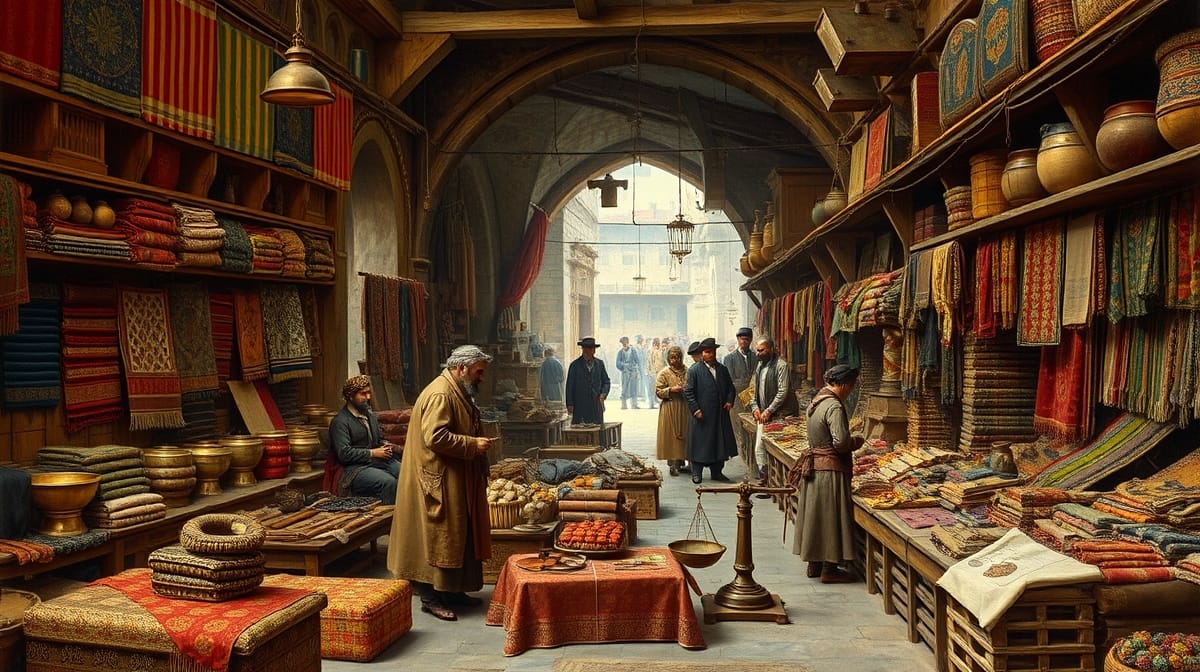
This system of privileges weakened domestic producers, especially in the 18th and 19th centuries, as European goods entered the Ottoman market more easily. While industrial production accelerated in Europe, the guild system and labor-intensive production remained dominant in the Ottoman Empire. Cheaper, standardized, and abundant imported goods narrowed the market of urban artisans and small producers.
This situation did not occur at the same pace in every region; domestic production in centers such as Bursa, Aleppo, Damascus, Thessaloniki, and Istanbul resisted for a long time. Yet as foreign competition increased, Ottoman producers remained disadvantaged in terms of price, capital, and technology. Since the state’s ability to implement protective customs policies was limited, domestic producers had weak defenses against European industrial products. This picture shows why economic and commercial administration in the Ottoman Empire cannot be explained solely through palace policy.
The destructive effect of the capitulations arose not from a single decree, but from the combination of old privileges with new power balances in a changing world economy.
How Did the Mechanism of Foreign Dependence Emerge?
Foreign dependence did not emerge because the Ottoman Empire suddenly became dependent on Europe; it took shape as the channels of trade, law, finance, and borrowing overlapped. First, foreign merchants gained a more advantageous position, then European goods gained strength in the market, and afterward the state turned to borrowing in order to cover revenue shortfalls. By the 19th century, a significant share of economic decisions had to be considered together with foreign pressure and the interests of creditors.
Capitulations and legal privileges
These privileges had legal as well as economic consequences. In many cases, foreign merchants were tried in their own consular courts, while the authority of Ottoman courts narrowed. This made it more difficult for the state to exercise full sovereignty over commercial disputes within its own territory. These legal privileges strengthened the permanence of commercial concessions, because foreign merchants obtained not only low taxes but also diplomatic protection.
As seen in İsmail Hakkı Uzunçarşılı’s account of Ottoman institutions, the classical state order established a close relationship among central authority, the courts, and finance. The capitulatory system inserted foreign consuls and embassies into this relationship. Thus, an unequal ground emerged in the domestic market between those operating under Ottoman law and those acting under foreign protection.
Exporting raw materials, importing manufactured goods
One of the clearest indicators of foreign dependence was the Ottoman Empire’s gradual transformation into a market that sold raw materials and bought manufactured goods. While products such as agricultural goods, leather, wool, cotton, silk, and minerals were valuable for European industry, Ottoman cities became more open to textiles, metal goods, and consumer products manufactured in Europe. Such a structure weakened domestic industrial accumulation and tied price fluctuations to foreign markets.
At this point, the capitulations were not the sole cause, but they were a framework that accelerated the process. Wars, disruptions in the provincial order, financial difficulties, and the production gap created by the Industrial Revolution were also added to the same picture. When the causes of the Ottoman period of stagnation and the events that shook the state during the period of decline are taken into account, it becomes clear that economic dependence was a multilayered problem.
The Treaty of Balta Liman and the 19th-Century Break
The 1838 Treaty of Balta Liman was a critical turning point in the opening of the Ottoman economy to the outside world. This treaty with Britain limited monopolies in domestic trade, enabled British merchants to operate more widely in the Ottoman market, and further narrowed the Ottoman state’s ability to apply protectionist economic policies. This development coincided with the reform atmosphere of the Tanzimat period; for this reason, the relationship between the Tanzimat and Islahat Edicts and the economic order should be considered together.
In Caroline Finkel’s broad narrative of Ottoman history, the 19th century stands out as a period in which the state was both trying to modernize and feeling European financial and diplomatic pressure more closely. The beginning of foreign borrowing from 1854 during the Crimean War marked a new stage of economic dependence. As debts grew and repayment difficulties increased, the establishment of the Ottoman Public Debt Administration in 1881 seriously limited Ottoman fiscal sovereignty.
Could the capitulations be abolished?
Although Ottoman administrators frequently sought to abolish these privileges, especially in the 19th century, European states did not give them up. The Ottoman government tried to end this system on the basis of the principle of equal sovereignty, but the balance of military, diplomatic, and financial power did not allow it. During the First World War, a unilateral abolition attempt was announced in 1914, but a lasting international result was achieved only in the period of the Republic of Turkey through the Treaty of Lausanne.
This historical trajectory clearly shows why the privileges gradually turned into an issue of state sovereignty. Rights originally granted to revive trade came to stand at the center of the question, “who controls their own customs, courts, and market?” in the age of modern states.
Conclusion
In conclusion, the capitulations were not a simple cause that single-handedly brought down the Ottoman economy; however, combined with low customs duties, legal privileges, foreign protection, competitive pressure on domestic producers, and foreign borrowing, they became one of the most important mechanisms that made the economy dependent on the outside world.
Sources
- Halil İnalcık and Donald Quataert, An Economic and Social History of the Ottoman Empire.
- Halil İnalcık, The Ottoman Empire: The Classical Age.
- Suraiya Faroqhi, Men of Modest Substance: House Owners and House Property in Seventeenth-Century Ankara and Kayseri.
- İsmail Hakkı Uzunçarşılı, An Introduction to the Organization of the Ottoman State.
- TDV Encyclopedia of Islam, article on İmtiyazat.