
The Geographical Discoveries began in the late fifteenth century under the leadership of Portugal and Spain. Europeans found a sea route to India around the southern tip of Africa and reached the Americas. For the Ottomans, the most important consequence was that part of the trade with the East shifted to ocean routes. The state responded by sending fleets against Portugal in the Red Sea and the Indian Ocean.
Quick Summary
- Vasco da Gama reached India in 1498; Portugal soon took centers such as Goa, Malacca and Hormuz.
- The Ottomans fought Portugal in the Red Sea, the Persian Gulf and the Indian Ocean.
- The Diu (1538) and Hormuz (1552) campaigns and aid to Aceh (1567) were part of this struggle.
- Piri Reis’s map of 1513 is one of the oldest maps showing the coasts of the Americas.
- At the end of the sixteenth century, the debasement of the akçe and rising prices shook the economy.
Contents
- The beginning of the discoveries
- Portugal’s entry into the Indian Ocean
- The Ottoman response: from the Red Sea to the Indian Ocean
- Piri Reis and knowledge of the New World
- The impact on trade routes
- Prices, silver and the akçe
- Positive and negative effects
- Frequently asked questions
How Did the Geographical Discoveries Begin?
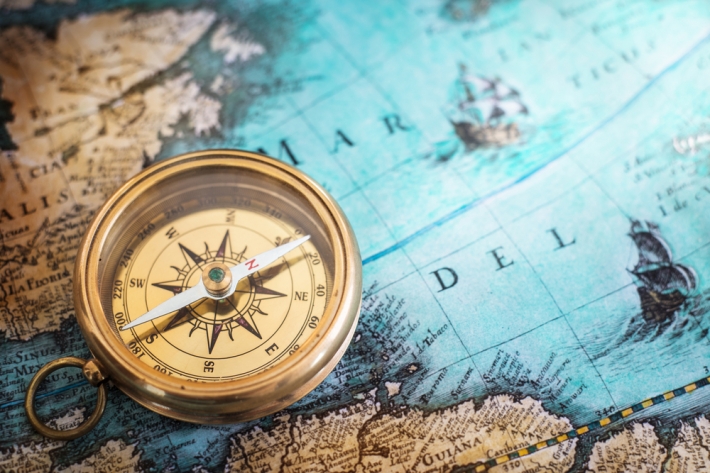
The main goal of European sailors was to reach the spices and silk of Asia without intermediaries. Until then, these goods had reached Europe after passing through the hands of Middle Eastern states and Italian merchants. Advances such as the compass, the astrolabe and ocean-going ships made long voyages possible. Religious and political aims also encouraged these ventures.
According to the entry on Portugal in the TDV Encyclopedia of Islam, Bartolomeu Dias rounded the Cape of Good Hope in the late fifteenth century. After Christopher Columbus reached the Americas in 1492, Spain and Portugal divided the new lands between them in the Treaty of Tordesillas of 1494. Vasco da Gama, in turn, became the first person to reach Calicut in India by sea, in 1498.
Portugal’s Entry into the Indian Ocean
Portugal quickly grew stronger in the Indian Ocean. According to the encyclopedia, the Portuguese governors Francisco de Almeida and Afonso de Albuquerque fought against the Mamluks and the Ottomans. Important trading centers such as Goa (1510), Malacca (1511) and Hormuz were captured. In this way, a large part of the highly profitable spice trade came under Portuguese control.
In 1509 the Portuguese defeated the Mamluk and Gujarati fleets off Diu. This defeat largely broke the Mamluks’ resistance in the Indian Ocean. These developments directly threatened the trade that ran through the Red Sea.
Faced with this threat, the states of the region took action. The sultans of Gujarat and Yemen asked the Mamluk sultan in Egypt for help. According to the TDV Encyclopedia of Islam entry on Selman Reis, Selman Reis went to Egypt on behalf of the Ottoman state. In 1511 he was appointed captain of the fleet being prepared at Suez.
The Ottoman Response: From the Red Sea to the Indian Ocean
With the conquest of Egypt in 1517, the struggle against Portugal passed directly to the Ottomans. In the same year a Portuguese fleet of thirty ships besieged Jeddah, but Selman Reis successfully defended the city. Protecting Jeddah, the port of Mecca, was also vital for the security of the holy cities. According to the encyclopedia, a Portuguese attack in 1541 aimed at the Ottoman fleet at Suez was also repulsed.
The largest campaign took place in 1538. According to the TDV Encyclopedia of Islam, Hadım Süleyman Pasha left Suez on 28 June 1538. The fleet carried about 20,000 soldiers, including 7,000 Janissaries. It first took Aden and in September 1538 reached Diu, the Portuguese base in India. The siege did not achieve the desired result, but the Ottomans kept Yemen, which was vital for the security of the Red Sea.
The struggle continued in the Persian Gulf as well. According to the encyclopedia, in May 1552 Piri Reis sailed from Suez with a fleet of thirty ships toward Hormuz, Portugal’s most important base in the gulf. This campaign, too, produced no decisive result. Seydi Ali Reis was then tasked in 1554 with bringing the fleet at Basra back to Suez. Storms drove him to India, and he described his return journey in his work “Mir’âtü’l-memâlik” (The Mirror of Countries).
Ottoman interest extended as far as Southeast Asia. According to the TDV Encyclopedia of Islam, the Sultan of Aceh in Sumatra, Alauddin Riayat Syah, asked Suleiman the Magnificent for help against Portugal in 1565. After Suleiman’s death, a defense agreement was concluded with Selim II in 1567. The sultan ordered cannons, muskets, ammunition and craftsmen to be sent to Aceh. We discussed the broader picture of the period in our article on the reign of Suleiman I.
Piri Reis and Knowledge of the New World
The discoveries did not escape the attention of Ottoman sailors. According to the TDV Encyclopedia of Islam, Piri Reis drew his first world map, dated 1513, in Gelibolu (Gallipoli) and presented it to Selim I in Cairo in 1517. The map shows the coasts of Spain, Portugal and West Africa as well as the eastern coasts of the Americas. According to the encyclopedia, its sources included a map by Christopher Columbus.
Piri Reis is also known for his “Kitâb-ı Bahriyye” (Book of the Sea), which describes the ports and coasts of the Mediterranean. The “Târîh-i Hind-i Garbî” (History of the West Indies), written in the late sixteenth century, was a work of historical geography that introduced the New World to Ottoman readers. It was among the first books printed at İbrahim Müteferrika’s press in 1730. This information about the Geographical Discoveries shows that Ottoman sailors and administrators followed developments closely.
The Impact on Trade Routes
The effect of the Geographical Discoveries on trade was not as sudden as is often assumed. Portugal diverted part of the spice trade to the route around the Cape of Good Hope, but it could not establish a complete monopoly. The Ottomans held Yemen, Jeddah and Suez on the Red Sea and Basra on the Persian Gulf. According to many historians, the spice trade through the Red Sea revived in the mid-sixteenth century.
The real break came in the seventeenth century. The great trading companies founded by the Dutch and the English moved Asian trade permanently onto ocean routes. Over time this reduced the caravan trade passing through Ottoman lands and the customs revenues it brought. You can find the details in our article on why the Silk and Spice Roads lost their importance.
The Geographical Discoveries also changed the balance of power in the Mediterranean. Italian cities such as Venice and Genoa gradually lost their role as intermediaries in the trade with the East. Spain and Portugal on the Atlantic coast rose, followed by the Netherlands and England. Throughout the sixteenth century, the Ottomans’ main rival in the Mediterranean was Spain.
Prices, Silver and the Akçe
Another consequence of the discoveries was the huge amount of silver that flowed from the Americas to Europe. According to many historians, this silver drove up prices in the Mediterranean world in the second half of the sixteenth century. The Ottoman economy was also affected by this wave; rising prices put pressure on state revenues and on those with fixed salaries.
The clearest sign of the impact was seen in the akçe, the Ottoman silver coin. According to the TDV Encyclopedia of Islam entry on the akçe, 450 akçes were struck from one hundred dirhams of silver in 1572, but the adjustment of 1584–1586 raised this number to 800. A Venetian ducat was worth 60 akçes in 1547 but rose to 120 akçes in 1587. According to the encyclopedia, Koca Sinan Pasha had to issue a new list of fixed prices (narh) after the adjustment of 1584. This adjustment is regarded as one of the sharpest devaluations in the history of the akçe.
The debased coins caused great discontent among soldiers who received their pay in akçes. Markets filled with low-value coins also increased social unrest in Anatolia. We discussed the revolts of this period in our article on revolts in the Ottoman Empire and their causes.
Positive and Negative Effects of the Geographical Discoveries on the Ottomans
This topic, often asked in exams, can be summarized briefly. The effects of the Geographical Discoveries on the Ottomans were not one-sided:
- Negative: In the long run, customs revenues from the trade with the East declined.
- Negative: American silver drove up prices, and the akçe lost value.
- Negative: European states grew richer and stronger at sea.
- Positive: The Ottoman navy gained experience in the Red Sea and the Indian Ocean and controlled points such as Yemen and Basra.
- Positive: Products of American origin, such as maize and tobacco, eventually reached Ottoman lands.
Frequently Asked Questions
How did the Geographical Discoveries affect the Ottomans?
Part of the trade with the East shifted to ocean routes, and the Ottomans entered a struggle with Portugal in the Red Sea and the Indian Ocean. In the long run customs revenues fell, and prices rose under the influence of American silver.
Which campaigns did the Ottomans launch against Portugal?
The main ones were Hadım Süleyman Pasha’s Diu campaign of 1538 and Piri Reis’s Hormuz campaign of 1552. In 1567 a decision was also made to send military aid to the Sultanate of Aceh in Sumatra.
Why is the Piri Reis map important?
The 1513 map is one of the oldest maps showing the eastern coasts of the Americas. In preparing it, Piri Reis drew on many sources, including a map by Christopher Columbus.
Why did the Geographical Discoveries strain the Ottoman economy?
The gradual decline in trade revenues and the price rises caused by American silver strained the economy. In 1584–1586 the silver content of the akçe was also cut almost in half.
Conclusion
The Geographical Discoveries affected the Ottomans in terms of both trade and naval policy. The state fought Portugal across a vast area stretching from the Red Sea to Sumatra and succeeded in holding the Red Sea. In the seventeenth century, however, the shift of Asian trade to the oceans and the price rises caused by silver permanently changed the economic balance.








2 thoughts on “The Impact of Geographical Discoveries on the Ottoman Empire”