The first Ottoman sultan to achieve Anatolian Turkish political unity was Bayezid I, known as Yıldırım (“the Thunderbolt”). That unity, however, collapsed at the Battle of Ankara in 1402, and rebuilding it took about a century. Mehmed II largely restored it, and Selim I completed it for good. In this article we explain the three stages with their dates and the principalities involved.
Quick Summary
- Bayezid I brought most of the Turkish principalities under Ottoman rule between 1389 and 1398.
- The defeat by Timur at Ankara in 1402 broke this unity.
- Mehmed I and Murad II recovered a large part of the lost lands.
- Mehmed II largely achieved unity by ending the Candarids and the Karamanids.
- Selim I completed unity for good by subjugating the Dulkadirids in 1515.
Contents
- Short answer: three sultans, three stages
- Bayezid I: the first unity
- The Battle of Ankara: why did unity break down?
- Mehmed I and Murad II
- Mehmed II: unity largely achieved
- Selim I: unity made final
- How the principalities joined
- Points often confused in exams
- Frequently asked questions
Short Answer: Three Sultans, Three Stages
The answer to this question depends on the word in which it is asked. The expressions “for the first time”, “largely” and “definitively” point to three different sultans. The table below summarises this distinction in Anatolian Turkish political unity.
| Stage | Sultan | Decisive development |
|---|---|---|
| For the first time | Bayezid I | Capture of the western Anatolian principalities and Karaman between 1389 and 1398 |
| Largely | Mehmed II | End of the Candarids (1461) and the Karamanids (1474) |
| Definitively | Selim I | Dulkadirids brought under Ottoman rule in 1515 |
Bayezid I: The First Sultan of Anatolian Turkish Political Unity
Bayezid was born in 1354 as the son of Murad I. He earned the nickname “Yıldırım” for his dash during the Karaman campaign of 1386. He came to the throne at Kosovo in 1389 on the death of his father and immediately turned his attention to the principalities in the east.

According to the TDV Encyclopedia of Islam, Bayezid took Alaşehir in the winter of 1389–1390. In the same campaign he brought the western Anatolian principalities of Aydın, Saruhan, Menteşe, Hamid and Germiyan under Ottoman rule. Part of the Germiyan lands, however, had passed to the Ottomans earlier as a dowry through a marriage.
Which Principalities Did the First Sultan of Anatolian Turkish Political Unity Take?
- 1389–1390: the principalities of Aydın, Saruhan, Menteşe, Hamid and Germiyan.
- 1392: the emir of Amasya surrendered the city to the Ottomans.
- 1397–1398: Alaeddin Bey of Karaman, defeated at Akçay, was killed; Konya, Larende and Niğde were taken.
- Late 1390s: after the death of Kadı Burhaneddin, the Sivas area and the Kastamonu region also came under Ottoman influence.
Thus, for the first time in Ottoman history, the peninsula was largely gathered under the rule of a single dynasty. For Bayezid’s policy and what followed, see our article on Bayezid I and the Battle of Ankara.
The Battle of Ankara (1402): Why Did Unity Break Down?
This rapid unification met the threat of Timur before it had settled on firm foundations. Some of the beys who had lost their lands had gone over to Timur’s side. According to the TDV Encyclopedia of Islam, the two armies met on 28 July 1402 on the Çubuk Plain near Ankara.
In the battle, the principality troops changing sides weakened the Ottoman army. Bayezid was taken prisoner and died soon after. Timur returned the principalities the Ottomans had taken to their former owners. The region was thus fragmented again, and the state was dragged into a struggle for the throne among the princes.
These years of civil war are known as the Ottoman Interregnum. The period clearly showed how fragile rapid expansion could be.
Mehmed I and Murad II: Recovering What Was Lost
Mehmed I (Çelebi), who ended the Interregnum, first restored the unity of the state. He then pursued a measured policy towards the western Anatolian principalities. For the details of this process, see our article on how Mehmed Çelebi reunited the state.
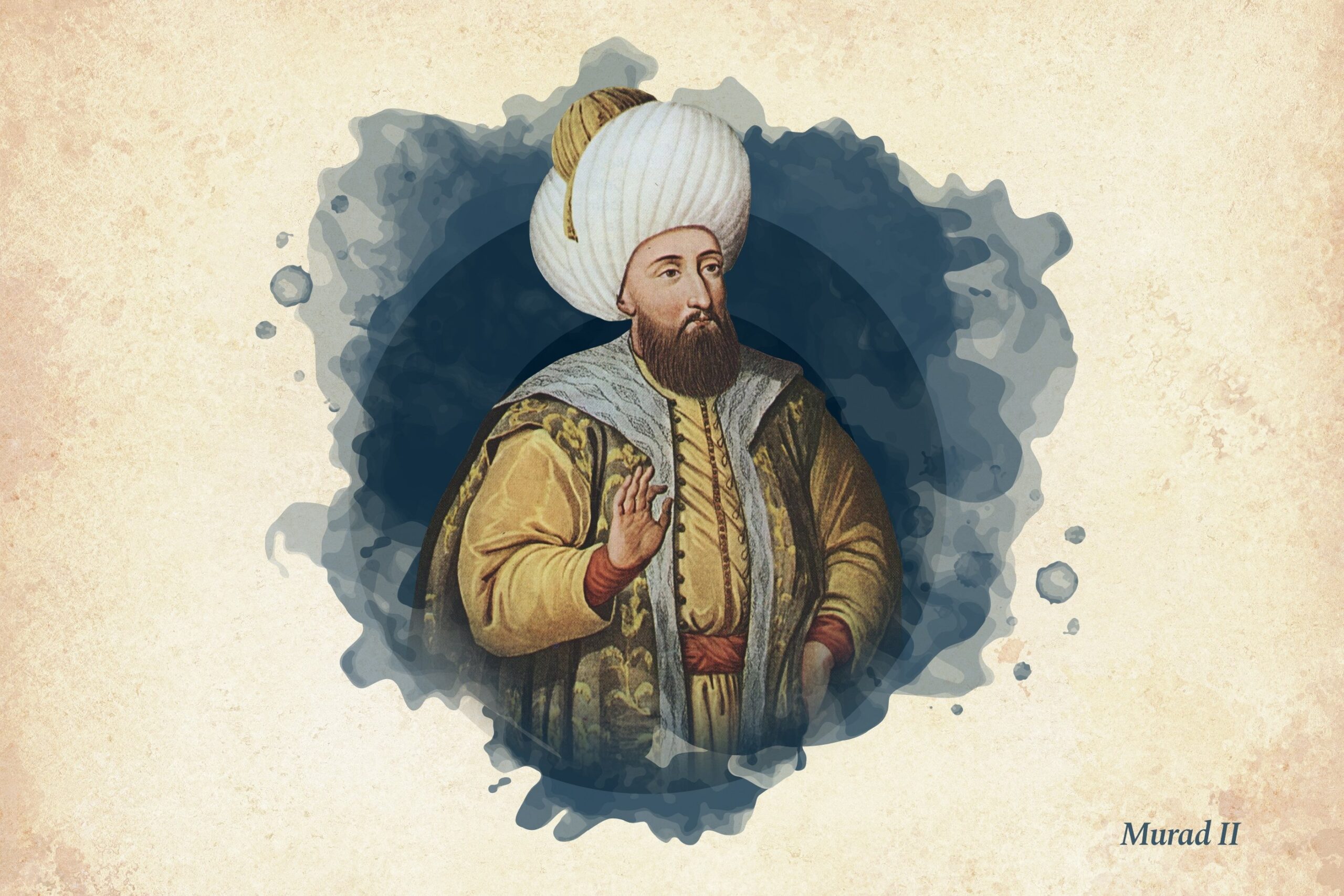
Under Murad II a large part of the western principalities rejoined the Ottoman lands. The Karamanids, however, remained strong. For this reason unity was not complete under Murad II. For his struggles in the Balkans, you can read our article on the reign of Murad II and the Battle of Varna.
Mehmed II: The Sultan Who Largely Achieved Unity
After the conquest of Istanbul, Mehmed II turned to the last strong principalities on the peninsula. The Candarids on the Black Sea coast came to a complete end in his reign, in 1461. Sinop and the Kastamonu region thus came under direct Ottoman rule.
The real great rival was the Karamanids. According to the TDV Encyclopedia of Islam, Ottoman forces took Gevele in April 1468 and then Konya. The principality, which had existed since 1256, came to an end in 1474. In 1473 Mehmed II also defeated the Aq Qoyunlu ruler Uzun Hasan at Otlukbeli, largely weakening the threat in the east.
Almost the whole peninsula thus came under Ottoman rule. In the southeast, however, the Dulkadirids and the Ramazanids, dependent on the Mamluks, were still separate powers.
Selim I: The Sultan Who Made Unity Final
Selim I defeated the Safavids at Chaldiran in 1514 and secured the eastern frontier. On his way back he sent an army against Alaüddevle Bey of the Dulkadirids, who had not joined the campaign. According to the TDV Encyclopedia of Islam, Alaüddevle was defeated and killed on 13 June 1515 at Ördekli, between Göksun and Andırın.
Selim placed Şehsuvaroğlu Ali Bey, loyal to the Ottomans, at the head of the principality. The remaining Turkish principalities thus came under Ottoman sovereignty in practice. When Ali Bey was killed in 1522, the Dulkadir lands were turned into a province centred on Maraş.
The Egyptian campaign that followed closed the last gap in the southeast. The Mamluks were defeated at Marj Dabiq in 1516 and at Raydaniyya on 22 January 1517. The Mamluk protection on which these principalities relied thus ended, and the Ramazanids too became a principality dependent on the Ottomans. According to the encyclopedia, Mahmud Bey of the Ramazanids fought on the left wing of the Ottoman army at Raydaniyya and lost his life in the fighting; Kubad Bey was appointed in his place. For an overall assessment of Selim’s reign, see our article on the Ottoman state under Selim I.
How Did the Principalities Join the Ottomans?
The principalities did not always join the Ottoman lands through war. The sources point to four different ways. This variety shows that the state used its military power together with political and legal means.
| Way | Example | Explanation |
|---|---|---|
| Intervening in a succession dispute | Karesi | Orhan Bey took control of the region by exploiting the internal strife in the principality. |
| Marriage and dowry | Germiyan | Süleyman Şah gave Kütahya, Simav, Emet and Tavşanlı as a dowry at his daughter’s wedding. |
| Purchase | Hamidids | Murad I bought places such as Beyşehir, Akşehir, Yalvaç and Seydişehir from Hüseyin Bey. |
| Bequest | Germiyan | Yakub Bey, the last bey of Germiyan, left his country to the Ottomans after his death. |
| War | Aydın, Saruhan, Menteşe, Karaman | Bayezid I and later sultans took these principalities through military campaigns. |
According to the TDV Encyclopedia of Islam, Yakub Bey went to Edirne in 1428 and informed Murad II that he was leaving his country to him after his death. The principality came to an end with this bequest in 1429. The lands that came as a dowry, meanwhile, are regarded as the first serious step of Ottoman influence over Germiyan.
These methods show that the early sultans pursued a patient policy of expansion. Economic and dynastic ties were established first, and military force came into play afterwards. For the other reasons behind the state’s rapid growth, see our article on why the Ottoman state grew so quickly.
Points Often Confused in Exams
This topic is often asked in exams, and confusion arises mostly on two points. The first is overlooking the word that sets the measure in the question. The expression “for the first time” points to Bayezid I, while “definitively” points to Selim I.
The second confusion concerns Murad II. Murad II recovered some of the principalities lost during the Interregnum but did not complete unity. The Karamanids survived in his reign, and only Mehmed II put an end to this principality.
Moreover, “the first principality to join the Ottomans” is a separate question, and its answer is the Karesi principality. For this topic, see our article on the first principality to join the Ottomans.
Frequently Asked Questions
Who was the first Ottoman sultan to achieve Anatolian Turkish political unity?
Bayezid I (Yıldırım). Between 1389 and 1398 he achieved unity for the first time by taking the western Anatolian principalities and the Karamanids.
Who definitively achieved Anatolian Turkish political unity?
Selim I. By bringing the Dulkadirids under Ottoman sovereignty in 1515, he definitively achieved Turkish political unity in Anatolia.
Did Murad II achieve Turkish political unity?
No. Murad II recovered some lost lands, but strong principalities such as the Karamanids remained independent in his reign.
Which was the last Turkish principality to join the Ottomans?
The Ramazanids remained a principality dependent on the Ottomans from the reign of Selim I onwards. According to the TDV Encyclopedia of Islam, there is a report that Pir Mansur gave up the principality in 1608; the principality is accepted as having ended around this time.
Conclusion
The first Ottoman sultan to achieve Anatolian Turkish political unity was Bayezid I, but the unity he built fell apart at Ankara. It became permanent only when Mehmed II ended Karaman and Selim I subjugated the Dulkadirids. This long process shows that the state’s power in these lands was shaped not by a single victory but by a century of struggle.
Sources
- TDV Encyclopedia of Islam, entry “Bayezid I”
- TDV Encyclopedia of Islam, entry “Ankara Savaşı” (Battle of Ankara)
- TDV Encyclopedia of Islam, entry “Karamanoğulları”
- TDV Encyclopedia of Islam, entry “Dulkadıroğulları”
- TDV Encyclopedia of Islam, entry “Ramazanoğulları”
- Halil İnalcık, The Ottoman Empire: The Classical Age 1300–1600.






1 thought on “The First Ottoman Sultan Who Ensured Anatolian Turkish Political Unity”