Under Selim I, the Ottoman Empire strengthened its political unity in Anatolia during his brief eight-year reign, reshaped its eastern frontier in response to Safavid pressure, brought Syria and Egypt under its rule, and thereby moved from a Balkan-centered power toward a broader imperial order encompassing the Arab lands and the holy cities.
Quick Summary
- Selim I ascended the throne in 1512 and ruled until 1520.
- The victory at Chaldiran significantly reduced Safavid pressure on the eastern frontier.
- The victory at Turnadag ended the political existence of the Dulkadirid Principality.
- The victories at Marj Dabiq and Ridaniya brought Syria and Egypt under Ottoman rule.
- The state developed into a broader, more polycentric structure with the addition of the Arab provinces.
- Ottoman protection over the Hejaz strengthened the empire’s prestige in the Islamic world.
Table of Contents
- Selim I’s Accession and Early Priorities
- The Safavid Struggle and the Impact of Chaldiran
- The Strengthening of Political Unity in Anatolia
- The Mamluk Campaigns and the Annexation of Arab Lands
- How Did Administration, Finance, and the Military System Change?
- Position in the Islamic World and the Caliphate Debate
- The Long-Term Consequences of Selim I’s Reign
- Conclusion
Selim I’s Accession and Early Priorities
Selim I ascended the throne in 1512 after Bayezid II. His accession came at a time of intensifying dynastic rivalry. The presence of rivals such as Prince Ahmed and Prince Korkut posed a serious challenge to central authority. The new ruler first moved to bring this rivalry to an end.
This process was not merely a struggle for the throne. It also determined the direction of the empire’s foreign policy. In particular, the Safavid Empire’s influence over Qizilbash communities in Anatolia was regarded by the government in Istanbul as a political and military threat. Feridun Emecen’s assessments in the TDV Encyclopedia of Islam likewise show that this eastern question was one of the period’s central tensions.
Why did Selim I turn east?
For Selim I, eastern policy was an area in which frontier security and domestic order could not be separated. The influence of the Safavid ruler Shah Ismail in Anatolia concerned the central government. For this reason, the sultan initially prioritized Iran and Eastern Anatolia rather than the Balkans. The empire’s strategic priorities therefore shifted temporarily eastward.
This choice also altered the broader trajectory of Ottoman expansion. The Balkan- and Mediterranean-focused policy of Mehmed II’s reign was not abandoned altogether. However, securing the eastern frontiers now became more decisive. This transformation can be assessed within the framework of Ottoman sultans’ strategies of state administration.
The Safavid Struggle and the Impact of Chaldiran
The Battle of Chaldiran in 1514 was one of the most important military developments of the period. The Ottoman army made effective use of firearms and artillery. Shah Ismail’s forces were defeated, and Safavid political influence in Anatolia was significantly curtailed. The victory shifted the balance of power in Eastern Anatolia in Istanbul’s favor.
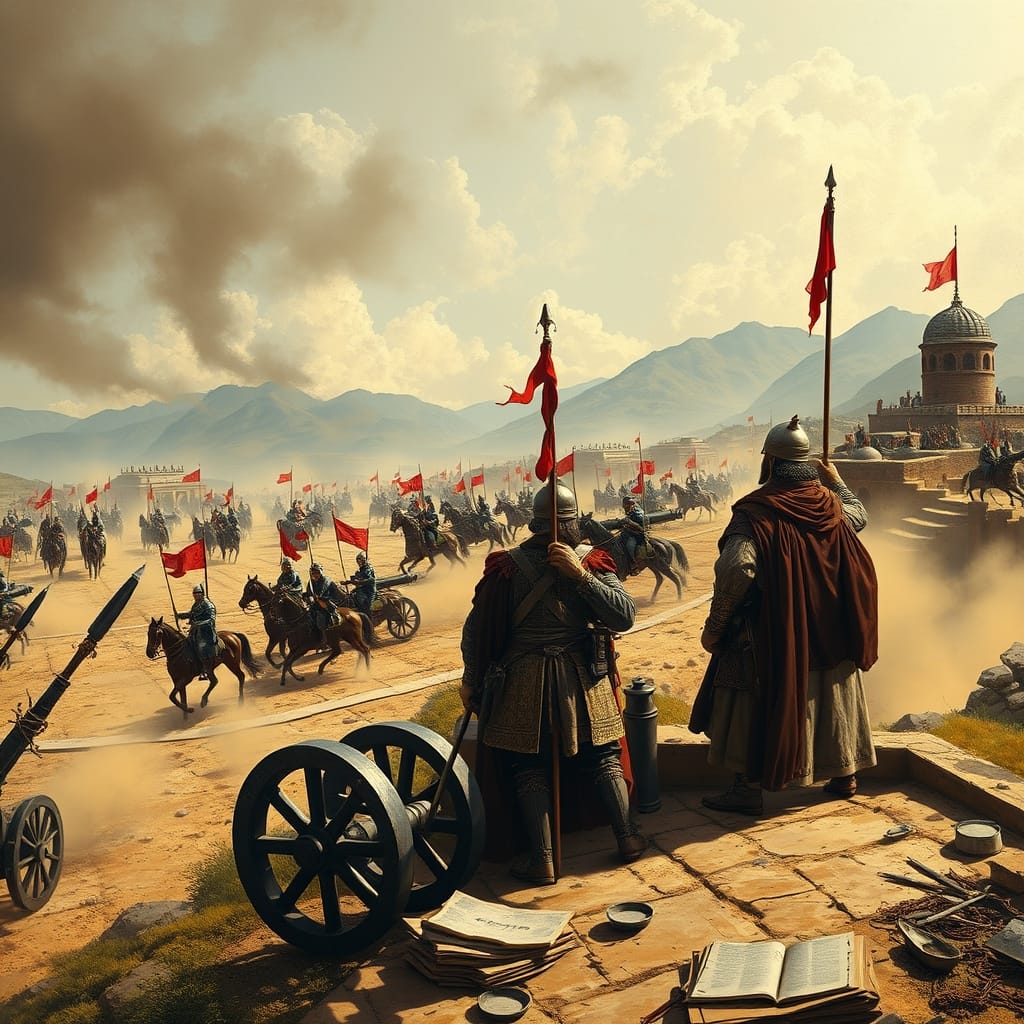
Chaldiran should not be viewed merely as a pitched battle. After the victory, Tabriz briefly fell into Ottoman hands. Nevertheless, the entire region was not placed under permanent control. Even so, an important foundation was laid for strengthening Ottoman influence in Eastern Anatolia.
Selim I and eastern policy after Chaldiran
After the victory, Selim I established more systematic relations with local powers in the east. Some Kurdish beys cooperated with the Ottoman administration. Figures such as Idris-i Bitlisi played a role in establishing contact between local beys and the central government. Thus, political accommodation as well as military occupation was used in the frontier region.
These developments provide a broader historical framework for understanding the Battle of Chaldiran and the Ottoman-Safavid struggle. The strengthening of the eastern frontier also laid the foundations for the Ottoman-Iranian rivalry that would continue into the following century. The conflict did not end, but a new frontier order emerged.
The Strengthening of Political Unity in Anatolia
The second major consequence of the eastern campaigns was the reduction of political fragmentation in Anatolia. In 1515, the Dulkadirid Principality was defeated at the Battle of Turnadag. This development ended the rule of an independent dynasty in Marash and its surrounding region. As a result, Ottoman central authority in Anatolia became more integrated.
The Dulkadirids had long served as a buffer power between the Ottomans and the Mamluks. The principality’s elimination removed this buffer zone. Consequently, the Ottoman Empire and the Mamluk Sultanate became direct neighbors. This situation created the geopolitical conditions for the campaigns into Syria and Egypt that would begin shortly afterward.
The strengthening of Anatolian unity meant more than territorial gain. Central control over taxation, military recruitment, and local administration also expanded. By incorporating the new regions into the classical sanjak and province system, the state sought to increase administrative integration. This process can be regarded as a distinct stage within the characteristics of the Ottoman period of expansion.
The Mamluk Campaigns and the Annexation of Arab Lands
The Mamluk campaign that began in 1516 changed the geographic scale of the state much more dramatically. The Mamluk army was defeated at the Battle of Marj Dabiq. Mamluk rule over Aleppo, Damascus, and Palestine then collapsed. Ottoman forces quickly took control of major Syrian cities.
In 1517, the Battle of Ridaniya proved decisive in breaking Mamluk resistance in Egypt. Cairo was captured, and the Mamluk Sultanate came to an end. Egypt, Syria, and Palestine were thus incorporated into the Ottoman political system. These conquests greatly increased the empire’s population, sources of revenue, and administrative responsibilities.
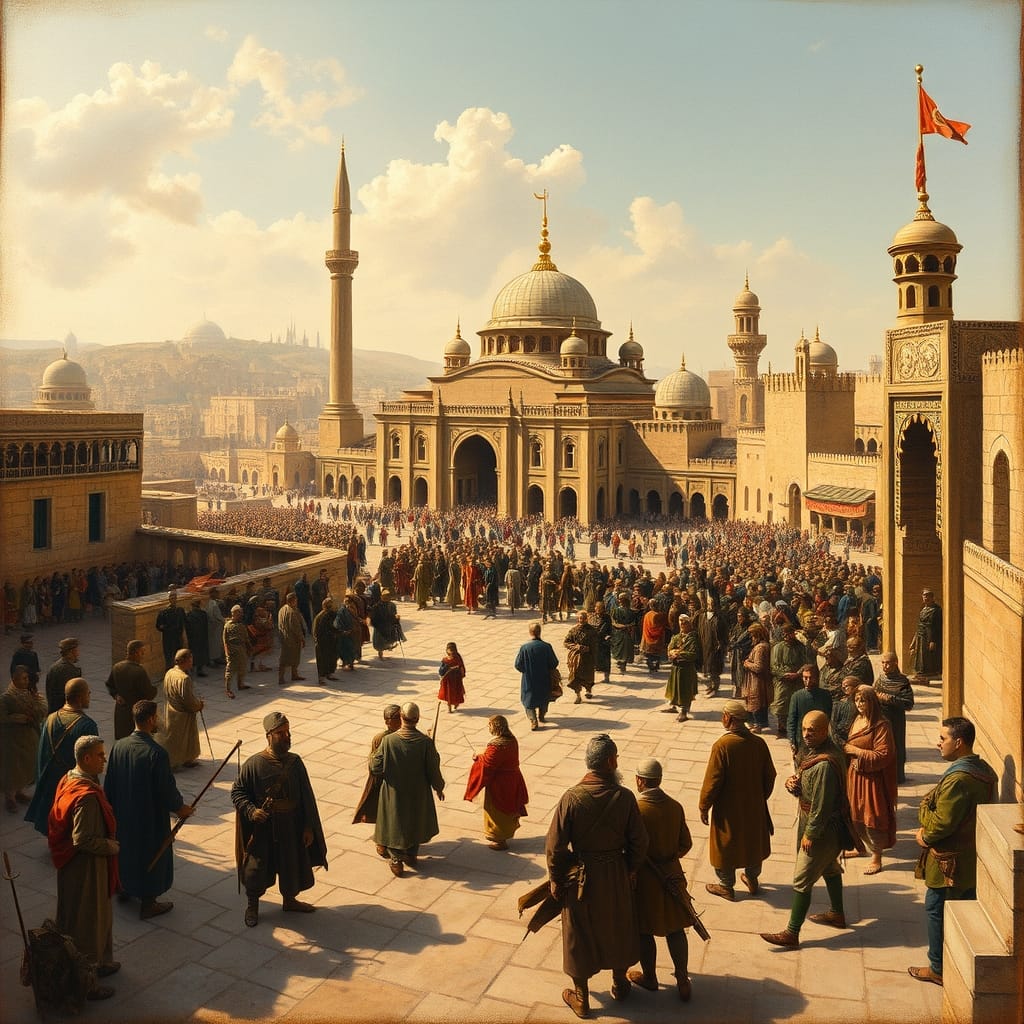
Why was Egypt important during the reign of Selim I?
Egypt was not merely a wealthy agricultural region. It was a strategic center connected to the trade routes of the Red Sea, the Eastern Mediterranean, and the Indian Ocean. Cairo was also a major city of scholarship, commerce, and administration. The incorporation of Egypt broadened the empire’s economic and diplomatic horizons.
Meanwhile, the Portuguese presence in the Indian Ocean created a new challenge for the spice trade. The Ottoman administration now had to concern itself more directly with the security of Red Sea routes. This development becomes clearer when considered together with the impact of the Age of Exploration on the Ottoman Empire.
How Did Administration, Finance, and the Military System Change?
The new territories confronted the central administration with different administrative traditions. The established bureaucracies of Syria and Egypt were not completely dismantled. In many places, the Ottomans adapted existing fiscal and local practices to their own system. This flexibility helped the empire govern the newly conquered, extensive regions more quickly.
Egypt’s tax revenues were important for the state treasury. In addition, the Syrian cities, pilgrimage routes, and regional trade networks also became matters of central concern. The state was no longer a power dependent only on revenues from the Balkans and Anatolia. The Arab provinces became important components of the fiscal system.
Militarily, the campaigns once again demonstrated the importance of artillery and Janissary forces. Regular firearm-equipped units provided a decisive advantage at Chaldiran and in the wars against the Mamluks. Yet an army alone was not enough to make the victories permanent. In the new provinces, an administrative network was established through judges, governors-general, sanjak governors, and fiscal officials.
This administrative expansion is also significant in terms of the Imperial Council and the Ottoman system of government. The center now had to govern more diverse social and economic regions under a single political framework. As a result, the state’s bureaucratic capacity and provincial administration became more complex.
Position in the Islamic World and the Caliphate Debate
With the conquest of Egypt, the Hejaz region, to which Mecca and Medina belonged, also entered the Ottoman sphere of rule. The Sharif of Mecca’s declaration of allegiance enhanced the sultan’s prestige as protector of the holy cities. This development clearly strengthened the Ottoman dynasty’s political weight in the Islamic world.
However, the classical narrative that “the caliphate was ceremonially transferred to the Ottomans in 1517” is disputed in modern historiography. Halil Inalcik and other scholars emphasize that Ottoman sultans used the title of caliph at different times. The significance of 1517 is more closely associated with the conquest of Egypt and the establishment of Ottoman protection over the Hejaz.
Therefore, when evaluating Selim I’s reign, symbolic leadership should be distinguished from formal institutionalization. The sultan’s standing in the Islamic world rose markedly. Yet projecting the caliphal discourse developed in later centuries directly back onto 1517 can lead to anachronistic conclusions. The issue can be examined in greater detail through the debate over the transfer of the caliphate to the Ottomans.
The Long-Term Consequences of Selim I’s Reign
The most enduring consequence of Selim I’s reign was the expansion of the empire’s geographic and political center of gravity. The state was no longer a power limited to the Balkans, Anatolia, and the Black Sea region. Its connection to Syria, Egypt, and the Hejaz carried Ottoman politics much more forcefully into the Eastern Mediterranean and the Red Sea.
This expansion also laid a strong foundation for the great campaigns of Suleiman I’s reign. New sources of revenue, secured eastern regions, and increased political prestige were passed on to the next reign. This continuity becomes clearer when compared with the transformation of the Ottoman Empire under Suleiman I.
Caroline Finkel approaches Ottoman history through long-term institutional transformations. From this perspective, Selim’s reign was not merely a period of rapid conquests. It was also a time when the state’s capacity to govern new peoples, cities, and economic regions was tested. The administrative adaptations that followed the conquests made the empire’s imperial character more pronounced.
Ismail Hakki Uzuncarsili’s classic works also devote extensive attention to the military and political importance of this period. In particular, the elimination of the Mamluks fundamentally altered the balance of power in the Near East. The Ottoman Empire was now a principal political actor in the Arab lands, alongside its rivalry with the Safavids and European powers. This position directly shaped foreign policy in the centuries that followed.
Conclusion
In conclusion, during his short reign from 1512 to 1520, Selim I significantly changed the direction of the Ottoman Empire. Central authority in Eastern Anatolia was strengthened, the Mamluk Sultanate was eliminated, and Syria and Egypt were incorporated into the empire. The state thus evolved into an imperial order governing a broader geography and wielding greater political influence in the Islamic world.
Sources
- Feridun Emecen, TDV Encyclopedia of Islam, “Selim I” entry.
- Ahmet Ugur, TDV Encyclopedia of Islam, “Selimname” entry.
- Ismail Hakki Uzuncarsili, Ottoman History.
- Caroline Finkel, Osman’s Dream: The Story of the Ottoman Empire 1300–1923.
- Halil Inalcik and Donald Quataert, An Economic and Social History of the Ottoman Empire.
- Turkish Historical Society