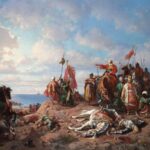
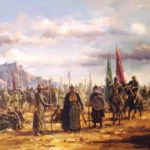
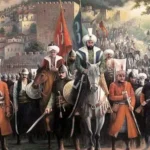
The characteristics of the Ottoman rise period describe the process during which the state reached its peak in political, military, and cultural terms. This phase of Ottoman history lasted from the mid-15th century to the early 17th century. Among the characteristics of the Ottoman rise period, the expansion of territory, the strengthening of central authority, and major advances in art and architecture hold an important place.
This process, which began with the conquest of Istanbul by Mehmed II, transformed the Ottoman State into a world empire. During this period, the Balkans, Anatolia, and the Arabian Peninsula were largely incorporated into Ottoman territory. Among the characteristics of the Ottoman rise period is also the establishment of a well-organized and powerful army structure.
During the rise period, sultans such as Suleiman the Magnificent developed the legal and justice systems and strengthened state institutions. Great advances were also achieved in art, literature, and science at the Ottoman court. The characteristics of the Ottoman rise period are as follows:
- The process that began with the conquest of Istanbul
- Expansion of territory and transformation into an empire
- Establishment of strong central authority
- Reorganization of the army structure
- Development of the legal and justice system
- Advances in art, architecture, and literature
- Economic prosperity and control over trade routes
Sultans of the Rise Period
The Ottoman rise period was not merely an era of increasing conquests, but also a process in which state institutions matured and the empire’s identity was strengthened. At the beginning of this period, Mehmed II (1451-1481) ended the Byzantine Empire by conquering Istanbul in 1453, and subsequently turned the Ottoman State into a great empire through reforms that reinforced central authority. Notable developments during Mehmed II’s reign include the establishment of dominance over the Black Sea trade routes, the elimination of the Empire of Trebizond, and continued advances in the Balkans.
Bayezid II (1481-1512) stood out mainly for preserving internal order, advancing naval power, and supporting cultural activities. Although the Cem Sultan affair affected the foreign policy of the period, the Ottoman navy continued to grow stronger. Selim I (1512-1520), in his short reign, expanded Ottoman borders to the east and south through the victories of Chaldiran, Marj Dabiq, and Ridaniye, establishing Ottoman rule over Syria, Egypt, and the Hejaz. These developments increased the state’s political weight in the Islamic world.
Suleiman the Magnificent (1520-1566) was the longest-reigning sultan of the Ottoman rise period. With the successes of Belgrade, Rhodes, and Mohács, great supremacy was achieved in Europe; his legal reforms are the reason behind his title “the Lawgiver.” During the reign of Selim II (1566-1574), Cyprus was conquered, and the navy continued to be influential in Mediterranean politics. Under Murad III (1574-1595), Ottoman-Safavid conflicts continued, resulting in some territorial gains in the east. However, during this period, court expenditures, military costs, and administrative problems also began to become more pronounced.
What Happened During the Ottoman Rise Period?
The Ottoman rise period is regarded as the era in which the state experienced its golden age in political, military, and cultural terms. The Ottoman rise period began with the conquest of Istanbul and enabled the Ottomans to become a global power. During this process, many important developments took place, and the state’s administrative structure became more systematic.
The first major development was the end of the Byzantine Empire through the conquest of Istanbul. This achievement brought the Ottomans prestige both in the Islamic world and in Europe. Subsequently, conquests in Anatolia and the Balkans gained pace, and the state’s borders expanded significantly.
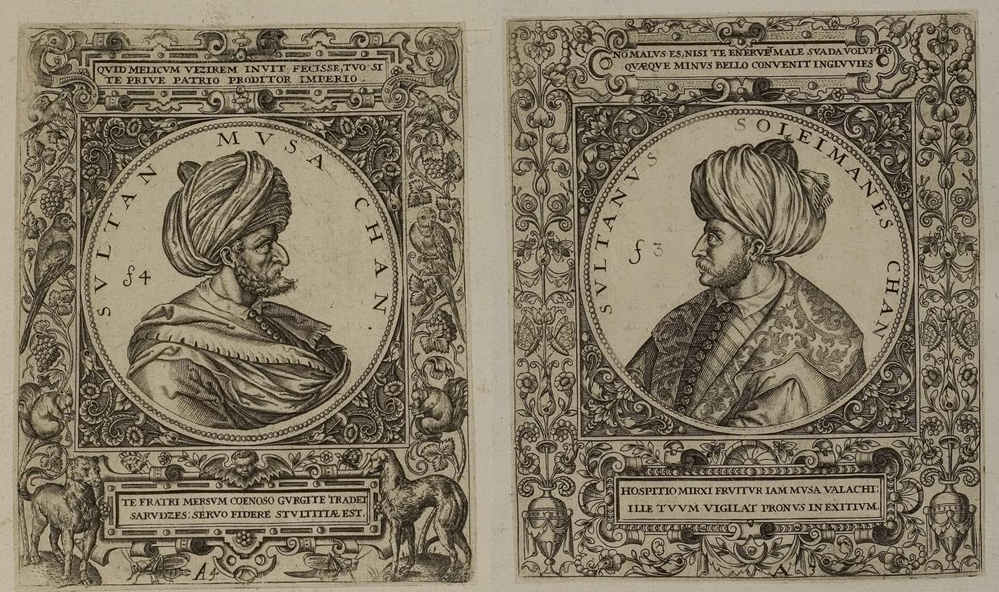
Throughout the Ottoman rise period, a strong central army was established, and the effectiveness of the Janissary Corps was increased. With the development of naval power, the Ottomans became an important sea power in the Mediterranean. What happened during the Ottoman rise period can be summarized as follows:
- The conquest of Istanbul
- Expansions in Anatolia and the Balkans
- Strengthening of the Janissary Corps
- Becoming a naval power in the Mediterranean
- Development of the legal system
- The golden age of art and architecture
- The achievement of economic prosperity
These developments also had significant effects on social life. With the conquests, new cities were incorporated into Ottoman administration, and population growth and urbanization accelerated in major centers, especially Istanbul. The state sought to preserve social order by governing different religious and ethnic communities within the framework of the millet system. The spread of the timar system both ensured the continuity of military power in the provinces and helped supervise peasant production. The distribution of timars in the Balkans and Anatolia made it easier for the sipahis to remain loyal to central authority. Thus, the Ottoman rise period was not merely a growth centered on the palace and the army, but a comprehensive transformation process that also affected the order of cities, villages, and the provinces.
Military Expansion: Major Conquests and Wars
The Ottoman rise period was one in which military successes directly increased the state’s political power. The Conquest of Istanbul (1453) was the most decisive event of this process; the Byzantine Empire came to an end, and the Ottoman capital was moved to a center of very high strategic and symbolic value. The Otranto Expedition (1480) during the reign of Mehmed II is notable in showing that the Ottomans could reach as far as the coasts of Italy; although the expedition did not turn into long-term control, it caused great reverberations in Europe.
During the reign of Selim I, the Battle of Chaldiran (1514) established Ottoman superiority over the Safavids and strengthened dominance over eastern Anatolia. The Battle of Marj Dabiq (1516) broke Mamluk power in Syria; the Battle of Ridaniye (1517) resulted in Egypt coming under Ottoman rule. Thus, the Ottoman State rose to a much more influential position in the Eastern Mediterranean and the Islamic world.
During the reign of Suleiman the Magnificent, the Conquest of Belgrade (1521) opened an important gateway for campaigns into Central Europe. The Conquest of Rhodes (1522) increased Ottoman security in the Eastern Mediterranean. The Battle of Mohács (1526) largely ended the political power of the Kingdom of Hungary and expanded Ottoman influence in Europe. The Naval Victory of Preveza (1538) consolidated the supremacy of the Ottoman fleet under the command of Hayreddin Barbarossa Pasha in the Mediterranean. The Siege of Szigetvár (1566) was Suleiman’s last campaign; the fortress was taken, but the sultan died during the campaign. These wars and conquests clearly demonstrate the military power of the period.
Sources of Economic Power: Trade Routes and the Timar System
The Ottoman rise period is notable not only for military successes but also for the expansion of economic resources. After the conquest of Istanbul, the Ottomans set out to control the key points of Black Sea and Mediterranean trade. The seizure of strategic regions along the Silk and Spice Roads increased the state’s customs revenues and contributed to the revival of trade centers. With the incorporation of Syria, Egypt, and the Hejaz into Ottoman territory, Eastern Mediterranean trade and Red Sea connections became even more important.
Relations with European states such as Venice, Genoa, and later France were an important part of economic policy in Mediterranean trade. The capitulations granted to France in 1535 were initially regarded as a means for the Ottomans to establish a balance against the Habsburgs in European politics. Although these privileges provided political and commercial benefits at first, in later centuries they became one of the factors that increased European states’ influence over the Ottoman economy.
The foundation of the economic order rested on the timar-zeamet-has system and the state land regime. While the bare ownership of land was considered to belong to the state, the peasant who cultivated it worked the land, and the timar-holding sipahi raised soldiers in return for tax revenues. Has revenues were allocated to high-ranking state officials, zeamets to mid-level administrators, and timars to sipahis. The state treasury was fed by sources such as tithes, poll taxes, the jizya, customs duties, mining revenues, and war spoils. This structure created a strong bond between central authority and the provincial economy.
A Golden Age in Culture, Art, and Architecture
The Ottoman rise period is also considered one of the empire’s most brilliant phases in culture and art. The most important architect of this era was Mimar Sinan. The Şehzade Mosque is regarded as one of his early masterpieces in Istanbul. The Süleymaniye Mosque reflects the political splendor of Suleiman the Magnificent’s reign and the maturity of classical Ottoman architecture. The Selimiye Mosque in Edirne, which Sinan called his “masterpiece,” is considered the pinnacle in terms of architectural balance, dome arrangement, and aesthetic unity.
In literature, Divan poetry showed great development. Bâkî was one of the most powerful poets known in the court circles of Suleiman’s reign in particular. Fuzûlî, with his works in Turkish, Arabic, and Persian, was influential not only in Ottoman lands but also in the wider Islamic cultural world. Hayâlî is also counted among the important Divan poets of the period. This literary production was strengthened by court patronage, madrasa culture, and the support of urban elite circles.
The art of miniature also developed during the rise period. Nakkaş Osman is known especially for his works depicting historical events and portraits of sultans. Matrakçı Nasuh is an important figure known for his miniatures depicting campaign routes and cities. In calligraphy, Şeyh Hamdullah is regarded as one of the founders of the classical Ottoman calligraphic style, while Ahmed Karahisarî stood out with different writing styles. The art of illumination (tezhip) was used to embellish manuscripts, while İznik tiles, with their blue, white, turquoise, and red tones in mosques, palaces, and tombs, became one of the symbols of Ottoman aesthetics.
Law and State Administration: Suleiman’s Reforms
The Ottoman rise period was also an era in which institutionalization strengthened in terms of law and state administration. The Kanunname-i Âl-i Osman, shaped during the reign of Mehmed II, contained important provisions regarding dynastic order, central administration, and state duties. During the reign of Suleiman the Magnificent, customary law was made more systematic, and regulations were introduced in taxation, land, and criminal practices. For this reason, the sultan was known as “the Lawgiver” not only for his military successes but also for his regulatory role in law.
At the center of state administration was the Imperial Council. Officials such as the grand vizier, viziers, the kazaskers (chief military judges), the defterdar (treasurer), and the nişancı (chancellor) took part in the Council. The grand vizier, as the absolute deputy of the sultan, was the most important representative of executive power. While the viziers assisted the grand vizier in state affairs, the kazaskers were responsible for the legal and educational affairs of the military class. The Şeyhülislam was influential as the authority issuing religious and legal opinions (fatwas), especially on religious and legal matters. The defterdar dealt with financial affairs, while the nişancı was responsible for drafting decrees and charters.
In provincial administration, the system of beylerbeyliks (provinces) and sanjaks was of great importance. Beylerbeys were responsible for governing large provinces, while sanjak beys governed smaller administrative units. Kadis (judges) had the authority to make decisions in their localities on matters such as the administration of justice, inheritance, trade, marriage, endowments (vakıf), and public order. In this way, Ottoman administration established a hierarchical, record-based system extending from the center to the provinces. This structure made it easier to govern different regions under the umbrella of the empire.
What Marks the Beginning and End of the Rise Period?
The rise period is one of the most brilliant periods in Ottoman history and is defined by specific starting and ending points. The rise period began when Mehmed II conquered Istanbul in 1453. This conquest marked the beginning of the Ottomans’ transformation from a regional power into a global empire.
The conquest of Istanbul not only ended the Byzantine Empire but also brought great cultural, economic, and political benefits to the Ottomans. With the conquest, the Ottomans became a bridge between the East and the West.
Throughout the rise period, the Ottomans continued to expand in the Balkans, the Middle East, and North Africa, and built up naval power in the Mediterranean and the Indian Ocean. During this period, the central structure of the state was consolidated, and the army and navy were modernized. The beginning and end of the rise period are as follows:
- Beginning: The conquest of Istanbul in 1453 (reign of Mehmed II)
- End: The death of Sokollu Mehmed Pasha in 1579
After this date, the Ottoman Empire transitioned into the stagnation period. Although successes were occasionally achieved in the 17th century, the Ottomans could no longer maintain their former strength.
The assassination of Sokollu Mehmed Pasha in 1579 is one of the important symbolic dates used to mark the end of the rise period. In fact, the Ottoman State did not collapse immediately after this date and preserved its vast territories and great military power for a long time. However, signs of weakening in central administration, unrest among the kapıkulu (standing) troops, rising court expenditures, and deterioration in provincial order became increasingly visible. From the late 16th century onward, the prolonged Ottoman-Habsburg and Ottoman-Safavid wars placed pressure on the treasury. During the same period, the price revolution caused by the influx of silver from Europe increased structural problems such as currency fluctuations and inflation. These developments show that the transition to the stagnation period should be explained not by a single event, but by interlinked political, military, and economic problems.
Frequently Asked Questions
How many years did the Ottoman rise period last?
The Ottoman rise period is generally considered to have begun with the Conquest of Istanbul in 1453 and to have ended with the death of Sokollu Mehmed Pasha in 1579. According to this view, the period lasted approximately 126 years. Although some historians use different end dates, the 1453-1579 range is the chronology most commonly preferred, especially in school curricula and general historical narratives.
Who was the most powerful sultan of the rise period?
Suleiman the Magnificent is most often cited as the most powerful sultan of the rise period. During his long reign between 1520 and 1566, major successes such as Belgrade, Rhodes, and Mohács were achieved, and the Ottoman State became a great power in European, Mediterranean, and Middle Eastern politics. His legal reforms are also influential in this assessment.
How far did Ottoman borders extend during the rise period?
During this period, Ottoman borders expanded to include the Balkans, Anatolia, Syria, Egypt, the Hejaz, parts of Iraq, the coasts of North Africa, and Central Europe. Under Suleiman, Ottoman influence over Hungary increased, and the navy became a major force in the Mediterranean. Thus, the Ottomans acquired the appearance of a great empire spread across three continents.
Which art forms developed during the rise period?
During the Ottoman rise period, architecture, Divan literature, miniature painting, calligraphy, illumination, and tile art all showed great development. Mimar Sinan’s mosques are considered the pinnacle of classical Ottoman architecture. Poets such as Bâkî and Fuzûlî stood out in literature, Nakkaş Osman and Matrakçı Nasuh in miniature painting, and İznik tiles in the decorative arts.
Why is 1579 considered the end of the rise period?
The year 1579 is regarded as a symbolic end date due to the assassination of Sokollu Mehmed Pasha. Sokollu was an important statesman who, through his powerful grand vizierate, maintained balance in central administration. After his death, administrative problems, military expenditures, kapıkulu rebellions, prolonged wars, and economic fluctuations became more pronounced, and the signs of the stagnation period increased.