The narh system was the maximum selling price that the Ottoman state set for many goods and services, from bread and meat to cloth and labor. The kadı fixed the narh, the muhtesip watched the market, and guild representatives took part in the cost calculation. In this article we look at how the official narh was set, the profit limit allowed to tradesmen, how inspections worked and why the system came to an end.
Quick Summary
- The state set a price ceiling, the narh, for basic goods and services.
- The kadı issued the narh, the muhtesip monitored the market and guild stewards helped calculate costs.
- Bread, meat and vegetable prices changed with the seasons and were reset in times of war and famine.
- The legal profit of tradesmen ranged from 10 to 15 percent; the sources call this “eleven for ten”.
- Tradesmen who broke the narh could face the bastinado, prison or even exile.
- The practice was abolished for everything except bread in the late 1850s.
Contents
- Short answer
- Why did the state intervene in prices?
- How was the narh set in five steps?
- Seasonal and emergency price settings
- Tradesmen’s profit: the “eleven for ten” rule
- What happened to tradesmen who broke the rules?
- What do the narh registers tell us?
- How did the practice end?
- Frequently asked questions
What Is the Narh System? A Short Answer
The word “narh”, of Persian origin, simply means price. In Ottoman usage it referred to the upper price limit that the state set for a good or a service. The narh system was the established practice that decided who set this price, on what information and how often.
At the heart of the system stood the kadı, the judge of the town. Drawing on the observations of the muhtesip, who knew the market best, and on cost figures from guild representatives, the kadı announced the narh. The aim was both to protect the public from high prices and to let tradesmen earn a fair return for their labor.
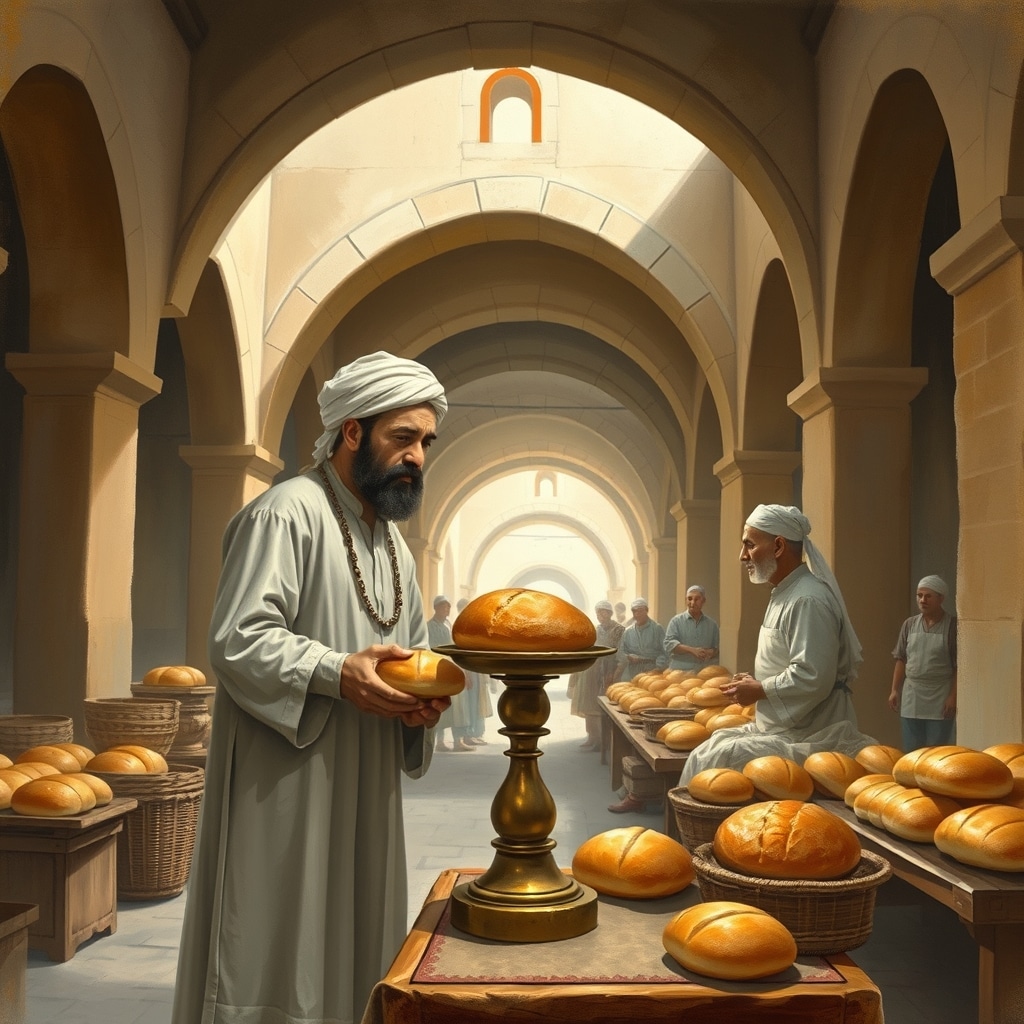
Why Did the Ottomans Intervene in Prices?
Islamic scholars did not agree on whether the state should intervene in prices. Some considered a price ceiling permissible, while others thought it would encourage a black market. A hadith stating that it is God who raises and lowers prices also shaped this debate.
The Ottomans, however, took the matter very seriously. Although the narh was not enforced with the same rigor everywhere, sultans and grand viziers regarded price control as an important affair of state. The best-known example is the great inspection tour that grand viziers made through the markets on Wednesdays. On these tours officials checked whether tradesmen observed the rules on quality, public health and prices, and those who did not were punished on the spot.
Price control was also directly tied to feeding the cities. In Istanbul, one of the most populous cities in the world, giving people access to staple food at reasonable prices was one of the state’s main concerns. The narh system was the institutional answer to this concern.
How Did the Narh System Work? Setting the Price in 5 Steps
The official price was not left to the whim of a single official. The narh was set through a process that combined market information, cost calculation and official approval. This process can be summarized in five steps.
1. The muhtesip monitored the market
To set a price, one had to know how the market was moving. The person best placed to do this was the muhtesip, also called the ihtisap ağası or ihtisap emini in Ottoman sources. With his assistants, known as kol oğlanları, the muhtesip constantly toured the bazaar and the market. This made him the kadı’s most important helper in fixing the narh.
Some advice books on statecraft even argued that it would be better for the muhtesip to set prices himself. In practice, however, the muhtesip could not announce a narh without consulting the kadı.
2. The guilds were consulted
The voice of the trades concerned was also heard when a price was set. Officials met with the kethüda (steward) and the yiğitbaşı (deputy) of each guild. The narh for meat and dairy products was decided at a meeting attended by the ağa of the Janissaries or the sekbanbaşı, the chief butcher of the palace, farm owners and the steward of the butchers. For bread, the superintendent of grain, the steward of the bakers and the guild’s senior masters were present.
3. A test batch was made and costs were calculated
Making a çeşni meant finding out, by trial, how much raw material a product required. The price of bread was set by making such a test batch according to the type of flour it contained. For manufactured goods, the quantity and value of the raw materials were also taken into account. The prices of precious fabrics were found in the same way.
4. The kadı announced the narh and it was entered in the register
The final decision belonged to the kadı; setting prices was among the duties of the Ottoman kadı. Istanbul was made up of four judicial districts: the walled city proper (nefs-i İstanbul), Eyüp, Galata and Üsküdar. The kadı of Istanbul set the narh and sent the lists to the other districts. The new prices were entered in the court registers and also sent to provincial towns.
In the provinces, too, the kadı set the price after consulting the town’s notables, the âyan and eşraf. In large towns the approval of an administrator such as a governor or commander was also obtained. For goods coming from the provinces, the price at the place of origin was documented and the selling price was set accordingly. Because the range of goods on the market was so wide, a narh was fixed only for the main goods, and the rest were left to the heads of the guilds concerned.
5. Criers announced the prices and inspections began
To inform the public of the new prices, criers called münadi were sent out to the markets. From then on, the muhtesip and his assistants checked whether tradesmen kept to the announced narh and to the rules on weights and measures. The narh system could only survive through this constant supervision.
Seasonal and Emergency Price Settings
The official narh was not a figure set once and left unchanged for years. Besides daily and seasonal prices, the Ottomans also made new assessments in emergencies. Bread, meat, milk and dairy products had different summer and winter prices.
- Meat: The first lambs were slaughtered at Hıdrellez, celebrated on 6 May. The price of meat was set a few days earlier.
- Bread: When the new wheat crop was bought after the harvest, the price of bread was recalculated.
- Vegetables and fruit: In an age without greenhouses, early produce had a different price. For this reason, a new narh was announced almost every day in spring and autumn.
- Ramadan: New prices were announced a day or two before Ramadan or on its first day, and food was sold accordingly.
War, blockade, famine and natural disasters also upset prices. During a campaign the army’s needs were collected, and some of the people who produced these goods went on campaign themselves. As goods became scarce on the market, resetting prices became unavoidable. Prices were readjusted in the mid-17th century, when the Venetians blockaded the Dardanelles, and again in the 19th century, when the British did so. Locust plagues, floods, earthquakes and droughts had the same effect.
The value of money also directly affected the narh system. As the silver content of the coinage fell, the prices of goods rose quickly. Whenever the state readjusted the coinage, the prices of all goods and services were set again from scratch.
Tradesmen’s Profit: The “Eleven for Ten” Rule
The narh system was designed not to ruin tradesmen but to let them work at a reasonable profit. The legal profit of tradesmen ranged from 10 to 15 percent. The ihtisap codes expressed this rate as “eleven for ten”: one akçe of profit was added to every ten akçes of cost. For difficult work that required much labor, the rate could rise to 15 percent.
Wholesale and retail prices also differed. In the sources the wholesaler is called “getirici” (the one who brings) and the retailer “mukim” or “oturakçı” (the one who stays). For many goods the narh lists showed these two prices separately.
For some goods that required special skill, a separate price was sometimes set for the products of master craftsmen. This practice worked as a kind of patent right. To learn more about the place of tradesmen in urban life, you can also read our article on the social structure of the Ottoman Empire.
What Happened to Tradesmen Who Broke the Rules?
As he toured the bazaar and the market, the muhtesip punished tradesmen who broke the narh through his assistants. To set an example for others, the punishment was usually the bastinado (falaka), carried out in full public view.
After the abolition of the Janissary Corps in 1826, the Regulation on the Office of the Ihtisap Ağası divided the muhtesip’s judicial powers into three: beating, prison and exile. Offences that called for prison or exile were reported to the Sublime Porte.
An order sent to the ihtisap superintendent of Sofia in 1831 shows how the practice was meant to work. Those who used faulty scales or gave short weight were to be beaten with a stick. Those who committed greater offences were to be sent to the ihtisap prison. Serious offenders were to be tried before the kadı and then exiled to distant fortresses. For the wider framework of this punishment, see our article on exile and the death penalty in the Ottoman Empire.
What Do the Narh Registers Tell Us?
Official price records were usually written on the back pages of the kadı court registers. In Istanbul a different path was followed, and these records were copied into separate registers. Of the great narh registers drawn up after coinage readjustments, only those dated 1600 and 1640 have survived.
The 1600 register also includes earlier prices, so it allows us to calculate how much prices changed. The 1640 register is very comprehensive. It even specifies the amount of metal in serâser fabrics woven with gold and silver thread and the type of silk to be used.
It also shows at what price goods of each size were to be sold, from ready-made clothes to mats and building materials. In this way the standard of each good was defined together with its narh. Because the register also covers the prices of services and rules of cleanliness, it serves as an ihtisap code as well. Many of these goods were bought and sold in Ottoman trading places such as the bedesten and the arasta.
How Was the Narh System Abolished?
The kadıs’ duty to set and enforce prices lasted until the middle of the 19th century. As city government was reorganized in the Tanzimat era, these tasks first went to newly founded price councils. When the Ministry of Ihtisap was abolished in 1855, its duties passed to the newly founded şehremaneti, the municipality.
After 1856 no official narh entries appear in the court registers. Within a few years the price ceiling was lifted first for vegetables and fruit, then for all goods except bread. From then on, prices were set by the free market.
Frequently Asked Questions
When was the narh system abolished?
The narh system came to an end gradually in the 1850s. No such entries appear in the registers after 1856, and within a few years prices were freed for all goods except bread.
Did the narh system prevent a black market?
Its aim was to protect the public from high prices. Some Islamic scholars, however, believed that a price ceiling could encourage a black market. The Ottomans countered this risk with strict inspections and harsh punishments.
Who set the official narh?
The kadı set the price. The muhtesip supplied market information, while the guild’s kethüda and yiğitbaşı took part in calculating costs.
Conclusion
The narh system was both the protector and the regulator of the Ottoman urban economy. Working together, the kadı, the muhtesip and guild representatives tried to make sure that people could buy their basic needs at reasonable prices and that tradesmen could work at a profit of 10–15 percent. Updated according to the seasons, wars and the value of money, this order gave way after the Tanzimat to municipal government and the free market.
Sources
- TDV Encyclopedia of Islam, entry “Narh”
- TDV Encyclopedia of Islam, entry “Hisbe”
- Mübahat S. Kütükoğlu, Osmanlılarda Narh Müessesesi ve 1640 Tarihli Narh Defteri.
- Halil İnalcık, The Ottoman Empire: The Classical Age 1300–1600.