Zağanos Pasha was an Ottoman statesman who served under Murad II and Mehmed the Conqueror, supported the young ruler’s policy of conquering Istanbul, took on important responsibilities during the siege of 1453 and rose to the grand vizierate after the conquest. His historical importance lies in his military contributions, in his influence on the balance of power at court and in the charitable endowments he founded in Balıkesir.
Quick Summary
- He belonged to Mehmed II’s inner circle and resolutely supported his policy of conquest.
- He took part in building Rumelihisarı and had the tower bearing his name built.
- During the siege of Istanbul he argued for pressing on with the attack and made important contributions to the military preparations.
- He became grand vizier after the conquest; sources give differing dates for his departure from office.
- The complex he built in Balıkesir created a lasting social legacy alongside his military career.
Contents
- Who was Zağanos Pasha? Origins and first posts
- His place in Mehmed II’s inner circle
- Rumelihisarı and the preparations for the conquest
- His military and political role in the siege of 1453
- His grand vizierate and dismissal
- His last posts and death
- His complex and endowment legacy in Balıkesir
- His importance in Ottoman history
- Conclusion
- Sources
Who Was Zağanos Pasha? Origins and First Posts
What was Zağanos Pasha’s background?
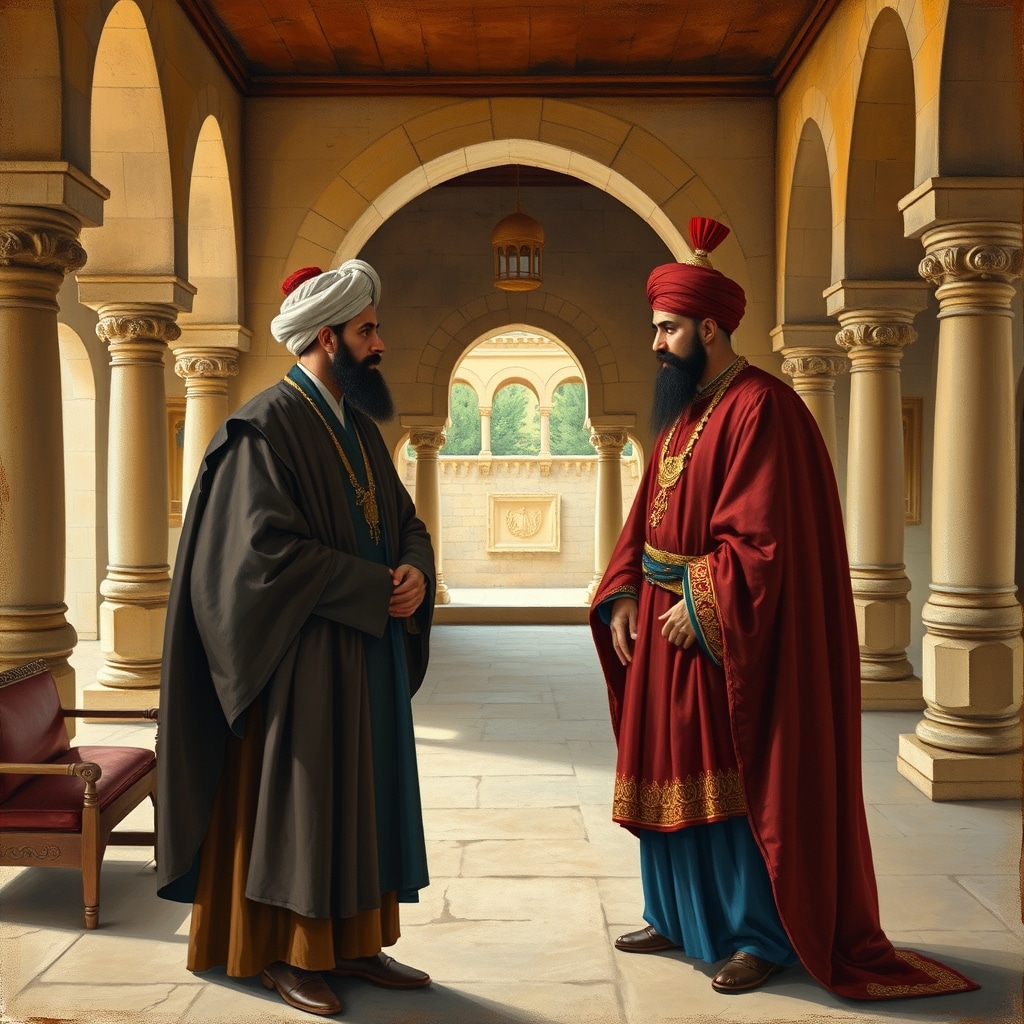
His date and place of birth are not known with certainty; different studies of his origins raise Greek, Albanian or Turkish possibilities. Feridun Emecen takes into account Italian sources reporting that he was raised in the palace and highlights the record Zağanos b. Abdullah, which points to devşirme origins. Presenting a particular ethnic identity as undisputed fact would therefore go beyond the certainty the available documents provide.
Rather than explaining his name through modern national categories, investigating the routes by which he joined palace circles offers a more fruitful way to understand his life. A statesman’s origins are not a fixed factor that alone explains the posts he held and the political relationships he formed. Information on the devşirme system and how children were selected in the Ottoman Empire helps to assess the institutional background of this rise.
From palace service to provincial administration
His first known official post was that of head treasurer (hazinedarbaşı); then, in 1440, he became governor of the sancak of Arvanid-ili and entered provincial service. This change shows that his career was not limited to palace service and that he also had ties with administration outside the center. His biography, moreover, should not be reduced to the days of the conquest; his rise took place within a process shaped by the posts he had held before.
His Place in Mehmed II’s Inner Circle
Zağanos Pasha and the young ruler’s policy
During Mehmed’s first reign, which began in 1444, the court went through serious disagreements over the ruler’s authority and the policy to be pursued. Acting together with Şehâbeddin Pasha, the vizier belonged to the circle that strengthened the young sultan’s position and supported a more assertive policy. Feridun Emecen’s entry Şehâbeddin Paşa assesses this partnership within the power struggle waged against the circle of Çandarlı Halil Pasha.
However, the Buçuktepe revolt of 1446 and Murad II’s return to the throne cost the young ruler’s supporters much of their power. With Mehmed sent to Manisa, the struggle at court entered a new phase; even so, the future influence of the pro-conquest circle did not disappear entirely. These developments suggest that a close relationship with the sultan did not by itself guarantee lasting political security and that the balance at court could shift quickly.
When his second reign began in 1451, Mehmed, drawing on his earlier experience, turned to preparations for the conquest and relied on the support and services of various statesmen. The life of Mehmed the Conqueror and the conquest of Istanbul explain more broadly the place of this political goal in the ruler’s career. From this perspective, the importance of close advisers lies not only in offering advice but also in turning the ruler’s decisions into workable military and administrative undertakings.
Rumelihisarı and the Preparations for the Conquest
Besieging Istanbul required not only attacking the land walls but also controlling traffic on the Bosphorus and the city’s links with the outside world. Rumelihisarı, built in 1452, was an important part of this preparation; Abdullah Mehmet Avunduk’s entry on the fortress explains its function of controlling the Bosphorus. The tower known by Zağanos Pasha’s name and its inscription are among the concrete architectural evidence of the vizier’s place in this great building project.
Moreover, the names of different viziers on the towers of the same fortress make it clear that the preparation for the conquest relied on the contributions of more than one official. The division of tasks in the building suggests that, despite political differences, statesmen could work together toward a specific military objective. Seen this way, regarding the fortress merely as an imposing defensive structure would overlook the administrative and organizational side of the preparations.
The value of a fortress built before a siege depends as much on how well it meets the army’s needs and uses the advantages of the terrain as on the height of its walls. Bringing together materials, labor and time is a separate administrative problem that directly affects military goals. The vizier’s role in this building should therefore be seen as a responsibility that began before his contribution on the battlefield and extended into the preparatory phase.
His Military and Political Role in the Siege of 1453
His duties around the Golden Horn
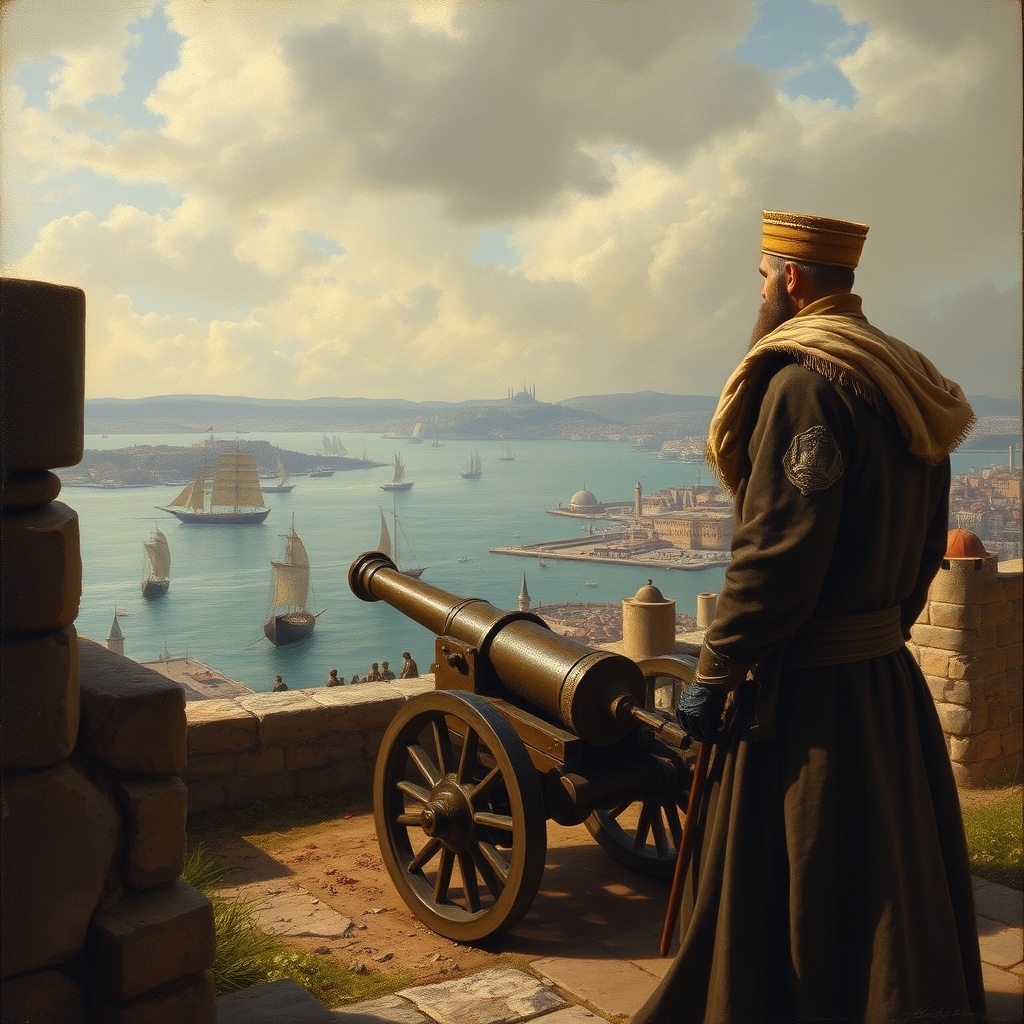
During the siege, Zağanos Pasha was stationed on the heights of Galata and Kasımpaşa and added to the pressure on the harbor area with gun batteries set up against the ships in the Golden Horn. This duty shows that the siege did not take place only in front of the land walls and that operations on different fronts must be assessed together. Treating success on one front as the sole explanation of the whole conquest fails to account for the links and division of labor among the army’s various units.
The entry of relief ships into the harbor on 20 April heightened anxieties around the siege; during this crisis the vizier supported continuing the operation. The prospect of outside help, the resilience of the defense and the loss of time carried different weights in the debate over whether to press on. In such conditions, a vizier’s influence could stem not only from the troops he commanded but also from the weight of his views in the war council on the final decision.
His influence on the decision for the final assault
According to Halil İnalcık’s entry Mehmed II, in the last days of the siege he defended the case for an assault against Çandarlı’s cautious views. The war council decided on a general assault, and he thus gained an influential place in the critical political debate that preceded the conquest of 29 May 1453. His contribution to this decision is important; yet in explaining the outcome of the conquest, the artillery, developments in the defense and the joint effort of the army must be considered together.
His Grand Vizierate and Dismissal
How should the rivalry with Çandarlı be read?
To understand his rivalry with Çandarlı Halil Pasha, one needs to ask which military and diplomatic dangers the experienced administrators of the time were weighing. M. Münir Aktepe states that Çandarlı feared a new crusading alliance but nonetheless served in building the fortress and in the preparations for the conquest. This means that the other side’s contribution to the preparations must also be weighed in explaining the disagreement; caution about the siege is not in itself proof of treason.
After the conquest Çandarlı was dismissed and executed, and Zağanos Pasha rose to the grand vizierate, reaching the most powerful stage of his career. In İnalcık’s assessment, the conquest extended the ruler’s authority; from this angle, it makes sense to read the change of vizier together with the strengthening of central government. The Imperial Council and the government of the state place the viziers’ role in decision-making within a broader institutional context.
Uncertainty over the date he left office
The span of 1453–1456 often given for Zağanos Pasha’s grand vizierate should not be regarded as a definite chronology accepted in the same way by all historians. Emecen, while relating the account of a dismissal connected with the siege of Belgrade in 1456, also notes that İnalcık shows Mahmud Pasha as grand vizier at the beginning of 1455. Şehabeddin Tekindağ’s entry Mahmud Paşa, meanwhile, dates the change in office differently; attributing the dismissal solely to the defeat at Belgrade is therefore uncertain.
The short terms of office used in historical lists thus offer a starting point that should be read together with the relevant documents and narrative sources. The list of Ottoman grand viziers and the notable names by period helps to follow the continuity of the office, but disputed dates should be assessed separately. The uncertainty does not cancel the fact that he served as grand vizier; the real debate concerns the limits of his term and the developments behind his removal from the center.
His Last Posts and Death
After leaving his post at the center, Zağanos Pasha continued his career with assignments at Gelibolu, in naval operations and around the Morea; Emecen dates his death to about 1464. His tomb stands beside his complex in Balıkesir, and his later posts show that losing influence at court and leaving state service were two different things. Reading the last part of his life merely as a story of decline would therefore unduly narrow the place his activities outside the center hold in his biography.
His Complex and Endowment Legacy in Balıkesir
Why is the Zağanos Pasha Complex important?
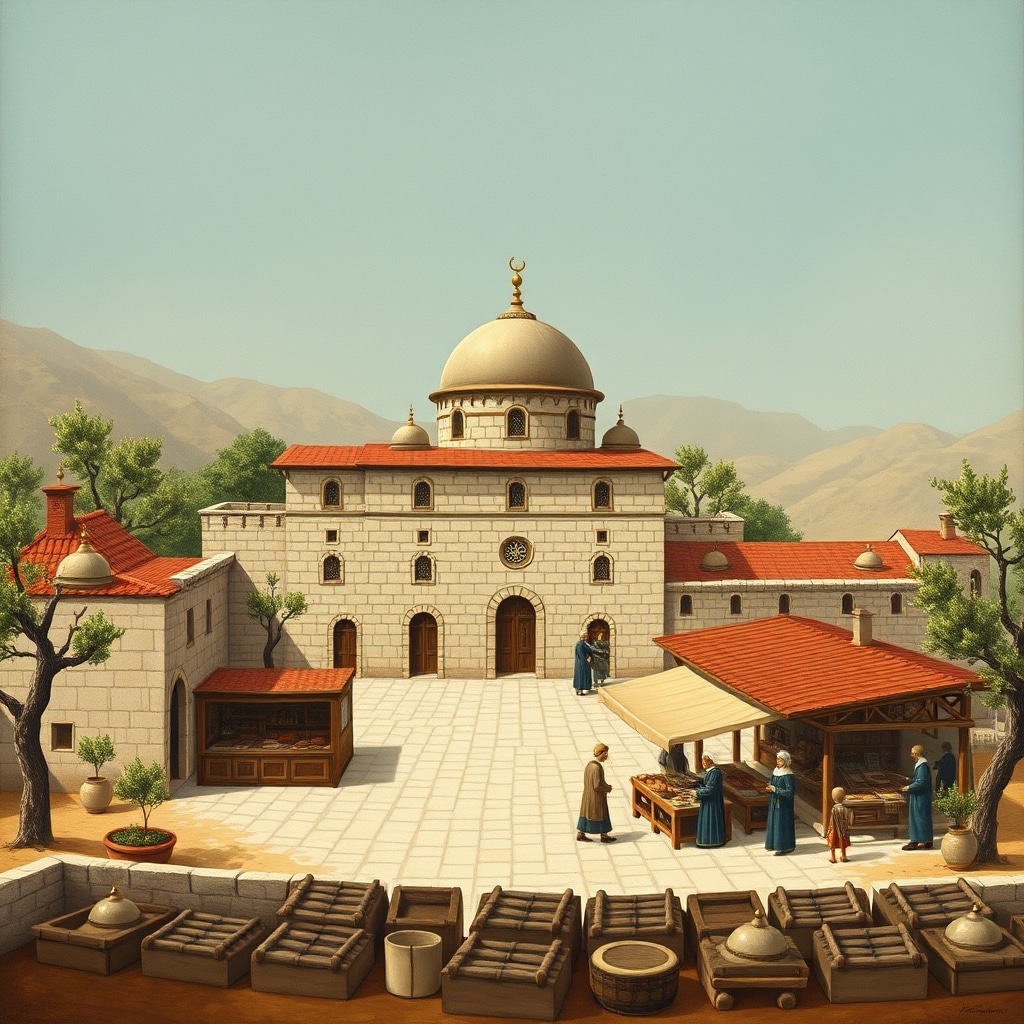
The complex in Balıkesir is one of the clearest traces of how his military and political career extended into urban life; its original foundation dates to 1460–1461. Ahmet Vefa Çobanoğlu and Tuğba Erzincan report that, besides the mosque, there were once buildings such as a public kitchen (imaret), a covered market (bedesten) and a bazaar. The endowment deed dated February 1462 is important for understanding that this work was not just a group of buildings but was organized around specific revenues and services.
In assessing a complex, looking at the whole formed by the place of worship together with the surrounding services and economic relations shows the founder’s legacy more broadly. The endowment arrangement is also an important subject for examining how the revenues and responsibilities that would carry the work on to later generations were conceived. The Ottoman endowment system, mosques and social assistance offers a useful framework for understanding the place of these institutions in urban life.
The difference between today’s mosque and the original building
However, accepting the mosque seen today, in all its details, as the original fifteenth-century building would overlook the changes the structure has undergone. The complex was damaged by earthquakes; after heavy damage in 1897, the present mosque was rebuilt in 1904 on the foundations of the old building. The explanations of Çobanoğlu and Erzincan make it necessary to treat the continuity of the founder’s historical legacy and the preservation of a particular building’s original architecture as separate questions.
His Importance in Ottoman History
In assessing Zağanos Pasha’s importance, his military duties, his relationship with the ruler and the works he left to urban life should be seen as connected parts of the same biography. This approach allows the influence of a vizier who supported the conquest to be judged through decision-making and preparatory work, without reducing it to movements on the battlefield. The impact of the 1453 conquest of Istanbul on world history helps to understand on a larger scale the great transformation of which his contribution was a part.
Reading his dismissal together with his later services, in particular, draws attention to how the political positions of statesmen close to the ruler could change over time. His endowment works, in turn, suggest that an administrator’s memory was not confined to palace records but could live on through urban spaces. Ultimately, his historical influence comes into clearer focus when the military, administrative and social relationships that extend beyond the days of the conquest are assessed together.
Conclusion
Zağanos Pasha was an important statesman who supported Mehmed II’s policy of conquest and took part in the siege preparations and in critical decisions. While the disputed chronology of his grand vizierate calls for careful reading of the sources, his complex in Balıkesir shows how his legacy lived on in urban life. His life offers an important historical example for assessing together the changeability of personal influence and the long-term effect of military and social contributions.
Sources
- Feridun Emecen, TDV Encyclopedia of Islam: TDV Encyclopedia of Islam, entry “Zağanos Paşa” (2013); TDV Encyclopedia of Islam, entry “Şehâbeddin Paşa” (2019).
- Halil İnalcık, TDV Encyclopedia of Islam: TDV Encyclopedia of Islam, entry “Mehmed II” (2003).
- M. Münir Aktepe and Şehabeddin Tekindağ, TDV Encyclopedia of Islam: respectively TDV Encyclopedia of Islam, entry “Çandarlı Halil Paşa” (1993) and TDV Encyclopedia of Islam, entry “Mahmud Paşa” (2003).
- Abdullah Mehmet Avunduk, TDV Encyclopedia of Islam: TDV Encyclopedia of Islam, entry “Rumelihisarı” (2008).
- Ahmet Vefa Çobanoğlu and Tuğba Erzincan, TDV Encyclopedia of Islam: TDV Encyclopedia of Islam, entry “Zağanos Paşa Külliyesi” (2013).