The devshirme system was the method by which the Ottoman state selected children from among its Christian subjects according to set rules and trained them for the Kapıkulu corps and palace service. According to the TDV Encyclopedia of Islam, the method was applied in the reign of Mehmed I and became law in the reign of Murad II. The children selected could become Janissaries, palace officials and even grand viziers.
Quick Summary
- The method became law in the reign of Murad II (1421–1451).
- Children were selected between the ages of eight and twenty, especially between fourteen and eighteen.
- The children of families with only one son and city children were not taken.
- Those selected were first placed with Turkish villagers and then enrolled in the Acemi Ocağı (Novice Corps).
- The devshirme system effectively ceased to function from the mid-seventeenth century onward.
Contents
- Definition
- The emergence of the method
- The selection of children
- Who was selected and who was exempt
- “Giving to the Turks” and the Novice Corps
- The Enderun
- Its role in government
- Decline and end
- Frequently asked questions
What Was the Devshirme System?
Under this method the state selected boys from among its Christian subjects according to set rules. The children selected became Muslims, learned Turkish and were trained in the Kapıkulu corps attached to the sultan. According to the TDV Encyclopedia of Islam, the jizya tax on the youths who were collected was lifted. In this respect the devshirme system became the main source of military and administrative personnel.
According to the encyclopedia, it is difficult to equate this practice with a slave system, because the children collected were the children of non-Muslim subjects whose free status was beyond doubt. The fact that they were called “kul” (servants of the sultan) is explained by their being the sultan’s household troops. We described their place in the army in our article on military organization in the Ottoman Empire.
How Did the Method Emerge?
According to the TDV Encyclopedia of Islam, soldiers for the Janissary Corps founded in the reign of Murad I were at first supplied from prisoners of war under the pençik law. When conquests decreased and, after the Battle of Ankara, stopped for a while, a new path was taken. According to the encyclopedia, this method, not seen in earlier Islamic states, was applied in the time of Mehmed I. It became law in the reign of his son Murad II. We described this period in our article on Murad II and the Battle of Varna.
According to the encyclopedia, the selection was at first carried out by the beylerbeyis, sancakbeyis and kadıs. Because the duty was abused, officials began to be sent from the center in the reign of Mehmed II. These officials were high-ranking officers of the Janissary Corps, and a scribe accompanied them. Those who abused their duty through bribery were severely punished.
How Were Children Selected under the Devshirme System?
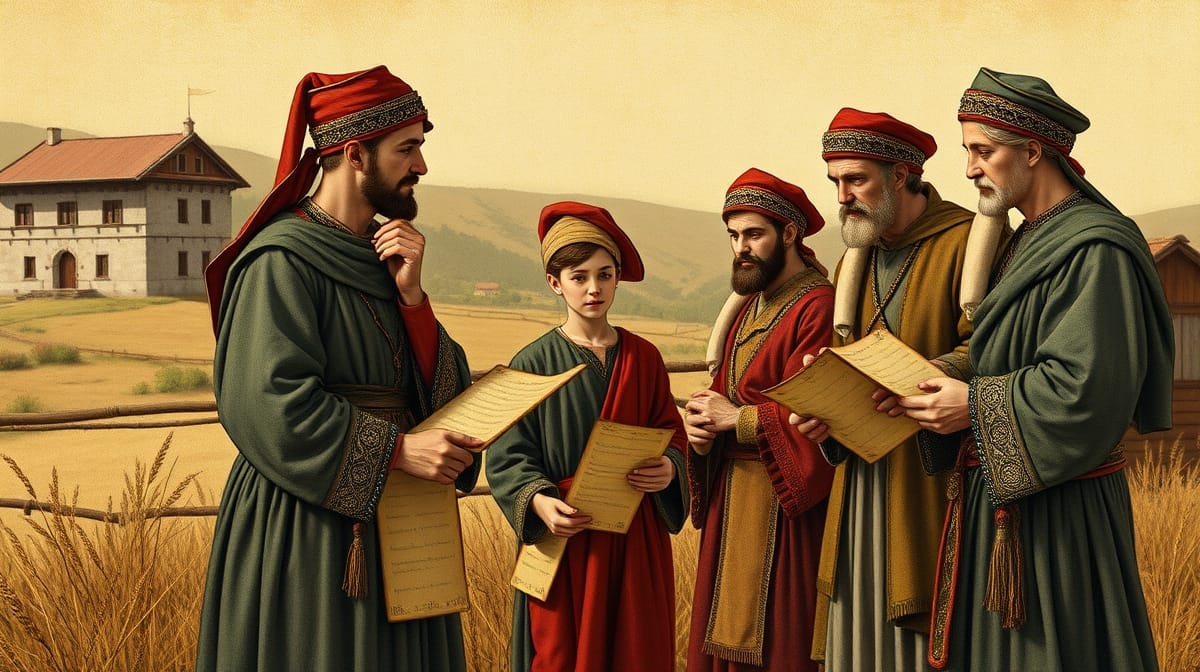
According to the encyclopedia, the agha of the Janissaries determined the need and submitted it to the Imperial Council. By decision of the council, children were collected every three, five or seven years, depending on need. Wherever he went, the official announced his arrival through town criers. Christian boys between the ages of eight and twenty, especially between fourteen and eighteen, were gathered in the center of the district (kaza). The children came with their fathers, their priests and the baptismal registers.
According to the encyclopedia, in each district usually one boy was taken from every forty households, but the number was determined mostly by need. The village, the parents’ names, the date of birth and even the eye color of each child selected were recorded in two registers. These records were called “registers of descriptions” (eşkal defteri); one stayed with the official and the other with the “sürücü” who took the children to the center. The children were sent to Istanbul in convoys of 100–200 called “sürü.”
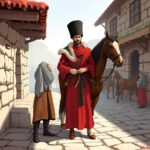
The costs, too, were borne by the people of the region. According to the encyclopedia, the price of the red cloak and red cap put on the children was collected from the local reaya under the name “kul akçesi.” This sum, 90–100 akçe per child at first, later rose to 300 and even 600 akçe.
Who Was Selected and Who Was Exempt?
According to the encyclopedia, the law set out in detail the qualities of the children to be collected. Only one of two boys was chosen, and in families with many children the healthiest. The child of a family with only one son, orphans and the son of the village headman were not taken. City children and youths who had married or learned a trade were not collected either. Those who were excessively tall or short were also excluded.
According to the encyclopedia, Albanian, Bosnian, Greek, Bulgarian, Serbian and Croatian children were preferred. Turkish, Kurdish, Persian, Russian, Jewish, Georgian and Roma children were not taken. The children of the Bosnians, who converted to Islam en masse in the reign of Mehmed II, were collected only for the palace, at their fathers’ request. Pass guards, mine workers and workers on state construction projects were usually exempt as well.
The practice was not the same everywhere. According to the encyclopedia, it was applied at first mainly in Rumelia. From the late fifteenth century onward it was also carried out in Anatolia, except around Erzurum, Harput, Diyarbakır, Bursa and Istanbul.
“Giving to the Turks” and the Novice Corps
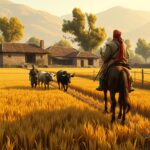
According to the encyclopedia, the children brought to Istanbul were inspected by the agha of the Janissaries at the Ağakapısı. They were then circumcised and given Muslim Turkish names. Those set aside for the palace were first trained in the Edirne, Galata or İbrahim Pasha palaces. The others were placed, for a small fee, with Turkish villagers in Anatolia and Rumelia. To prevent them from running away, those collected in Rumelia were sent to Anatolia and those collected in Anatolia to Rumelia.
During this period, called “Türk’e verme” (giving to the Turks), the children worked on farms and learned Turkish and Islamic customs. When the time came, they were brought to Istanbul and enrolled in the Acemi Ocağı. According to the encyclopedia, the youths, who after this enrollment were called “acemi oğlanı” (novice boys), were paid a daily wage of first 1 and then 2 akçe. According to the encyclopedia, the practice of giving to the Turks was abandoned in the seventeenth century. We described the later path of the novice boys in our article Who were the Janissaries?.

The Devshirme System and the Enderun
According to the TDV Encyclopedia of Islam, from the mid-fifteenth century onward the Enderun was the most important official educational institution outside the madrasa. It was founded in the Edirne Palace in the time of Murad II and received its real organization in the reign of Mehmed II. According to the encyclopedia, this institution was based on culture and discipline rather than race or blood ties. Exceptionally talented novice boys were chosen for the Enderun, while the others were distributed to military units in a procedure called “çıkma.”
According to the encyclopedia, education at the Enderun was based on seven levels, from the Great and Small Chambers up to the Privy Chamber (Has Oda). In the first chambers, Islamic culture, Turkish, Arabic and Persian were taught. Sports such as wrestling, running and archery were also part of the training. We discussed the educational order in our article on the Ottoman education system.

To Which Offices Could They Rise?
The most visible result of the devshirme system appeared in the government of the state. According to the encyclopedia, after Mehmed II struck a blow at the Çandarlı family of Turkish origin, almost all grand viziers, with a few exceptions, were appointed from among those raised in this way. Mahmud Pasha, Gedik Ahmed Pasha, Makbul İbrahim Pasha, Sokullu Mehmed Pasha and Lala Mehmed Pasha were among them. The grand viziers from the Köprülü family had the same origin.
According to the encyclopedia, Lorenzo Bernardo, the Venetian envoy who was in Istanbul between 1584 and 1587, admired this order. The envoy wrote that those who commanded the armies were not dukes, marquises or counts but ordinary people who had come up from herding sheep. In his view, the Venetians too should do what the sultan did. We described its place within the social structure in our article on the social structure of the Ottoman Empire.
Why Did the Devshirme System Decline?
According to the TDV Encyclopedia of Islam, the method was applied successfully for about a century and a half, from the first half of the fifteenth century to the end of the sixteenth. From the late sixteenth century onward, the sons of Janissaries began to be admitted to the corps under the name “kuloğlu.” Irregular recruits were also taken in from outside under the names “kul kardeşi” and “ağa çırağı.” In this period bribery also crept into the process.
According to the encyclopedia, attempts at reform were made in the time of Murad IV, but from the mid-seventeenth century onward collections were rarely carried out. It appears that at the beginning of the eighteenth century about 1,000 boys were collected to replace the bostancıs (palace guards) who had taken part in a rebellion. Ahmed Cevad Pasha writes that the last collection took place in 1751. By the time the Janissary Corps was abolished in 1826, this order had long since come to an end.
According to the encyclopedia, the compatibility of the method with Islamic law was debated mostly by Western researchers. Some found the forcible taking of zimmi children contrary to the law. Others regarded it as a continuation of the ghulam system of earlier Islamic states. Historians today regard the separation of children from their families and their change of religion as the harsh aspects of the institution.
Frequently Asked Questions
What was the devshirme system?
It was the method of training soldiers and state officials by selecting, according to set rules, children from among the Christian subjects. Those selected were trained in the Kapıkulu corps and at the palace.
When did the devshirme system come to an end?
There was no official decision abolishing it. The method was effectively abandoned from the mid-seventeenth century onward; Ahmed Cevad Pasha states that the last collection took place in 1751.
Children of what age were selected?
According to the TDV Encyclopedia of Islam, those between the ages of eight and twenty, especially between fourteen and eighteen, were selected.
Were Muslim children taken?
As a rule, no. The exception was the children of the Bosnians who had converted to Islam in the reign of Mehmed II; they were collected only for the palace.
Conclusion
The devshirme system was an institution that built a bridge between military power and central government in the classical age of the Ottoman Empire. Children were selected by strict rules, learned the language and culture through “giving to the Turks,” and were trained in the Novice Corps and the Enderun. In this way many statesmen rose to the highest offices. From the late sixteenth century onward the rules loosened, and the method was gradually abandoned. Today the devshirme system is assessed together with both its achievements and its harsh aspects, such as separating children from their families.


5 thoughts on “What Was the Devshirme System? How Were Children Selected in the Ottoman Empire?”