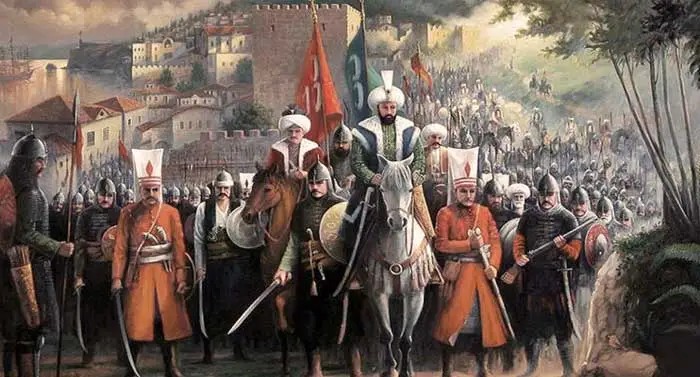
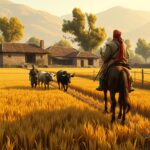
The first regular army in the Ottoman Empire was the yaya and müsellem units founded in the reign of Orhan Bey. The yayas were infantry and the müsellems were cavalry. These soldiers received wages during campaigns and in peacetime farmed the land given to them. Later, the Janissary Corps, formed from prisoners of war, became the core of the state’s first standing army.
Quick Summary
- Under Osman Gazi, the army consisted of tribal forces gathered by a call to campaign.
- Orhan Bey formed the yaya and müsellem units from the local Muslim population.
- These soldiers received wages on campaign and farmed their holdings in peacetime.
- In the reign of Murad I, the foundations of the Janissary Corps were laid through the pençik system.
- The yayas and müsellems gradually turned into rear-service units.
Contents
- Short answer and comparison
- The army under Osman Gazi
- The yaya and müsellem organization
- Why did they fall short?
- The pençik and the Janissary Corps
- The later role of the yayas and müsellems
- Other military elements
- Points confused in exams
- Frequently asked questions
The First Regular Army in the Ottoman Empire: Short Answer and Comparison
The easiest way to understand the military structure of the early period is to set three forces side by side. The table below summarizes whom they were drawn from and how they served.
| Force | Period | Who made it up? | Form of service |
|---|---|---|---|
| Yaya | Orhan Bey | Local Muslim Turkish population | Infantry; wages on campaign, land in peacetime |
| Müsellem | Orhan Bey | Local Muslim Turkish population | Cavalry; campaign service in return for a farm |
| Janissary | From Murad I onward | Prisoners of war, later devshirme recruits | Salaried and permanent service |
What Was the Army Like under Osman Gazi?
In the first years of the beylik there was no regular army. Osman Gazi’s forces consisted of tribal warriors gathered by a call to campaign and of gazis in the frontier zone. These warriors joined raids in the hope of booty and land and returned to their homes when the campaign was over.
This structure was sufficient for taking small fortresses. However, the long sieges of walled cities such as Bursa and İznik required soldiers who were permanently ready and could be called up according to set rules. For the story of the first conquests, see our article on the places conquered by Osman Bey.
The Yaya and Müsellem Organization: How Was the First Regular Army Founded?
In the reign of Orhan Bey conquests accelerated, and more soldiers were needed. In response, units were formed from the local Muslim population and called to duty according to set rules. The TDV Encyclopedia of Islam defines these soldiers as forces that received wages during campaigns and in peacetime returned home to go about their work.
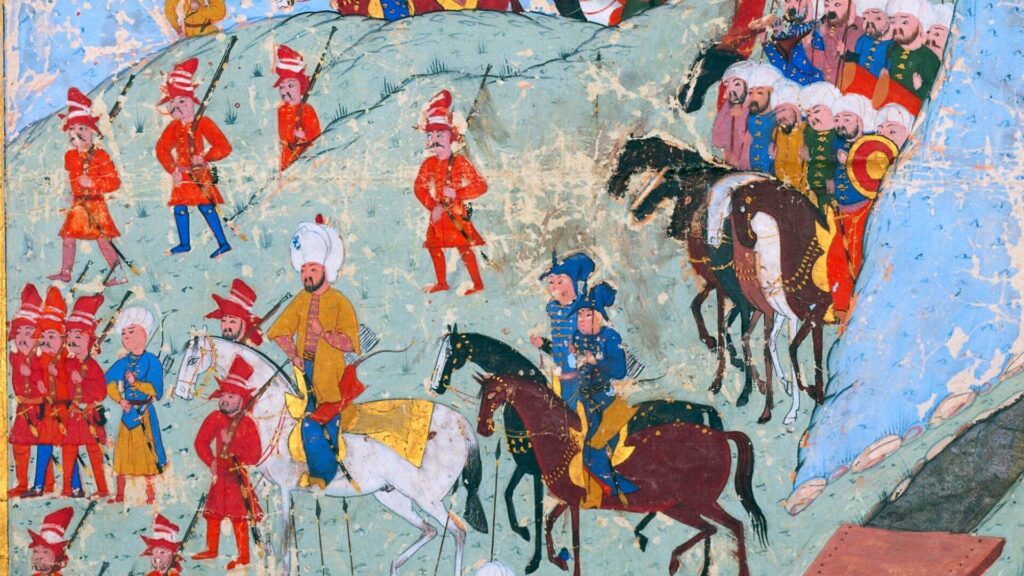
The yayas formed the infantry class. The müsellems were soldiers who joined campaigns with their horses. According to the TDV Encyclopedia of Islam, the müsellems went on campaign with their horses in return for the farms they held and were called by this name because they were exempt from taxes. The word “müsellem” itself means “exempted.”
According to the sources, these soldiers were organized in small groups. Only some of them actually took part in a given campaign, while the others helped cover its costs. This system provided regular soldiers without placing a heavy burden on the treasury. For the details of the expansion under Orhan Bey, take a look at our article on Ottoman expansion under Orhan Gazi.
What Made the Yayas and Müsellems Regular?
What distinguished them from the earlier tribal forces was registration and rules. It was clear who would serve, in what order and in return for what. Wages and land tied loyalty not only to booty but to a regular relationship with the state.
Why Did the Yayas and Müsellems Fall Short?
According to the TDV Encyclopedia of Islam, the yaya and müsellem soldiers could not keep up with developments and were criticized in particular for their undisciplined behavior. These soldiers were farmers for most of the year. Long sieges and continuous campaigns in Rumelia, however, required a full-time force.
The crossing into Rumelia made this need even more evident. The TDV Encyclopedia of Islam draws attention to records that Gazi Süleyman Pasha used prisoners of war as paid soldiers after the first conquests in Rumelia. Keeping soldiers permanently on both sides of the straits was not possible with a part-time force.
In addition, as the state grew, the loyalty of the soldiers became more important. A force with strong local ties might be closer to its own circle than to the ruler. A salaried unit attached directly to the sultan was therefore needed.
The Pençik System and the Birth of the Janissary Corps
The new solution was prisoners of war. According to the TDV Encyclopedia of Islam, in the reign of Orhan Bey a force said to number about a thousand men, intended to be salaried and to serve permanently, was formed. In the reign of Murad I, the Acemi Ocağı (Novice Corps) was founded in Gelibolu.
The basis of this system was the pençik. The word means “one fifth.” According to Islamic law, one fifth of the booty belonged to the state treasury. On the basis of this rule, one fifth of the prisoners of war began to be taken on behalf of the state. According to the TDV Encyclopedia of Islam, the practice came into force on the advice of Kara Rüstem of Karaman, with the approval of the kazasker Çandarlı Kara Halil and by the decision of Murad I.
According to the encyclopedia, the more widely accepted account says that this arrangement was made after the conquest of Edirne in 1361. With the accelerating conquests the number of captives had increased greatly, and the price of a captive had fallen as low as 125 akçe. It is also known that similar practices existed in some of the Anatolian beyliks, especially among the Aydınoğulları.
The young men who were taken first learned the language and culture while living with Turkish families and were then admitted to the corps. Over time, the captives were replaced by children collected through the devshirme system. For the details of this process, see our articles on the devshirme system and who the Janissaries were.
The Later Role of the Yayas and Müsellems
As the Janissary Corps grew, the military importance of the yayas and müsellems, regarded as the first regular army in the Ottoman Empire, declined. According to the TDV Encyclopedia of Islam, the müsellems later served as rear-service troops. Tasks such as opening roads, building bridges and transporting cannons and ammunition were assigned to these units.
This transformation shows how the military structure of the early period developed layer by layer. Old institutions were not abolished but adapted to new tasks. For the general structure of the Ottoman army, you can read our article on military organization in the Ottoman Empire.
Other Elements of the Early Army
The first regular army in the Ottoman Empire did not meet all military needs on its own. From the second half of the fourteenth century onward, several forces with different duties worked together. Each of these forces answered a different need of the state.
- Akıncıs: Light cavalry under the command of the frontier lords (uç beyleri). They carried out raids into enemy territory, gathering intelligence and keeping up pressure along the border.
- Timariot sipahis: Sipahis who maintained mounted soldiers in return for land revenue. As the timar system developed, they became the army’s largest cavalry force.
- Azabs: Light infantry recruited from the population. They served especially in the front ranks in battle and as fortress guards.
- Kapıkulu troops: Salaried units attached to the sultan and serving permanently. The Janissary Corps was the core of this group.
Are the First Regular Army and the Timariot Sipahis the Same?
No. The timariot sipahis were soldiers of a separate system based on land revenue, and it became widespread later. The yayas and müsellems, on the other hand, were the first regular units, founded earlier. Although both forces were connected with land, their organization and duties were different.
This variety shows that the early sultans avoided tying military power to a single source. The local population, the frontier lords and the units attached to the sultan balanced one another. We described how war strategies were carried out with this structure in our article on the war strategies of the Ottoman sultans.
Points Confused in Exams
The most common mistake in questions on the first regular army in the Ottoman Empire is to think that this army was the Janissary Corps. In fact, the Janissaries emerged after the yayas and müsellems. In exam questions, the two concepts must be kept apart.
- The first regular army: the yaya and müsellem units founded in the reign of Orhan Bey.
- The first standing (permanent) army: the salaried Kapıkulu troops attached directly to the sultan, with the Janissary Corps as their core.
The second important point is that the Janissaries were made up not of volunteers but of prisoners of war. The devshirme system was a later stage of this practice. For the end of the corps in 1826, see our article Why was the Janissary Corps abolished?.
Frequently Asked Questions
In which sultan’s reign was the first regular army in the Ottoman Empire founded?
It was founded in the reign of Orhan Bey. This army consisted of infantry and cavalry units called the yaya and müsellem.
Why was the first regular army in the Ottoman Empire founded?
The long sieges of walled cities such as Bursa and İznik showed that tribal forces gathered by a call to campaign were not enough. The state needed units that could be called up according to set rules and received land in return. The yaya and müsellem organization arose from this need.
What is the difference between a yaya and a müsellem?
The yayas were infantry and the müsellems cavalry. Both were recruited from the local Muslim population and received land or tax exemption in return for their service.
Which was the first standing army in the Ottoman Empire?
The first standing army was the Kapıkulu troops, whose foundations were laid in the reign of Murad I. The core of this force was the Janissary Corps.
Conclusion
The yaya and müsellem units, the first regular army in the Ottoman Empire, were the first step in the transition from tribal forces to a state army. When these units fell short, the Janissary Corps, based on the pençik and the devshirme, was founded. This two-stage development formed the military basis for the beylik’s rapid transformation into a great state.
Sources
- TDV Encyclopedia of Islam, entry “Müsellem”
- TDV Encyclopedia of Islam, entry “Pencik”
- TDV Encyclopedia of Islam, entry “Yeniçeri”
- TDV Encyclopedia of Islam, entry “Kapıkulu”
- İsmail Hakkı Uzunçarşılı, Osmanlı Devleti Teşkilâtından Kapukulu Ocakları [The Kapıkulu Corps in the Organization of the Ottoman State].

1 thought on “The First Regular Army in the Ottoman Empire”