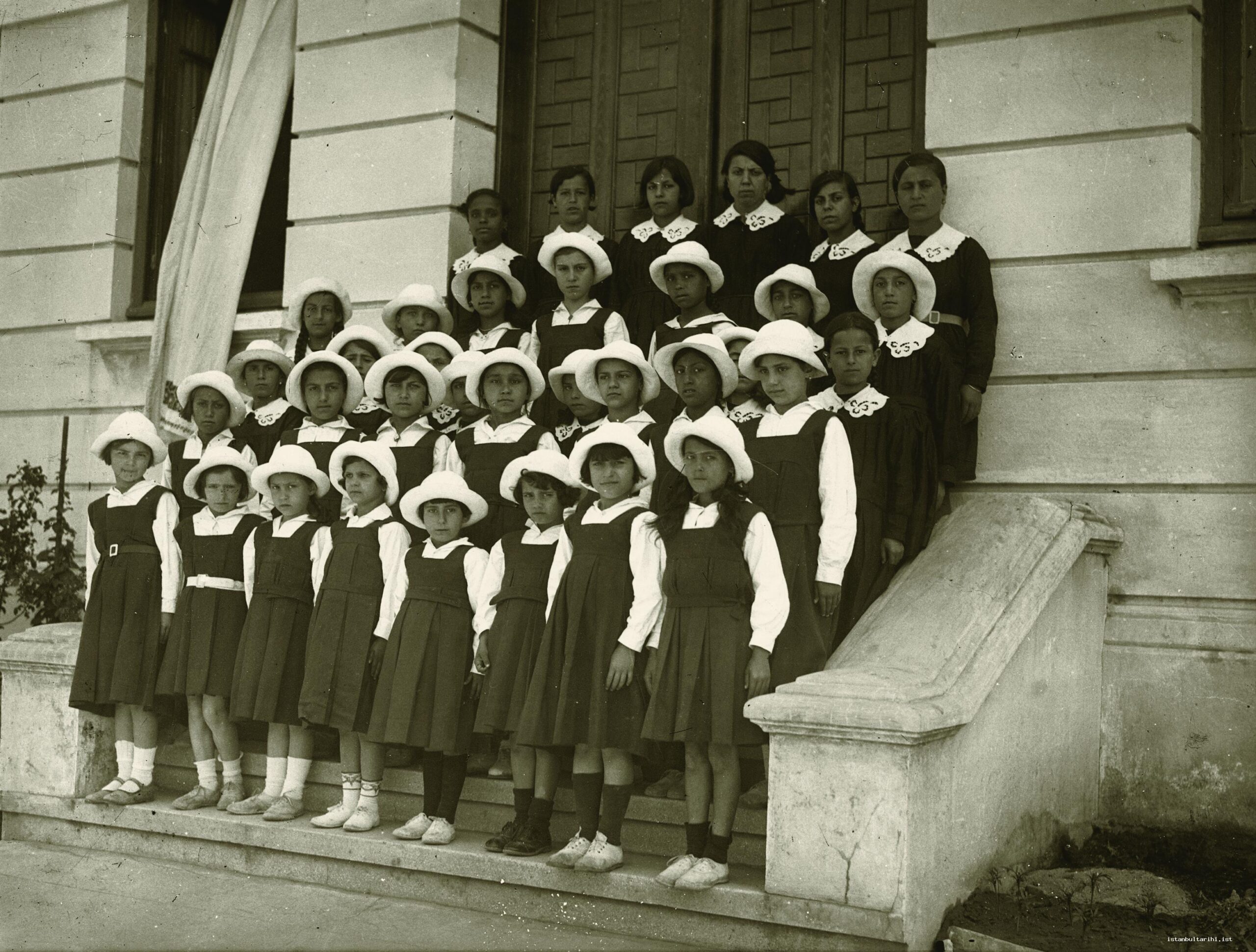
The name given to high school equivalent schools in the Ottoman Empire was “idadi”. The word means “a place set aside for preparing”; these schools prepared students for higher schools. The first idadis were opened for the military schools from 1845 onward, while civilian idadis were planned by the regulation of 1869. One step above the idadi stood the sultanis.
Quick Summary
- The name of the high school equivalent schools was idadi; the word carries the meaning “place of preparation”.
- Military idadis were founded in 1845 to prepare students for schools such as the Harbiye.
- The Regulation on Public Education of 1869 placed the idadi between the rüşdiye and the sultani.
- By the end of Abdülhamid II’s reign the number of idadis had risen to 109, with nearly 20,000 students.
- From 1910 some idadis became sultanis; in 1923 all of them were renamed high schools (lise).
Contents
- What does idadi mean?
- Sıbyan school, rüşdiye, idadi and sultani
- Military idadis
- The founding of civilian idadis
- Subjects taught in the idadis
- Idadis under Abdülhamid II
- From sultani to high school
- Frequently asked questions
The Name Given to High School Equivalent Schools in the Ottoman Empire: Idadi

According to the TDV Encyclopedia of Islam, the word idâdî literally means “a place set aside for preparing something”. Until the first years of the Tanzimat, the word was used for the preparatory classes of Western-style schools. For a time, the sıbyan schools that prepared pupils for the rüşdiyes opened in 1847 were also called idadis.
The idadis opened as high school equivalents fall into two groups. Military idadis trained students for the military higher schools, and civilian idadis for the civilian higher schools. The common aim of both types was to prepare students for a higher school. The institution’s name came from this very task.
Sıbyan School, Rüşdiye, Idadi and Sultani
In the traditional order, children learned to read and write at the neighborhood sıbyan schools. During the Tanzimat, new levels were added on top of this structure. According to the TDV Encyclopedia of Islam, the first rüşdiye was opened in 1847 in Istanbul at the Davud Pasha School. The rüşdiyes formed the first stage of secondary education and corresponded to today’s middle school.
The Regulation on Public Education (Maârif-i Umûmiyye Nizamnâmesi) issued in 1869 placed the idadis above the rüşdiyes and below the sultanis. The sultanis were the highest level of secondary education. The first example of this type was the Galatasaray Imperial School (Mekteb-i Sultânî), opened in 1868 on the French model. The school was also known by its French name, “Le lycée impérial de Galata Serai”.
The sequence thus took shape as sıbyan school, rüşdiye, idadi and sultani. The answer to the exam phrase “high school equivalent school” is idadi. The sultanis, for their part, corresponded to full high schools. We discussed the general educational order of the period in detail in our article on the Ottoman education system.
Military Idadis
The field in which idadis first appeared was the army. According to the encyclopedia, until 1844 there was no secondary institution preparing students for military schools such as the Naval School, the School of Engineering, the Medical School and the Harbiye. As a result, the young men entering these schools were not at a level to cope with the education given. Even Harbiye graduates, despite a long education, did not reach the competence needed to serve in the units.
On the proposal of the Harbiye commander Emin Pasha, it was decided in 1845 that students entering military schools would first study at a preparatory school. The Temporary Council of Education (Meclis-i Maârif-i Muvakkat), founded the same year, envisaged opening schools named “Mekteb-i Fünûn-ı İ‘dâdiyye” in twelve places. One of these five-year military idadis was to be in Istanbul and the others at army headquarters. We told the story of the Harbiye in our article on the word meaning military school.
The old Harbiye building in Maçka was allocated to the first military idadi. In 1853 Sultan Abdülmecid ordered that only rüşdiye graduates be admitted to the idadis. It was not always possible, however, to find enough rüşdiye graduates.
For this reason a preparatory school called the Mahrec-i Mekâtib-i Askeriyye was set up to train students for the idadi in Istanbul. According to the encyclopedia, the aptitude and physical fitness of the children who entered this school at the age of twelve or thirteen could not be measured. To solve the problem, four military rüşdiyes were opened in Istanbul in 1875 on the proposal of Süleyman Hüsnü Pasha. Under Abdülhamid II, in 1898, the Harbiye and Medical School idadis had 1,280 and 545 students respectively.
The Founding of Civilian Idadis
According to the 1869 regulation, idadis were to be opened in settlements with more than a thousand households. Each idadi would have six teachers, to be chosen from the graduates of the Higher Teachers’ College (Dârülmuallimîn-i Âliye) in Istanbul. Muslim and non-Muslim children who had finished the rüşdiye would be admitted together to these three-year schools.
This mixed structure was a deliberate choice. According to the encyclopedia, the idadis were also needed to put into practice Ottomanism, the basic principle of Tanzimat education. Young people of different religions and origins would form an “Ottoman nation” by studying at the same desks. You can find the background of this idea in our article on Ottoman intellectual currents.
However, for lack of money and teachers, the idadis in the regulation could not be opened for a long time. A commission set up at the beginning of the 1873–1874 school year decided first to open a model idadi in Istanbul. The Dârülmaârif building was allocated to the model school, and in 1874 an idadi section was opened at the Higher Teachers’ College to train idadi teachers. By 1876 the number of idadis in Istanbul had risen to four or five. The only idadi opened in the provinces was the Yenişehir idadi in the province of Yanya, which began teaching in 1875.
Subjects Taught in the Idadis
According to the program prepared in September 1873, the first idadis taught Ottoman grammar, Arabic, Persian, and Turkish reading and writing. These were accompanied by Ottoman history, arithmetic, algebra, geography, geometry and trigonometry. Gymnastics and drawing were also in the program. French, German and English were taught as foreign languages.
The seven-year program of the 1898–1899 school year was even broader. Besides religious knowledge and Turkish, subjects such as law, bookkeeping, cosmography, mechanics, physics and chemistry were taught. The “elsine” (languages) course in the program was for students whose mother tongue was Greek, Armenian or Bulgarian. A separate Arabic course was also added for the children of Arab subjects. The video below on the lessons of the period also offers an interesting comparison.
Idadis under Abdülhamid II
The real spread of the idadis took place under Abdülhamid II. To develop schools in the provinces, part of the provincial revenues was set aside for education under the name “hisse-i maârif”. In 1888 the course of study was extended to four years. So that children from villages and small towns could also study, it was decided to convert the day idadis in provincial centers into boarding schools. In places that had an idadi, the rüşdiyes were merged with the idadis.
In this period the idadis were divided into five-year and seven-year schools. Graduates of civilian idadis were also given the chance to continue to the military higher schools. According to the encyclopedia, by the end of the period the total number of idadis had risen to 109, and the number of students approached 20,000. In 1880 an idadi for girls was also opened in Istanbul, but it closed two years later because of public indifference.
From Sultani to High School
After the proclamation of the Second Constitutional Era in 1908, secondary education was reorganized. From 1910 onward, ten idadis in Istanbul and some other large cities were converted into sultanis. In 1913 the sultanis, together with their primary sections, became twelve-year schools. The last three years of these schools were divided into science and literature branches.
The five-year idadis in the sancaks, meanwhile, were to be turned into multipurpose schools with agriculture, commerce and crafts branches. Because of the First World War, these branches could be opened in only a few places. According to the encyclopedia, at the end of the War of Independence there were only six idadis with agriculture branches, five with industry branches and one with a commerce branch. For girls’ secondary education, an inas idadi was founded in Sultanahmet in 1911. This school was converted into a sultani in 1913–1914 and later took the name Bezmiâlem Vâlide Sultan Sultânîsi.
In the first years of the Republic, the names were brought under a single roof. In 1923 it was decided to give the name “lise”, high school, to all institutions of general secondary education. At that time Turkey had seventy-two incomplete and twenty-three complete high schools. Thus the names idadi and sultani gave way to today’s concept of the high school.
Frequently Asked Questions
What was the name given to high school equivalent schools in the Ottoman Empire?
High school equivalent schools were called idadis. Idadis stood above the rüşdiye and below the sultani and prepared students for the higher schools.
What is the difference between an idadi and a sultani?
The idadi was a high school equivalent preparatory school. The sultani was the highest level of secondary education and corresponded to a full high school; its first example was the Galatasaray Imperial School, opened in 1868.
When was the first idadi opened?
The decision to open military idadis was taken in 1845. The first civilian idadis were opened in Istanbul after the preparations of 1873–1874.
Why does the name given to Ottoman high school equivalent schools mean “preparation”?
Because the task of the idadis was to prepare students for higher schools such as the Harbiye, the Medical School and the Mülkiye. The word’s meaning, “a place set aside for preparing”, reflects this task.
Conclusion
The name given to high school equivalent schools in the Ottoman Empire was idadi, and these schools were founded to prepare students for the higher schools. The process that began with the military idadis in 1845 spread to civilian education with the 1869 regulation. The idadis, which exceeded a hundred under Abdülhamid II, were partly converted into sultanis after 1910. In 1923 all of these schools came to be called high schools.
Sources
- TDV Encyclopedia of Islam, entry “İdâdî”
- TDV Encyclopedia of Islam, entry “Rüşdiye”
- TDV Encyclopedia of Islam, entry “Galatasaray Mekteb-i Sultânîsi”
- Mahmud Cevad, Maârif-i Umûmiyye Nezâreti Târihçe-i Teşkîlât ve İcrââtı [History of the Organization and Activities of the Ministry of Public Education], Istanbul 1338/1922.