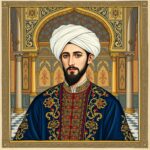
Şehzade Mustafa was the son of Suleiman the Magnificent and Mahidevran Sultan, born in Manisa in 1515. Because of his success as a provincial governor, his standing among the military and his execution on his father’s orders in 1553, he became one of the most controversial figures in Ottoman succession politics, and his death deeply affected the balance within the dynasty and the later struggle for the throne.
Quick Summary
- He was born in Manisa in 1515; his mother was Mahidevran and his father Suleiman the Magnificent.
- He gained administrative experience in Manisa and Amasya and became a strong candidate.
- He won a marked reputation among soldiers and ordinary people.
- In 1553 he was strangled on the sultan’s orders near Ereğli in the province of Konya.
- His death sharpened dynastic politics and the debate over succession even further.
Contents
- Who was Şehzade Mustafa?
- What were his childhood and education like?
- Why were the Manisa and Amasya years important?
- What was his place in the Ottoman succession rivalry?
- How did tension grow in palace politics?
- Why was he executed in 1553?
- What were the effects of his death?
- How is his historical legacy assessed?
- Conclusion
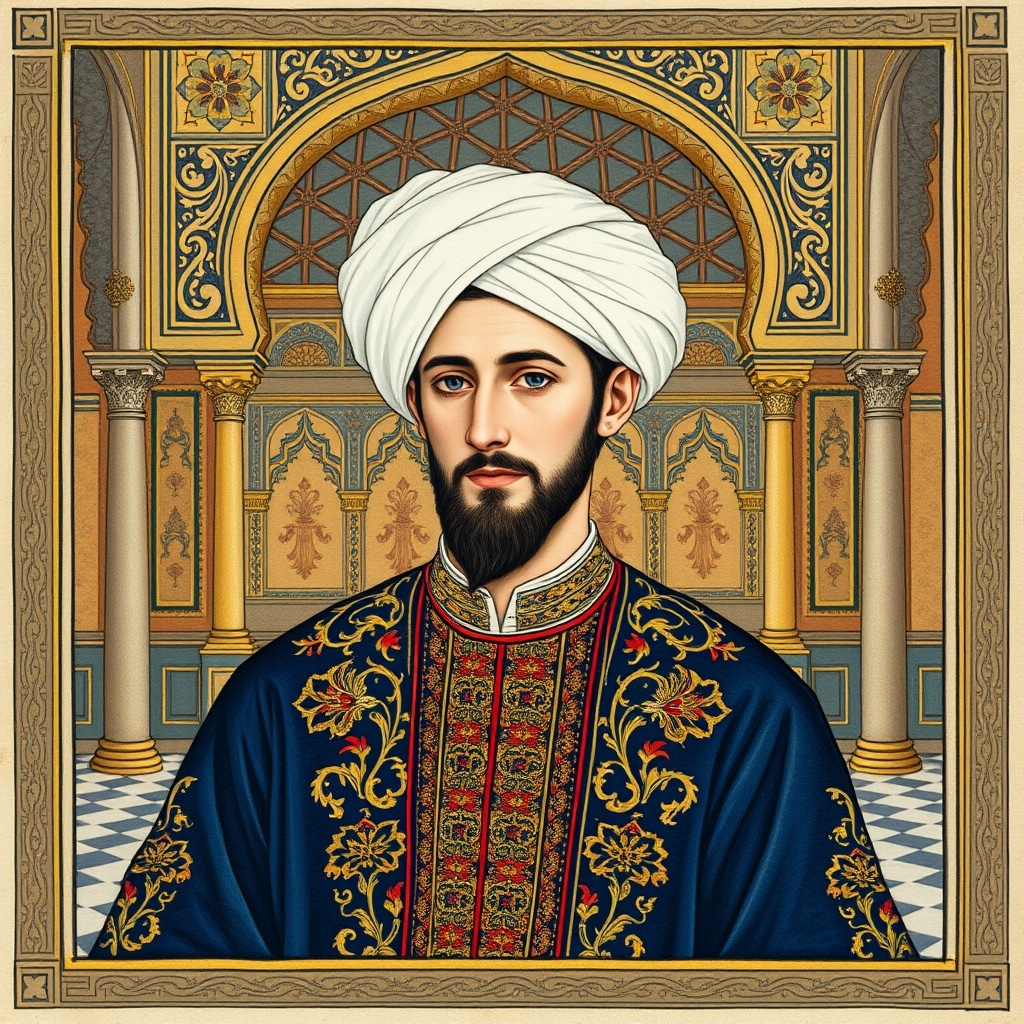
Who Was Şehzade Mustafa?
Şehzade Mustafa was born in Manisa in 1515. His father was Suleiman the Magnificent, then governor of the sancak of Saruhan, who came to the throne in 1520. His mother was Mahidevran Sultan. When Suleiman became sultan, Mustafa too rose to a more visible place in the dynasty’s future.
His childhood fell in a period when palace education and dynastic rivalry advanced side by side. The birth of Suleiman’s other sons made the future question of the throne more complicated. The Ottoman system had no fixed rule that the eldest son automatically became ruler. Every male member of the dynasty could therefore become a candidate for the throne, depending on circumstances.
İsmail Hakkı Uzunçarşılı’s assessments of the Ottoman dynastic order show that this rivalry was an institutional rather than a personal matter. The central government’s main concern was to prevent the civil war that could break out when a ruler died. Yet the same system kept the rivalry among a living sultan’s sons constantly alive.
Şehzade Mustafa’s childhood and family
His mother Mahidevran held an important place in Mustafa’s childhood world. She closely followed her son’s education and his position within the palace. Hürrem Sultan’s bearing sons to Suleiman, however, changed the balance within the dynasty. This led to separate groups of supporters forming around candidates born of different mothers.
Explaining this period only through personal jealousies would be incomplete. Palace figures, military groups and senior officials watched closely to see who would take the throne in the future. For wider context on Hürrem’s position, see Hürrem Sultan’s place in the palace and her political influence.
Education and Cultural Circle
How was Şehzade Mustafa educated?
Şehzade Mustafa received the religious, literary, administrative and military education expected of a candidate for the throne. Palace tutors taught him the Qur’an, the basic Islamic sciences, history, literature and statecraft. He also acquired military skills such as horsemanship, the use of weapons and the organization of campaigns.
This education was not merely theoretical. In the Ottoman dynastic tradition, young princes gained administrative experience by serving in a sancak after a certain age. The Ottoman system of education and provincial postings for members of the dynasty offers a helpful framework for understanding this model.
Mustafa was also interested in literature, and sources note that he wrote poetry under the pen name “Muhlisî.” His close ties with poets and scholars during the Amasya years strengthened his cultural side. This trait set him apart from a candidate known only for his military abilities.
Why Were the Manisa and Amasya Years Important?
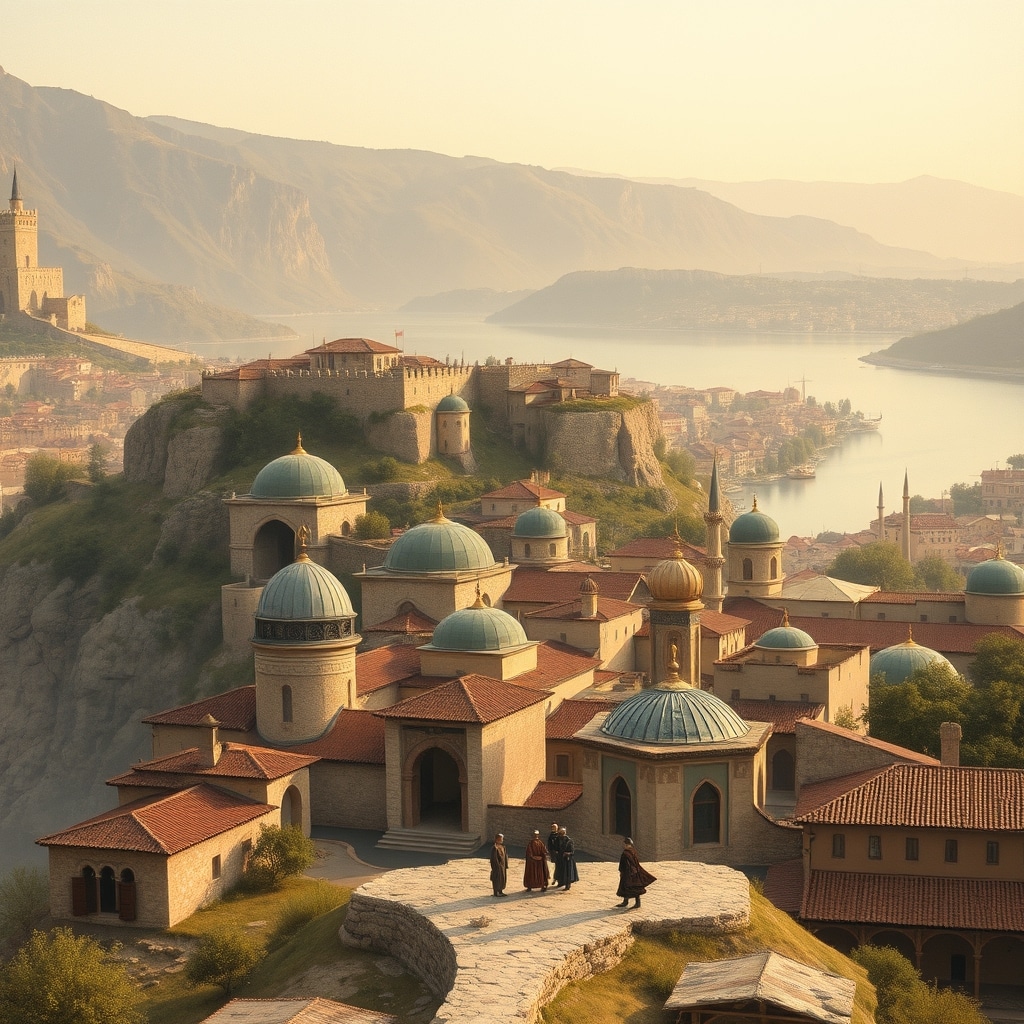
Posted to Manisa in the mid-1530s, Mustafa gained direct experience of local government there. Manisa was an important sancak because of its proximity to Istanbul and its weight in dynastic tradition. This post made it easier for him to become known among statesmen and soldiers.
Mustafa’s reputation in Manisa grew over time. His contacts with the population, his appearances at official ceremonies and his administrative activity strengthened his political profile. Reports by Venetian envoys also show that he attracted attention especially in military circles. As a result, he was increasingly seen as the future ruler.
His transfer to Amasya in 1541 is a turning point frequently debated by historians. At that time, another of Suleiman’s sons was installed in Manisa. The Amasya post did not remove Mustafa from politics altogether. However, its distance from the capital and the symbolic weight of the sancaks made the change significant.
In assessing Ottoman dynastic politics, Caroline Finkel stresses that provincial postings mattered not only administratively but also for succession. From this perspective, the Amasya period can be seen as a decline. Even so, Mustafa kept a wide circle and a respected position there as well.
His Place in the Ottoman Succession Rivalry
In the Ottoman succession system, all of the ruler’s sons were in theory candidates for the throne. This made a candidate’s political support more important than his age. Mustafa’s administrative experience, his standing in military circles and the fact that he was the eldest surviving son made him a strong option.
But being strong did not mean being safe. Past dynastic wars had made sultans wary of the alliances forming around their sons even during their own reigns. The wars among members of the dynasty during the Interregnum clearly show the historical background of this concern.
Expectations in Mustafa’s favor were especially marked in military circles. This support strengthened him on the one hand, but on the other it posed a potential threat from Suleiman’s point of view. If the army openly leaned toward one candidate, a contest for power could arise even while the ruler was alive.
At this point the concept of “heir apparent” must be used with care. Mustafa was not an officially designated heir as in modern monarchies. He was, rather, a strong dynastic candidate. His tragedy therefore has less to do with being stripped of an established right than with the harsh consequences of succession rivalry.
How Did Tension Grow in Palace Politics?
As Mustafa’s position grew stronger, the balance at court became more delicate. Traditional accounts place Hürrem Sultan and Grand Vizier Rüstem Pasha at the center of events. It is clear that Hürrem wanted to protect the future of her own sons. Historians point out, however, that explaining the whole process through her plans alone is insufficient.
For Suleiman, the central issue was the authority of the sultanate. Once expectations in Mustafa’s favor within the army reached a level that could influence the ruler’s decisions, the political risk grew. In addition, a dynastic crisis on the eastern frontier, where the war with the Safavids was still going on, could have had grave consequences for the state.
There are records that Rüstem Pasha reported to the sultan that some soldiers supported Mustafa. Claims that secret contact had been made with Shah Tahmasp of Iran also appear in the accounts of the period. It is not certain, however, to what extent these accusations reflected genuine preparations for a revolt.
It is therefore sounder to see the causes of the event as a combination of several factors. Palace rivalry, support within the army, uncertainty over succession and Suleiman’s concern for his authority appear to have been at work at the same time. The political and military structure of Suleiman the Magnificent’s reign explains the wider context of this tension.
Why Was Şehzade Mustafa Executed in 1553?
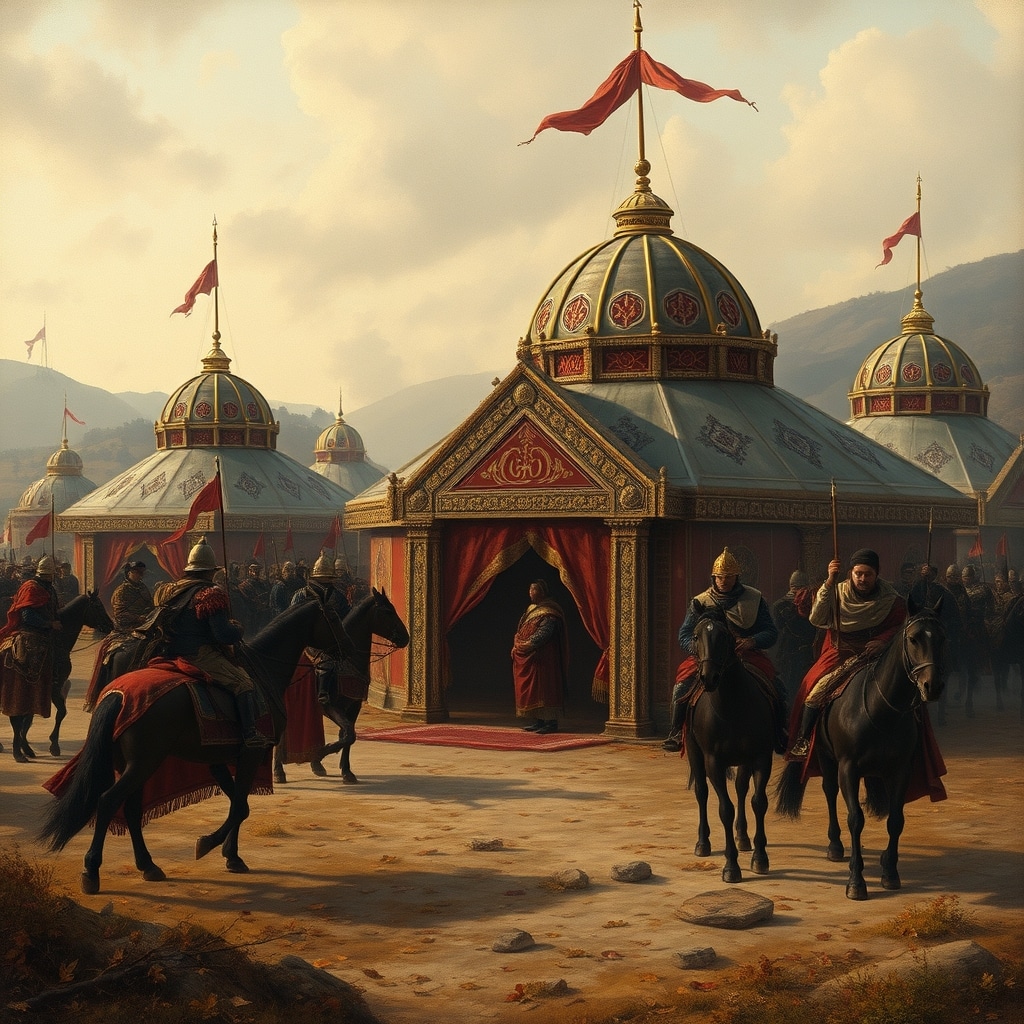
In 1553 a new eastern campaign was launched against the Safavids. As Suleiman advanced into Anatolia at the head of the army, Mustafa set out from Amasya and came to the sultan’s camp. Sources report that he was warned of danger. Even so, he entered the imperial tent to meet his father.
He was killed on 6 October 1553 in the camp near Ereğli in the province of Konya. Because the Ottoman dynasty had a tradition of executions without bloodshed, strangulation was used. The chronicles of the time describe the event with differing details. The main sources agree, however, that the execution was carried out on Suleiman’s orders.
İsmail Hakkı Uzunçarşılı assesses the decision within the harsh conditions of palace and succession politics. Feridun M. Emecen’s studies of Suleiman also help to explain the ruler’s approach, which put the security of his power first. Even so, modern historiography does not accept that the charge of treason was conclusively proven.
There is therefore no one-sentence answer to the question “why was he killed?” Suleiman regarded the support forming around his son as a threat to his own rule and to the order of the state. Rival groups within the palace also reinforced this perception. The final decision, however, rested with the sultan’s political responsibility.
Was Şehzade Mustafa’s death a punishment for rebellion?
There is no indisputable evidence that Şehzade Mustafa was actually preparing a revolt. The documents and chronicles of the period mention both contacts that aroused suspicion and accusations circulating in palace circles. These, however, do not amount to a definitive trial record in the modern sense.
Reducing the event to a simple choice between “guilty” and “innocent” therefore narrows its historical context. In Ottoman politics, even a potential threat could be seen as a serious security problem. For the general framework of the severe punishments applied to members of the dynasty, the political use of exile and execution in the Ottoman Empire is also important.
The Effects of His Death on the Army and the Court
News of the execution caused serious unrest in the army. The affection felt for Mustafa, especially among the Janissaries, provoked an angry reaction to the decision. Shortly afterward, Suleiman removed Rüstem Pasha from the grand vizierate and appointed Kara Ahmed Pasha in his place. This change is generally linked to an effort to calm the reaction.
Mustafa’s mother Mahidevran later lived in Bursa. Her son’s body was also taken to Bursa and buried in the Muradiye complex. A tomb was built over his grave in the reign of Selim II. His memory thus found a lasting place within dynastic architecture.
His death did not end the rivalry for the throne. In the following years, a serious struggle broke out between Suleiman’s sons Selim and Bayezid. Bayezid was defeated and took refuge in Iran; he was later killed together with his sons. These developments show that the decision of 1553 did not fully solve the succession problem.
Moreover, Mustafa’s name soon turned into a political symbol. In Rumelia, a movement formed around a false pretender who used his name. This suggests that he left a strong memory among part of the population and the soldiers even after his death.
The Historical Legacy of Şehzade Mustafa
Although he never became sultan, Şehzade Mustafa is one of the most debated members of the Ottoman dynasty. The main reason is that he was killed on his father’s orders while he was a strong candidate. What kind of ruler he would have been had he lived is a counterfactual question that history cannot answer.
The elegy that Taşlıcalı Yahya Bey wrote for Mustafa strengthened the event’s place in literary memory. The poet treated what had happened as a great loss. A political execution thus quickly became part of cultural memory as well. In later centuries, plays and literary works reinterpreted this tragedy.
In popular culture, on the other hand, Mustafa is often presented as the ideal candidate for the throne. This view draws strength from the favorable portrayals in contemporary sources. History, however, cannot assume the achievements of a reign that never happened. His military reputation and administrative experience are known; his future policies cannot be.
Caroline Finkel’s framework for Ottoman dynastic politics shows that this event was more than a personal tragedy. The uncertainty of the succession system, the authority of the ruler and military support all came together here. Mustafa’s death is therefore an important case for understanding the structure of the state in the sixteenth century.
Conclusion
With his experience as a provincial governor, his standing in military circles and his strong candidacy for the throne, Şehzade Mustafa became one of the most important dynastic figures of Suleiman’s reign. His execution in 1553 was not only a family tragedy; it made visible the tension between the succession order, palace politics and the authority of the ruler. For this reason, the life and death of Şehzade Mustafa remain one of the key examples for understanding Ottoman political history today.
Sources
- İsmail Hakkı Uzunçarşılı, Osmanlı Tarihi, vol. II.
- Caroline Finkel, Osman’s Dream: The Story of the Ottoman Empire 1300–1923 (2005).
- TDV Encyclopedia of Islam, entry “Süleyman I”.
- Turkish Historical Society.