The Cem Sultan affair, which began with the succession struggle of 1481, markedly changed the Ottoman state’s succession politics, its internal balance of legitimacy and its European diplomacy. Throughout Bayezid II’s reign, the threat of a rival prince constrained foreign policy, multiplied diplomatic bargaining and showed how critical a power struggle within the dynasty could be for the security of the state.
Quick Summary
- The fight for the throne clearly exposed the uncertainty of the Ottoman succession system.
- Cem’s brief bid for power in Bursa created the appearance of a double legitimacy.
- After the defeat at Yenişehir, the struggle moved beyond Anatolia.
- His years on Rhodes and in Europe put constant pressure on Ottoman diplomacy.
- Bayezid II pursued a more cautious policy in the face of the threat from his brother.
- The prince’s literary circle carried his cultural legacy beyond politics.
Contents
- What does the Cem Sultan period mean?
- How did the succession crisis after Mehmed II begin?
- How did Bursa and Yenişehir affect Ottoman politics?
- The prince question in European diplomacy
- Effects on government and the idea of succession
- Did the policy of conquest stop completely?
- Diplomacy, intelligence and the financial burden
- Cultural legacy and Cem’s poets
- How was the affair closed after 1495?
- Conclusion
What Does the Cem Sultan Period Mean?
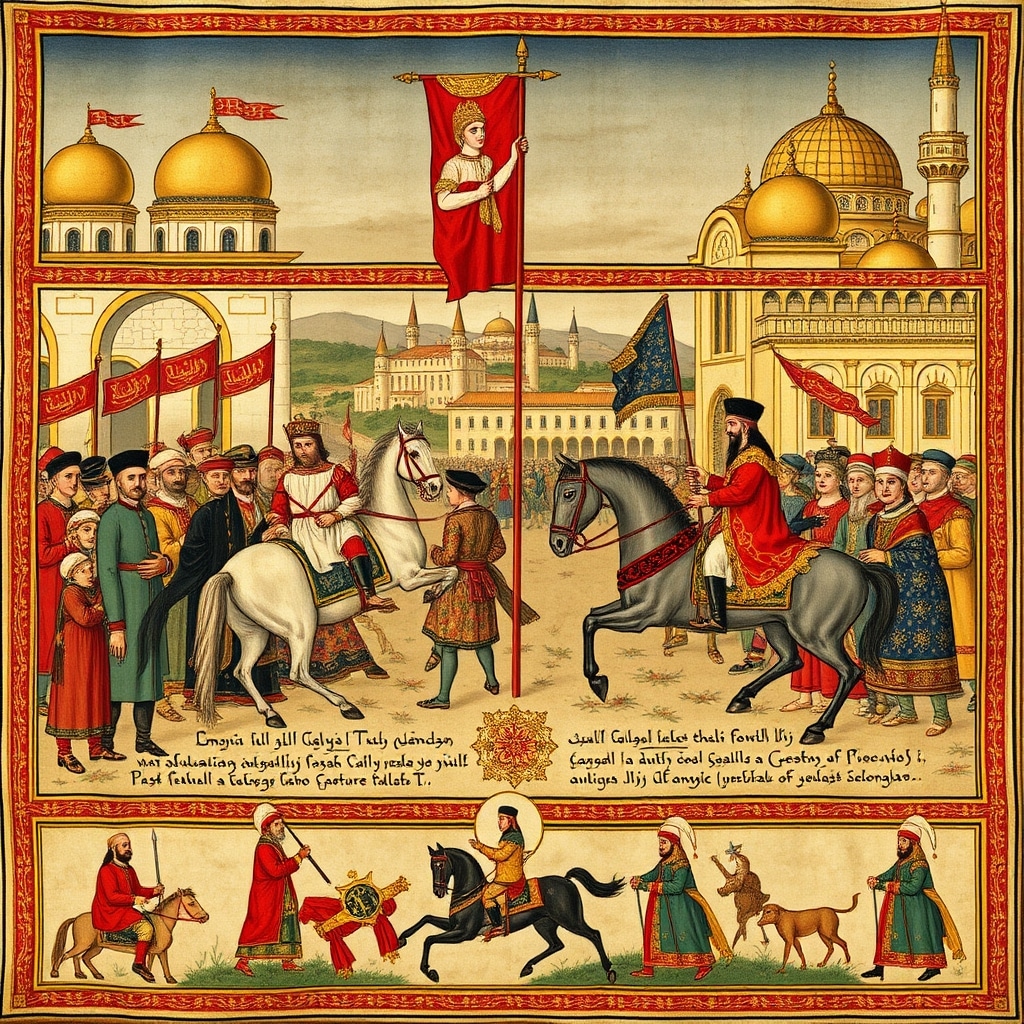
Historically, the “Cem Sultan period” was not an independent Ottoman reign. Although the prince briefly had the Friday sermon (hutbe) read and coins struck in his name in Bursa, he never became the sultan ruling the whole empire. The term is therefore better suited to describing the dynastic crisis that stretched from 1481 to 1495.
After the death of Mehmed II, the claims of both princes to the throne exposed the uncertainty of the succession system. The Ottomans had no fixed rule that the eldest son inherited. What decided the matter was the military, administrative and political support that the prince who reached the throne could secure.
To understand this framework, the reign of Mehmed II and the Ottoman tradition of training princes should be considered together. Service as provincial governors did not only prepare the princes as administrators. It also allowed each of them to build a separate network of political support around himself.
How Did the Succession Crisis after Mehmed II Begin?
When Mehmed II died in 1481, Bayezid was in Amasya and Cem in Konya. Who would reach the capital first was of vital importance. Bayezid’s arrival in Istanbul and accession to the throne gave him the first major advantage in the struggle.
Cem Sultan, for his part, claimed that his father had preferred him and set out to gather support in Anatolia. His ties in the Karaman region and his circle in Konya gave him an important early advantage. However, the central bureaucracy, the kapıkulu troops and the balance of power in Istanbul tilted in Bayezid’s favor.
This process showed how decisive the capital was in Ottoman politics. Control of the palace, the power of the Janissaries and access to the central administration directly shaped the outcome of the succession struggle. Succession was therefore not merely a family matter within the dynasty.
What kind of rule did Cem Sultan establish in Bursa?
When Cem Sultan took control of Bursa in 1481, he proclaimed himself ruler. During this period of about eighteen days, the Friday sermon was read and coins were struck in his name. These two practices were among the clearest symbols of sovereignty in the Islamic political tradition.
This development in Bursa, however brief, produced two separate centers of legitimacy. In Istanbul Bayezid II claimed sovereignty, and in Bursa his rival brother did the same. The crisis thus ceased to be a personal rivalry and became a matter concerning the unity of the state.
How Did Bursa and Yenişehir Affect Ottoman Politics?
The battle fought near Yenişehir in June 1481 was the turning point of the succession struggle. Cem’s forces were defeated, and his political base in Anatolia quickly weakened. The prince withdrew first to Konya and then, by way of Tarsus, to the Mamluk lands.
Warmly received in Cairo, the prince later went to Mecca and performed the pilgrimage. However, news of support from Anatolia drew him back into the struggle. His new attempt in 1482, made together with Kasım Bey of the Karamanids, also failed.
This failure strengthened Bayezid II’s central authority. Yet as long as his rival was alive, the succession problem did not entirely go away. Even after its military victory, the state continued to live with a diplomatic and political threat.
The Cem Sultan Question in European Diplomacy
Why did Cem Sultan become a bargaining chip in European diplomacy?
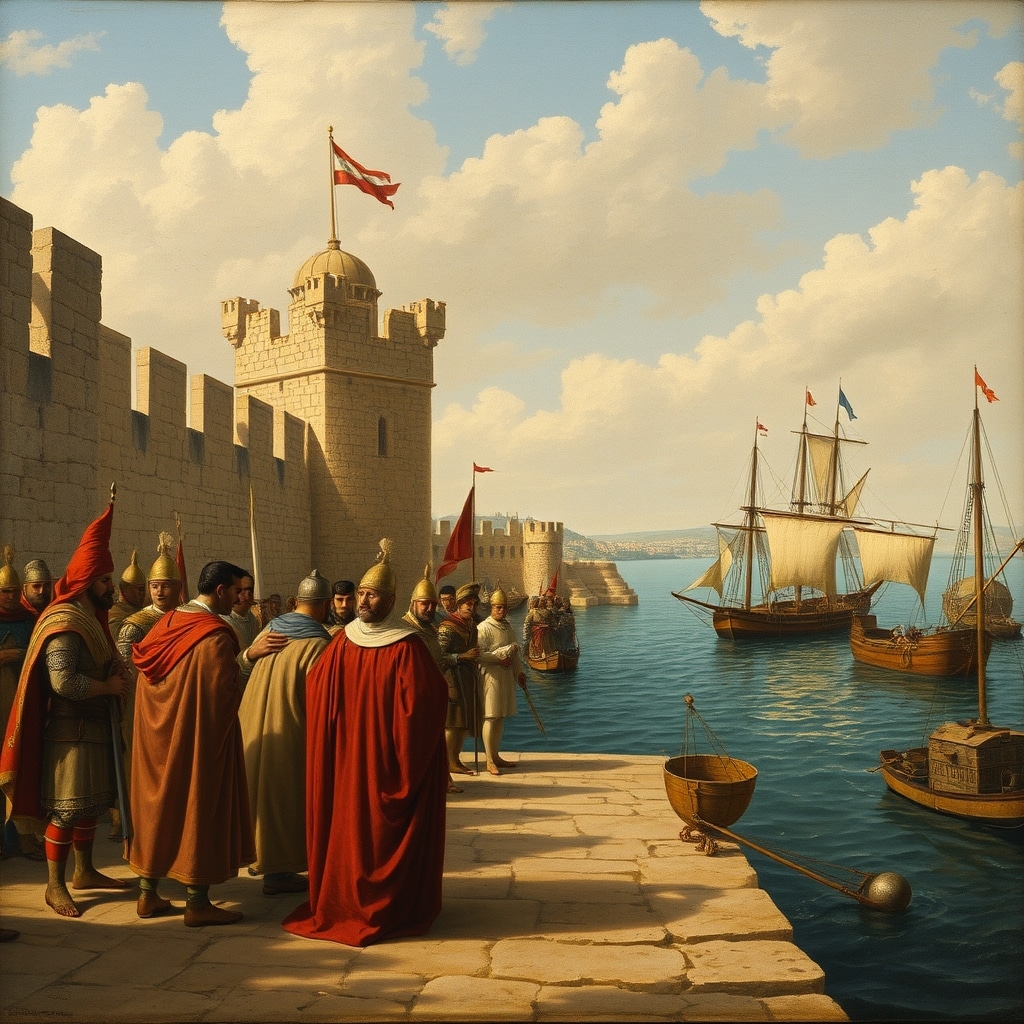
When Cem Sultan reached Rhodes on 29 July 1482, he expected the Knights to help him cross into Rumelia. The Knights of Rhodes, however, saw him as a valuable political card against the Ottoman state. From that moment on, the affair took on an international dimension.
Bayezid II negotiated with the government of Rhodes to prevent his brother’s release. Sources report that an agreement was reached to pay the Knights 40,000 gold pieces a year. The dynastic problem thus turned directly into financial diplomacy.
The prince was later sent to French territory. Hungary, Naples, the Papacy and the Mamluk government all took an interest in his future. Each state tried to weigh the dispute over the Ottoman throne in terms of its own political interests.
Brought to Rome in 1489, the prince came under the supervision of Pope Innocent VIII. Papal circles considered using him in a possible crusade. Bayezid II, in turn, kept up his diplomatic contacts and payments to reduce that possibility.
Halil İnalcık’s study of Renaissance diplomacy shows that this process was not a simple hostage story. The affair was a complex diplomatic arena in which information, money, embassies and mutual threats were used together by the Ottomans and the European powers. For this reason, the episode is regarded as one of the striking examples of early modern bargaining between states.
Effects on Government and the Idea of Succession
The Cem Sultan crisis revealed the fragility, at the dynastic level, of the centralizing policy that had come to the fore under Mehmed II. Despite a strong bureaucracy and army, the rivalry of two adult princes could keep the state occupied for a long time. This turned the succession question directly into a security problem.
Mehmed II’s law code (kanunname) already contained harsh provisions aimed at preventing conflict within the dynasty. Even so, the crisis of 1481 exposed the gap between written principle and political reality. Who would actually take the throne was decided by military force, speed, support in the capital and bureaucratic alliances.
For this reason, Bayezid II’s government had a more cautious character in its early years. A major campaign in the west could increase the risk of the rival prince being used by the European powers. Nevertheless, the sultan did not entirely abandon his interests in the Balkans, the Black Sea and Anatolia.
The capture of Kilia and Akkerman in 1484 shows that the state kept its capacity for military action. Behind decisions concerning Western Europe, however, the dynastic question remained a constantly calculated risk. It is therefore inaccurate to describe the period simply as one in which “conquests stopped.”
For the wider transformation of Bayezid II’s reign, see how the Ottoman Empire changed under Bayezid II. The Imperial Council and central government also offer a complementary framework for understanding how the state worked. Together, these two topics make it easier to read the institutions of the period alongside dynastic politics.
Did the Policy of Conquest Stop Completely?
To say that the prince question halted Ottoman conquests altogether would be an overgeneralization. Rather than simply keeping the state on the defensive, Bayezid II weighed the risks region by region. Military pressure continued along the Black Sea coast, on the Balkan frontier and on the balance of power in Anatolia.
The real change was greater caution in large-scale moves toward Western Europe. The release of the rival prince could spark a new rebellion at home during a campaign. Diplomatic security therefore became an inseparable part of military planning.
The death of the rival prince in 1495 considerably eased this pressure. Indeed, war with Venice and naval operations became more prominent in the last part of Bayezid II’s reign. Over time, the constraining effect of the dynastic crisis on foreign policy thus clearly faded away.
How Did Diplomacy, Intelligence and the Financial Burden Change?
The rival prince’s presence in Europe pushed the Ottoman government toward more continuous intelligence work. Bayezid II closely followed where his brother was being held and which states he was in contact with. Envoys and special agents played important roles in this process.
The affair also placed a direct financial burden on the treasury. Payments to the Knights of Rhodes and later to papal circles turned an internal dynastic problem into a foreign-policy expense. Diplomacy thus became a means of containing a military threat with money.
The European states, for their part, treated the prince less as a genuine candidate for the throne than as a bargaining chip. The possibility of his release was one of their tools for putting pressure on Istanbul. This situation forced Ottoman diplomacy to respond more closely to the European balance of power.
Cultural Legacy and Cem’s Poets
Although the political struggle overshadowed the prince’s cultural identity, his circle matters for fifteenth-century Ottoman literature. During his years as governor in Konya, he gathered poets and scholars around him. Later, some of them followed him into exile as well.
Cem Sultan wrote poetry in Turkish and Persian. Alongside his Turkish and Persian divans, his mesnevi Cemşîd ü Hurşîd is part of his literary legacy. In the poems he wrote in exile, separation, fate, longing for home and political defeat are strongly felt.
The circle known as “Cem’s poets” shows that a prince’s court could be a cultural center and not only an administrative one. This side of his life offers an important example of artistic patronage by members of the Ottoman dynasty. The prince’s political defeat did not erase his cultural influence.

How Was the Affair Closed after 1495?
King Charles VIII of France wanted to use the prince in his own plans during his Italian campaign. Cem Sultan was taken out of Rome at the beginning of 1495 but soon fell ill. He died near Naples on 25 February 1495.
There are reports that he was poisoned, but this claim has never been conclusively proven. On hearing of his death, Bayezid II declared official mourning and had a funeral prayer performed in absentia. The return of the body to Ottoman lands, however, took several years.
In 1499 his body was brought to Bursa and buried at the Muradiye. A dynastic problem that had affected international politics for about fourteen years was thus physically closed as well. Bayezid II then gained wider room for maneuver in his western policy.
Conclusion
The Cem Sultan affair had consequences far broader than a failed bid for the throne. It exposed the uncertainty of the succession system, strengthened Bayezid II’s politics of legitimacy and gave European states the chance to use an Ottoman dynastic problem as a tool of diplomatic pressure. In short, the Cem Sultan affair is an important turning point that shows how directly domestic politics could merge with foreign policy and state security.
Sources
- Halil İnalcık, A Case Study in Renaissance Diplomacy: The Agreement between Innocent VIII and Bayezid II on Djem Sultan (1979).
- İsmail Hakkı Uzunçarşılı, Cem Sultan’a Dair Beş Orijinal Vesika (1960).
- Caroline Finkel, Osman’s Dream: The Story of the Ottoman Empire 1300–1923 (2005).
- TDV Encyclopedia of Islam, entry “Cem Sultan”.
- Turkish Historical Society.