What you need to know about the Ottoman-Russian wars is not limited to the military struggles between two great powers. These wars also created long-lasting effects on the political balance of Europe and Asia. The struggles between the Ottoman Empire and Russia continued intermittently from the 17th century onward, with conflicts occurring on many different fronts up until the 20th century. Among the key facts to know about the Ottoman-Russian wars is that both states sought to secure regional supremacy in line with their own interests.
Russia, driven by its goal of reaching the Black Sea and gaining access to warm-water seas, constantly turned its attention toward Ottoman territory. The Ottoman Empire, for its part, strove both to protect its lands and to maintain its influence in the region. During this process, strategic regions such as Crimea, the Balkans, and the Caucasus repeatedly changed hands.
Among the things to know about the Ottoman-Russian wars, it should not be forgotten that these struggles had not only military but also political and diplomatic dimensions. The treaties signed, the involvement of European powers, and balance-of-power politics were among the factors that altered the course of the wars. Here is what you need to know about the Ottoman-Russian wars:
- The struggle for dominance over the Black Sea and the Balkans
- Russia’s motivation to reach warm-water seas
- The loss of Crimea and the effects of the Treaty of Küçük Kaynarca
- The loss of Balkan territories through the Treaty of Berlin
What Was the Main Cause of the Ottoman-Russian Wars?
The cause of the Ottoman-Russian war lies in the conflicting interests of both states. Although the Ottoman Empire possessed vast territories, it was forced into a defensive position from the 17th century onward. Russia, on the other hand, wanted to expand its territory southward, reach warm-water seas, and open a path to the Mediterranean via the Black Sea. These geographic and strategic goals lie at the heart of the cause of the Ottoman-Russian war.
Control of the Black Sea held great importance in terms of trade routes and military bases. Russia’s desire to reach the Black Sea directly threatened the Ottoman Empire’s sphere of sovereignty. This situation continually created grounds for conflict between the two states.
Another important cause of the Ottoman-Russian war was the struggle for dominance over the Balkans. The Ottoman administration over the Orthodox populations living in the Balkans was frequently used by Russia as a pretext for war. Russia intervened in Ottoman internal affairs by claiming to be the protector of the Orthodox peoples. The causes of the Ottoman-Russian wars are as follows:
- Russia’s desire to reach warm-water seas
- The struggle for dominance over the Black Sea and the Straits
- The claimed protection of the Orthodox peoples in the Balkans
- The struggle for control over the Caucasus
- Conflicts over trade routes and economic interests
How Did the Ottoman-Russian War End?
The Ottoman-Russian war recurred many times throughout history, and each time it produced significant consequences. From the 18th century onward, the Ottoman Empire generally found itself in a weakened position during these wars. The first major defeat was sealed with the Treaty of Küçük Kaynarca, signed in 1774. Through this treaty, the Ottoman Empire was forced to recognize the independence of Crimea, while Russia gained the right to free trade in the Black Sea.
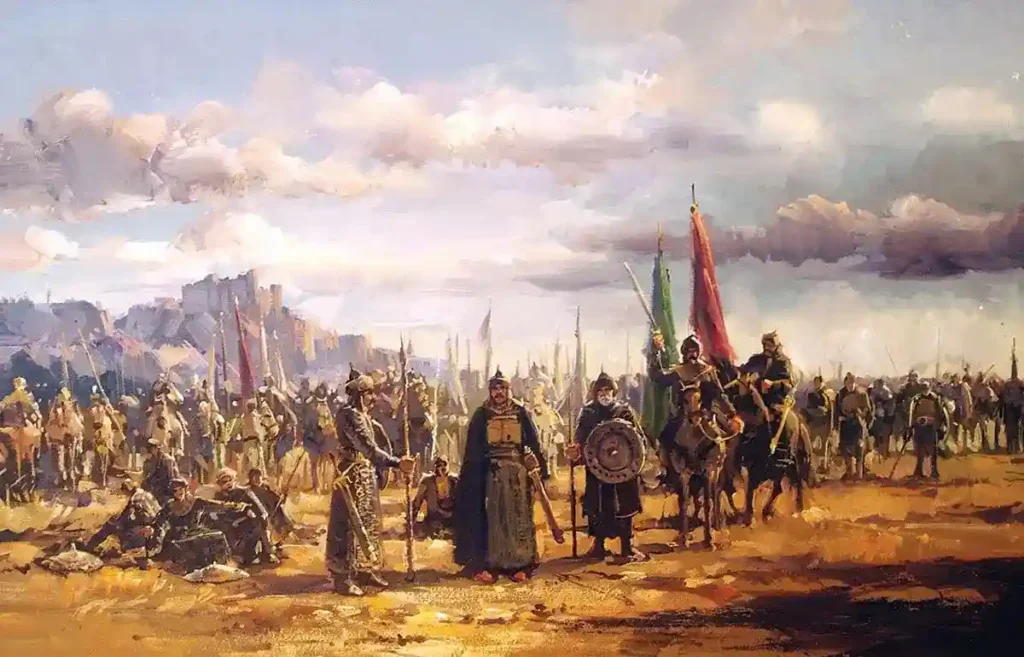
The Ottoman-Russian War of 1877-1878 was one of the most severe wars between the two states. The Ottoman army suffered defeats on many fronts, and large amounts of territory were lost in the Balkans. The Treaty of San Stefano, signed as a result of this war, was later revised through the Treaty of Berlin. The Treaty of Berlin imposed extremely harsh conditions on the Ottoman Empire, and the state’s dominance over the Balkans came to an almost complete end. The consequences of the Ottoman-Russian wars are as follows:
- The loss and independence of Crimea
- Russia gaining dominance over the Black Sea
- The weakening of Ottoman sovereignty in the Balkans
- The recognition of Greek independence
- The Ottoman Empire’s loss of power on the international stage
The Ottoman-Russian war did not result solely in territorial losses; it also had a profound impact on the Ottoman Empire’s international prestige. From then on, the Ottoman Empire became a power subject to intervention by European states.