The Eastern Front in the Turkish War of Independence was the front on which the government of the Grand National Assembly of Turkey (TBMM) fought against Armenia. Kâzım Karabekir Pasha, commander of the Eastern Front, took Sarıkamış, Kars, Gümrü (Alexandropol) and Iğdır in the offensive he launched on 28 September 1920. The war ended on 3 December 1920 with the Treaty of Alexandropol (Gümrü), the first treaty that Ankara signed. The border, for its part, was finalized in 1921 by the treaties of Moscow and Kars.
Quick Summary
- On this front, Armenia stood opposite the TBMM government.
- The commander was Kâzım Karabekir Pasha, who was placed at the head of the Eastern Front on 14 January 1920.
- The offensive began on 28 September 1920; Kars was taken on 30 October and Gümrü on 7 November.
- The Treaty of Alexandropol (3 December 1920) was the first treaty signed by the Ankara government.
- The treaties of Moscow (16 March 1921) and Kars (13 October 1921) ensured that Kars and Ardahan remained in Turkey.
- The units in the region and the captured weapons were sent to the front in the west.
Contents
- Whom did Ankara fight?
- Why was the front opened?
- The commander: Kâzım Karabekir
- Where was the fighting?
- The treaties of Alexandropol, Moscow and Kars
- Its contribution to the National Struggle
- Against whom was the War of Independence fought?
- Frequently asked questions
Whom Did Ankara Fight on the Eastern Front?
On the Eastern Front, the main power facing the TBMM government was Armenia. According to the TDV Encyclopedia of Islam, the Treaty of Alexandropol, which ended the war, was signed between Armenia and the TBMM government. For Ankara, the issue was the future of Kars and its surroundings, which had changed hands after Mudros. Armenia, for its part, relied on the rights that the Treaty of Sèvres had granted it.
The Eastern Front also had a Georgian dimension. According to the encyclopedia, in April 1919 the British had left Kars to the Armenians and Ardahan to the Georgians. Ardahan and Artvin passed to Turkish rule on 23 February 1921. Batum, however, was left to Georgia under the Treaty of Moscow. In short, the main war on the Eastern Front was fought against Armenia, while the question of Ardahan and Batum also concerned Georgia.
Why Was the Eastern Front Opened?
The roots of the Eastern Front go back to the Armistice of Mudros (30 October 1918). The armistice provided for the withdrawal of the Ottoman army to the borders of 1914. According to the TDV Encyclopedia of Islam, Kars was evacuated for this reason. Yâkub Şevki Pasha, who was in the city, resisted at first, but he stepped back when he was told that this would become a pretext for the occupation of Istanbul. On 5 November 1918 the people of Kars founded the Kars İslâm Şûrası (Islamic Council of Kars); in January 1919 the council changed its name to Cenûb-ı Garbî Kafkas Hükûmet-i Muvakkate-i Milliyesi (Provisional National Government of the Southwest Caucasus).
This local administration did not last long. On 12 April 1919 the British occupied Kars, dissolved the government and exiled its members to Malta. They then left control of the city to the Armenians.
Kars, Ardahan and Batum were known as the elviye-i selâse, that is, “the three sanjaks”. These sanjaks had been ceded to Russia by the Treaty of Berlin of 1878 and returned by the Treaty of Brest-Litovsk of 3 March 1918. Mudros, however, wiped out this gain within the same year. We described how the sanjaks were lost in 1878 in our article on the Ottoman-Russian wars.
According to the encyclopedia, the British dissolution of the administration in Kars intensified the national reaction in Anatolia. The Erzurum Congress convened on 23 July 1919 under the chairmanship of Mustafa Kemal Pasha. The Chamber of Deputies (Meclis-i Mebusan), for its part, opened the National Pact (Misak-ı Millî), regarded as the political programme of the National Struggle, for signature on 28 January 1920. The encyclopedia’s entry on Karabekir writes that it was Karabekir who secured the inclusion of the three sanjaks in this text.
The final spark was the Treaty of Sèvres, which the Ottoman delegates signed on 10 August 1920 and which Ankara did not recognize. The treaty left the drawing of the border between Turkey and Armenia to the arbitration of US President Wilson. According to the entry on Karabekir, this arrangement gave provinces such as Erzurum, Trabzon, Van and Bitlis to Armenia. Karabekir had reported that violence in the region was increasing and had asked for permission to launch an offensive; Ankara granted it on 20 September 1920. We discussed the place of Sèvres in the end of the empire in our article on when and why the Ottoman Empire fell.
Do Not Confuse It with the Caucasian Front
The Eastern Front is often confused with the Caucasian Front of the First World War. On the Caucasian Front the Ottoman army had fought against Russia, and Karabekir, too, had fought the Russians there. On the Eastern Front, by contrast, the Ankara government, formed after Mudros, fought Armenia. Kars links the two fronts: Karabekir took the city once in April 1918 and a second time on 30 October 1920. We told the story of the Caucasian Front in our article on the reasons for the opening of the Caucasian Front.
Commander of the Eastern Front: Kâzım Karabekir Pasha
The commander of the front was Kâzım Karabekir Pasha (1882–1948). Born in Istanbul, Karabekir had taken part in the Balkan War, the Gallipoli Campaign and the fighting in Iraq. He also knew the region well: in 1918 he had retaken Erzincan and Erzurum, and in May 1918 he had entered Gümrü. After Mudros he was appointed, at his own request, commander of the XV Corps in Erzurum (13 March 1919). He arrived in Erzurum on 3 May 1919 and saw to it that the local association organized a congress.
At the Erzurum Congress, Karabekir helped Mustafa Kemal Pasha to be elected its chairman. When Istanbul demanded the arrest of Mustafa Kemal and Rauf Bey, he announced that he would not carry out this order. Under the Millî Harekât Esas Planı (Basic Plan of the National Movement), he was appointed commander of the Şark Cephesi (Eastern Front) on 14 January 1920; this is the name under which the front appears in the encyclopedia. When the British occupied Istanbul on 16 March 1920, he had the British officers and soldiers in Erzurum arrested.
On 6 May 1920 Ankara also made him governor of Erzurum. Although he was elected deputy for Edirne, he continued his duties at the front. The victory won against Armenia earned him the title “conqueror of the East” (doğu fâtihi). Karabekir opened schools in Erzurum and Sarıkamış for thousands of children who had been orphaned during the war years. He took a personal interest in the children and had them perform the plays he had written.
In 1924 Karabekir became chairman of the first opposition party, the Progressive Republican Party (Terakkîperver Cumhuriyet Fırkası). We discussed the party’s short life in our article on the attempts to move to multi-party politics. In 1946 he was elected Speaker of the Grand National Assembly, and he died in Ankara on 26 January 1948.
Where Was the Eastern Front Fought? From Kars to Gümrü
The offensive began on 28 September 1920. Karabekir ordered his units holding the passes of the Soğanlı Mountains to attack. According to the TDV Encyclopedia of Islam, Sarıkamış, Göle and Kağızman were taken during the advance. Kars was entered on 30 October 1920. After this success, Karabekir was promoted to ferik (lieutenant general) by a decision of the Assembly.
The importance of Kars came from its geography. The encyclopedia describes the city as a strategic position on the Caucasian frontier. The old part of the city lies on the edge of the deep valley cut by the Kars River, and Kars Castle rises at its centre. After 1878 the Russians had extended the Tiflis–Gümrü railway as far as Kars.
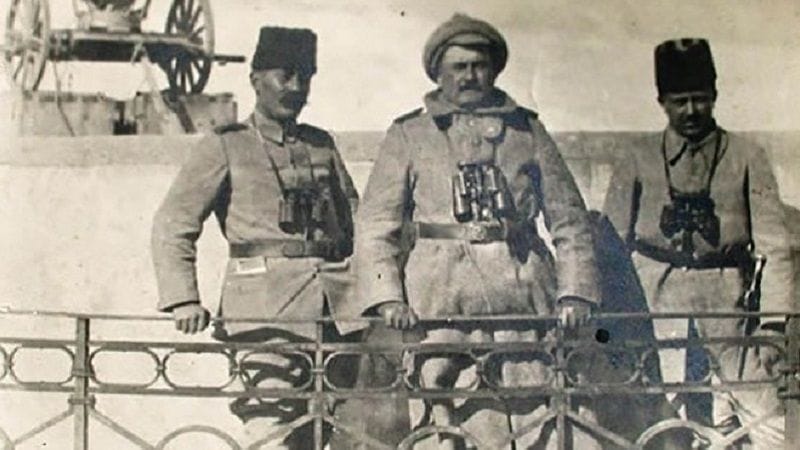
The offensive did not stop at Kars. Turkish units entered Gümrü on 7 November and Iğdır on 12 November. Thereupon talks began with the Armenian side, which had agreed to a ceasefire. Ardahan and Artvin were taken on 23 February 1921. In this way the lands of the three sanjaks were regained, with the exception of Çürüksu (Kobuleti), Adjara and Batum.
The main places taken on the Eastern Front, with their dates, were as follows:
- Sarıkamış, Göle and Kağızman: by 30 October 1920
- Kars and Kars Castle: 30 October 1920
- Gümrü: 7 November 1920
- Iğdır: 12 November 1920
- Ardahan and Artvin: 23 February 1921
The Treaties of Alexandropol, Moscow and Kars
The Eastern Front was not closed by a single treaty. Alexandropol ended the war, while the treaties of Moscow and Kars finalized the border. Read together, these three texts reveal the political outcome of the front.
| Treaty | Date | Parties | Main outcome |
|---|---|---|---|
| Alexandropol (Gümrü) | 3 December 1920 | TBMM government and Armenia | Kars, Sarıkamış, Kağızman, Kulp and Iğdır were incorporated into Turkish territory |
| Moscow | 16 March 1921 | TBMM government and Soviet Russia | Russia recognized the National Pact; Batum was left to Georgia |
| Kars | 13 October 1921 | Turkey and the Transcaucasian republics (with a Russian representative) | It was confirmed that Kars would remain in Turkey; Nakhchivan became an autonomous region attached to Azerbaijan |
The Treaty of Alexandropol (3 December 1920)
The Treaty of Alexandropol was signed on 3 December 1920 between Armenia and the TBMM government. Karabekir signed the treaty on behalf of Ankara. According to the TDV Encyclopedia of Islam, this was the first treaty that Ankara signed. Kars, Sarıkamış, Kağızman, Kulp and Iğdır were once again incorporated into Turkish territory. Armenia, for its part, renounced all the rights that had been granted to it at Sèvres.
The Treaty of Moscow (16 March 1921)
The Treaty of Moscow was a treaty of friendship signed with Soviet Russia on 16 March 1921. According to the encyclopedia, Russia had recognized the TBMM government but was wary of an alliance. With the treaty it recognized the National Pact and accepted the provisions of the Treaty of Alexandropol. It thus approved the incorporation of Kars and Ardahan into Turkey, while Batum was left to Georgia.
The Treaty of Kars (13 October 1921)
The remaining issues were settled by the Treaty of Kars, signed on 13 October 1921. According to the encyclopedia, the treaty was signed by Turkey and the Transcaucasian republics in talks in which a Russian representative also took part. Under this treaty Nakhchivan was recognized as an autonomous part of the Azerbaijan Soviet Socialist Republic. Thanks to the final border adjustments made by the treaties of Moscow and Kars, Kars remained within the borders of the new Turkish state.
What Did the Eastern Front Bring to the National Struggle?
The most tangible gain of the Eastern Front was the return of Kars and Ardahan to Turkish territory. The second gain lay in the military balance. According to the encyclopedia, the units in the region and the weapons obtained from Armenia were transferred to the front in the west. Ankara was thus able to commit more forces against the Greek army.
Some of the gains were diplomatic. With Alexandropol, the TBMM government signed a treaty with a state for the first time. At Moscow, Russia undertook that it, too, would not recognize any treaty that Turkey did not recognize. Russia also agreed to the abolition of the capitulations. In addition, it promised Ankara enough arms and ammunition for two divisions, together with aid of 10 million gold roubles.
The effect on morale was also great. According to the entry on Karabekir, this victory raised the hopes of those taking part in the National Struggle. The entry on the National Struggle likewise writes that the Allies convened the London Conference after Ankara’s successes on three fronts. The conference, which met in February 1921, ended on 12 March without result.
Against Whom Was the War of Independence Fought? The Fronts at a Glance
The short answer: the War of Independence was fought against Armenia in the east, France in the south and Greece in the west. The TDV Encyclopedia of Islam defines the National Struggle as the general name for the wars fought against the occupying powers after Mudros. Militarily, the struggle ended with the Armistice of Mudanya on 11 October 1922. Politically, it came to an end with the Treaty of Lausanne on 24 July 1923.
| Front | Opposing side | Main places | How did it end? |
|---|---|---|---|
| Eastern Front | Armenia | Sarıkamış, Kars, Gümrü, Iğdır | Treaty of Alexandropol (3 December 1920) |
| South | France | Maraş, Antep, Urfa, Dörtyol | Treaty of Ankara (20 October 1921) |
| Western Front | Greece | İnönü, Sakarya, Afyon, İzmir | Armistice of Mudanya (11 October 1922) |
In the south, the struggle was waged against the French occupation. According to the encyclopedia, the Armenians in the French army that occupied Dörtyol in December 1918 met the armed resistance of the people of the village of Karakese. The resistance in Maraş ended in victory on 12 February 1920, and militia forces also went into action in Urfa. With the Treaty of Ankara of 20 October 1921, France withdrew from the Anatolian territories it had occupied.
In the west, the fighting was against the Greek army. Greek troops landed at İzmir on 15 May 1919. The regular army first halted the Greek advance at İnönü (January and April 1921). The Battle of Sakarya, which lasted three weeks, ended on 12 September 1921 with the defeat of the Greek army. After the Great Offensive, which began on 26 August 1922, Turkish units entered İzmir on 9 September.
Beyond these three fronts there were other powers as well. Britain formally occupied Istanbul on 16 March 1920 and, according to the encyclopedia, supported some internal uprisings. Italy entered Antalya, but on 18 April 1922 it began to evacuate the Menderes valley. Ankara also had to deal with internal uprisings such as those of Anzavur, Düzce and Yozgat. Judging by the dates in the table, the Eastern Front was the earliest front to close.
Frequently Asked Questions
Whom did Ankara fight on the Eastern Front?
The TBMM government fought Armenia. The question of Ardahan and Batum, however, also concerned Georgia.
Who was the commander of the Eastern Front?
The commander was Kâzım Karabekir Pasha. He was appointed commander of the Şark Cephesi (Eastern Front) on 14 January 1920.
Where was the Eastern Front fought?
The offensive covered Sarıkamış, Göle, Kağızman, Kars, Gümrü and Iğdır. Ardahan and Artvin were taken on 23 February 1921.
Why is the Treaty of Alexandropol important?
It is the first treaty signed by the Ankara government. With this treaty, Armenia renounced the rights that Sèvres had granted it.
Conclusion
The Eastern Front in the War of Independence was a short campaign against Armenia, but one with lasting results. In the autumn of 1920 the units of Kâzım Karabekir Pasha took Sarıkamış, Kars, Gümrü and Iğdır. The treaties of Alexandropol, Moscow and Kars confirmed that Kars and Ardahan would remain in Turkey. The units and weapons sent west, meanwhile, lent strength to the later stages of the National Struggle. That is why the Eastern Front is remembered as the victory that won Ankara its first treaty.
Sources
- TDV Encyclopedia of Islam, entry “Millî Mücadele” (National Struggle)
- TDV Encyclopedia of Islam, entry “Kâzım Karabekir”
- TDV Encyclopedia of Islam, entry “Kars”
- TDV Encyclopedia of Islam, entry “Ardahan”
- TDV Encyclopedia of Islam, entry “Sevr Antlaşması” (Treaty of Sèvres)
- TDV Encyclopedia of Islam, entry “Nahcıvan” (Nakhchivan)