The lonca organization was the guild that brought together tradesmen of the same craft in Ottoman cities and supervised production, quality and prices within an order running from apprentice to master. Tradesmen elected their own leaders, and the kadı approved the choice. In this article we explain the steps from apprentice to master, the duties of guild officers and why the system came to an end.
Quick Summary
- The word comes from the Italian “loggia”; it was first the name of a trading place in Galata.
- Ottoman guilds were based on mutual supervision and solidarity rather than competition.
- A craft had the ranks of apprentice, journeyman and master; mastership was granted in a ceremony.
- A board made up of the şeyh, the kethüda and the yiğitbaşı led the guild.
- Tradesmen who broke the narh could face heavy penalties.
- Factory goods from Europe weakened the system; the old order of the tradesmen formally ended in 1913.
Contents
- Short answer
- 6 steps from apprentice to master
- Solidarity instead of competition
- Relations with the state: the kadı, the narh and inspection
- Palace craftsmen
- From the Ahi brotherhood to the guilds
- Gedik: the right to open a shop
- Why did the system collapse?
- Frequently asked questions
What Was the Lonca Guild System? A Short Answer
The word comes from the Italian “loggia”, meaning a room or a special place. It is thought to have entered Turkish through the trade of Venetian, Genoese and Ragusan merchants in Galata. From the time of Mehmed the Conqueror there was a quarter called Lonca in Galata. This was where merchants’ goods were stored and where tradesmen bought them wholesale and distributed them.
Over time the place name became identified with the tradesmen’s organization. The first recorded use of the word for the tradesmen of Bursa dates from 1632–33, while the oldest document in Istanbul is dated 1697. The term became widespread in the 18th century. The word lonca came to mean both the common room where tradesmen met and the organized tradesmen themselves, that is, the guild.
From Apprentice to Master: 6 Steps of the Guild System
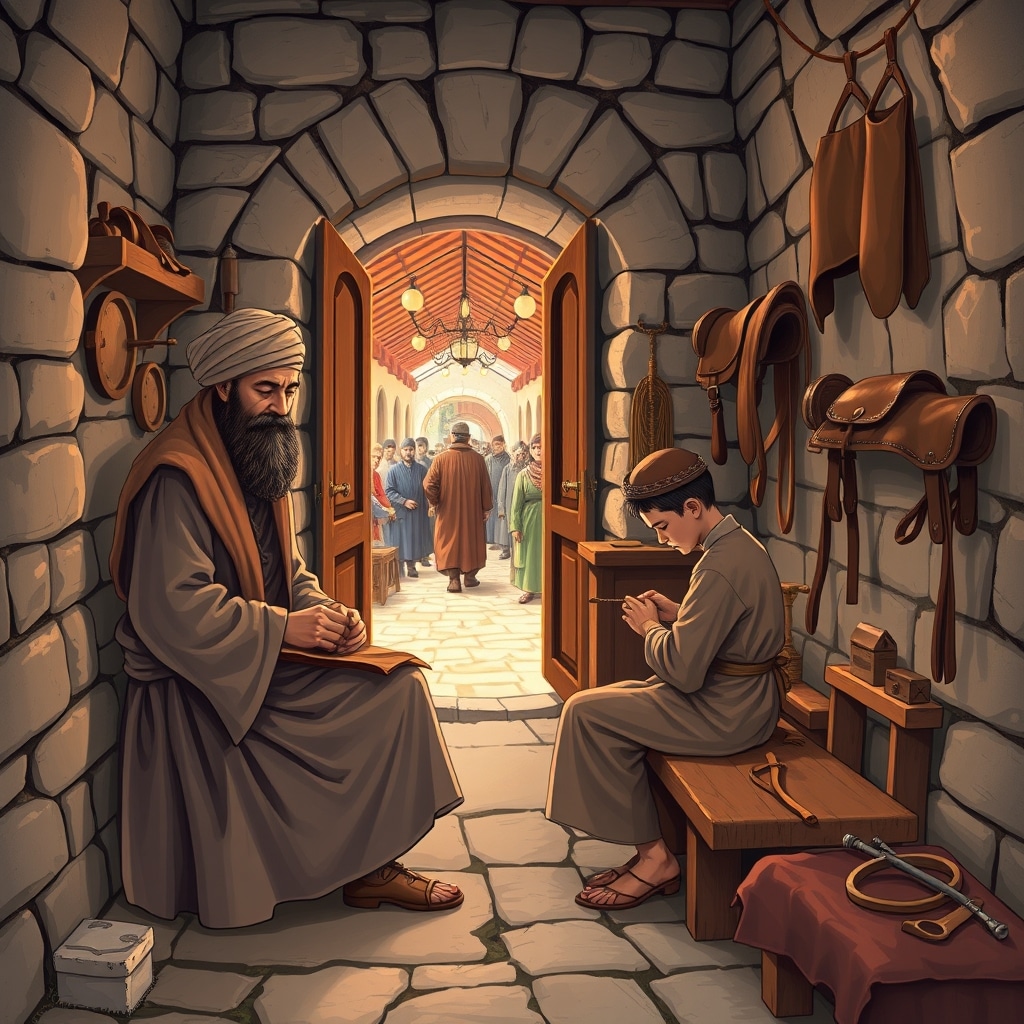
The guilds had a hierarchical structure. The duties, authority and rights of each step were set by tradition and by regulations.
1. Apprentice
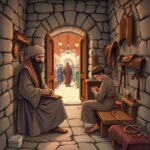
Someone who wanted to learn a craft entered a master’s service as an apprentice, a çırak. He had to show complete obedience to his master and follow the traditions of the craft. An apprentice could not leave his master without the permission of his guild. During this period he received a wage according to his needs.
2. Journeyman
An apprentice who had worked for a certain time and proved himself rose to journeyman, or kalfa. The journeyman’s wage increased; he produced under his master’s orders and kept an eye on the apprentices.
3. Master
A journeyman who had learned the finer points of the craft was promoted to master, or usta, in a ceremony. With prayers, the yiğitbaşı girded the new master with a şed or peştamal, a waist cloth. The journeyman’s work was shown to the masters, and the masters and wealthy tradesmen bought these pieces. The money collected became the new master’s capital. The best masters in a guild were called “ihtiyar”, elders.
4. Yiğitbaşı
The yiğitbaşı was responsible for training apprentices well and for the discipline and punishment of the tradesmen. He girded new masters with the şed and managed the orta sandık, the common chest of the guild.
5. Kethüda
The kethüda looked after the financial and administrative affairs of the guild. His job was to prevent corruption, settle disputes among tradesmen and, when necessary, take them to the kadı or the Imperial Council. The tradesmen elected the kethüda, and the kadı entered him in the court register.
6. Şeyh
At the head of the board stood the şeyh, chosen from among the literate and elderly tradesmen. The şeyh dealt mostly with ceremonies. From the 18th century onwards his place was gradually taken by the kethüda.
The board had other officers too. The işçibaşı checked the quality of the goods produced and kept defective goods off the market. Experts called “ehl-i hibre” acted as arbitrators in disputes between tradesmen and merchants.
Solidarity Instead of Competition
A continuation of the tradesmen’s associations of the Seljuk period, these bodies were organized on the basis of mutual supervision and assistance rather than the principle of competition. Members of the same craft worked together and supervised one another. The common chest supported tradesmen who fell on hard times.
Each branch of trade had its own traditions and a “pîr”, a patron saint. Adam was regarded as the patron of farmers, Idris of tailors, David of blacksmiths and Salman the Persian of barbers. Ahi Evran was the patron of tanners. For the place of tradesmen in the city, see our article on the social structure of the Ottoman Empire.
In the 17th century Evliya Çelebi listed the guilds of Istanbul one by one by name. They operated in Ottoman trading places such as the bedesten, the arasta and the bazaar.
Relations with the State: The Kadı, the Narh and Inspection
Although the guild system governed itself, it was under the supervision of the state. Every stage, from the supply of raw materials to production, pricing and sale, was subject to this supervision. The election of the kethüda and the other officers was approved by the Ottoman kadı. Over time kethüdas also began to receive warrants from the government.
The tradesmen had a say in pricing. Experts played a role in setting prices according to the quality of the goods. However, a tradesman who broke the official price of essential foodstuffs and sold at a higher price was called a “muhtekir”, a profiteer. Such people could face heavy penalties, including death.
The guilds were organized independently of one another according to the goods and services they produced and where they were located. The central authority and the kadıs determined which goods each could produce and sell, and with what rights. These rights were not an absolute monopoly. If they were found to bring no benefit to consumers or producers, they could be abolished at once.
In wartime tradesmen could also be taken into state service. Tradesmen who joined the army to meet its need for food, clothing and war materials were called “orducu esnaf”, the army’s tradesmen.
Palace Craftsmen
While some tradesmen worked independently, others worked for a salary in state-owned workshops. The craftsmen who met the needs of the palace were called “ehl-i hiref”. According to Koçi Bey, the palace craftsmen numbered about 2,000 in the 17th century.
Among them were cooks, bakers, tailors, goldsmiths, furriers, saddlers, calligraphers, bookbinders and painters. Some craftsmen brought from Iran and Azerbaijan after the victories of Otlukbeli and Çaldıran were also taken into the palace. Each group had its own head master, journeymen and apprentices.
Another state workshop was at Ağakapısı. All the tradesmen there were taken from the Acemi Ocağı, the training corps of the Janissaries, and trained in various crafts. Bootmakers, barbers, bakers, cooks, blacksmiths and farriers were among them. In the second half of the 18th century, about 800 masters and workers worked in this workshop. When the devşirme system broke down, the state workshops also began to meet their needs from independent tradesmen.
From the Ahi Brotherhood to the Guilds
The link between the tradesmen’s organization and the Ahi brotherhood had existed since the founding of the state. Officers of the Ahi organization such as the “ahi baba” and the şeyh remained at the head of some guilds until the first half of the 19th century.
The şeyhs of the Ahi Evran lodge had long been regarded as the şeyh of all tradesmen. They had the right to appoint chaplains, ahi babas, kethüdas and yiğitbaşıs and to grant journeyman and master status to those who had completed their training. The office of şeyh passed from father to son within the family of Ahi Evran.
Gedik: The Right to Open a Shop
In Turkish the word gedik means “a gap, a breach in a wall”. In commercial law, however, it refers to a privilege. Its origin lies in a permanent right of use over tools and fittings, such as shelves, cupboards and chests, that tradesmen installed especially in shops belonging to pious foundations. For how foundation shops worked, see our article on the Ottoman waqf system.
This right rests on a right of use known in Islamic law as “süknâ”. Ebüssuûd Efendi had also treated a similar right as equivalent to the gedik. Within the guild system this right began to be granted to the tradesmen’s bodies from the mid-16th century. Over time, practicing a particular craft became a privilege that depended on holding a gedik. These two terms, however, were never used interchangeably in the documents.
Why Did the Guild System Collapse?
Limited competition eventually created a weakness as well. According to some researchers, the guilds did not feel a strong enough need to raise quality and develop new techniques. As economic life expanded, monopolies became a heavier burden.
Purchasing monopolies over products and raw materials other than essential foodstuffs were abolished in 1794. Under Mahmud II, monopolies on food were also abolished, starting with the grocers. The Treaty of Balta Liman of 1838 put an end to all monopoly rights.
Unable to compete with factory goods from Europe, the organization of the tradesmen gradually broke up. After the Tanzimat there were attempts to reorganize the tradesmen with new regulations. With reforms that followed the Constitutional period, the gedik and guild system was abolished in 1913.
Frequently Asked Questions
What was the purpose of the guild system?
It organized tradesmen by craft, regulated training from apprentice to master, inspected quality and settled disputes among tradesmen. It acted as a bridge between the state and the tradesmen on prices and raw materials.
Is the lonca guild the same as the Ahi brotherhood?
They are not the same, but they are linked. Ottoman guilds were a continuation of the Ahi tradition of the Seljuk period; officers such as the ahi baba and the şeyh survived in some of them until the 19th century.
When was the guild system abolished?
The gedik system and the old order of the tradesmen were abolished in 1913. Before that, the regulation of 1794 and the Treaty of Balta Liman of 1838 had ended the monopolies.
Conclusion
The lonca was a guild system that regulated production in Ottoman cities not through competition but through solidarity and supervision. The path from apprentice to master, the oversight of the yiğitbaşı and the kethüda and the approval of the kadı gave the life of tradesmen a solid framework. The abolition of monopolies and competition from factory goods brought this order to an end in 1913.
Sources
- TDV Encyclopedia of Islam, entry “Lonca”
- TDV Encyclopedia of Islam, entry “Esnaf”
- TDV Encyclopedia of Islam, entry “Gedik”
- Ahmet Kal’a, İstanbul Esnaf Birlikleri ve Nizamları.