The Waqf System was a fundamental institution in Ottoman society that financed public services such as mosques, madrasas, soup kitchens, hospitals, fountains and roads through continuous sources of income, without burdening the state budget, while uniting religious responsibility with social solidarity.
Contents
- What Is the Waqf System?
- How Waqfs Functioned in the Ottoman Empire
- Mosques and Neighborhood Life
- Madrasas, Education and Learning
- Social Aid, Soup Kitchens and Health Services
- Economic and Urban Impact
- Transformation after the Tanzimat
- Conclusion
- Sources
What Is the Waqf System?
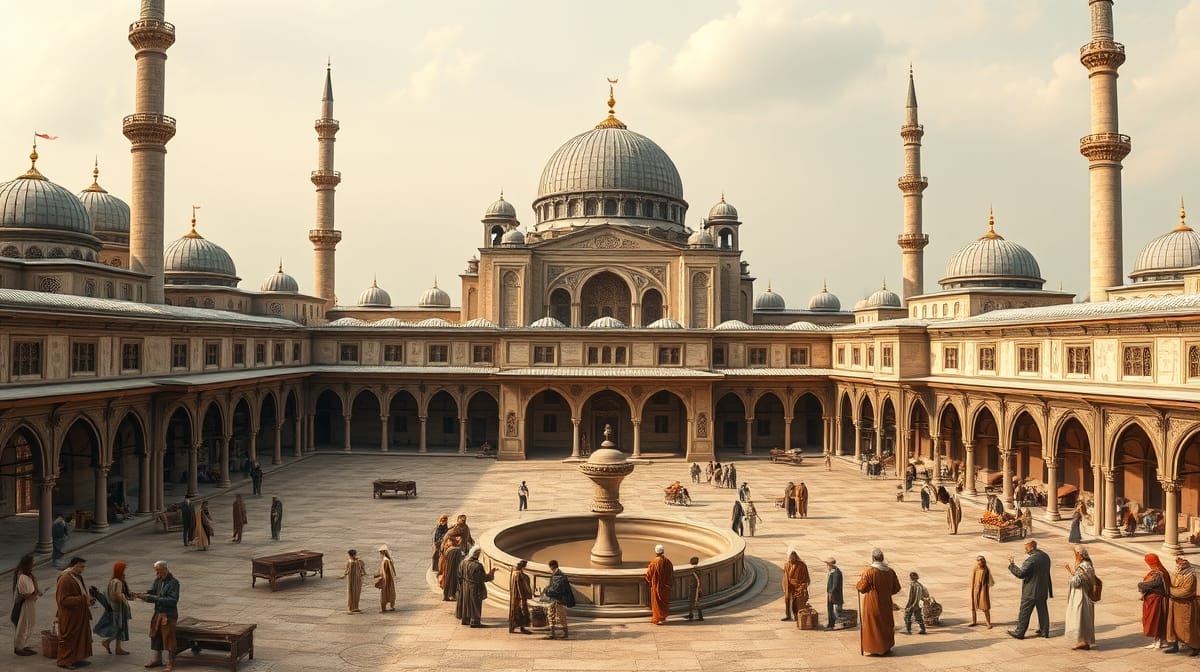
In the Ottoman world, a waqf meant dedicating a property or income for the public good for the sake of God, while preserving the original capital and spending its revenue on specified services. This institution was based on the Islamic legal concept of sadaqa jariya, or ongoing charity; among the Ottomans, however, it became not merely an act of individual beneficence but the main support of urbanization, education, social security and cultural life.
A person could endow an income-producing asset such as a house, shop, field, mill, bathhouse, inn, vineyard, garden or cash money; the revenue generated from this property could be allocated to the salaries of mosque staff, the upkeep of madrasa students, feeding travelers, treating the sick or assisting the poor. According to Halil İnalcık, to understand Ottoman urban order, one must look not only at central state institutions but also at the local and semi-public service network created by waqfs.
The Waqf System and the Principle of Continuity
The most important principle of the Waqf System was continuity. Endowed property acquired a legal status that made it difficult to sell or divide through inheritance. The waqf deed set out in detail for what purposes, to which officials and in what amounts the revenues would be distributed. In this way, a charitable institution could continue to operate for generations after its founder’s death.
The Ottoman waqf was not merely an institution that distributed aid; it was a long-lasting social mechanism that connected income, law, architecture, education and neighborhood life.
How Waqfs Functioned in the Ottoman Empire
The operation of waqfs was regulated through documents known as waqf deeds. A waqf deed was a legal text that recorded the founder’s intention, the endowed properties, sources of revenue, the duties of officials, salaries and the details of services. Registered before a qadi, these documents ensured the waqf’s legitimacy and accountability. As İsmail Hakkı Uzunçarşılı emphasized in his studies of Ottoman institutions, qadis played a key role in the implementation of waqf law.
Waqfs were generally administered by a trustee, or mütevelli. The trustee managed the waqf properties, collected rents, paid the wages of officials and was obliged to comply with the conditions in the waqf deed. Oversight by an inspector or qadi was intended to prevent mismanagement. Although abuses were sometimes seen in practice, the system’s survival for a long period was made possible by the tradition of legal recordkeeping and its social legitimacy.
Sources of Revenue within the Waqf System
The Waqf System rested not only on a sense of charity but also on solid sources of income. Behind major külliyes there were often market shops, inns, bathhouses, mills, olive groves, farm revenues or lands in distant regions. These revenues were tied to detailed expenditure items, from lamp oil for the mosque to bread for students in the madrasa.
At this point, the waqf was also part of Ottoman economic life. While the revenues of shops in a market sustained a madrasa, the madrasa maintained scholarly vitality in the city; the mosque strengthened neighborhood identity; and the soup kitchen supported the poor and travelers. For this reason, the waqf institution should be considered together with different elements of the Ottoman order, such as the timar system; one sustained the military-administrative structure, while the other sustained social and urban services.
Mosques and Neighborhood Life
In the Ottoman city, the mosque was not merely a place of worship; it was the center of neighborhood life. Friday mosques brought larger communities together, while masjids regulated everyday religious and social relations at the neighborhood level. Waqf revenues covered the salaries of officials such as the imam, preacher, muezzin, caretaker and lamp-lighter, and financed needs such as cleaning, lighting, repairs and the provision of books.
The külliyes that formed around mosques produced some of the most influential examples of Ottoman architecture. Great külliyes such as Fatih, Süleymaniye and Selimiye were not only religious building complexes but multifunctional centers where education, health, food and lodging services were gathered. To understand these institutions, the features of Ottoman art and architecture and the waqf order must be evaluated together.
The Waqf System in Mosque Endowments
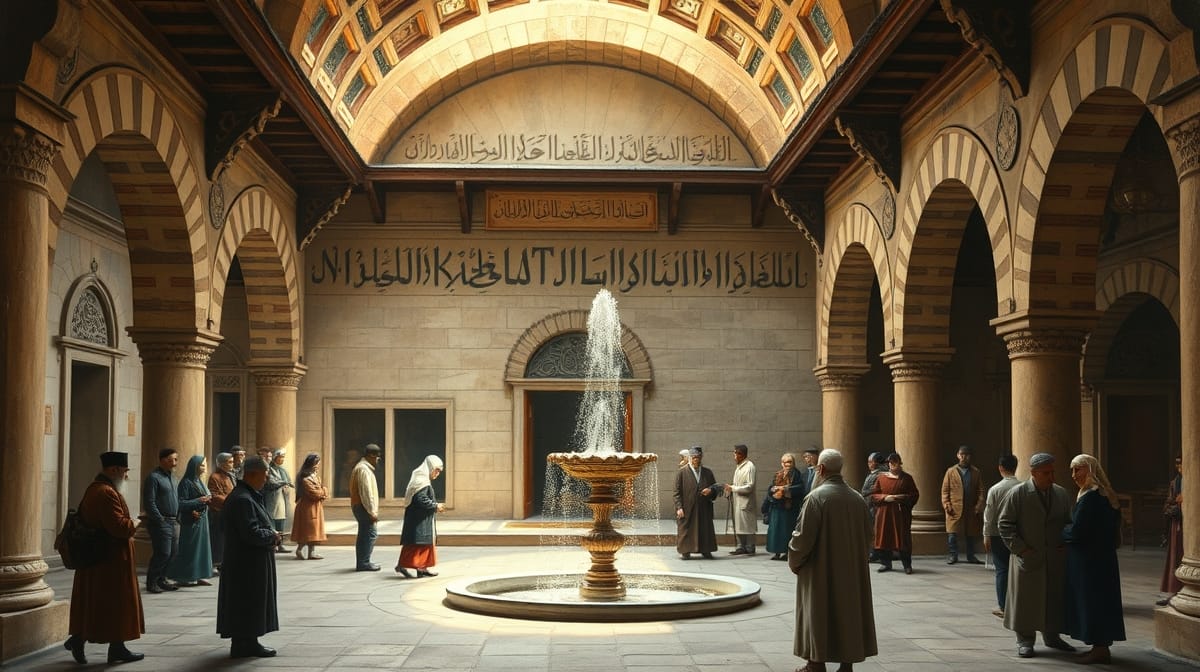
In mosque endowments, the Waqf System tied the continuity of worship to material security. The survival of a mosque depended not only on its architectural strength but also on the sources of revenue that sustained it. Oil for lamps, the renewal of carpets, the repair of taps and fountains, the salaries of officials and Ramadan services were provided according to the conditions of the waqf deed.
In this respect, the mosque was a center that brought different classes of society together in the same space. Tradesmen, ulema, artisans, soldiers, travelers and the poor could meet around the same waqf services. As Suraiya Faroqhi has shown in her studies of Ottoman urban life, the daily life of the city was organized to a great extent around such institutions.
Madrasas, Education and Learning
In the Ottoman educational order, madrasas survived thanks to waqfs. The salaries of professors, the food of students, their accommodation, book needs and building expenses were often covered by waqf revenues. For this reason, the Waqf System became decisive not only in social aid but also in scholarly production and the training of bureaucratic personnel.
The first Ottoman madrasa is generally accepted to have been founded in Iznik during the reign of Orhan Ghazi. Later, the madrasas of Bursa, Edirne and Istanbul formed a more complex educational network as the state expanded. The Sahn-ı Seman madrasas established in Istanbul by Mehmed II and the Süleymaniye madrasas of the reign of Suleiman the Magnificent stood out as institutions of higher education supported by waqf revenues. This development offers a broader framework for the education system in the Ottoman Empire.
The Waqf System and Madrasa Students
The Waqf System did not merely provide madrasa students with classrooms; it also met their needs for accommodation and food. Daily meals given to students, sometimes small cash stipends and access to libraries reduced the economic burden of the pursuit of learning. This made it easier for talented young people from the provinces to receive an education.
The subjects taught in madrasas varied according to the period and the level of the madrasa, but they could include fields such as Islamic jurisprudence, Qur’anic exegesis, hadith, Arabic, logic, theology and mathematics. Mehmet İpşirli’s assessments of the Ottoman learned establishment show how important the madrasa-waqf relationship was in the training of the learned class.
Social Aid, Soup Kitchens and Health Services
One of the most visible aspects of Ottoman waqfs was social aid. Soup kitchens, or imarets, were institutions that distributed food to the poor, students, travelers and sometimes the staff of the külliye. In some large imarets, daily menus, distribution times and priority recipients were clearly specified in the waqf deeds. This practice was a strong form of solidarity organized within society before the modern concept of the welfare state.
The Waqf System also supported health services through darüşşifas, or hospitals. Darüşşifas established in centers such as Bursa, Edirne and Istanbul were institutions where patients were treated, physicians served and medicine expenses were covered by waqf revenues. Of course, these services were not the same as the modern hospital system; nevertheless, they were important for providing regular and institutional health assistance in their own time.
The Poor, Travelers and Everyday Aid
Waqfs were effective not only in major cities but also in towns and along travel routes. Caravanserais and inns contributed to the safe lodging of travelers, while fountains and sebils supplied water needs. Bridge, road and pavement waqfs made transportation easier; some waqfs aimed to assist widows, orphans, debtors or captives.
This diversity shows that Ottoman society cannot be understood only through the palace and the army. The neighborhood, guilds, family, religious institutions and charitable networks were among the fundamental elements that shaped daily life. In this respect, within the social structure of the Ottoman Empire, waqfs created a special sphere that built a bridge between the state and society.
Economic and Urban Impact
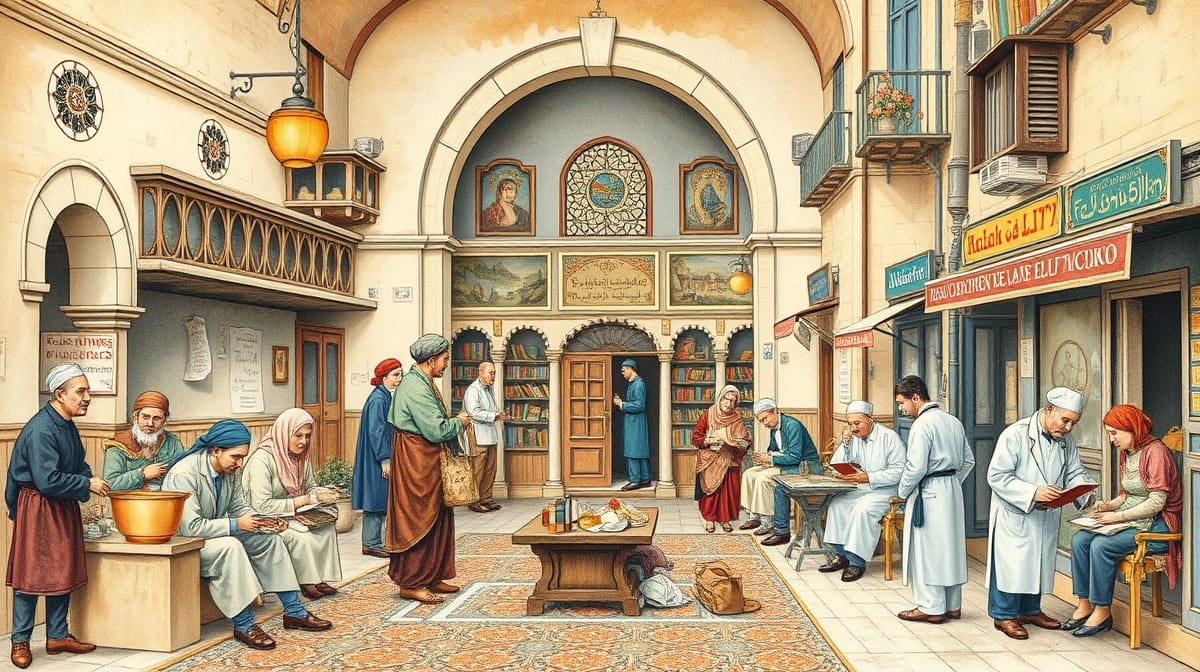
The Waqf System directly influenced the economy of Ottoman cities. Around the construction of a külliye, markets, bazaars, housing and craft areas could develop. Shops around a mosque both brought vitality to the neighborhood economy and generated income for the waqf. For this reason, waqfs may be regarded as the invisible financial backbone of urban planning.
The broad framework emphasized in Halil İnalcık and Donald Quataert’s studies of Ottoman economic and social history shows that the Ottoman economy was shaped not only by taxation and trade but also by the ways local institutions produced income. By directing property revenues to public services, waqfs established a lasting connection between private wealth and public benefit.
Women and the Founding of Waqfs
Women were also important founders of waqfs in Ottoman history. Dynastic women, powerful women in the palace milieu and wealthy urban women established waqfs for mosques, fountains, schools, soup kitchens and charitable institutions. Hürrem Sultan’s Haseki Külliye, Mihrimah Sultan’s mosques and Nurbanu Sultan’s Atik Valide Külliye are among the well-known examples of this tradition.
This situation is important for understanding women’s influence in Ottoman public life. The founding of waqfs offered elite women in particular the opportunity to perform religious charity, gain social prestige and leave a lasting architectural legacy. The subject gains broader meaning when considered together with the place of women in the Ottoman period.
Transformation after the Tanzimat
By the nineteenth century, the Ottoman administration showed a tendency to bring waqfs under more centralized control. The establishment of the Ministry of Evkaf was an important turning point in terms of reorganizing waqf revenues and administration under state supervision. The aim of this process was to consolidate the dispersed administration of waqfs and ensure that revenues were used more regularly.
Centralization, however, also transformed the local flexibility of the classical waqf order. During the Tanzimat and Reform periods, with the development of modern municipal, educational and health institutions, some of the traditional functions of waqfs began to shift to state institutions. This change should be read together with the administrative transformation that followed the Tanzimat and Reform edicts.
Why Did the Waqf System Weaken?
Over time, the Waqf System lost its former strength under the influence of economic crises, wars, mismanagement, the weakening of revenue sources and centralizing reforms. Some waqf properties became inefficient, some became the subject of legal disputes and some revenues proved insufficient in the face of inflation. Nevertheless, the idea of the waqf continued to live on in the post-Ottoman period in the fields of social assistance, cultural heritage and religious services.
As seen in Caroline Finkel’s broad narrative of Ottoman history, the empire’s long life cannot be explained by military successes alone; institutions that sustained daily life were also decisive in this continuity. Waqfs are among the most concrete examples of this institutional continuity.
Conclusion
The Waqf System was a powerful order of solidarity in Ottoman society that united education, worship, health, urbanization and social aid, from mosques and madrasas to soup kitchens and hospitals; while this system shaped the material fabric of Ottoman cities, it also nourished the moral and institutional continuity of social life.
Sources
- Halil İnalcık and Donald Quataert, An Economic and Social History of the Ottoman Empire.
- İsmail Hakkı Uzunçarşılı, The Learned Organization of the Ottoman State.
- Suraiya Faroqhi, Subjects of the Sultan: Culture and Daily Life in the Ottoman Empire.
- Caroline Finkel, Osman’s Dream.
- TDV Encyclopedia of Islam, Waqf entry.




1 thought on “The Ottoman Waqf System: Mosques, Madrasas and Social Aid”