Harem life was an order bound by strict rules in the closed quarters of Topkapı Palace where the sultan’s family lived. According to the TDV Encyclopedia of Islam, concubines (cariye) were educated here and rose step by step, and most of them were eventually married off and left the palace. In this article we look at the rules, titles and common myths on the basis of the sources and compare them with the picture painted in novels.
Quick Summary
- Harem life was a closed order based on seniority, education and service.
- All the servants of the women’s quarters answered to the agha of the Darüssaade.
- A newly arrived concubine was a novice; in time she became an apprentice, a kalfa and an usta.
- From Mehmed the Conqueror onward, sultans chose their consorts from among the palace concubines.
- After Ahmed III the title kadınefendi became common for the sultans’ consorts.
- When a sultan died, his women and retinue were sent to the Old Palace.
Contents
- Daily rules
- From concubine to kadınefendi
- The sultans’ marriages
- When the sultan died
- Allowances, dress and endowments
- Myths and facts
- Frequently asked questions
What Rules Governed Harem Life?
According to the TDV Encyclopedia of Islam, the term Darüssaade was used for the private quarters of Topkapı Palace in which the sultans and their families lived for about 380 years. Here lived the sultan’s mother, his daughters, sisters and consorts, and the other female relatives belonging to the dynasty. Alongside them were the concubines who had been presented to the palace as gifts or bought. For this large community, harem life meant an order based on seniority and rank of duty.
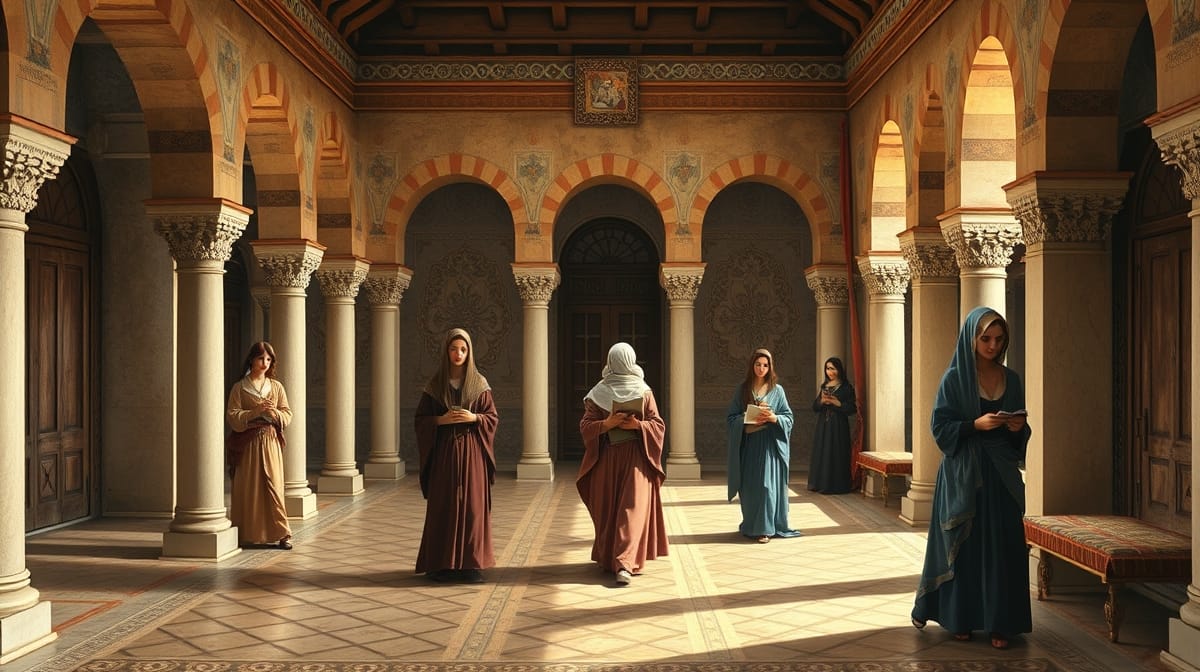
The Agha of the Darüssaade and the Order of the Gates
All the servants of the quarters answered to the agha of the Darüssaade. According to the encyclopedia, because the eunuch aghas supervised the part of the palace belonging to the women, they were also called the aghas of the girls. Newly acquired aghas guarded the gates under the orders of senior members called nöbet kalfası. In the meantime they learned the customs and rules of the corps and moved up to the rank of novice agha.
The women did not take part in city life. Their needs for education, entertainment and clothing were met by the agha of the Darüssaade. Purchases from the city were also made through the aghas. This closed world of the palace held a privileged place within the social structure of the Ottoman Empire.
Links with the Outside World in Harem Life
The link with the outside world was not cut off entirely. According to the entry on Topkapı Palace, contact with the city also continued through palace women who had earlier married and left the palace. The sultans’ consorts, however, had very limited contact with the outside until the reign of Mahmud II.
After this period the kadınefendis began to wear the çarşaf and the ferace and to cover their faces with a yaşmak. It also became normal for them to be seen at promenade grounds. From the reign of Sultan Abdülmecid onward, outings beyond the palace increased further.
The Steps from Concubine to Kadınefendi
Most of the women in the palace did not belong to the dynasty. According to the entry on Topkapı Palace, only a few of them became the sultan’s consorts. The others were married off and left the palace after receiving education and training. Some joined the class of servants, such as the hazinedar usta and the kalfas.

From Novice to Master
A concubine newly brought into the palace was called a novice (acemi). According to the entry on the kadınefendi, novices were trained according to strict rules and in time rose to the ranks of apprentice (şakird), kalfa and usta. Advancing within harem life required respecting this order of seniority. These steps show clearly that not every woman in the palace had the same status.
Gözde, Ikbal and Kadınefendi
Concubines who caught the sultan’s attention and grew close to him became a gözde or an ikbal. According to the encyclopedia, the practice of the ikbal is first encountered in the reign of Mustafa II. In later periods the number of ikbals varied between one and six. When there was more than one, they were ranked as başikbal, second ikbal and third ikbal.
Ikbals who bore the sultan a child were given apartments and concubines. Abdülhamid I had the Apartments of the Favorites (Gözdeler Dairesi) built at Topkapı. The title hanım or hanımefendi was used for the ikbals. You can find the period’s understanding of birth and pregnancy in our article on pregnancy in the Ottoman period.
The kadınefendis were ranked first, second and third according to their seniority. The first was also called the başkadınefendi. If one of them died or the sultan divorced her, the next in line took her place. The başikbal, in turn, was promoted to the last kadınefendi position.
Promotion took place on the recommendation of the agha of the girls and with the sultan’s approval, and a berat (patent) showing the new status was issued. The rising concubine was adorned with sable furs by the chief consort and led to the sultan’s apartment. She kissed the hem of the ruler’s robe, and apartments and concubines were assigned to her. This rise within harem life was an official procedure that was put on record.
How Did the Sultans Marry?
According to the entry on the kadınefendi, until the reign of Mehmed the Conqueror the sultans married the daughters of Byzantine emperors, Anatolian beys and Serbian and Bulgarian kings. These weddings were very splendid. From Mehmed the Conqueror onward the practice of taking brides from outside came to an end, and the sultans began to choose their consorts from among the palace concubines.
Even in this period, Suleiman the Magnificent, Osman II and Sultan İbrahim contracted formal marriages with the women they were attached to. These marriages, however, were not well received in palace circles. For the later development of Ottoman family law, see our article on the first Ottoman law regulating marriage and divorce.
How the marriage contract was concluded is known from a document dated 20 October 1774 about Abdülhamid I’s marriage to his fifth consort. According to it, an auspicious hour was first fixed and the Chamber of the Holy Mantle was prepared.
The agha of the Darüssaade, the treasury officials and the sultan’s imam gathered behind a lattice in the room, whose doors and curtains had been closed. The deferred dower (mihr-i müeccel) was set and the marriage was contracted. Although the document does not say so explicitly, it is understood that the parties were represented by proxies. Sherbets were then drunk and the ceremony came to an end.
From Hatuns to Hasekis: How the Titles Changed
In the early periods the title hatun was used for the sultans’ consorts. Osman Bey’s wife Mal Hatun, Bayezid I’s wife Devlet Hatun and Mehmed the Conqueror’s wife Sitti Mükrime Hatun are examples. Until the 18th century the titles haseki, sultan and, rarely, hanım also appear.
From Ahmed III onward the title kadın or kadınefendi became common. After this the word sultan was used mostly for the sultans’ daughters. Kadınefendis whose sons came to the throne, however, continued to use the title valide sultan. For a wider list, take a look at our article on Ottoman women’s names.
The word haseki means “close companion, private confidante”. According to the entry on the haseki, concubines who won the sultan’s favor and became his consorts were called haseki or hünkâr hasekisi. Those who bore a son were given the title haseki sultan, and a gold crown set with precious stones was placed on their heads. They were given apartments and revenue grants (has) for their upkeep, and concubines were assigned to serve them.
The best known holders of this title are Suleiman’s consort Hürrem Sultan and Sultan İbrahim’s favorite Telli Haseki. The Haseki Complex that Hürrem had Mimar Sinan build still stands. Over time the term haseki sultan was replaced by kadın and kadınefendi.
What Changed When a Sultan Died?
The death of a sultan also meant a great change for harem life. According to the entry on the kadınefendi, the dead sultan’s women, his daughters and all the members of his retinue were sent to the Old Palace. The princes, however, remained at Topkapı Palace. This practice was first applied to the retinue of Murad III.

The Old Palace and the Valide Procession
Everything changed if the son of a kadınefendi, who led an almost reclusive life in the Old Palace, came to the throne. She returned to Topkapı in a ceremony called the valide procession and became the most powerful person in the quarters. Those whose sons did not come to the throne continued this secluded life until they died.
Kösem Sultan, mother of Murad IV and Sultan İbrahim, is among the best known valides who rose in this way. According to the entry on the haseki, hasekis who had borne sons were sent to the Old Palace. Those who had no children or had borne daughters were married to high-ranking statesmen.
Some sultans personally married off the consorts they had divorced to other men. Abdülhamid II’s marriage of Nurefsun Kadınefendi to another man is an example.
When the Old Palace was given to the office of the serasker in 1826, the arrangement changed again. The dead sultan’s women were now settled in Topkapı Palace or in the Twin Palaces (Çifte Saraylar). In this way harem life moved in the 19th century to new palaces such as Dolmabahçe and Yıldız as well.
Allowances, Dress and Endowments
Livelihood within harem life also depended on rank. According to the entry on the kadınefendi, the sultans’ consorts had allowances and assignments according to their rank. These could be in kind or in cash, such as fabric, fur, candles, soap, firewood, sugar, coffee, meat, honey and fruit. In addition, revenue grants (has) and paşmaklık estates were set aside for them.
The chief consort received more, and the others less according to their rank. From the end of Mahmud II’s reign the kadınefendis were paid salaries from the Privy Purse (Hazine-i Hassa), and from then on all their salaries were made equal. When they died, their property was seized on behalf of the treasury.
The kadınefendis took great care over their dress and dressed like the sultanas. The buttons of their gowns were made of diamonds and their sleeves were lined with fur up to the elbow. They covered their heads and shoulders with shawls. From the reign of Abdülmecid onward, their dress and way of life took shape according to European fashion.
The sultans’ women founded great endowments and built works such as mosques, sebils, libraries, hospitals, imarets, bridges and fountains. Hatice Turhan, Gülnuş, Mihrişah, Nakşidil and Bezmialem are the names that stand out in this field. We explained how these institutions worked in our article on the Ottoman waqf system.
Myths and Facts
Western paintings and novels often showed the sultan’s women’s quarters as an exotic place of pleasure. A large share of these depictions rests on the imagination of painters and writers who had never seen the inner parts of the palace. The picture of harem life in the sources, by contrast, points to a palace organization woven with rules. We discussed the overall structure of this section in detail in our article on the Ottoman harem system.
Myth: Harem Life Was a World of Pleasure
In reality, education, service and seniority were at the center of daily life. Novice concubines were raised according to strict rules, and every promotion took place on the recommendation of the agha of the girls and with the sultan’s approval. Entertainment and ceremonies were also part of this order, but they were not the whole of life.
Myth: The Sultans Had Countless Wives
According to the entry on the kadınefendi, the number of a sultan’s consorts rose at most to seven, as far as can be determined. The number of women of the later sultans, including Sultan Abdülaziz, did not exceed four. Most of the crowd in the palace consisted not of the sultan’s consorts but of concubines who were being educated and who served.
Myth: No One Who Entered the Palace Could Ever Leave
Most of the women not belonging to the dynasty were married off and left the palace after their education. Even the childless hasekis of a dead sultan could be married to high-ranking statesmen. Those who married and left the palace also served as a bridge between the women inside and the city.
Frequently Asked Questions
What kind of order was harem life?
It was a closed palace order based on seniority, education and service. All the servants answered to the agha of the Darüssaade.
What does ikbal mean?
It is the name given to a concubine who caught the sultan’s attention and grew close to him. According to the TDV Encyclopedia of Islam, the practice is first encountered in the reign of Mustafa II.
Who was called haseki sultan?
The haseki who bore the sultan a son. A jeweled gold crown was placed on her head, and apartments and revenues were assigned to her.
How many consorts did the sultans have?
According to the TDV Encyclopedia of Islam, the number of kadınefendis rose at most to seven. Under Abdülaziz and the sultans after him the number did not exceed four.
What happened to the consorts when the sultan died?
They were sent to the Old Palace. A kadınefendi whose son came to the throne returned to Topkapı as valide sultan.
Conclusion
Harem life was less the world of pleasure depicted in novels than a palace organization run on seniority, education and strict rules. Concubines rose from novice to master, and those who grew close to the sultan became ikbals and kadınefendis. Marriages, promotions and allowances were regulated by documents, and the death of a sultan changed the whole order. For women outside the palace, see our article on the place of women in the Ottoman period.










2 thoughts on “Harem Life in the Ottoman Empire: Facts, Myths, and Rules”