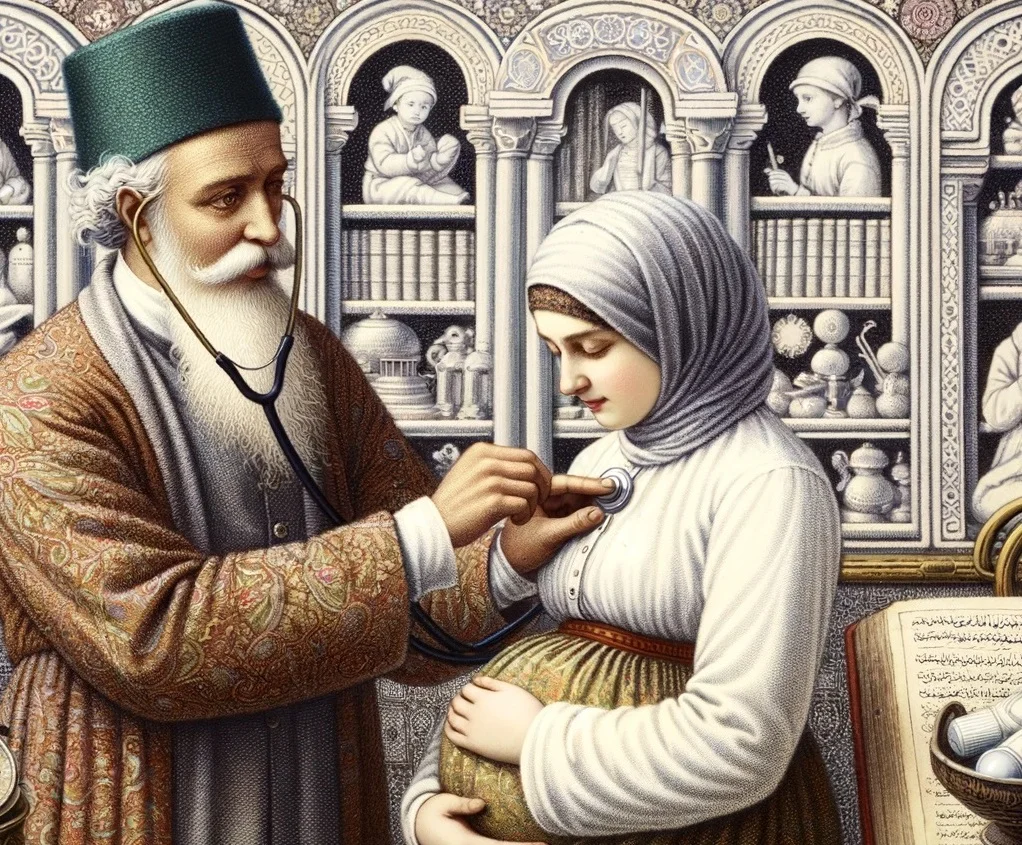
How was pregnancy understood in the Ottoman Empire? In this period, when there were no modern tests, pregnancy was recognized through signs such as the cessation of menstruation, nausea, food cravings and, above all, the baby beginning to move. In doubtful cases experienced midwives were consulted, and when necessary the court also heard the midwives’ opinion. In this article we examine the signs, the role of midwives and the truth behind the folk tests.
Quick Summary
- The first and most reliable sign was a regular period being late.
- Nausea, cravings and changes in the breasts were followed through observation.
- Certainty usually came when the baby’s movements were felt.
- Midwives examined women and gave their opinion in legal disputes.
- Folk tests such as the wheat and barley test had no scientific basis.
Contents
- The short answer
- Signs of pregnancy in the Ottoman period
- The role of midwives
- Pregnancy in Ottoman medicine
- The importance of pregnancy in law
- Childbirth and postpartum customs
- Old-fashioned pregnancy tests
- How was pregnancy recognized in the past?
- Frequently asked questions
How Was Pregnancy Understood in the Ottoman Empire? The Short Answer
In Ottoman society, pregnancy was recognized not through a test result but through signs that accumulated over time. Women first noticed the changes in their own bodies and talked them over with their mothers and relatives. If the signs did not become clear, they went to the experienced midwife of the neighborhood.
In this process, the most decisive moment was when the baby’s movements were felt. These movements usually begin in the fourth or fifth month of pregnancy. Until then, it was often spoken of as a possibility rather than accepted as certain knowledge.
Signs of Pregnancy in the Ottoman Period
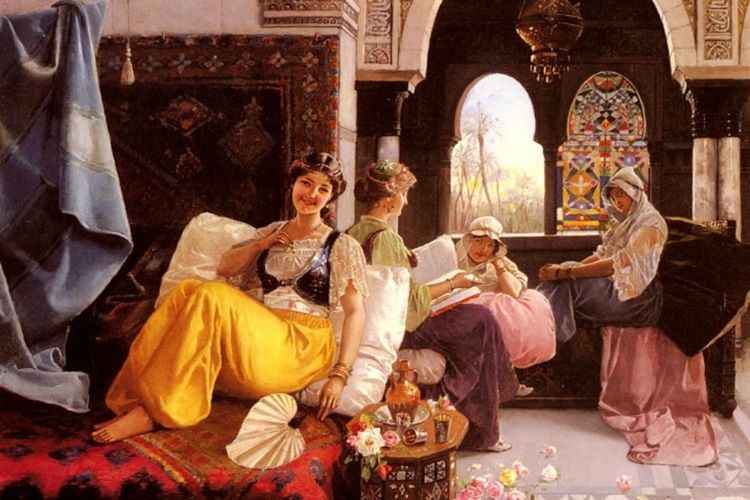
Women of the period watched carefully for the signs that are still known today. None of these signs was considered conclusive on its own, but together they formed a strong indication.
- A late period: In a woman with regular periods, a delay was the first and most important sign.
- Nausea and vomiting: Nausea, especially in the morning, was taken as an early sign.
- Cravings: An intense desire for, or aversion to, certain foods was a well-known sign among the people.
- Changes in the breasts: Fullness, tenderness and changes in color were observed in the breasts.
- The baby’s movements: The growing belly and the baby beginning to stir were the signs that settled the matter.
These signs were discussed within the family, especially among women. It was also common not to share the news with a wider circle in the first months. Prayers were said for everything to go well, and various precautions were taken against the evil eye.
The Place of Cravings in Recognizing Pregnancy
The Turkish word aşerme describes a pregnant woman’s strong longing for certain foods. In folk culture, aşerme was seen both as a herald of pregnancy and as a state in which the pregnant woman’s wish had to be fulfilled without fail. This belief was part of the care shown to pregnant women.
The Role of Midwives
In Ottoman society, the experts on pregnancy and childbirth were midwives. Midwives usually learned their craft through a master–apprentice relationship from the midwives who came before them. To reach a judgment, they asked about the woman’s symptoms, examined her abdomen and reached an opinion based on their experience.
The midwife’s task was not only to deliver babies. She followed the expectant mother’s progress and gave advice on the mother’s nutrition and rest. From the mid-nineteenth century onward, the state began to put midwives through formal training and to register them. This transformation was part of modernization in the field of health.
For women’s daily lives and place in society, see our article on the place of women in the Ottoman period.
Pregnancy in Ottoman Medicine
Ottoman physicians carried on the accumulated knowledge of Islamic medicine with works in Turkish. One of the best-known names in this field is the physician Sabuncuoğlu Şerefeddin of Amasya. According to the encyclopedia, he was born around 1386 and practiced medicine for fourteen years at the Amasya Darüşşifa (hospital). He was the grandson of Sabuncuoğlu İlyas Çelebi, the chief physician of Sultan Mehmed I.
According to the TDV Encyclopedia of Islam, his Cerrâhiyye-i İlhâniyye, written in 1465, is the first work in the history of medicine to illustrate surgical procedures with miniatures, and it is written in plain Turkish. For this reason, the work is important not only for the history of medicine but also for the Turkish language and the art of painting.
Sabuncuoğlu’s Mücerrebnâme, written in 1468, contains the formulas of some medicines used for women’s diseases. These works show that women’s health and childbirth held an important place in the medical knowledge of the time. It should not be forgotten, however, that physicians too relied on symptoms and observation when diagnosing pregnancy.
Why Was Establishing Pregnancy Important in Law?
Pregnancy was not only a family matter; it also had legal consequences. According to the TDV Encyclopedia of Islam, in Islamic law certain rights of the unborn child were reserved until its birth. These rights were of four kinds: lineage, inheritance, endowment and bequest.
According to the encyclopedia, if there was a fetus among the heirs, two separate calculations were made, depending on whether it might turn out to be a boy or a girl. The case most advantageous to the fetus was taken as the basis, and its share was held back until the birth. If it was born alive, it was entitled to its share; if it was stillborn, the reserved share passed to the other heirs. Because a bequest is completed by a unilateral declaration of will, a bequest made in favor of a fetus was also valid; the same applied to endowments.
For this reason, jurists tried to determine whether the fetus was in the womb at the moment the rights arose, and they took an interest in the shortest and longest durations of gestation. According to the encyclopedia, today’s medical means can detect pregnancy from the first days; the same ease did not exist in the early periods of Islamic law. For the fetus to benefit from these rights, it had to be born alive.
For example, when a man died, whether his wife was pregnant directly affected the division of the inheritance. Pregnancy also played a decisive role in divorce and in the waiting period (iddet). When such disputes were brought before the kadı’s court, research shows that the opinion of midwives could be sought. For how the courts worked, see our article What did an Ottoman kadı do?.
In the Islamic tradition, on the basis of a hadith, the development of the fetus is accepted as taking place in stages. This belief made the period in which the baby’s movements were felt important from both a religious and a social point of view.
Childbirth and Postpartum Customs
Once it was clear that a baby was on the way, the family entered a long period of preparation for the birth. Births usually took place at home, with the help of the midwife and the women of the family. The mother’s period after giving birth is called lohusalık, and this postpartum period had a special place in social life.
In folk tradition, the postpartum period usually lasted forty days. During this time care was taken that mother and baby should rest, and long journeys and crowds were avoided. The bath taken on the fortieth day was celebrated as a custom marking the end of the postpartum period.
Guests who came to visit the house after the birth were offered lohusa şerbeti (postpartum sherbet). This red sherbet, flavored with cloves and cinnamon, was a symbol of the joy of the birth. The baby was named as the call to prayer was recited into its ear. For the naming preferences of the period, see our articles on Ottoman female names and Ottoman boy names.
Old-Fashioned Pregnancy Tests
Before modern science, many societies tried out methods for finding out in advance whether a woman was expecting. Some of these methods are still described today as “old-fashioned pregnancy tests.” However, how widespread they were in the Ottoman Empire is not documented in the sources.
The Wheat and Barley Test
The best-known ancient test is described in papyri from Ancient Egypt. The woman’s urine was poured on wheat and barley seeds, and if the seeds sprouted she was thought to be pregnant. People also tried to predict the baby’s sex by looking at which seed sprouted. Modern research has shown that this method does not work for predicting sex.
The Finger Pregnancy Test
Among the people, tests done “with the finger” or “by hand” are also mentioned. These methods rest on the idea that changes in the cervix can be felt by hand. It should be remembered, however, that such practices do not provide a reliable diagnosis in early pregnancy and may even pose health risks.
How Was Pregnancy Recognized in the Past? A Comparison with Other Cultures
The methods used in the Ottoman Empire were largely similar to those used elsewhere in the world in the same period. In Europe, too, the confirmation of pregnancy long depended on feeling the baby’s movements. Although physicians tried to make predictions by looking at the color and appearance of urine, these methods had no scientific basis.
Truly reliable pregnancy tests were developed only in the twentieth century, after the discovery of the pregnancy hormone. For this reason, the experience of Ottoman women was part of the general experience of the premodern world. The difference lay in the transmission of knowledge through midwives and solidarity among women.
Frequently Asked Questions
How was pregnancy recognized in the Ottoman Empire?
It was recognized through signs such as a late period, nausea, cravings and changes in the breasts. Certainty usually came when the baby’s movements were felt.
Why were midwives important in recognizing pregnancy?
Midwives were experts who made their assessment through examination and experience. They delivered babies, looked after expectant mothers and, when necessary, gave their opinion in court.
Was there a pregnancy test in the Ottoman Empire?
There was no test in today’s sense. Although some methods were passed around among the people, they had no scientific basis.
Conclusion
The answer to the question of how pregnancy was understood in the Ottoman Empire lies in observation and experience. Women watched the changes in their bodies, midwives interpreted these signs, and the law determined the consequences of pregnancy. Certainty often came with the baby’s first movements.
Sources
- TDV Encyclopedia of Islam, entry “Cenin” (Fetus)
- TDV Encyclopedia of Islam, entry “Sabuncuoğlu Şerefeddin”
- Turkish Historical Society (Türk Tarih Kurumu)
- Sabuncuoğlu Şerefeddin, Cerrâhiyyetü’l-Hâniyye.
- Gülhan Balsoy, The Politics of Reproduction in Ottoman Society, 1838–1900.