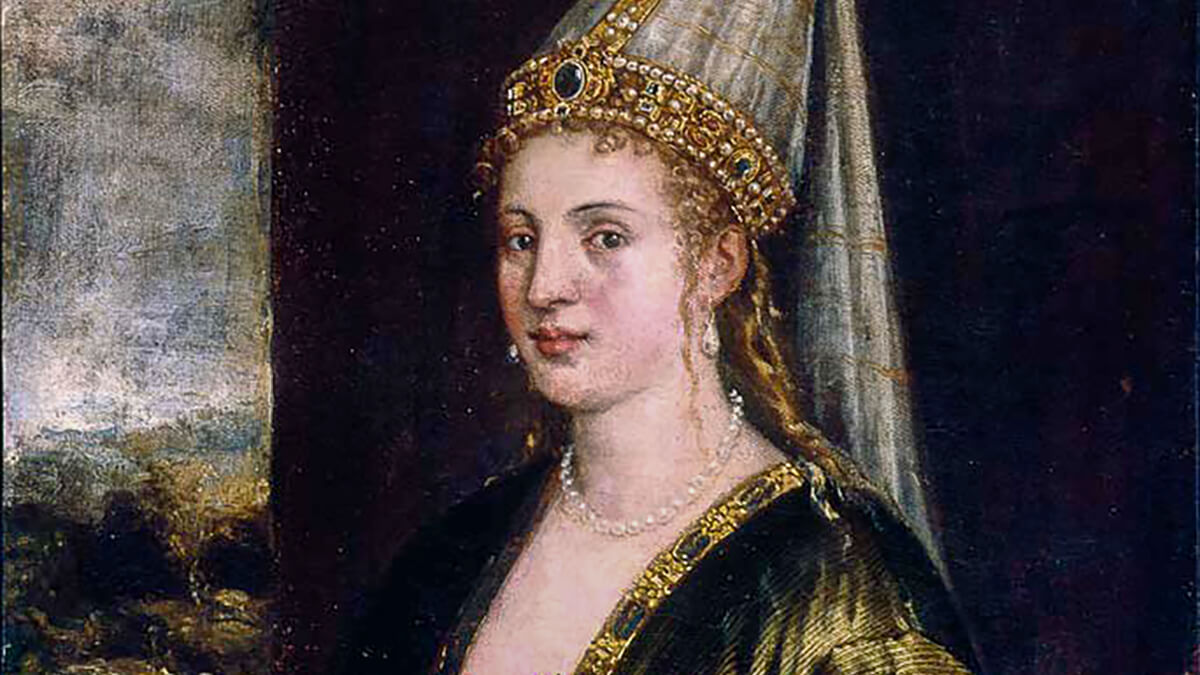
Hürrem Sultan was the wife of Suleiman the Magnificent and one of the most influential women in Ottoman history. According to the TDV Encyclopedia of Islam, she was probably born in the Rohatyn region of present-day Ukraine. Her real name was Alexandra Lisowska. She was taken captive in the Crimean raids and brought to the palace. Until her death in 1558 she remained one of the most powerful figures in the palace.
Quick Summary
- Her real name was probably Alexandra Lisowska.
- Western sources call her Roxelana.
- She was captured in the Crimean raids and presented to Prince Suleiman.
- When her son Mehmed was born, she received the title of haseki.
- Suleiman married her, although custom did not require it.
- Her greatest charitable work is the Haseki Complex in Istanbul.
Contents
- Origins
- Arrival at the palace
- Marriage
- Political influence
- Charitable works
- Final years
- Misconceptions
- Frequently asked questions
Who Was Hürrem Sultan?
According to the TDV Encyclopedia of Islam, Hürrem Sultan was the daughter of a poor Catholic priest. Her family lived in the Rohatyn region, which was then part of Poland. This region lies within the borders of Ukraine today. Her real name was Alexandra Lisowska. Her year of birth is not known for certain.
Western sources give her various names. According to the encyclopedia, Rossa, Roza and Rosanna are some of them. The most widely used name, however, is Roxelana. In Ottoman sources she appears almost exclusively as Haseki Sultan.
Was Hürrem Sultan Really Abducted?
According to the encyclopedia, she was taken captive in the reign of Selim I. In those years the Crimeans were raiding as far as Ukraine and Galicia. The young girl was seized in one of these raids. She reached the palace between the ages of fourteen and seventeen.
According to the encyclopedia, she was presented to Suleiman, who was still a prince, by Hafsa Sultan or by Makbul İbrahim Pasha. In other words, her capture is not a legend. Such captivity was common in the raids of the period. The details of her journey until she reached the palace, however, are not known.
Some popular accounts claim that she was educated in the Enderun. This is not true, because the Enderun was the palace school where boys were trained. According to the encyclopedia, she was given the name Hürrem, or Hürremşah, because of her cheerful face. She also received a good upbringing in the palace.
Her Marriage to Suleiman
According to the encyclopedia, with her intelligence and charm she soon became Suleiman’s favourite. She gave birth to Prince Mehmed in 1521. As a result she received the title of haseki. Her daughter Mihrimah was born in 1522. This name means “sun and moon”.
Abdullah, Selim, Bayezid and Cihangir were born next. Abdullah died young in 1526. In later years these children were also at the centre of the struggle for the throne.
According to the encyclopedia, until the early 18th century the women who bore the sultan children were called hatun, haseki and, rarely, sultan or hanım. The title haseki designated the favourite who stood out among these women. The mother of a prince also went with her son to his sanjak and supervised him.
Suleiman’s earlier favourite was Mahidevran Gülbahar Sultan. She was the mother of the eldest prince, Mustafa. A fierce rivalry began between the two women. According to the encyclopedia, when the valide Hafsa Sultan died in 1534, Suleiman sent Mahidevran to her son in Manisa.
Suleiman then married Hürrem Sultan. According to the encyclopedia, there was no obligation to marry concubines. The marriage was therefore a remarkable step by the customs of the time. We described how the harem worked in our article on the harem system.
According to the encyclopedia, Suleiman wrote letters to her while on campaign. These letters show the depth of the love between them. The letters were published in the collection compiled by Çağatay Uluçay. Some contemporary writers, such as the Austrian envoy Busbecq, claimed that she influenced the sultan through witchcraft. These rumours may also reflect foreigners’ limited knowledge of the harem.
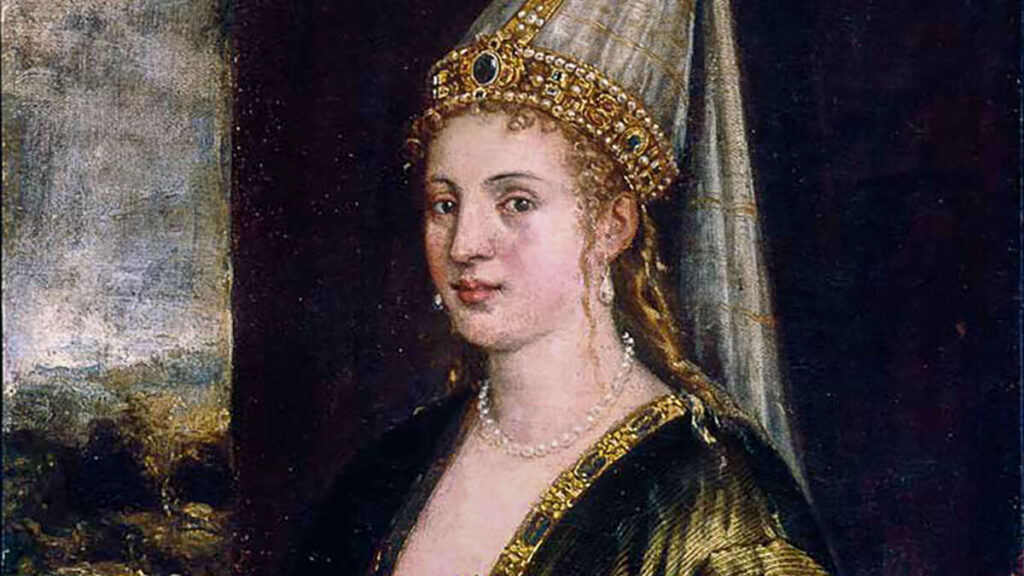
Her Political Influence in the Palace
According to the encyclopedia, she soon established complete authority in the palace. She made it the goal of her life that one of her own sons should become sultan. The greatest obstacle on this path was Prince Mustafa. The soldiers and the people loved this prince dearly.
According to the encyclopedia, both Makbul İbrahim Pasha and the valide Hafsa Sultan regarded Mustafa as heir apparent. The death of Hafsa Sultan in 1534 changed the situation. According to the encyclopedia, Suleiman’s wife then moved from the Old Palace to the New Palace, that is, Topkapı. Thus the harem of Topkapı in time became the place where the sultan’s family lived.
According to the encyclopedia, she is also believed to have played an important part in the fall of Makbul İbrahim Pasha. According to the encyclopedia, a fire broke out in the Old Palace on the night of 25 January 1541. After this she moved the harem to Topkapı Palace and initiated the harem protocol. In the same year Prince Mustafa was sent from Manisa to the more distant Amasya.
Her daughter Mihrimah married Rüstem Pasha. According to the encyclopedia, she also had a part in Rüstem Pasha’s rapid rise to the grand vizierate. When her son Prince Mehmed died in Manisa in 1543, she pinned her hopes on Bayezid. According to the encyclopedia, the Iranian campaign of 1548 was also undertaken so that the princes could prove themselves.
In this campaign Selim was left in Edirne as deputy, or kaymakam. Bayezid joined his father in Aleppo. According to the encyclopedia, the eldest prince, Mustafa, remained in Amasya as if out of favour.
According to the encyclopedia, Prince Mustafa was killed during the Iranian campaign of 1553. There is no doubt that she, together with Mihrimah and Rüstem Pasha, played a large part in this event. Following the soldiers’ reaction, Rüstem Pasha was dismissed and replaced by Kara Ahmed Pasha. Two years later Ahmed Pasha was also executed, and Rüstem Pasha became grand vizier again.
According to the encyclopedia, in a letter to Suleiman she had asked that Rüstem Pasha not be executed. Her influence is also noted in the execution of Ahmed Pasha. These events show how much the harem’s influence over affairs of state had grown.
A few months after Mustafa’s death, Prince Cihangir also died in Aleppo. This left only Bayezid and Selim alive. We described the period in our article on the Ottoman Empire under Suleiman the Magnificent.
Which Works Did Hürrem Sultan Commission?
According to the encyclopedia, her greatest charitable work is the Haseki Complex in Istanbul. The complex consists of a mosque, a madrasa, a primary school, a soup kitchen and a hospital. According to the encyclopedia, the district formerly called Avratpazarı has been known as Haseki since the 19th century. The double bath near Hagia Sophia is also her work.
According to the TDV Encyclopedia of Islam, the complex was the first work Mimar Sinan built after he became chief architect of the court. The first unit to be built was the mosque, completed in 1538–1539. When the mosque became too small, it was doubled in size in 1612 by Sedefkar Mehmed Ağa. The madrasa and the primary school were built a year later, and the soup kitchen and the hospital twelve years later. According to the encyclopedia, Peçuylu İbrahim and Evliya Çelebi describe the building of the complex in Avratpazarı as a courtesy that Suleiman showed his wife.
According to the encyclopedia, she also had the Kariye lodge in Istanbul converted into a madrasa. She also has charitable works in Jerusalem, Mecca and Medina. For all these buildings she left endowments with high revenues.
According to the TDV Encyclopedia of Islam, her complex in Jerusalem was built in 1551. Its soup kitchen distributed food to hundreds of guests, students and poor people. According to the encyclopedia, after his wife’s death Suleiman also had soup kitchens built in her name in Mecca and Medina. He brought water to Edirne and had a caravanserai built at Cisr-i Mustafa Paşa. We discussed the Ottoman works in Jerusalem in our article on Jerusalem.
Diplomacy and Her Final Years
According to the encyclopedia, in the last years of her life she turned to charitable works. She also took part in some diplomatic activity. She corresponded with the sister of Shah Tahmasp. She also wrote a letter of thanks for the gifts that came from the shah after the construction of the Süleymaniye Mosque.
Hürrem Sultan died in Istanbul on 15 April 1558. According to the encyclopedia, she was buried in the graveyard of the Süleymaniye Mosque. Suleiman later had a large tomb built over her grave. This tomb stands today in the same graveyard as Suleiman’s own tomb.
Common Misconceptions
The claim that she was educated in the Enderun is not based on the sources. Descriptions such as “the most beautiful Ottoman sultana” also belong to later narratives. The sources emphasize rather her intelligence, her charm and her political influence. According to the encyclopedia, her life has also been the subject of plays and operas in Europe and Turkey.
Some accounts also say that she was the first concubine to marry a sultan. The TDV Encyclopedia of Islam, however, notes only that there was no obligation to marry concubines. That is why the word “first” should not be used as if it were certain.
Frequently Asked Questions
What was Hürrem Sultan’s real name?
According to the TDV Encyclopedia of Islam, it was Alexandra Lisowska. Western sources call her Roxelana.
Where was Hürrem Sultan from?
She came from the Rohatyn region, which was then part of Poland. This region is in Ukraine today.
What does haseki mean?
It is a title given to the favourite women who bore the sultan children. Suleiman’s wife received this title when her son Mehmed was born.
Where is Suleiman’s wife buried?
In a tomb in the graveyard of the Süleymaniye Mosque in Istanbul.
Conclusion
Hürrem Sultan, who came to the palace as a captive, became Suleiman’s lawful wife. The move of the harem to Topkapı is associated with her name. So are the Prince Mustafa affair and the rise of Rüstem Pasha. The Haseki Complex and the soup kitchen in Jerusalem show her charitable side. In these respects Hürrem Sultan is one of the historical figures in whom legend and reality are most intertwined.









1 thought on “Who Was Hürrem Sultan, Really?”