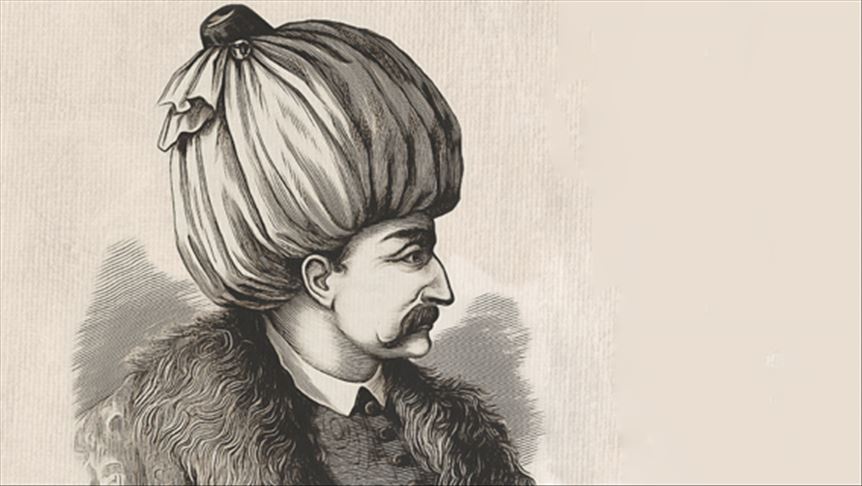
The Ottoman Empire during the reign of Suleiman the Magnificent experienced a rise that was remarkable both politically and culturally. Suleiman the Magnificent, who ascended the throne in 1520, was the longest-reigning sultan in Ottoman history. During his reign, the Ottoman Empire came to dominate vast territories across Europe, Asia, and Africa, evolving into a truly multinational empire. Throughout this process, campaigns conducted both to the east and to the west significantly expanded the empire’s borders.
The Ottoman Empire during the reign of Suleiman the Magnificent took important steps not only through military victories but also in the fields of law and architecture. Suleiman was remembered not merely as a commander but also for his sense of justice. For this reason, he became known among the people by the title “Kanuni” (the Lawgiver).
During this period, the Ottoman Empire was recognized as one of the great powers of Europe. Under Suleiman’s rule, Ottoman forces advanced as far as the gates of Vienna, while the Ottoman navy established strong dominance at sea. In addition, various laws were prepared to maintain order in domestic administration, and state institutions operated within a defined legal framework.
What Are the Key Events During Suleiman the Magnificent’s Reign?
The key events during the reign of Suleiman the Magnificent directly shaped the overall course of Ottoman history. The campaigns undertaken, the regulations enacted, and the institutional developments of this era left a lasting mark on both the empire’s internal structure and its foreign relations. In the early years after Suleiman took the throne, Belgrade and Rhodes were conquered. These conquests strengthened the Ottoman position in Europe and the Mediterranean.
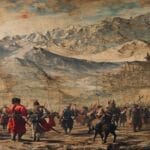
The Battle of Mohács, fought in 1526, brought about the collapse of the Kingdom of Hungary and increased Ottoman influence in Central Europe. This was followed by the siege of Vienna, through which the Ottomans once again demonstrated their power in Europe.
At sea, the Ottoman navy under the command of Barbaros Hayreddin Pasha secured dominance in the Mediterranean through the Battle of Preveza. Thanks to these developments, the key events during the reign of Suleiman the Magnificent were not limited to land battles alone—naval power also came to the forefront.
As a result of the campaigns launched against Iran, the rivalry between the Ottomans and the Safavids became pronounced. This struggle was temporarily halted with the Treaty of Amasya, concluded during Suleiman’s reign. At the same time, the legal codification efforts carried out in domestic administration brought clarity to the empire’s legal structure. The key events during the reign of Suleiman the Magnificent are as follows:
- The conquest of Belgrade
- The capture of Rhodes
- The Battle of Mohács
- The siege of Vienna
- The Naval Victory of Preveza
- The Iranian campaigns and the Treaty of Amasya
- The introduction of legal reforms
- The increase in construction activities led by Mimar Sinan
What Is the Significance of Suleiman the Magnificent’s Reign?
The significance of Suleiman the Magnificent’s reign can be explained through the political, military, legal, and cultural developments of Ottoman history. This era represents one of the phases in which the Ottoman Empire reached its widest borders on a global scale. Through campaigns conducted both in the east and the west, the Ottoman sphere of influence expanded considerably. In Europe, the Ottoman presence began to be perceived as a serious threat, which in turn enhanced the empire’s international prestige.
The significance of Suleiman the Magnificent’s reign stands out not only for its conquests but also for the reforms implemented in state administration. His efforts regarding the justice system introduced regulations aimed at protecting the rights of the people. The laws he prepared remained in force in the Ottoman Empire for many years and provided stability in governance.
By supporting art and architecture, Suleiman also fostered progress in the cultural sphere. The fact that Mimar Sinan’s most important works date from this period is a clear indication of this. At the same time, educational institutions were expanded, and scholars and poets received considerable support.