Sultan Suleiman I was remembered in history as “the Magnificent” thanks to an empire expanded through conquest, law codes that strengthened the legal order, and a political reputation that reached from Europe to the Islamic world.
Contents
- Sultan Suleiman I and the Title of the Magnificent
- Conquests and Imperial Vision
- Law, State Order, and Legal Codes
- Leadership in the Islamic World and Caliphal Prestige
- Culture, Art, and Architectural Legacy
- The Historical Limits of the Image of Magnificence
- Conclusion
Sultan Suleiman I and the Title of the Magnificent
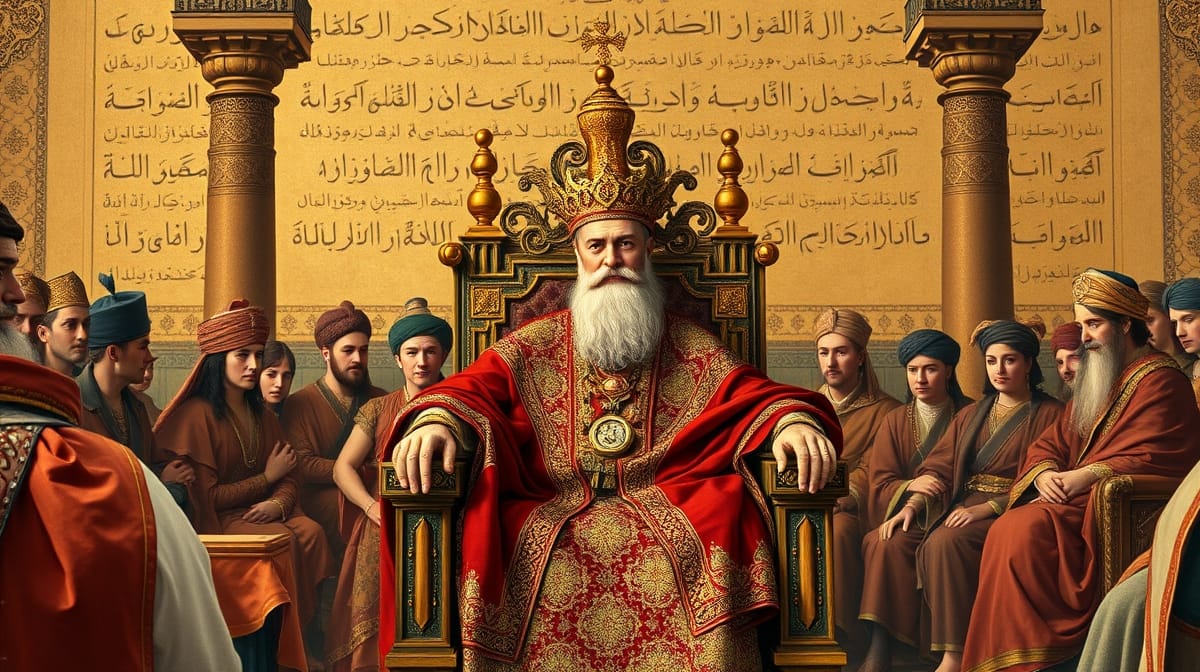
Sultan Suleiman I, the tenth sultan in Ottoman history, ascended the throne in 1520 and ruled for about forty-six years, until his death during the Szigetvar campaign in 1566. This long reign became one of the most visible periods of the Ottoman state in political, military, legal, and cultural terms. In Western sources he was most often called Suleiman the Magnificent; in the Ottoman tradition, however, he was more commonly remembered by the epithet “Kanuni,” meaning “the Lawgiver.”
These two titles in fact describe two different aspects of the same ruler. The epithet “Magnificent” is especially connected with the splendor of the Ottoman court, the strength of its armies, diplomatic influence, and the ruler’s international prestige as seen from Europe. The title “Lawgiver,” by contrast, emphasizes his role as a legislator, organizer, and ruler who systematized the machinery of the state. According to Halil İnalcık, the Ottoman classical order reached its institutional maturity in this century; the authority of the sultan became visible not only through conquest, but also through law and administration.
Why was Sultan Suleiman I perceived differently?
What made the reign of Sultan Suleiman I exceptional was not simply the number of campaigns undertaken. During his rule, the Ottoman state became a major imperial power capable of exerting influence simultaneously across the Mediterranean, Central Europe, the Red Sea, the Persian Gulf, and North Africa. When this wide sphere of influence is considered in competition with the European rulers of the age, the perception of “magnificence” becomes even stronger.
The title “Magnificent” refers not only to courtly splendor, but also to the political power and international visibility that the Ottoman state achieved in the sixteenth century.
In this context, when writing about Sultan Suleiman I, he should not be treated as a one-dimensional ruler of victories alone, but assessed at the intersection of conquest, law, diplomacy, economy, architecture,and religious legitimacy. For a broader background to the period, the Ottoman order during the reign of Sultan Suleiman I may also be examined.
Conquests and Imperial Vision
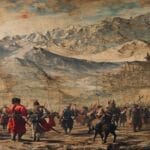
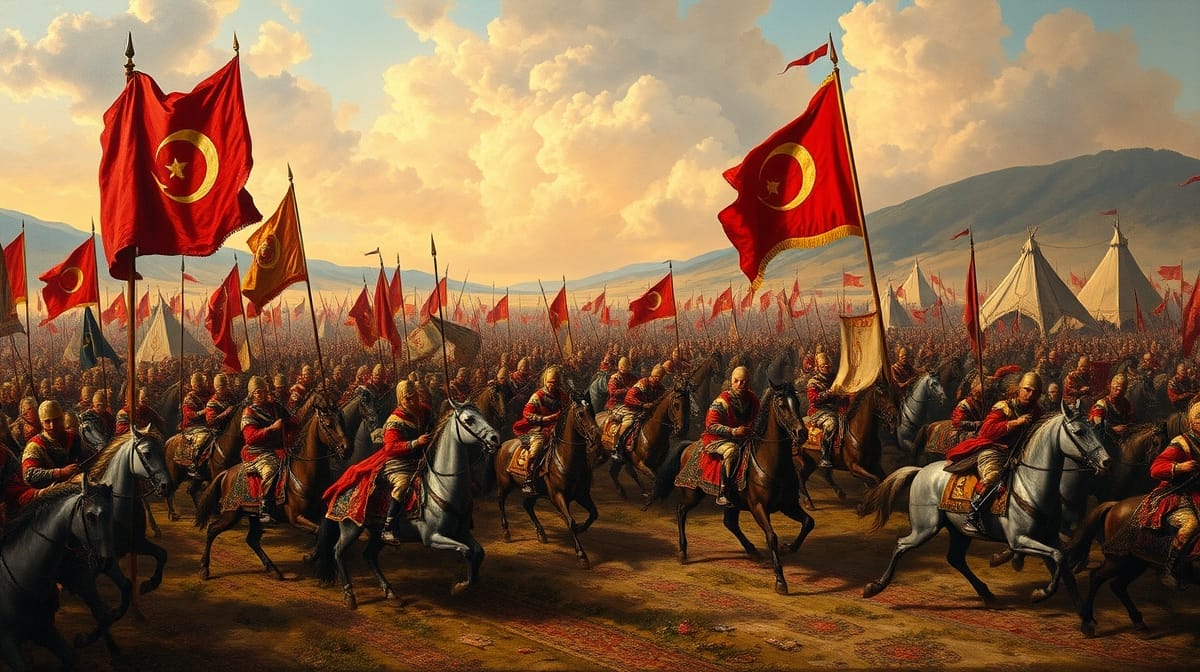
Military successes played a major role in Sultan Suleiman I being remembered as “the Magnificent.” Soon after he came to the throne, the capture of Belgrade in 1521 meant that the Ottomans took control of one of the most important gateways into Central Europe. The conquest of Rhodes in 1522, meanwhile, was a strategic success for the security of Ottoman naval power in the eastern Mediterranean.
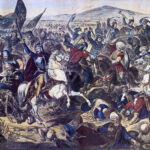
The Battle of Mohacs in 1526 was not merely a brilliant military victory won in a short time; it was an event that radically changed the political balance in Hungary. After this victory, Ottoman influence extended deep into Central Europe. Although the Siege of Vienna in 1529 did not result in the capture of the city, it showed that Ottoman power was being felt seriously in European capitals.
Western campaigns during the reign of Sultan Suleiman I
The western campaigns of Sultan Suleiman I cannot be explained solely as attempts to gain territory. These campaigns were also part of the rivalry with the Habsburgs, the struggle for dominance over Hungary, and the Ottoman claim to be a decisive actor in European diplomacy. In her account of this period, Caroline Finkel emphasizes that Ottoman-Habsburg rivalry became one of the central axes of sixteenth-century European politics.
At the heart of the Ottoman army were the kapikulu troops, timariot cavalrymen, and an advanced logistical system. For more context on this military structure, the content explaining who made up the Ottoman army is a useful supplement. Likewise, among the naval victories of the period, the historical importance of the Battle of Preveza for the Ottomans makes it easier to understand the Mediterranean dimension of Suleiman’s age.
The Mediterranean, North Africa, and naval power
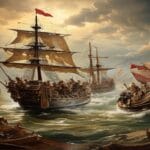
The magnificence of Suleiman’s age was not limited to victories on land. The appointment of Barbaros Hayreddin Pasha as grand admiral and the Ottoman naval victory at Preveza in 1538 consolidated Ottoman supremacy in the Mediterranean. Ottoman influence increased across the North African line stretching from Algiers to Tripoli. These developments showed that Istanbul was not only the center of the Balkans and Anatolia, but also a principal actor in Mediterranean politics.
As can be seen in İsmail Hakkı Uzunçarşılı’s assessments of Ottoman institutional history, the relationship between central authority and the military-administrative structure in this period rested largely on an institutional order. This order ensured the sustainability of campaigns and made it possible for the Ottomans to maintain a presence on several fronts at once.
Law, State Order, and Legal Codes
In Ottoman society, Sultan Suleiman I’s most enduring title was “Kanuni,” or “the Lawgiver.” This epithet does not mean that he was the only ruler to create new laws; rather, it refers to his compilation and systematization of the customary legal order inherited from earlier periods. The balance between Sharia law and customary regulations was one of the fundamental issues of Ottoman administration.
Kanunnames, or legal codes, were texts that determined the functioning of the state in areas such as taxation, land tenure, penal practices, the timar system, and administrative authority. The fact that these regulations became more systematic during the reign of Sultan Suleiman I shows that the sultan was influential not only on the battlefield, but also at the center of statecraft. In this respect, his magnificence was associated with the pen as much as with the sword.
Sultan Suleiman I and the ideal of justice
During the reign of Sultan Suleiman I, the concept of justice stood at the center of Ottoman political thought. The sultan’s legitimacy rested not only on his ability to wage conquest, but also on protecting the reaya, regulating taxes according to certain rules, and placing limits on state officials. In the Ottoman understanding of politics, the idea of the “circle of justice” was an important concept explaining the ruler’s role as the founder of order.
In the functioning of this administrative order, the role of the Imperial Council in Ottoman government held a special place. The grand vizier, viziers, kazaskers, treasurers, and the nişancı were among the officials who took part in decision-making processes on behalf of the sultan. During the reign of Sultan Suleiman I, this mechanism became even more important in a form suited to the scale of empire.
Leadership in the Islamic World and Caliphal Prestige
In the age of Suleiman, the Ottoman sultan was seen not only as a Turkish-Muslim ruler, but also as a protector and leader across the wider Islamic world. With the end of Mamluk rule during the reign of Selim I, the Ottomans had assumed the role of protector over the Hejaz. Sultan Suleiman I continued this legacy and strengthened his prestige in the Islamic world.
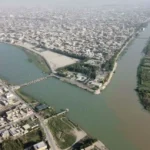
As a result of the Iraqayn campaign, Baghdad came under Ottoman rule in 1534, a development of great political and symbolic importance. Baghdad carried powerful meaning because of the Abbasid legacy and the Islamic scholarly tradition. The struggle against the Safavids was not merely a border conflict; it was also part of the great rivalry between Sunni Ottoman politics and the Shiite Safavid world.
To understand the historical background of this rivalry, the content prepared on the Ottoman-Iranian wars offers complementary reading. In addition, the article titled the leadership of Ottoman sultans in the Islamic world broadens the dimension of religious legitimacy in Suleiman’s age.
Culture, Art, and Architectural Legacy
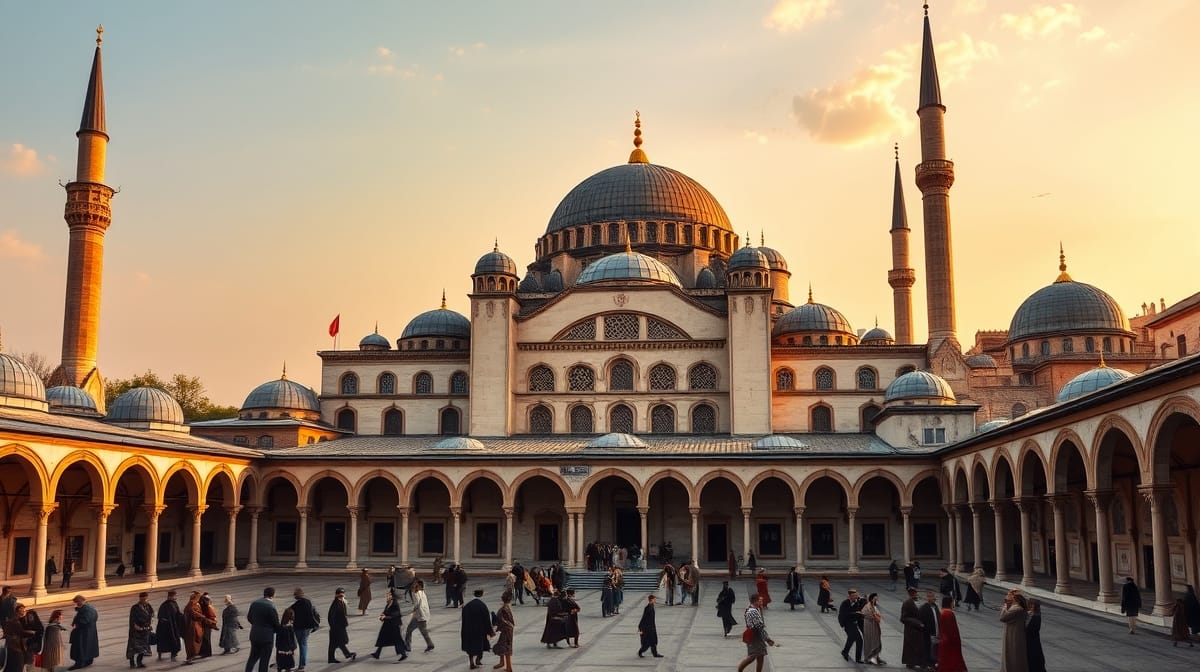
One of the most visible aspects of the title “Magnificent” is court culture, architecture, and art. The reign of Sultan Suleiman I was the age in which Ottoman architecture achieved its classical style with the rise of Mimar Sinan. The Şehzade Mosque, the Süleymaniye Mosque, and complexes in different regions of the empire functioned not only as places of worship, but also as centers of education, charity, health care, and social solidarity.
The Süleymaniye Complex was a major architectural program that brought together the political power of the sultan and the Islamic tradition of charitable endowment. With its mosque, madrasa, hospital, soup kitchen, and other units, this complex is regarded as one of the ideal examples of Ottoman urban order. Suraiya Faroqhi’s studies of Ottoman social history show how important such institutions were for urban life and everyday order.
Poetry, court culture, and Ottoman aesthetics
Sultan Suleiman I was also a ruler who wrote poetry under the pen name “Muhibbi.” This shows that Ottoman sultans were not only military and political actors, but also participants in literary and cultural circles. Calligraphy, illumination, music, poetry, and historiography were supported at court; Ottoman culture took on its classical form more distinctly in this period.
To view the architectural and aesthetic dimensions of this legacy more broadly, the fundamental features of Ottoman art and architecture may be examined. The reign of Sultan Suleiman I was one of the ages in which this artistic tradition produced its peak examples.
The Historical Limits of the Image of Magnificence
Sultan Suleiman I being remembered as “the Magnificent” should not reduce historical reality to an entirely unproblematic story of success. In the final years of his long reign, some structural tensions within the state became more visible. Rising war costs, the growth of the central bureaucracy, changes in the timar system, and rivalries within the palace would turn into more pronounced problems in later centuries.
The execution of Şehzade Mustafa in 1553 is one of the most controversial events of the period. This event should be assessed in terms of dynastic politics, the security of the throne, and power struggles around the palace. Narratives shaped around Hürrem Sultan, Rüstem Pasha, and court factions have often been transmitted in historiography somewhere between legend and reality. For this reason, readings on the historical personality of Hürrem Sultan are also important for understanding the age of Suleiman.
Even so, these critical points do not diminish the weight of Sultan Suleiman I’s reign in world history. On the contrary, they allow his rule to be understood more realistically. The title “Magnificent” refers not to the claim of a flawless age, but to the great scale, diplomatic visibility, and institutional power that the Ottoman state attained in the sixteenth century.
Conclusion
Sultan Suleiman I was remembered in history as “the Magnificent” because of his military conquests, codification of law, influence in Mediterranean and European politics, claim to leadership in the Islamic world, and cultural and architectural legacy. His reign represented the peak of the Ottoman classical age, while also standing as a complex imperial experience that prepared the problems of later centuries.
Sources
- Halil İnalcık, Devlet-i Aliyye.
- İsmail Hakkı Uzunçarşılı, Osmanlı Tarihi.
- Caroline Finkel, Osman’s Dream.
- Suraiya Faroqhi, Osmanlı Kültürü ve Gündelik Yaşam.
- TDV Encyclopedia of Islam, Süleyman I entry.