In the era of Orhan Gazi, the Ottoman beylik took the Byzantine cities of Bithynia, gained control of the Marmara region and crossed into the Balkans (Rumelia). According to the TDV Encyclopedia of Islam, Bursa was taken in 1326, İznik (Nicaea) in 1331 and İzmit (Nicomedia) in 1337. With the annexation of the Karesi lands the Ottomans reached the shores of the Dardanelles, and between 1352 and 1354 they settled on the Gallipoli peninsula. This expansion turned the beylik into the core of an empire.
Quick Summary
- He became head of the beylik in March 1324 and ruled until 1362.
- Bursa surrendered in 1326 and became the center of the beylik.
- After the victory at Pelekanon in 1329, the Kocaeli coast was taken as far as Üsküdar.
- The first Ottoman madrasa was founded in İznik in 1331.
- The crossing into Rumelia was hastened by the Byzantine civil war and the Gallipoli earthquake of 1354.
Contents
- Who was he?
- Contemporary testimonies
- The conquest of Bursa
- Pelekanon, İznik and İzmit
- Karesi and the Marmara
- The crossing into Rumelia
- State organization
- Army and coinage
- The significance of the era
- Frequently asked questions
Who Was Orhan Gazi?
Orhan Gazi was the son of Osman Gazi, the founder of the Ottoman state. According to the TDV Encyclopedia of Islam, his date of birth is disputed. Since he was described as a “yiğit” (young warrior) when he married Nilüfer in 1299, he may have been about eighteen at the time. According to Ottoman tradition, Süleyman and Murad were born to him by Nilüfer, the daughter of the tekfur (Byzantine lord) of Yarhisar.
According to the encyclopedia, he fought alongside his father at the siege of İznik (1302) and the battle of Dimboz (1303). He became head of the beylik in March 1324. We described his father’s era in our article Who was Osman Gazi?
The Ottoman Bey in Contemporary Sources
The Arab traveler Ibn Battuta came to Bursa in this period. According to the TDV Encyclopedia of Islam, he mentions the ruler as the son of Osmancık and a bey with the title Ikhtiyar al-Din. In the traveler’s account he was the greatest of the Turkmen sultans in wealth, lands and military power, and he had about 100 fortresses. He spent most of his time touring these fortresses and never stayed in one city for more than a month.
The Mamluk historian Ibn Fadlallah al-Umari also writes that he had fifty cities, more than fifty fortresses and 40,000 horsemen. According to the encyclopedia, al-Umari had gathered this information from someone in the circle of the anti-Ottoman Germiyanids. His account should therefore be read as an assessment from the point of view of the beylik’s rivals.
The Conquest of Bursa (1326)
The new bey tightened the siege of Bursa and İznik, the two great centers of Byzantine Bithynia. According to the TDV Encyclopedia of Islam, in the spring of 1326 he came before Bursa with all his forces and demanded its surrender. Under the terms of surrender, the soldiers entering the city would not harm the people, and those who wished to leave could go with their property. On surrender, 30,000 gold pieces were to be paid to the Ottoman bey.
According to the encyclopedia, Bursa was taken over on 6 April 1326. In Aşıkpaşazade’s account, the Muslims entered the city when Ahi Hasan climbed onto a tower. From then on Bursa was the center of the beylik. We discussed this role of the city in our article on the first capital of the Ottoman Empire.
Pelekanon, İznik and İzmit
The fall of Bursa caused great alarm in Constantinople. According to the TDV Encyclopedia of Islam, Emperor Andronikos III crossed the sea to relieve the blockaded city of İznik. The Battle of Pelekanon in 1329 ended in an Ottoman victory; John Kantakouzenos, commander-in-chief of the Byzantine army, describes it in detail in his memoirs. Afterwards Hereke and the coastal towns of Kocaeli as far as Üsküdar came under Ottoman rule.
According to the encyclopedia, İznik surrendered on 2 March 1331 after the blockade was tightened. Through a treaty concluded in 1333, Byzantium agreed to pay 12,000 gold pieces a year and in return secured the lifting of the siege of İzmit. According to the encyclopedia, Byzantium thus sank, in the eyes of the Ottoman bey, to the status of a tributary state.
This peace did not last long. In 1337, while the emperor was busy with a campaign in Albania, İzmit was besieged and taken. Its churches were converted into mosques, and one church was set aside as a madrasa. According to the encyclopedia, Süleyman Pasha was appointed governor of İzmit, while the defense of the coast was entrusted to Kara Mürsel.
According to the encyclopedia, the conquest of İznik brought the Ottoman bey fame in the Islamic world. Friendly relations were established with the Jalayirid sultan Hasan-i Buzurg in Iraq. Against Byzantium, meanwhile, a joint campaign was agreed at a meeting with Umur Bey of Aydın in Saruhan in 1330.
Karesi and the Marmara Coasts
One of the most important gains of this period was the territory of the Karesi beylik. According to the TDV Encyclopedia of Islam, with the annexation of Karesi, places such as Kapıdağ, Edincik, Biga, Kemer and Lapseki passed under Ottoman rule. Süleyman Pasha was appointed to the sanjak of Karesi, and Biga was made a frontier base. In this way the beylik reached the shores of the Dardanelles.
The annexation of Karesi also supplied the naval experience and military strength needed to cross into Rumelia. Making Biga a frontier base allowed operations against Rumelia to be directed from there. We covered this subject separately in our article on the first beylik to join the Ottomans.
The Crossing into Rumelia
The Byzantine civil war opened the way into Rumelia. According to the TDV Encyclopedia of Islam, the Ottoman bey allied himself with John Kantakouzenos in the struggle for the throne. In 1346 Kantakouzenos gave him his daughter Theodora in marriage, in a ceremony that followed Byzantine custom. The encyclopedia regards this alliance as an entirely ordinary policy under the conditions of the time. In 1347 Theodora brought her husband to Üsküdar to meet her father.
According to the encyclopedia, in the autumn of 1352 the Serbian king Dušan sent 4,000 horsemen, and the Bulgarian tsar Ivan Alexander also joined the war. Süleyman Pasha’s cavalry army of 10,000–12,000 men, however, defeated the Bulgarians on the Maritsa, and the Serbian and Byzantine forces were routed as well. On the night of 1–2 March 1354 a terrible earthquake leveled Gallipoli and the fortresses around it. Süleyman Pasha immediately settled these defenseless towns, and a permanent base was established in Rumelia.
In the same year an important step was taken in Anatolia too. According to the encyclopedia, taking advantage of the turmoil in the Eretnid sultanate, Süleyman Pasha seized Ankara and Sivrihisar in 1354. The encyclopedia regards this event as the beginning of the great struggle between the Ottomans and the Karamanids.
Building the State Organization
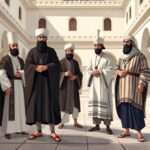
This period stands out not only for its conquests but also for institution-building. According to the TDV Encyclopedia of Islam, the administration of the beylik was set up and run mostly by jurists and members of the ulema. Alaeddin, Sinaneddin and Çandarlı Kara Halil were the foremost of these scholar-bureaucrats. Çandarlı Kara Halil became first the kadi of İznik and then of Bursa. According to the encyclopedia, new regulations were always put into practice with the approval of ulema versed in Islamic law.
According to the encyclopedia, in 1331 Orhan Gazi founded the first madrasa in İznik, under the direction of the Sufi scholar Davud-i Kayseri, to train kadis. Many waqf deeds and property deeds from the period are the work of a developed bureaucracy. According to the encyclopedia’s entry on the külliye, Orhan Gazi’s complexes were built in İznik (1334) and in Bursa (1339–1340). The charitable institutions attached to his imaret in Bursa produced an income of 166,305 akçe a year.
Army and Coinage
According to the TDV Encyclopedia of Islam, it is clear that the military organization was rearranged in the era of Orhan Gazi. The foot archers who joined the Turkmen raids for gaza wore red caps (kızıl börk). At the suggestion of Vizier Alaeddin Pasha, a corps of household infantry in permanent service in the bey’s retinue was established. As a mark of nobility, these soldiers were given the “white cap” (ak börk).
According to the encyclopedia, among the Muslim Turks the word timar was used in the sense of “care”; the Greek pronoia has the same meaning. Sufism was also popular in the land at that time. Davud-i Kayseri, who headed the first madrasa, had written a commentary on Ibn Arabi’s Fusus al-Hikam.
According to the encyclopedia, after the conquest of Bursa silver coins of the Ilkhanid type were struck in 1327, and five types of coin have been identified. We also discussed these arrangements in our article on the first regular army in the Ottoman state.
The Significance of the Orhan Gazi Era
In this period a small frontier beylik became a state reaching both shores of the Marmara. The capture of great cities such as Bursa and İznik gave the beylik a rich urban life and trade. Institutions such as the madrasa, the office of kadi, the waqf and a regular army took shape in these years. The base established in Rumelia, meanwhile, prepared the ground for the great conquests under his son Murad I.
According to the encyclopedia, Orhan Gazi died of plague in Bursa in March 1362, shortly after the conquest of Edirne. At his death his sons Murad, İbrahim and Halil were still alive. In the inscription dated 1337 in the Şehadet Mosque he is called “sultan al-ghuzat” (sultan of the warriors for the faith). His tomb is in Bursa, beside that of his father Osman Gazi.
Frequently Asked Questions
Which cities were conquered in the era of Orhan Gazi?
The main ones were Bursa (1326), İznik (1331) and İzmit (1337). The Karesi lands and the area around Gallipoli were also taken in this period.
How long did Orhan Gazi reign?
According to the TDV Encyclopedia of Islam, he became head of the beylik in March 1324 and ruled until his son Murad I came to the throne in 1362.
Where was the first Ottoman madrasa founded?
It was founded in İznik in 1331, under the direction of Davud-i Kayseri.
When did the Ottomans cross into Rumelia?
The crossing was made in 1352–1354 under the command of Süleyman Pasha. The 1354 earthquake made the capture of Gallipoli easier.
What does ak börk mean?
It is the cap given to the household infantry in the ruler’s retinue. Among the Turks, white was a mark of nobility.
Conclusion
Ottoman expansion in the era of Orhan Gazi completed the conquest of Bithynia with the capture of Bursa, İznik and İzmit. The annexation of Karesi brought the Ottomans to the shores of the Dardanelles, while the Byzantine civil war and the 1354 earthquake eased the crossing into Rumelia. In the same years institutions such as the madrasa, the office of kadi and a regular army were established. In this way the beylik laid the foundations of a state that would become an empire.


7 thoughts on “Ottoman Expansion in the Era of Orhan Gazi”