Osman Gazi was the founder of the great state that would bear his name and the first bey of the dynasty. According to the TDV Encyclopedia of Islam, he was the son of Ertuğrul Gazi, who had settled in the frontier zone of Söğüt. He took control of the area around Bilecik, Yenişehir and İnegöl and in 1302 defeated Byzantine forces at Bapheus. When he died in 1324, his beylik had become a strong frontier state.
Quick Summary
- He was the son of Ertuğrul Gazi, who settled in the frontier zone of Söğüt.
- He began his raids in 1284–1285 by attacking the castle of Kulaca near İnegöl.
- By 1299 he had brought the area around Bilecik, Yenişehir, İnegöl and Yarhisar under his control.
- On 27 July 1302 he defeated Byzantine forces at Bapheus.
- According to the TDV Encyclopedia of Islam, he died in 1324 and was buried in Bursa.
Contents
- Who was he?
- The situation on the frontier
- His conquests
- The Battle of Bapheus
- His family and successor
- His death and tomb
- His legacy
- Frequently asked questions
Who Was Osman Gazi?
According to the TDV Encyclopedia of Islam, the earliest sources present him as the son of Ertuğrul Gazi, who belonged to a Turkmen tribe that had come to Anatolia. The family had settled in the frontier zone of Söğüt, near Eskişehir. According to the encyclopedia, Ibn Battuta also gives his name in the form Osmancuk. The origin and genealogy of the family, however, are told in different ways in the sources.
According to the encyclopedia, the dynasty used the Kayı tamga as a symbol of sovereignty on coins and important objects. According to Fuad Köprülü, the Kayı formed the first ethnic core of the state. His date of birth is not known for certain. According to the encyclopedia, on the basis of a local tradition, he must have been born in 1257.
According to the encyclopedia, in a work written in 1436–1437 Yazıcıoğlu Ali recorded the genealogy linking the dynasty to Kayı, a grandson of Oğuz Khan. This genealogy was a response to the claims of superiority of Timur and his son Shahrukh. This shows that genealogical narratives also had a political function.
What Was the Situation on the Frontier?
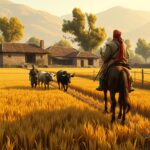
According to the encyclopedia, before Osman Gazi began his raids, the Byzantine border started at Bilecik. The local tekfurs, or lords, between Bilecik and Sultanöyüğü recognized the Seljuk sultan. These lords also lived in peace with the Turkmens, who had summer and winter pastures in the region. Among the people, meanwhile, the alp gazis organized raids for holy war. The Turkmens, who lived by stockbreeding, migrated seasonally between their summer and winter pastures.
This environment left a wide field of action for warriors who gathered around a bold leader. The frontier zones were places where central authority was weak but opportunities were plentiful. According to the encyclopedia, the Ilkhanid emir Chupan came to Anatolia in May 1299 against Sülemiş, who had rebelled. As the Seljuk sultan’s authority weakened, the frontier beys acted more freely. The new beylik was born in such an environment.
Which Places Did Osman Gazi Conquer?
According to the TDV Encyclopedia of Islam, in 1284–1285 a night raid was made against the Greeks of İnegöl, and the small castle of Kulaca was set on fire. According to the encyclopedia, in 1288–1299 the local lords who paid tribute to the Seljuk sultan were eliminated. The lords of Göynük, Gölpazarı, Bilecik, Yenişehir, İnegöl and Yarhisar were among them. Then holy war began directly against the Byzantine lands in Bithynia.
According to the encyclopedia, in 1299 the beylik controlled a wide area stretching from Eskişehir to Bilecik and Yenişehir. Of these lands, İnönü was given to his son Orhan, Yarhisar to Hasan Alp and İnegöl to Turgut Alp. For this reason the area around İnegöl was known for a time as Turgut-ili. Yenişehir also served for a time as one of the beylik’s centres. According to the encyclopedia, the grandchildren of these alps later formed the aristocracy of the state.
According to the encyclopedia, Saltuk, Hasan and Konur were the leading alps who went on campaign. The alps were regarded as the bey’s “worthy companions” and retainers (nöker). This bond of loyalty was the basis of the young beylik’s military strength.
Karacahisar was a strategic castle at the crossroads of the routes leading from Anatolia to Nicaea and Constantinople. According to the encyclopedia, Aşıkpaşazade relates that the castle was taken for a time and then abandoned. Because of this confusion in the sources, dates for the “first conquest” should be treated with caution.
Why Is the Battle of Bapheus Important?
According to the encyclopedia, Osman Gazi fought Byzantine forces at Bapheus on 27 July 1302, according to the Byzantine historian Pachymeres. According to the encyclopedia, local sources date the battle to 1301–1302 and place it at Yalakova. Before the battle the vanguards had clashed at Koyunhisar, which blocked the road coming from Nicaea. This victory also made the young beylik’s name known in the Byzantine world.
According to the encyclopedia, the Byzantine army was under the command of Leo Muzalon and, together with the Alans, numbered about 2,000 men. The local soldiers were reluctant, because their horses and money had been taken to be given to the Alans. The Turkish forces numbered about 5,000. Warriors from the region of Kastamonu had also joined them.
After Bapheus the Byzantine villages and castles in the region came under growing pressure. After the battle the countryside of Bithynia came largely under Turkish control. According to the encyclopedia, Neşri writes that in this period the bey became a ruler with his own Friday sermon (hutbe) and coinage.
The Seljuk sultan Alaeddin III, however, had been taken to Tabriz by the Mongols in 1302. The rule of the last Seljuk sovereign, Mesud II, lasted until 1308. No strong centre remained in Anatolia. This vacuum opened a wide field for the frontier beys.
Who Were His Family and Successor?
According to the encyclopedia, the Mekece endowment deed of 1324 names, besides Orhan, sons called Çoban, Melik, Hamid and Pazarlı and a daughter called Fatma Melek. Among the witnesses is also Mal Hatun, daughter of Ömer Bey. In the chronicles Mal Hatun is recorded as the wife of Osman Gazi and the daughter of Sheikh Edebali. According to the encyclopedia, the name Alaeddin Ali is also mentioned as another son. Because her father appears in the deed as Ömer Bey, this information about Mal Hatun is disputed.
According to the encyclopedia, the most important document of this period is the Asporça endowment deed of September 1323. The document shows that the villages of Narlı and Kıyaklı, granted to Orhan Bey’s wife Asporça Hatun, were made into an endowment. This document is important as one of the beylik’s first written endowment records.
According to the encyclopedia, Orhan Bey had led the army on campaigns since 1305. For this reason he succeeded to the throne without incident after his father’s death. According to the TDV Encyclopedia of Islam, in 1308 the lord of Bursa joined the other local lords in an attempt to stop the beylik’s forces at the Dinboz Pass, but was defeated. The city was placed under a blockade lasting more than ten years and surrendered on 6 April 1326. We described his son’s reign in our article on Ottoman expansion under Orhan Gazi.
When Did Osman Gazi Die?
According to the encyclopedia, the date of his death can be inferred from the Asporça Hatun and Mekece endowment deeds. In the first he appears to be alive, and in the second dead. For this reason it is accepted that he died in 1324. According to one account, his son Orhan was besieging Bursa when he died.
According to the encyclopedia, when Bursa surrendered, the Byzantine commander was allowed to leave for Constantinople, and the city’s metropolitan continued in his post. The city soon became the centre of the beylik.
According to the encyclopedia, in accordance with his will he was buried in the citadel of Bursa, beneath a building called Gümüşlükubbe. This building was destroyed in the earthquake of 1855. The present simple tomb was built by Sultan Abdülaziz in 1863. The tomb is still visited today in the Tophane district of Bursa. Next to it stands the tomb of his son Orhan Bey.
What Is His Legacy?
The beylik founded by Osman Gazi grew into a great state that bore his name. The bonds he forged with the alps laid the foundations of the ruling class of the following period. Holy war waged on the frontier against Byzantium gave the beylik both legitimacy and the opportunity to expand. The dynasty reigned for more than six centuries, until 1922. Before long the neighbouring beyliks were also absorbed into this new power; we discussed this process in our article on the first principality to join the Ottomans.
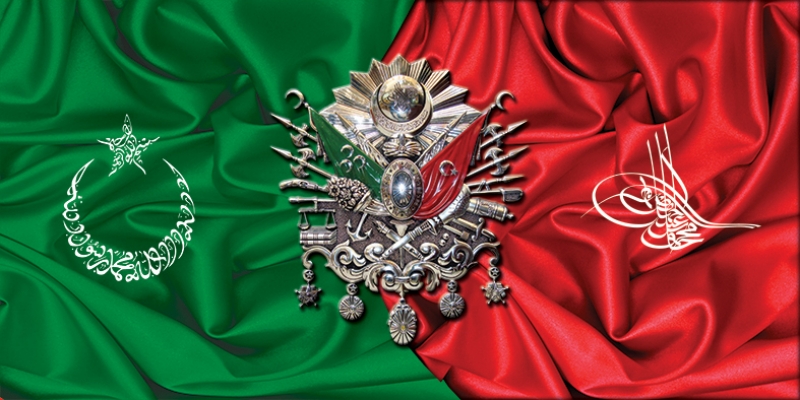
Later chronicles such as that of Aşıkpaşazade tell of a dream in which a tree grew from the bey’s navel and cast its shade over the world. This narrative is regarded as a legend that strengthened the dynasty’s legitimacy. The symbols used by the dynasty also changed over time. Beginning with the Kayı tamga, this tradition extended in later centuries to the tughra and the coat of arms. We described the state’s coat of arms of the late period in our article on the meaning of the Ottoman coat of arms.
Frequently Asked Questions
Whose son was Osman Gazi?
He was the son of Ertuğrul Gazi, who settled in the frontier zone of Söğüt.
Where is Osman Gazi’s tomb?
It is in the Tophane district of Bursa. The present tomb was built in 1863.
Why is 1299 taken as the founding date of the state?
According to the TDV Encyclopedia of Islam, in that year the beylik controlled an area stretching from Eskişehir to Bilecik and Yenişehir, and the lands were distributed among the alps. Textbooks usually date the founding to this year.
Where is Söğüt?
Today it is a district of the province of Bilecik. The tomb of Ertuğrul Gazi is also there.
When was the Battle of Bapheus fought?
According to the Byzantine historian Pachymeres, it was fought on 27 July 1302.
Where is the castle of Kulaca?
It is a small castle near İnegöl. According to the TDV Encyclopedia of Islam, some of its remains can still be seen today near the village of Kulaca.
Conclusion
Osman Gazi turned a small frontier beylik in Söğüt into a state expanding along the Byzantine border. The elimination of the local lords, the bonds forged with the alps and the victory at Bapheus were the cornerstones of this rise. When he died in 1324, his successor Orhan Bey soon took Bursa. That is why Osman Gazi is remembered not merely as a conqueror but as the founder of a six-century dynasty.





1 thought on “Who Was Osman Gazi and What Did He Achieve?”