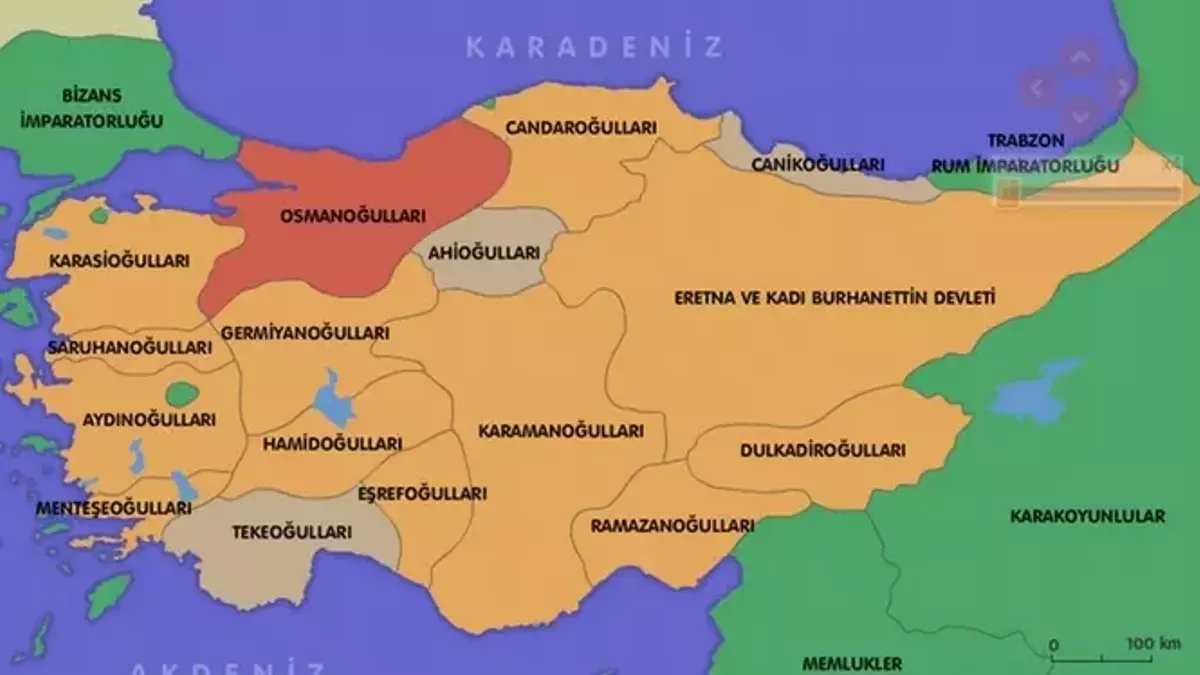
The first principality to join the Ottoman Empire was the Karesi principality, which ruled around present-day Balıkesir and Çanakkale. The principality was annexed to Ottoman territory around 1345 through Orhan Bey’s intervention during a period of internal turmoil. This annexation gave the state the shore of the Dardanelles, seafaring experience and the gateway for the crossing into Rumelia. In this article we look at who made up the principality, how it joined and the order in which the other principalities followed.
Quick Summary
- The Karesi principality was a Turkmen frontier principality founded in the region of Mysia.
- During a struggle for the throne, the principality’s notables asked Orhan Bey for help.
- The principality joined the Ottomans in 746/1345 or shortly afterwards.
- Orhan Bey gave the Karesi lands to his son Süleyman Pasha.
- Karesi’s seamen and commanders played a key role in the crossing into Rumelia.
Contents
- Who were the Karesi?
- How did Karesi join?
- Why the annexation mattered
- The crossing into Rumelia
- The order in which the principalities joined
- Similar questions in exams
- Frequently asked questions
The First Principality to Join the Ottoman Empire: Who Were the Karesi?
According to the TDV Encyclopedia of Islam, the founders of the principality were the Seljuk frontier lord Kalem Bey and his son Karesi Bey. These lords took Byzantine towns such as Erdek, Biga, Edremit and Bergama. In this way they came to control most of the lands of Balıkesir, Bergama and Çanakkale, known in antiquity as Mysia.
The location of the Karesi principality set it apart from the other principalities. Its opportunities for expansion lay not on land but in the Aegean islands and on the Rumelian shores across the water. For this reason the principality turned to the sea from an early date.
It was engaged in a constant struggle with the Latin powers in the Aegean and with Byzantium. According to the TDV Encyclopedia of Islam, in September 1334 a fierce battle took place off Edremit between the Turkish fleet under the command of Yahşi Bey and the Crusaders. This battle, won by the Crusader fleet, temporarily slowed Turkish expansion in the Aegean. The name Karesi lived on after the principality disappeared, and for centuries Balıkesir was known as the sancak of Karesi.
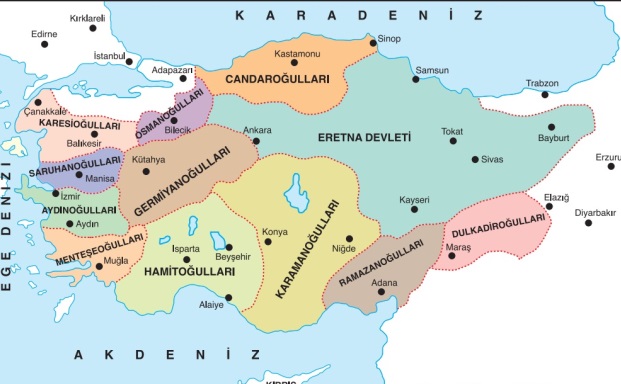
How Did the Karesi Principality Join the Ottomans?
Behind the annexation lay a struggle for the throne. According to the TDV Encyclopedia of Islam, after Yahşi Bey the principality fell into turmoil, and Demirhan Bey and Dursun Bey confronted each other. Notables dissatisfied with Demirhan Bey’s rule took action. The vizier Hacı İlbey, Evrenos Bey, Gazi Fazıl Bey and Ece Bey invited Dursun Bey, who was popular with the people, to the throne.
This group asked Orhan Bey for help in supporting Dursun Bey. In return for this help, Dursun Bey promised to cede places such as Bergama and Edremit to the Ottomans. However, the process did not go as planned, and Dursun Bey died shortly afterwards. Orhan Bey then took the region under his direct control.
The TDV Encyclopedia of Islam states that this annexation took place in 746/1345 or shortly afterwards. Orhan Bey granted the Karesi lands as an iqta to his son Süleyman Pasha, remembered as the conqueror of Rumelia. This decision allowed the region to become the base of the Rumelian campaigns within a short time.
An iqta meant that the revenues of a region were left to an administrator in return for service. Süleyman Pasha thus gathered both the administration of the region and its military power in his hands. The former lords of Karesi also took on new duties in his entourage. This arrangement was an effective example of how a newly annexed region could quickly be bound to the state.
Why Was the First Principality to Join the Ottoman Empire So Important?
Being the first principality to join the Ottoman Empire also gives Karesi symbolic importance. Its real importance, however, lies in consequences that changed the state’s direction and capacity. These consequences can be grouped under three headings.
Seafaring Experience
The Karesi dynasty was a principality experienced at sea. According to the TDV Encyclopedia of Islam, Demirhan Bey landed troops in Rumelia by ship across the Dardanelles and the Sea of Marmara. Yahşi Bey was also active around the Aegean islands. This accumulated experience was a great gain for the Ottomans, whose strength lay on land.
The Gateway to Rumelia
With the Karesi lands, the Anatolian shore of the Dardanelles came under Ottoman control. In this way the most suitable point for crossing into Rumelia was secured. Soon afterwards, under the leadership of Süleyman Pasha, the Ottomans crossed to the other side of the strait and expansion in the Balkans began.
Experienced Commanders
Karesi’s notables entered Ottoman service. Among them, Evrenos Bey became one of the best-known akıncı commanders of Rumelia in the following years. These lords, who knew the region, its people and the sea, played an important role in the Ottomans’ rapid advance in Rumelia.
For the other steps of the expansion under Orhan Bey, see our article on Ottoman expansion under Orhan Gazi. We discussed the general reasons for the state’s rapid growth in our article on the reasons for the Ottoman state’s rapid growth.
Economic Strength and Lasting Traces
According to the TDV Encyclopedia of Islam, Karesi, the first principality to join the Ottoman Empire, had a land army of 40,000 horsemen and an effective fleet. Large quantities of silk and spruce resin were produced in Balıkesir and sent to European markets. Istanbul fabrics, too, were mostly woven from Balıkesir silk.
According to the encyclopedia, no architectural work that can be attributed with certainty to the principality has survived; it is only claimed that the Güdük Minaret in Bergama was built in this period. Silver and copper coins of Yahşi Bey and his son Beylerbeyi, however, have survived to the present day.
From Karesi to Gallipoli: The Crossing into Rumelia
The granting of the Karesi lands to Süleyman Pasha soon produced a concrete result. Together with the lords and seamen who came from Karesi, the pasha put his plans for crossing into Rumelia into action. The people and commanders of the region knew both shores of the strait well.
According to the sources, Ottoman forces crossed to the other side of the strait in the early 1350s and began to use the fortress of Çimpe (Tzympe) as a base. In 1354, after a great earthquake in the region destroyed its walls, Gallipoli also came under Ottoman control. Thus a permanent bridgehead was established in Rumelia.
This development changed the course of Ottoman history. Some time later the capital moved to Edirne, and the Balkans became the state’s center of gravity. We described this shift of capitals in detail in our article on the Ottoman capitals. Without the annexation of Karesi, this rapid crossing would hardly have happened in the same way.
According to the encyclopedia, in the time of Süleyman Pasha Turks from the Karesi province were settled on the Gallipoli peninsula and to its north. Place names such as Balıkesirli, Karasili and Gönenli in Hasköy and Karesiyurdu in Dimetoka date from that period.
The Order in Which the Principalities Joined the Ottomans
After Karesi, the other principalities of Anatolia joined the Ottomans in different ways and at different times. The table below summarizes this process with approximate dates. Two dates are given for some principalities because they joined first partly and then completely.
| Principality | Period | Way of joining |
|---|---|---|
| Karesi | Around 1345 (Orhan Bey) | Intervention in a struggle for the throne |
| Germiyan | Partly around 1381, completely in 1429 | Dowry, then bequest |
| Hamidoğulları | Reign of Murad I | Purchase (some towns) |
| Aydın, Saruhan, Menteşe | 1389–1390 (Bayezid I) | Military campaign |
| Candaroğulları | 1461 (Mehmed II) | Military and political pressure |
| Karamanoğulları | 1468–1474 (Mehmed II) | Military campaign |
| Dulkadıroğulları | 1515, as a province in 1522 | Military campaign |
| Ramazanoğulları | Dependent from 1517, ended in 1608 | Allegiance and annexation |
The Germiyan lands that came as a dowry and the towns bought from the Hamidoğulları show that expansion did not always come through war. We described the details of these methods and the stages of Anatolian unity in our article on the sultans who achieved Anatolian Turkish political unity.
Similar Questions Frequently Asked in Exams
This topic usually comes up in exams in the form of questions that resemble one another. Reading the question correctly directly changes the answer.
- The first principality to join the Ottomans: the Karesi principality.
- The principality that gave land as a dowry: the Germiyanoğulları.
- The principality some of whose towns were bought: the Hamidoğulları.
- The principality that joined by bequest: the Germiyanoğulları.
- The last principality to join the Ottomans: the Ramazanoğulları.
A common mistake in the question of the first principality to join the Ottoman Empire is to think that Karesi was taken by war alone. In fact, the process began with an invitation from the principality’s own notables and a political intervention.
Frequently Asked Questions
Which was the first principality to join the Ottoman Empire?
It was the Karesi principality. This principality, which ruled around Balıkesir and Çanakkale, joined the Ottomans around 1345, in the reign of Orhan Bey.
What did the annexation of the Karesi principality bring the Ottomans?
It brought seafaring experience, the Anatolian shore of the Dardanelles and experienced commanders who would serve in Rumelia.
In which region was the first principality to join the Ottoman Empire?
The Karesi principality was located in the region of Mysia, covering the area around present-day Balıkesir, Bergama and Çanakkale. Its center was first Balıkesir and later Bergama.
Was the Karesi principality taken by war?
Not entirely. The process began when the principality’s notables asked Orhan Bey for help in a struggle for the throne. Military force was used, but the real basis of the annexation was a political intervention.
In which sultan’s reign did the first principality join the Ottoman Empire?
It joined in the reign of Orhan Bey. Orhan Bey placed the principality’s lands under the administration of his son Süleyman Pasha.
Conclusion
Karesi, the first principality to join the Ottoman Empire, was a small but strategic gain. These lands, acquired through an intervention during a struggle for the throne, gave the state seafaring know-how and a gateway to Rumelia. That is why the first step of the rapid expansion in the Balkans was taken in Karesi.
Sources
- TDV Encyclopedia of Islam, entry “Karesioğulları”
- TDV Encyclopedia of Islam, entry “Orhan”
- TDV Encyclopedia of Islam, entry “Germiyanoğulları”
- TDV Encyclopedia of Islam, entry “Hamîdoğulları”
- Feridun M. Emecen, İlk Osmanlılar ve Batı Anadolu Beylikler Dünyası [The Early Ottomans and the World of the Western Anatolian Principalities].









4 thoughts on “The First Principality to Join the Ottoman Empire”