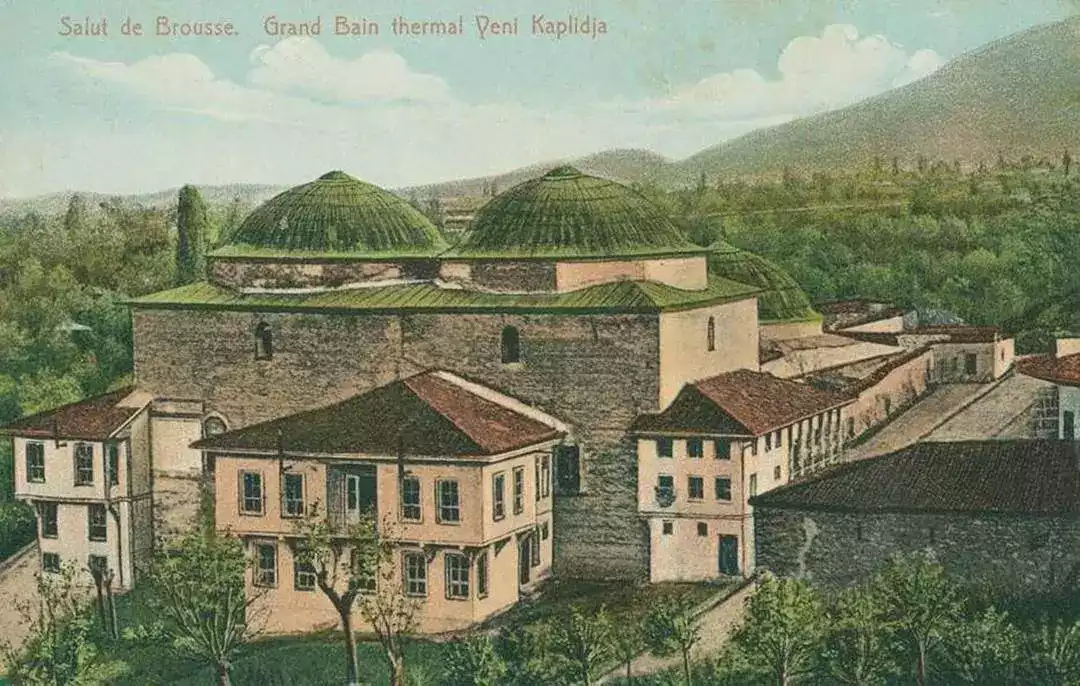
The first capital of the Ottoman Empire and the later Ottoman capitals trace, step by step, how a frontier principality grew into a great empire. Each move, from the tribal centre at Söğüt to Bursa, then to Edirne and finally to Istanbul, shows where the state was heading at the time. In this article we look at each centre, the reasons behind the moves and the debate over the “first capital”, with sources.
Quick Summary
- Söğüt became the principality’s first administrative centre under Osman Gazi.
- Bursa surrendered in 1326 and became the first true city capital.
- Expansion in Rumelia shifted the centre to Didymoteicho (Dimetoka) and Edirne.
- The date of Edirne’s conquest is disputed in the sources, between 1361 and 1369.
- Istanbul was conquered in 1453 and became the empire’s last permanent capital.
Contents
- Chronology of the capitals
- Why is the “first capital” question debated?
- Söğüt: the centre of the founding
- Bursa: the first city capital
- Didymoteicho and Edirne: the move to Rumelia
- Istanbul: the last and permanent capital
- The common logic of the moves
- Frequently asked questions
Chronology of the Ottoman Capitals
The Ottoman capitals changed not by a single decision but over time, following the direction of expansion. The table below summarises when each centre came to the fore and why it was chosen. Because the sources for the founding period are uncertain, the dates are approximate.
| Centre | Period | Reason for its rise |
|---|---|---|
| Söğüt | Late 13th – early 14th century | Homeland of Ertuğrul Gazi, first administrative centre of Osman Gazi |
| Yenişehir | Early 14th century | Centre on the plain from which the blockade of Bursa was run |
| Bursa | From 1326 | Trade, defence and the legitimacy a large city provided |
| Didymoteicho (Dimetoka) | 1360s | First major residence in Rumelia |
| Edirne | From the reign of Murad I to 1453 | Proximity to the Balkan campaigns |
| Istanbul | From 1453 to the end of the empire | Imperial heritage and a location linking two continents |
Why Is the First Capital of the Ottoman Empire Debated?
Which of the Ottoman capitals counts as the first is really a matter of definition. Those who take the place where the dynasty lived point to Söğüt. Those who look for a city with regular institutions point to Bursa. Both answers rest on a defensible point.
Moreover, most sources on the founding period were written about a century after the events. For this reason some dates rest not on documents but on tradition. Halil İnalcık stresses that the founding years are a period in which documents and tradition must be carefully separated.
That is why the short answers found in exam questions differ. Some books give Söğüt as the first capital of the Ottoman Empire, others Bursa. What really matters is to understand the role of each centre in the development of the state. A capital is not just a seat of government but a sign of the state’s priorities.
Söğüt: The Centre of the Founding Among the Ottoman Capitals
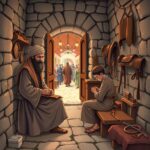
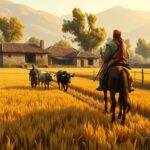
Söğüt was the place on the frontier with Byzantium where Ertuğrul Gazi settled with his tribe. According to the “Söğüt” entry of the TDV Encyclopedia of Islam, it first stood out as a frontier settlement and then as Osman Gazi’s first administrative centre. Ertuğrul Gazi’s tomb is still in Söğüt today.
Söğüt’s strength came from its geography. It lay in a mountainous, easily defended area and was very close to the Byzantine defensive line in Bithynia. Osman Gazi’s first conquests towards Karacahisar, Bilecik, Yarhisar and İnegöl were launched from this region. For the order of these conquests, see our article on the places conquered by Osman Bey.
Even so, Söğüt did not have the organisation of a capital in today’s sense. It was where the dynasty and the tribe lived. As expansion shifted west, the town fell into the background administratively. Yet with its tomb and endowments it kept its spiritual importance for centuries.
The Place of Yenişehir Among the Ottoman Capitals
In the early 14th century Osman Gazi shifted his centre of gravity to Yenişehir on the plain. The target was no longer small castles but large Byzantine cities such as Bursa and Nicaea (İznik). To besiege these cities, the principality’s forces had to come down to the plain.
Bursa was squeezed by a blockade that lasted for years. The blockade was largely directed from the area around Yenişehir. For this reason some researchers regard Yenişehir as a transitional centre. Although it is not counted as an official capital, it was where the transition from principality to state was actually managed.
Bursa: The First City Capital of the Ottoman Empire
Bursa surrendered to Orhan Bey on 6 April 1326 after a long blockade. The “Bursa” entry of the TDV Encyclopedia of Islam records that the city gave in after this blockade, which had driven its people to starvation. Osman Gazi’s death also falls in the same years. Thus the young principality became, for the first time, the owner of a large walled city.
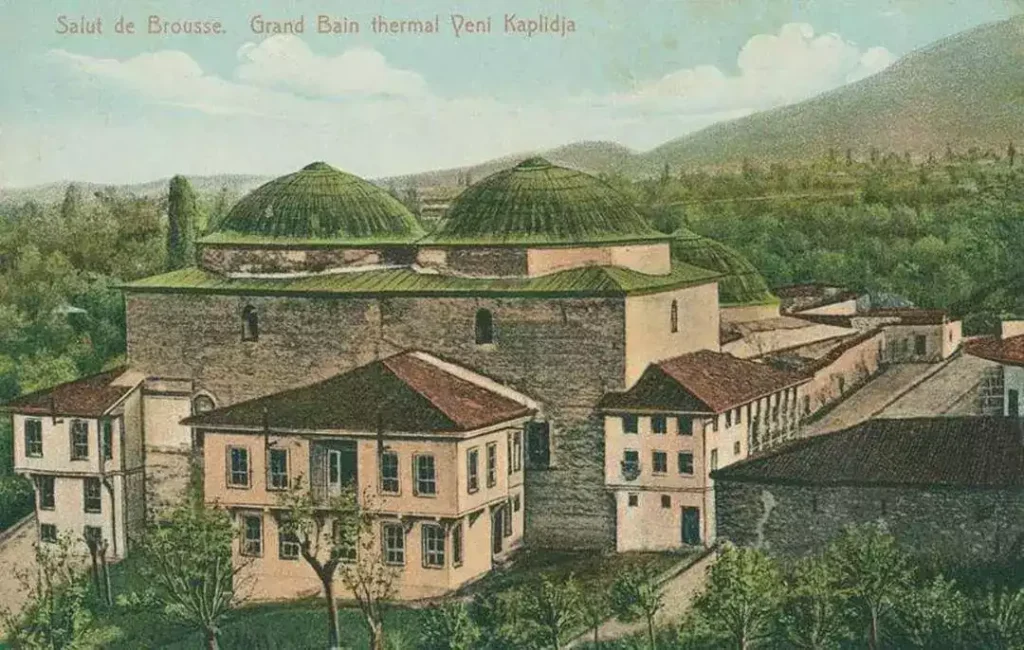
Under Orhan Bey, Bursa was rapidly built up. Mosques, soup kitchens, inns and madrasas turned the city into the institutional centre of the new state. The earliest known akçe coin is also thought to date from this period. For details of the expansion, see our article on expansion under Orhan Gazi.
Four Reasons Bursa Stood Out Among the Ottoman Capitals
- Trade: Bursa was one of the key stops where silk from Iran reached the West.
- Defence: The walled city on the slopes of Uludağ was an easily protected centre.
- Production: Its fertile plain could feed a growing army and a large population.
- Legitimacy: Residing in a large Byzantine city left the image of a frontier principality behind.
Bursa’s place in the trade network continued after its time among the Ottoman capitals. We described how this network worked in our article on places of trade. The tombs of the first sultans are also in Bursa. For this reason the city carried strong spiritual weight in later centuries as well.
Didymoteicho and Edirne: Why Did the Ottoman Capitals Shift to Rumelia?
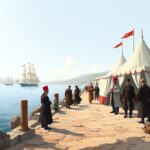
In the mid-14th century the principality’s forces crossed into Rumelia, and the direction of expansion became the Balkans. Launching campaigns from Bursa meant ferrying the army across the strait every time. It therefore became inevitable for the centre to move closer to the direction of the campaigns.
The first stop was Didymoteicho (Dimetoka). According to the TDV Encyclopedia of Islam, a large palace had been built there for the sultans. It is also said that Murad I resided there until the conquest of Edirne. In this respect Didymoteicho became the first major residence in Rumelia.
When Edirne was conquered, however, is disputed. The sources give different dates such as 1361, 1362, 1367 and 1369. What is certain is that the city became the state’s new centre under Murad I. Edirne lay at the crossroads of the routes leading to the Danube and Macedonia, an ideal starting point for Balkan campaigns.
In the turbulent years after the Battle of Ankara, Bursa and Edirne turned into two separate power centres where the princes competed. We discussed how this period ended in our article on how Mehmed Çelebi reunited the state after the Interregnum. After unity was restored, Edirne remained the capital under Murad II as well.
Istanbul (1453): The Last and Permanent Centre Among the Ottoman Capitals
Mehmed II had all his plans for the conquest of Istanbul prepared in Edirne in the winter of 1452–1453. On 29 May 1453 the city was conquered, and the capital moved for the last time. This move was different from the earlier ones. While the earlier shifts rested on logistical grounds, Istanbul was the declaration of an imperial claim.
After the conquest the city was resettled, and the institutions of central government took shape there. For the council where affairs of state were discussed, see our article on how the Imperial Council worked. Edirne did not lose its importance, however. The sources call the city “pâyitaht-ı kadîm”, that is, the ancient capital.
Indeed, many sultans stayed in Edirne for long periods. According to the TDV Encyclopedia of Islam, Ahmed I, Osman II and Murad IV often went to the city for hunting. Edirne thus took on the character of a second capital.
Istanbul remained the centre of the state until 1922, when the sultanate was abolished. Shortly before the proclamation of the Republic, on 13 October 1923, Ankara was made the capital of the new state. With that, a chain of capitals spanning six centuries came to a close.
The Common Logic of the Moves
When the Ottoman capitals are examined together, a clear pattern emerges. Each time, the centre advanced towards the front of expansion. Söğüt faced Bithynia, Bursa the Sea of Marmara, Edirne the Balkans, and Istanbul two seas and two continents.
The second common point is that the old centres were not abandoned. Söğüt preserved the memory of the founding, Bursa the dynastic tombs and the silk trade, and Edirne palace life and the link to the Balkans. In this way the state did not depend on a single city but was governed through several centres of power.
Third, each move also changed the language of legitimacy. The frontier principality became a settled state in Bursa and, in Istanbul, an empire that saw itself as heir to Rome. Changes among the Ottoman capitals were therefore also a mirror of political identity.
Frequently Asked Questions About the Ottoman Capitals
What was the first capital of the Ottoman Empire?
The answer depends on how a capital is defined. Söğüt was the centre of the founding and of the dynasty. The first city capital with institutions, however, is Bursa, which surrendered in 1326.
In what order did the Ottoman capitals change?
The generally accepted order is Söğüt, Bursa, Edirne and Istanbul. Yenişehir and Didymoteicho are also mentioned as important centres during transitional periods.
Why did the capital move from Edirne to Istanbul?
Istanbul had both a location linking two continents and an imperial heritage. With its conquest, the state positioned itself as the continuation of this heritage.
Conclusion
The first capital of the Ottoman Empire and the Ottoman capitals that followed it are the clearest indicator of the direction in which the state grew. Söğüt represents the founding, Bursa institutionalisation, Edirne Balkan expansion and Istanbul the imperial claim. The different answers to the “first capital” question also depend on which stage of this transformation we look at.
Sources
- TDV Encyclopedia of Islam, entry “Söğüt”
- TDV Encyclopedia of Islam, entry “Bursa”
- TDV Encyclopedia of Islam, entry “Edirne”
- TDV Encyclopedia of Islam, entry “Dimetoka”
- Halil İnalcık, Devlet-i Aliyye: Osmanlı İmparatorluğu Üzerine Araştırmalar [The Sublime State: Studies on the Ottoman Empire].
- Feridun M. Emecen, İlk Osmanlılar ve Batı Anadolu Beylikler Dünyası [The Early Ottomans and the World of the Western Anatolian Principalities].
1 thought on “The First Capital of the Ottoman Empire and the Later Capitals: From Söğüt to Istanbul”