One of the most significant battles in Turkish and world history, the Battle of Manzikert took place in 1071 between the Great Seljuk Empire and the Byzantine Empire. The causes of this battle, which opened the gates of Anatolia to the Turks, are frequently explored in historical research. In particular, the cause of the Battle of Manzikert holds great importance for understanding Seljuk-Byzantine relations.
What Is the Battle of Manzikert?
The Battle of Manzikert was fought between the Great Seljuk Sultan Alp Arslan and the Byzantine Emperor Romanos IV Diogenes. The battle took place on the Plain of Manzikert, located within the borders of present-day Muş province.
Fought on 26 August 1071, the battle ended in a Seljuk victory and played a crucial role in initiating Turkish dominance in Anatolia.
You may also be interested in our article titled What Is the Edict of Tanzimat? The Beginning of Change in the Ottoman Empire.
What Caused the Battle of Manzikert?
When discussing the cause of the Battle of Manzikert, the most prominent factor is the struggle for dominance over Anatolia between the Byzantines and the Seljuks. As the Seljuk Turks conducted raids into Anatolia, the Byzantines sought to halt this advance.
The main causes of the battle are as follows:
- The raids conducted by the Seljuks into Anatolia
- Byzantium’s desire to halt the Turkish advance
- The strategic importance of Anatolia
- Byzantium’s wish to reclaim lost territories
- The growing power of the Seljuk Empire in Anatolia
These developments made a major war between the two states inevitable.
The Seljuk Policy Toward Anatolia
The Great Seljuk Empire regarded Anatolia as an important region both militarily and economically. Turkmen tribes had begun settling in Anatolia, increasing the Turkish population in the region.
During the reign of Alp Arslan, the Seljuks sought to expand their dominance in Anatolia. This posed a serious threat to Byzantium.
Byzantine Preparations for the Battle
Byzantine Emperor Romanos IV Diogenes assembled a large army to halt the Seljuk advance. The goal was to drive the Turks out of Anatolia and reassert Byzantine authority.
The Byzantine army included soldiers from various nations. However, the lack of unity within the army caused significant problems during the battle.
Results of the Battle of Manzikert
The consequences of the cause of the Battle of Manzikert are just as significant in history. Following the Seljuk victory, the gates of Anatolia were opened to the Turks.
The key outcomes of the battle are as follows:
- Turkish settlement in Anatolia accelerated
- Byzantine defenses suffered a major blow
- A new era began in the history of Turkey
- Beyliks (principalities) were established in Anatolia
- It contributed to the launch of the Crusades
These developments laid the groundwork for Anatolia’s gradual transformation into a Turkish homeland.
Alp Arslan’s Battle Tactics
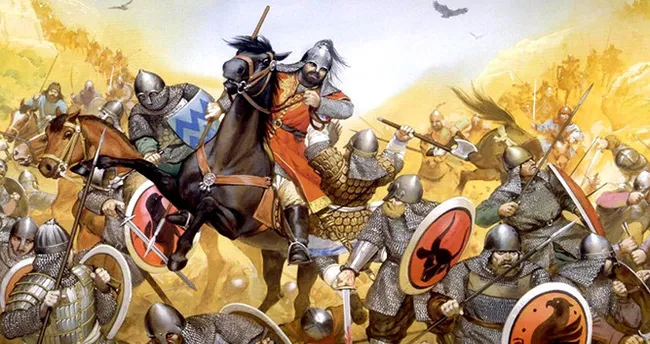
In the Battle of Manzikert, the Seljuk army employed the Turan tactic. Turkish soldiers drew the Byzantine army into the center through a feigned retreat, then encircled and delivered a decisive blow.
This tactic played a major role in securing the Seljuk victory.
The Historical Significance of the Battle of Manzikert
The 1071 Manzikert Victory was not merely a military triumph. It was also a historic turning point that transformed the political, cultural, and demographic structure of Anatolia.
With the settlement of Turks in Anatolia, new states were established in the region and Turkish-Islamic culture began to spread.
The cause of the Battle of Manzikert, frequently examined in historical research, stems from the struggle for dominance over Anatolia between the Seljuks and the Byzantines. The advance of the Seljuk Turks into Anatolia and Byzantium’s desire to stop it formed the fundamental cause of the battle. The Manzikert Victory of 1071 initiated the Turkification process of Anatolia and is recognized as one of the most significant events in Turkish history.