The Ottoman Interregnum was the period from the Battle of Ankara in 1402 to 1413, during which the sons of Bayezid I fought one another for the throne. According to the TDV Encyclopedia of Islam, Mehmed Çelebi, who won this struggle, reunited Anatolia and Rumelia under a single hand. In this article we describe step by step how he put the state back together.
Quick Summary
- During the Ottoman Interregnum, Süleyman, İsa, Musa and Mehmed fought for the throne.
- Mehmed Çelebi became sole ruler in 1413 by defeating Musa at Çamurlu.
- Reconciliation with Byzantium and guarantees of peace to the vassals were the basis of his policy.
- Cüneyd Bey, the Karamanids and İsfendiyar Bey were brought back into obedience.
- The movements of Mustafa Çelebi and Sheikh Bedreddin were suppressed.
- The tahrir (survey) and timar systems were developed in this period.
Contents
- After Ankara
- The struggle among the brothers
- Çamurlu and sole rule
- Order in Anatolia
- Mustafa Çelebi and Sheikh Bedreddin
- The Balkans and the sea
- Timar, tahrir and monuments
- His death and Murad II
- Frequently asked questions
How Did the Ottoman Interregnum Begin?
According to the TDV Encyclopedia of Islam, the Ottoman Interregnum was a period of internal struggle that brought the state to the brink of disintegration and formed one of the most important turning points in its history. After the Battle of Ankara, Bayezid I died in Timur’s hands. He left behind sons named Süleyman, İsa, Musa, Mehmed, Mustafa and Kasım. We described the details of the battle in our article on Bayezid I and the Battle of Ankara.
Timur returned the lands of the principalities to their former owners and divided the remaining territories among the princes. According to the encyclopedia, in this period all the princes ruled for a time as vassals of Timur. The goal of all of them was to capture Bursa, the first capital.
Even so, the state did not fall apart completely. The encyclopedia sees the main reason for this in the firm Ottoman settlement in Rumelia. The problems that arose lasted for about half a century and deeply affected the state’s organization, its conception of sovereignty and its rules of succession.
An Eleven-Year Struggle among the Brothers
Emir Süleyman and the Treaty of Gallipoli
The eldest prince, Emir Süleyman, took the treasury and the archives together with the grand vizier Çandarlı Ali Pasha and crossed into Rumelia. According to the encyclopedia, in February 1403 he signed the Treaty of Gallipoli with the Byzantine emperor Manuel. Under it, Thessaloniki, Thessaly and some towns on the Black Sea coast were ceded to Byzantium, and the tribute Byzantium paid was abolished. Süleyman then proclaimed his rule in Edirne.
Mehmed Çelebi’s Base in Amasya
Mehmed Çelebi, for his part, withdrew to the region of Amasya and Sivas after Ankara. According to the encyclopedia, he won the support of the ulema and the urban notables there. He reached an understanding with the Turkmen beys of the Tokat–Amasya region, who accepted his sovereignty in return for his recognition of their holdings. The Turkmen and Tatar forces of these beys became an important part of his army.
Mehmed confronted his elder brother İsa Çelebi over Bursa and defeated him at Ulubat. He entered Bursa and proclaimed his rule. Some time later İsa Çelebi was captured at Eskişehir and killed. Then the beys of Aydın, Menteşe and Germiyan were forced to recognize Mehmed’s authority.
Sending Musa Çelebi to Rumelia
When Emir Süleyman crossed into Anatolia and took Bursa and Ankara, Mehmed withdrew to Amasya once more. To force his elder brother to return to Rumelia, he sent his brother Musa there by way of Wallachia. Musa grew stronger as the lords of Rumelia and the timariot sipahis joined him. Finally, in 1411, he took Edirne; Süleyman was caught while fleeing and killed.
Musa, however, did not keep the agreement he had made with his brother: he had coins struck in his own name and proclaimed his rule. He made Kör Şah Melik vizier, Mihaloğlu Mehmed Bey beylerbeyi and Sheikh Bedreddin kazasker. According to the encyclopedia, his harsh manner and centralizing policy alienated the frontier lords.
The Victory at Çamurlu and Sole Rule
Musa’s siege of Constantinople drew the Byzantine emperor Manuel closer to Mehmed. Mehmed crossed into Rumelia on Byzantine ships, but in October 1412 he was defeated at İnceğiz by Musa’s 7,000 Janissaries. His second attempt also failed. He then tried to win over secretly the lords of Rumelia who had turned away from Musa.
He completed his preparations with the akıncı commander Gazi Evrenos Bey and received auxiliary forces from Nasırüddin Bey of the Dulkadır dynasty. Evrenos Bey also drew the Serbs to Mehmed’s side. The two armies met on the plain of Çamurlu near Samakov, south of Sofia. The defeated Musa was captured while fleeing and killed on 5 July 1413.
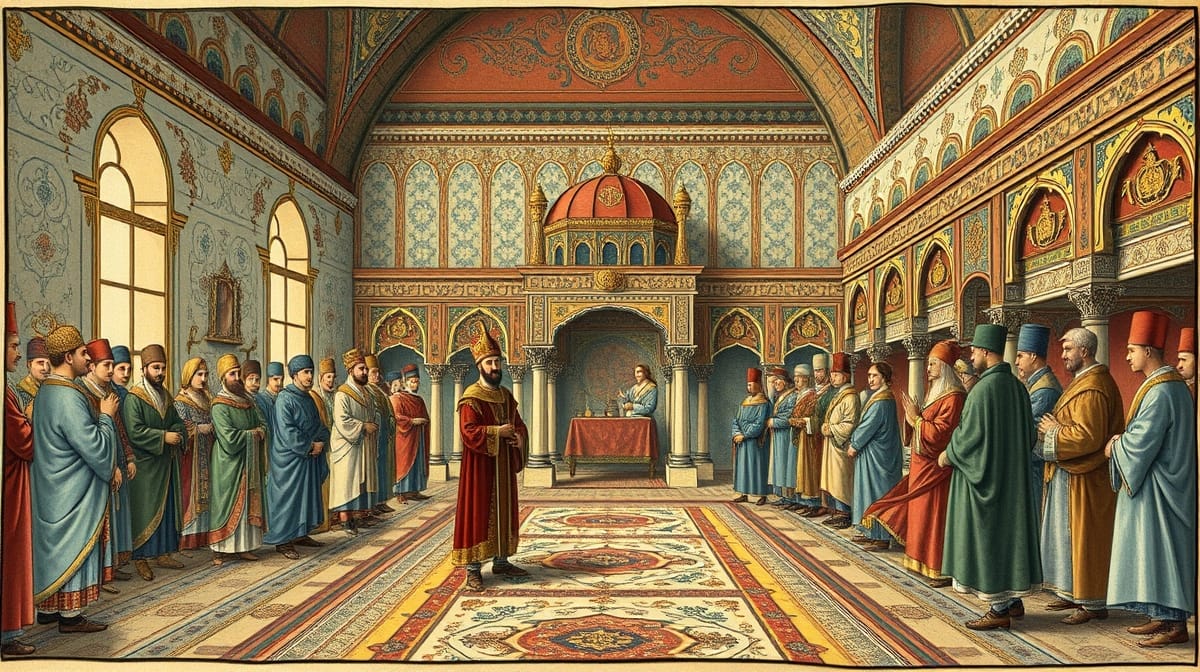
Mehmed Çelebi thus proclaimed himself the sole ruler of the state in Edirne. According to the encyclopedia, he received envoys from Byzantium, Serbia, Wallachia, the Despotate of the Morea and the Duchy of Athens. He sent them back with assurances of firm peace and friendship. This attitude was a continuation of the conciliatory policy he had pursued throughout the Ottoman Interregnum.
Mehmed’s ultimate success rested on his mostly placatory attitude toward the emperor, whom he called “father.” The encyclopedia recalls that throughout the Ottoman Interregnum Byzantium controlled the crossings between Anatolia and Rumelia. Good relations with Constantinople were therefore also the key to uniting the two shores.
Restoring Order in Anatolia
Feeling secure in the Balkans, Mehmed devoted the next two years to Anatolia. According to the encyclopedia, in 1414 he defeated Cüneyd Bey, who had re-established his principality in İzmir, and turned the land of Aydın into a sancak. In this struggle the beys of Germiyan and Menteşe, the Genoese of Chios and the Knights of Rhodes took his side.
While Mehmed was occupied with Musa, Mehmed Bey of Karaman had besieged Bursa for thirty-one days. Before setting out on campaign, the sultan sent an envoy with gifts to the Mamluk sultan, regarded as the protector of the Karamanids. In March 1415 he defeated the Karamanids and besieged Konya. In return for peace, the lands of Hamid-ili and Said-ili were annexed.
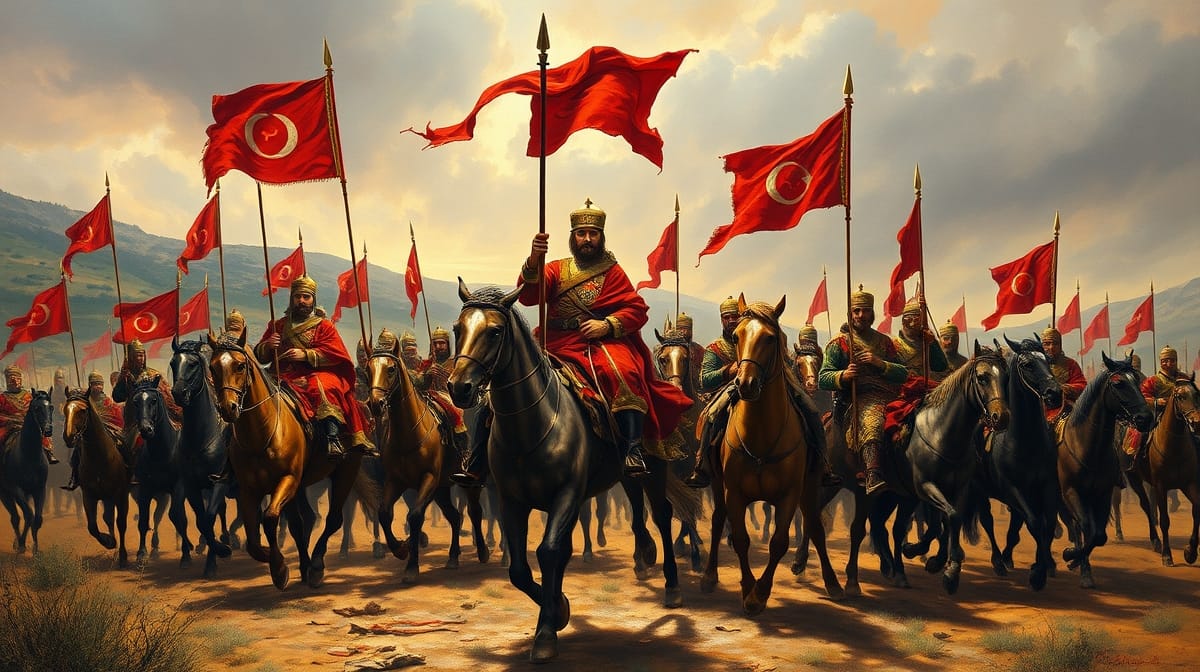
İsfendiyar Bey of the Candar dynasty declared his loyalty by promising to send auxiliary forces for the Karaman campaign. These steps turned the balance among the principalities, which had collapsed during the Ottoman Interregnum, back in the Ottomans’ favor. We discussed an earlier stage of Anatolian unity in our article on Anatolian Turkish political unity.
The Aftershocks of the Ottoman Interregnum
The Appearance of Mustafa Çelebi
According to the encyclopedia, Mustafa, the elder brother who had been captured by Timur at Ankara, was released by the Timurid Shahrukh and reached Trabzon in January 1415. From there he crossed to Wallachia; Cüneyd Bey, whom Mehmed had sent to Nicopolis, also joined him. Despite the support of Mircea, the voivode of Wallachia, they could not win over the frontier forces.
With Byzantine help, Mustafa and Cüneyd crossed to Thessaloniki and took Serres. In the autumn of 1416, however, Mehmed forced them to take refuge in Thessaloniki again. The emperor agreed to keep them in prison as long as Mehmed was alive. In return he received 300,000 akçe a year from the sultan.
The Movement of Sheikh Bedreddin
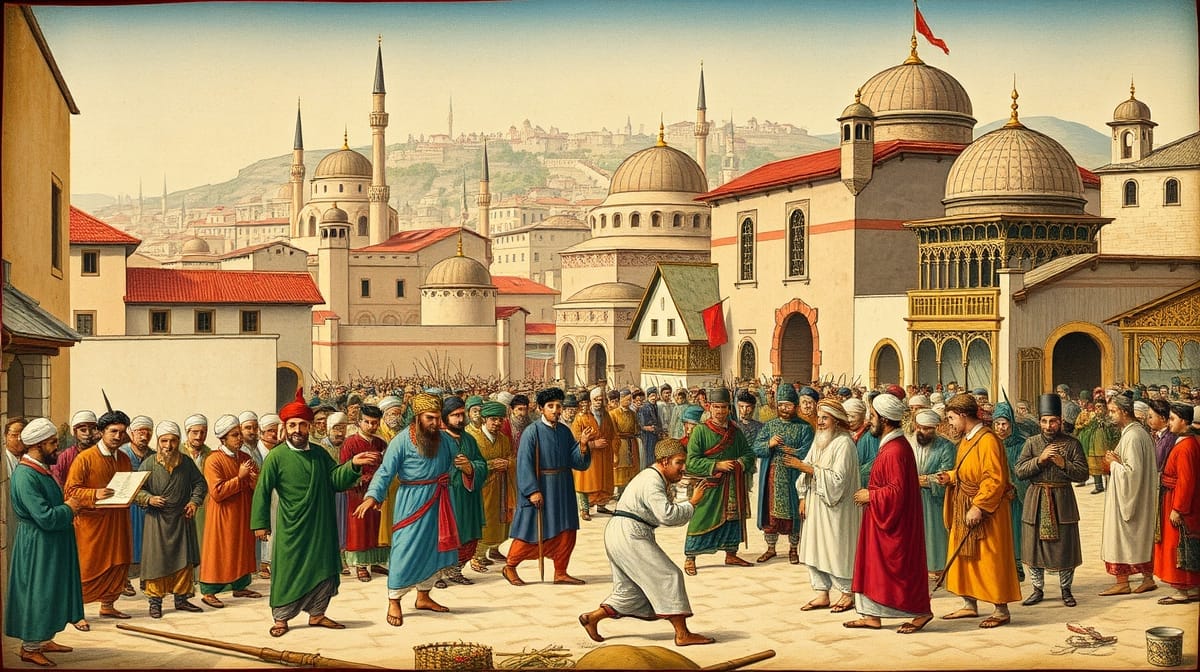
Musa’s kazasker, Sheikh Bedreddin, was exiled to İznik with his family in 1413 and given a salary of 1,000 akçe. According to the TDV Encyclopedia of Islam, probably in 1416 he fled İznik and took refuge with İsfendiyar Bey in Kastamonu. His disciple Börklüce Mustafa gathered a large following in Aydın and Karaburun, and Torlak Kemal did the same in Manisa.
Mehmed sent a large force against this movement. The forces of Börklüce and Torlak were defeated, and the units under Bayezid Pasha also captured the sheikh. Sheikh Bedreddin was brought before the sultan, who was in Serres, and executed there.
Balance in the Balkans and at Sea
According to the encyclopedia, Mehmed’s bringing his vassals back into obedience pushed Byzantium, the Pope and Venice toward diplomacy for a crusade. Venice had taken advantage of the turmoil of the Ottoman Interregnum to extend its control as far as western Greece, Albania and the Morea. In 1415 Mehmed had raids carried out on Venetian territories in the Aegean. On 29 May 1416, however, the Venetian fleet under Pietro Loredan destroyed the Ottoman fleet at Gallipoli.
In 1419 Mehmed campaigned against Mircea, the voivode of Wallachia. He had the fortress of Yeni Yergöğü built on the right bank of the Danube; it later took the name Rusçuk (Ruse). According to Neşri, Mircea submitted, sent three of his sons as hostages and agreed to pay tribute.
Timar, Tahrir and Lasting Monuments
According to the TDV Encyclopedia of Islam, the basic issue of Mehmed’s reign was for the state to become the dominant power in Anatolia and the Balkans again after the disaster of 1402. The sipahis, yayas, müsellems, kapıkulus and peasants knew that their status depended on the existence of a central government. That is why the tahrir and timar systems were developed and widely applied in this period.
In Bursa, Mehmed built a mosque, a madrasa, a soup kitchen and a tomb and endowed them with waqfs. The Old Mosque (Eskicami) in Edirne was completed in his time, and a bedesten was built as an endowment for the mosque. These works can be seen as the traces in stone of the order rebuilt after the Ottoman Interregnum. We described how the central administration worked in our article on the Imperial Council.
The Death of Mehmed Çelebi and Murad II
Mehmed, who fell ill in his last year, was above all concerned that his eldest son Murad should come to the throne without a crisis. According to the encyclopedia, he made an agreement with the emperor for this purpose. His younger sons Yusuf and Mahmud would go to Constantinople as hostages, and the emperor would not release Mustafa.
Mehmed died in Edirne on 25 June 1421. Murad ascended the throne in Bursa and refused to send his brothers to the emperor. We examined the events of the new period in our article on Murad II and the Battle of Varna.
Frequently Asked Questions
When did the Ottoman Interregnum begin and end?
It began with the Battle of Ankara in 1402 and ended when Mehmed Çelebi defeated Musa Çelebi at Çamurlu on 5 July 1413.
Which princes fought during the Ottoman Interregnum?
Süleyman, İsa, Musa and Mehmed Çelebi fought for the throne; Mustafa had been taken prisoner at Ankara.
Why did Mehmed Çelebi win?
According to the TDV Encyclopedia of Islam, his conciliatory attitude toward Byzantium, his balanced relations with the principalities and his winning over the frontier lords who had turned away from Musa were decisive.
Who was Sheikh Bedreddin?
He was Musa Çelebi’s kazasker. After being exiled to İznik, he led a broad movement with Börklüce Mustafa and Torlak Kemal and was executed in Serres.
When did Mehmed Çelebi die?
According to the TDV Encyclopedia of Islam, he died in Edirne on 25 June 1421.
Conclusion
The Ottoman Interregnum brought the state to the brink of disintegration after the defeat at Ankara. Through a patient struggle that began in Amasya, Mehmed Çelebi defeated his brothers one by one and restored unity in 1413. Reconciliation with Byzantium, balance with the principalities and firmness against revolts were his methods. The spread of the timar and tahrir systems also enabled him to leave a sounder state to his son Murad II.