The Ottoman Interregnum was a severe period of civil war after the Battle of Ankara, shaped by the struggles of Ottoman princes for the throne, regional alliances, Anatolian beyliks, and Byzantine diplomacy.
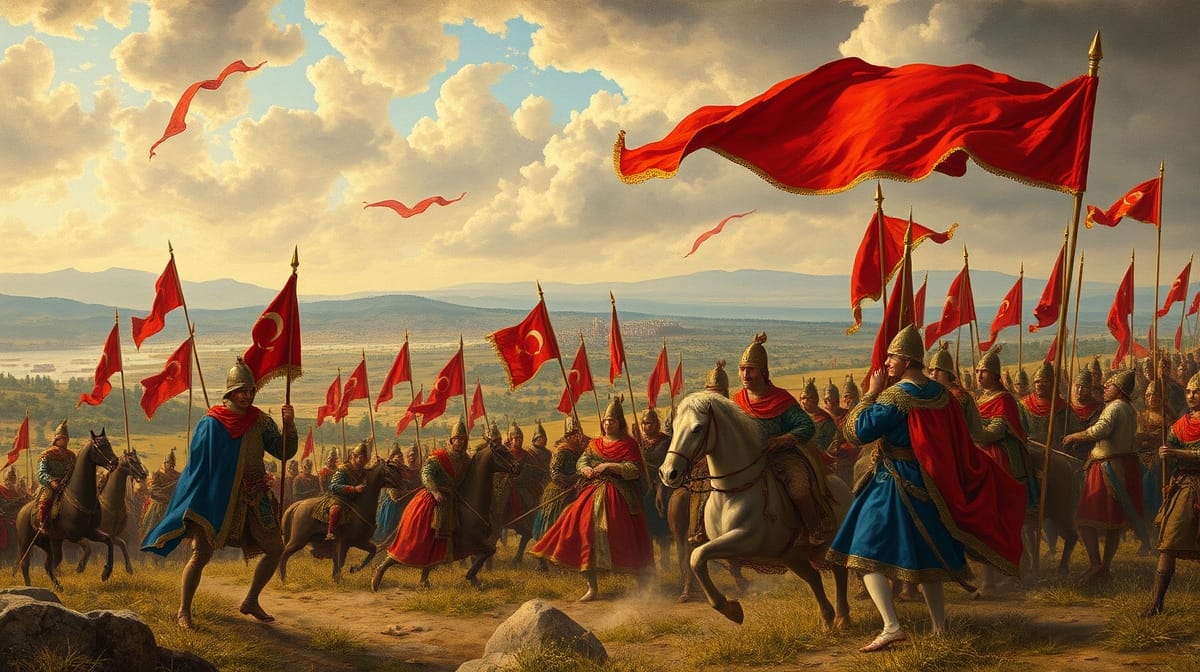
Quick Summary
- The Battle of Ankara severely shook the Ottoman central order.
- The princes fought by relying on Rumelian and Anatolian power bases.
- Byzantium, Wallachia, and the beyliks carefully exploited the balance of power.
- Mehmed Çelebi defeated his rivals and reunited the state.
- The Ottoman Interregnum profoundly affected later succession politics.
Contents
- The Disrupted Order After the Battle of Ankara
- The Causes of the Struggle for the Throne in the Ottoman Interregnum
- The Princes’ Centers of Power
- Alliances and External Actors
- Behind the Wars
- The Rise of Mehmed Çelebi
- Lasting Traces and Conclusion
The Disrupted Order After the Battle of Ankara
The 1402 Battle of Ankara was one of the sharpest turning points in Ottoman history. Bayezid I’s defeat by Timur was not merely a military loss. It also unraveled dynastic authority, the provincial order, and the networks of loyalty in Anatolia.
According to Halil İnalcık, this defeat clearly revealed the limits of early Ottoman centralization. The state had grown rapidly around a powerful ruler. Yet the system of succession did not possess rules firm enough to sustain that expansion.
In this environment, Bayezid’s sons advanced their own claims to legitimacy. Süleyman Çelebi sought power in Rumelia, İsa Çelebi around Bursa, Mehmed Çelebi in Amasya, and Musa Çelebi on various fronts. For this reason, Bayezid I and the Battle of Ankara is a key topic for understanding the beginning of the period.
The Causes of the Struggle for the Throne in the Ottoman Interregnum
The Ottoman Interregnum cannot be explained solely by personal ambition among brothers. The real issue was the question of which center would govern the Ottoman domains. Rumelian ghazis, Anatolian beys, frontier commanders, and palace circles supported different candidates.
The uncertainty of succession rules in the Ottoman Interregnum
At this time, the Ottomans did not have a fixed system of seniority. Members of the dynasty were considered candidates for the throne to the extent that they could gather political power. This understanding was also connected to earlier Turkic state traditions.
İsmail Hakkı Uzunçarşılı emphasizes that the princes’ experience in provincial governorships prepared them to act independently. Each prince entered the scene with his own retinue, military circle, and financial resources. This made the struggle longer and more exhausting.
In addition, the beyliks in Anatolia wanted to recover their former lands. Timur’s policy also encouraged this fragmentation. Thus, the Ottoman dynastic crisis turned into a regional war over the distribution of power.
The Princes’ Centers of Power
The princes belonged to the same dynasty, but they had different geographical bases. This difference determined the course of the wars. Each region supported the candidate best suited to its own interests.
Süleyman Çelebi’s Rumelian base
Süleyman Çelebi secured the support of the Rumelian power centered on Edirne. Ottoman administration in Rumelia remained more orderly than in Anatolia. For this reason, he initially appeared to be the strongest candidate.
However, the agreements Süleyman Çelebi made with Byzantium caused unease among some ghazis. The concessions in particular weakened his legitimacy. Even so, Edirne remained the most important political center of the period.
Mehmed Çelebi’s Amasya line in the Ottoman Interregnum
Mehmed Çelebi pursued a more cautious policy around Amasya and Tokat. His first objective was not to fight on every front. He first built a reliable base in Anatolia.
This strategy bought him time. He also developed balanced relations with local elements. As a result, Mehmed Çelebi presented the profile of a cool-headed leader who waited for his rivals to wear one another down.
The shifting positions of İsa and Musa Çelebi
İsa Çelebi was briefly influential around Bursa. However, he could not establish a strong and lasting alliance network. His defeats against Mehmed Çelebi weakened his claim.
Musa Çelebi followed a more complex path. At first, he needed the support of different powers. Later, he became a serious alternative to Süleyman Çelebi in Rumelia.
Alliances and External Actors
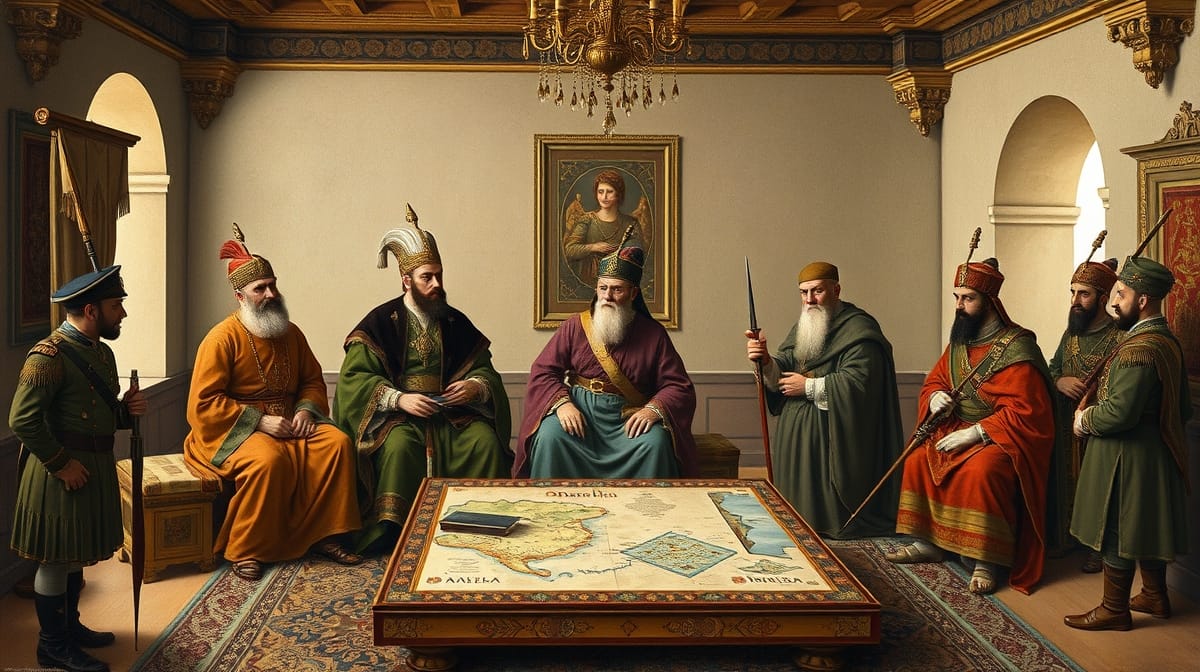
The wars of the Ottoman Interregnum did not involve only the Ottoman princes behind the scenes. The Byzantine Empire, Wallachia, the Serbian Despotate, and the Anatolian beyliks directly influenced the process. Every actor tried to benefit from the Ottoman civil war.
Caroline Finkel interprets this period as a crisis that demonstrated the Ottomans’ unexpected resilience. Although the state appeared fragmented, the administrative memory in Rumelia and Anatolia did not disappear entirely. This memory prepared the ground for reunification.
Byzantium sought to increase its own security by maintaining a balance among the princes. Reducing Ottoman pressure around Constantinople was vital for the empire. For this reason, Byzantine diplomacy maneuvered carefully between the candidates.
Meanwhile, the Anatolian beyliks watched for opportunities against Ottoman centralization. The Germiyanids, Karamanids, and other beyliks wanted to revive their former spheres of influence. This is also important for the struggle for Anatolian Turkish political unity.
Behind the Wars
The visible face of the wars between the princes was battlefield combat. Yet the real struggle revolved around networks of loyalty and the control of resources. Whoever could gather more soldiers, taxes, and legitimacy gained the upper hand.
Bursa, Edirne, Amasya, and the Rumelian frontiers were therefore critical centers. Bursa had the character of an old capital. Edirne, meanwhile, was the heart of military power in the Balkans.
During this period, ghazis and raider beys played a decisive role. Their support meant more than the number of soldiers. It also provided religious and political legitimacy.
The Ottoman Interregnum showed that the Ottoman throne was won not only through dynastic blood, but also through actual power and political consent.
In addition, the ulema and urban notables also influenced the process. Having the khutba read and coins minted in a prince’s name strengthened his claim to sovereignty. These symbols carried great significance in early Ottoman political culture.
The Rise of Mehmed Çelebi
Mehmed Çelebi acted more patiently and deliberately than his rivals. He first consolidated his position in Anatolia. Then he turned developments in Rumelia to his own advantage.
The fall of Süleyman Çelebi accelerated the rise of Musa Çelebi. However, Musa’s harsh rule alienated certain circles in Rumelia. This situation offered Mehmed Çelebi a new opportunity.
In 1413, the Battle of Çamurlu marked the final stage of the internal struggle. Mehmed Çelebi defeated Musa Çelebi and reunited the Ottoman domains. For this reason, historians often refer to him as the second founder of the state.
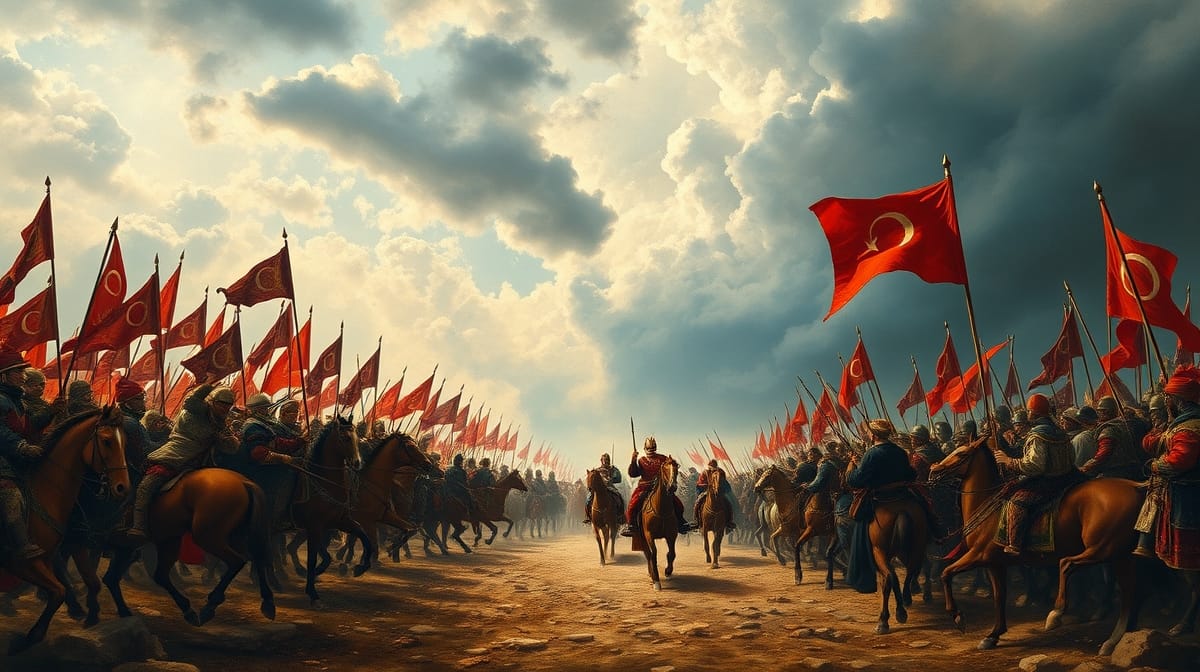
Mehmed Çelebi’s success was not merely a military victory. He reestablished a dispersed authority. He also pursued a balanced policy toward the Anatolian beyliks and a conciliatory one toward the Rumelian powers.
This process formed a bridge between the founding process of the Ottoman State and its later imperial structure. After the Ottoman Interregnum, the Ottomans turned toward protecting central authority more carefully. Thus, rivalry within the dynasty began to be controlled through harsher methods.
Lasting Traces and Conclusion
The Ottoman Interregnum left deep marks on Ottoman political thought. The most important lesson was that uncertainty over succession could fragment the state. For this reason, later sultans placed greater emphasis on strengthening central authority.
Especially during the reign of Mehmed II, the dynastic order was defined more harshly through law codes. This policy took shape in the shadow of the experience of the Interregnum. Mehmed II’s centralizing policy can be better understood in this respect.
The period also demonstrated the Ottomans’ capacity to emerge from crisis. Despite more than a decade of civil war, the state did not collapse completely. The military structure in Rumelia, the administrative tradition in Anatolia, and dynastic legitimacy came together again.
The Ottoman Interregnum is not merely a dark interval in Ottoman history. On the contrary, it was a great test that exposed the state’s weak points. The wars between the princes clearly showed that power was established through a balance of military force, diplomacy, and legitimacy.
Sources
- Halil İnalcık, Devlet-i Aliyye.
- İsmail Hakkı Uzunçarşılı, Osmanlı Tarihi.
- Caroline Finkel, Osman’s Dream.
- TDV Encyclopedia of Islam, Ottoman Interregnum entry.
- Halil İnalcık and Donald Quataert, An Economic and Social History of the Ottoman Empire.