The Young Ottomans were a pioneering intellectual movement that brought Namık Kemal’s ideas of liberty, homeland, and constitutional government to the public through a powerful literary and journalistic language, making the search for constitutional order visible in Ottoman political thought.

Quick Summary
- Namık Kemal regarded liberty as a moral and political duty.
- The press became the most effective instrument of the struggle of ideas.
- The idea of homeland gained a new meaning in Ottoman society.
- The demand for constitutional government strengthened the search for law and representation.
- Exiles did not reduce the movement’s influence; on the contrary, they enlarged it.
Contents
- Who Were the Young Ottomans?
- How Did Namık Kemal Rise at the Center of the Movement?
- The Struggle for Liberty, Homeland, and the Press
- The Young Ottomans and the Idea of Constitutional Government
- Namık Kemal’s Intellectual Legacy
- Conclusion
Who Were the Young Ottomans?
The Young Ottomans consisted of intellectuals who sought an answer in ideas to the political crises of the Ottoman Empire in the 1860s. At the core of the movement were figures such as Namık Kemal, Ziya Pasha, Ali Suavi, and Agâh Efendi. These figures did not reject the Tanzimat reforms entirely. However, they regarded the reforms’ distance from popular representation as a serious shortcoming.
Initially, the movement developed a new political language to prevent the state from disintegrating. In this language, law, consultation, liberty, and homeland came to the fore. According to Kemal Karpat, nineteenth-century Ottoman thought was debating the new relationship between the central state and society. The Young Ottomans became one of the liveliest links in this debate.
To understand this movement, one must know the Tanzimat environment. The intellectuals emerged from within the new bureaucratic order that grew after the 1839 Tanzimat Edict and the 1856 Reform Edict. For this context, the article The Tanzimat and Reform Edicts in the Ottoman Empire provides a useful background. The movement was also nourished by debates on constitutional government in Europe.
What question did the Young Ottomans seek to answer?
The Young Ottomans sought an answer to the question, “How can the Ottoman Empire be saved?” In their view, military reform alone was not enough. The state had to establish a form of government based on law. In addition, the people needed to participate in government, even if only in a limited way.
On the other hand, the members of the movement did not regard imitating the West as the only solution. They interpreted the concept of consultation in Islamic political thought together with constitutional ideas. In this way, they tried to establish a link between modern constitutional thought and the Ottoman-Islamic tradition. This approach formed the movement’s distinctive side.
How Did Namık Kemal Rise at the Center of the Movement?
Namık Kemal became one of the most influential pens among the Young Ottomans. He was born in Tekirdağ in 1840 and entered literary circles at a young age. Under Şinasi’s influence, he turned toward journalism. The milieu around Tasvir-i Efkâr in particular deeply shaped his intellectual world.
Namık Kemal’s strength did not come only from his political ideas. He expressed those ideas in an effective style. He used different genres such as poetry, drama, articles, and letters. For this reason, his ideas were able to move beyond a narrow bureaucratic circle.
In the TDV Encyclopedia of Islam, Namık Kemal is treated in both his literary and political aspects. This dual identity is highly important. His idea of liberty did not remain a dry concept. On the contrary, it turned into an emotional and memorable social appeal.
What distinguished Namık Kemal among the Young Ottomans?
What distinguished Namık Kemal among the Young Ottomans was his ability to translate ideas into a language the public could understand. Ziya Pasha came to the fore more through satire and criticism of the state. Ali Suavi followed a harsher and sharper political line. Namık Kemal, however, used literature for political consciousness.
Even so, Kemal was not merely an emotional poet of the homeland. He saw the rule of law and constitutional government as essential for the survival of the state. Halil İnalcık’s assessments of Ottoman modernization emphasize the importance of the search for institutions in the nineteenth century. Namık Kemal added a powerful language of ideas to this institutional search.

The Struggle for Liberty, Homeland, and the Press
In Namık Kemal’s thought, liberty did not mean only personal freedom. For him, liberty was a fundamental value that protected human dignity and society’s resilience. He therefore presented liberty as a moral duty. He also associated it with the strengthening of the state.
For the Young Ottomans, the press was the main arena in which ideas circulated. Newspapers opened a new ground for public debate in nineteenth-century Ottoman society. Namık Kemal’s writings made a great impact on this ground. The newspaper Hürriyet in particular became one of the movement’s emblematic publications.
Yet this publishing activity created tension with the state. Opposition writings increased the pressure of censorship and exile. Namık Kemal was first removed from Istanbul. He then went to Europe and continued his intellectual struggle there as well.
Namık Kemal’s real strength lay in taking liberty out of the realm of an abstract political term. He thought of it together with homeland, honor, and social responsibility.
Why did the Young Ottomans attach so much importance to the press?
The Young Ottomans saw the press as a sphere of voice for a society that could not directly reach the administration. Thanks to newspapers, state policies became open to discussion. New concepts also spread to wider circles. This played an important role in the formation of Ottoman public opinion.
In addition, the press was like a school in which the modern educated generation expressed itself. Namık Kemal’s articles did not merely provide readers with information. They also called the reader to a moral and political stance. For this reason, his writings differed from ordinary news texts of the period.
How did the idea of homeland gain a new meaning?
Before Namık Kemal, the word homeland was used mostly to mean the place of one’s birth. Namık Kemal gave this word a political and emotional meaning. For him, the homeland was the space of shared destiny and freedom. This idea was also closely related to the notion of Ottomanism.
The play Vatan Yahut Silistre in particular made this new meaning visible. The work was staged in 1873 and aroused great excitement. Namık Kemal’s subsequent exile to Famagusta increased his fame even further. Thus theater became a vehicle for political ideas.
The Young Ottomans and the Idea of Constitutional Government
The Young Ottomans and the idea of constitutional government formed an important threshold in Ottoman political history. The movement did not aim to abolish the sultanate altogether. Instead, it advocated limiting the sultan’s powers by law. For this reason, it moved close to the idea of constitutional monarchy.
This approach showed its influence in the atmosphere of the 1876 Kanun-i Esasi. Of course, it would not be correct to explain the proclamation of the constitution by this movement alone. Statesmen, foreign pressures, Balkan crises, and financial problems were also decisive. Yet the Young Ottomans strengthened the moral and intellectual ground of the constitutional idea.
To read this process in a broader framework, the article Democratization Movements in the Ottoman Empire is complementary. In addition, for debates on regime change, the topic regime change in the Ottoman Empire and the proclamation of constitutional government is also important. This is because 1876 was one of the most visible moments in the search to move from idea to institution.
Why was the idea of consultation central?
Meşveret, meaning consultation, was one of the key concepts the movement used with Islamic references. The Young Ottomans associated this concept with the idea of representation. In their view, the ruler had to take society’s opinion into account. Thus justice should not be left solely to the sultan’s goodwill.
The works of Ahmed Cevdet Pasha are important for understanding the legal and political outlook of the Tanzimat period. During this period, codification efforts gained momentum. Namık Kemal, however, emphasized public opinion and representation alongside law. As a result, constitutional government became a moral matter as much as a legal one.
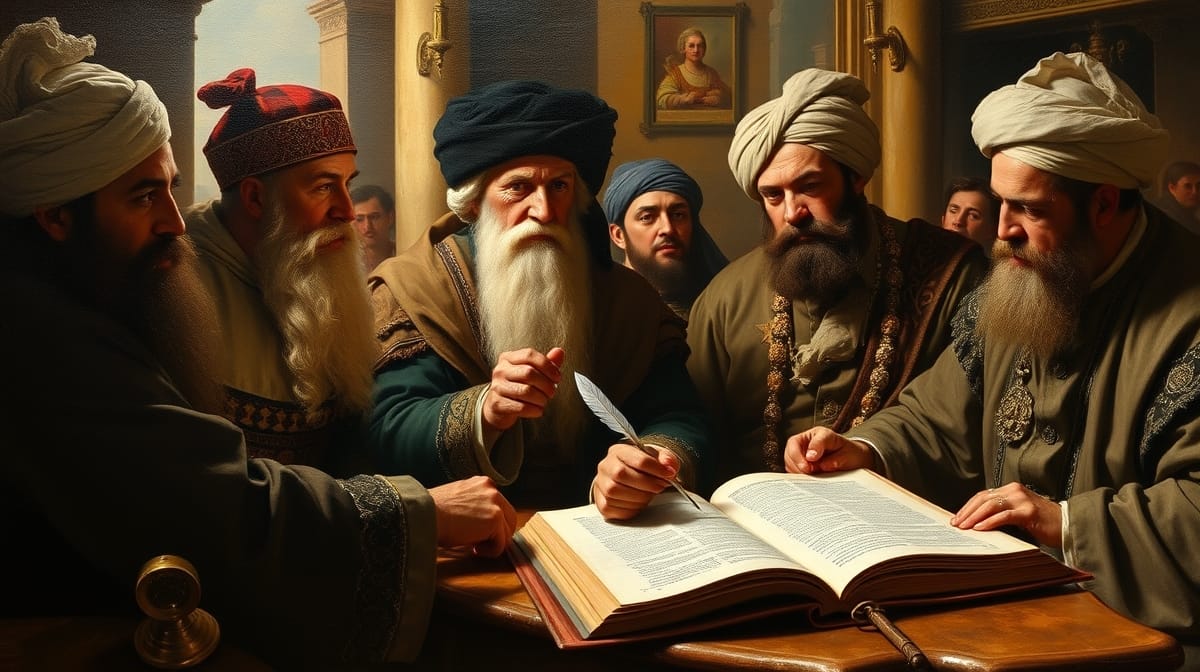
Namık Kemal’s Intellectual Legacy
Namık Kemal’s legacy was felt clearly among the generation of the Second Constitutional Era. After 1908, the language of liberty and constitution regained strength. Younger generations made his poems and articles part of political memory. For this reason, Namık Kemal did not remain merely a writer of his own age.
On the other hand, this legacy must be read critically. Namık Kemal’s ideas are not exactly the same as the modern understanding of democracy. He acted out of a concern to save the empire. For this reason, he thought of the idea of freedom together with the integrity of the state.
Caroline Finkel, while narrating the Ottoman Empire’s final century, emphasizes that issues of reform, crisis, and identity became intertwined. Namık Kemal’s importance emerges precisely here. He offered this complex period a powerful vocabulary. In his pen, the words liberty, homeland, and nation gained a new historical energy.
How did the Young Ottomans influence later currents of thought?
The Young Ottomans influenced later debates on Ottomanism, Islamism, and constitutionalist thought. The movement’s members did not produce a single uniform ideology. Yet they sought the salvation of the state in the realms of ideas, law, and representation. This search left a strong legacy for later generations.
This legacy should be evaluated within the broader framework of Ottoman intellectual life. For this reason, the article Ottoman Currents of Thought complements the topic. In addition, the related content titled Who Were the Young Ottomans? examines the movement’s direct identity.
Conclusion
In conclusion, the Young Ottomans powerfully opened the concepts of liberty, homeland, the press, and constitutional government to debate within Ottoman modernization. Namık Kemal became the most influential voice of this movement. His pen combined political thought with literary excitement and left a lasting mark on Ottoman thought.
Sources
- Halil İnalcık, The Ottoman Empire: The Classical Age.
- Kemal H. Karpat, Ottoman Modernization.
- Caroline Finkel, Osman’s Dream.
- Ahmed Cevdet Pasha, Tarih-i Cevdet.
- TDV Encyclopedia of Islam, entries on Namık Kemal and Yeni Osmanlılar.








1 thought on “The Young Ottomans and Namık Kemal: What Was the Powerful Voice of Liberty?”