The Karbala event was the killing of Husayn, his family and about seventy companions by an Umayyad army at Karbala on 10 Muharram 61 (10 October 680). According to the TDV Encyclopedia of Islam, at the root of the event lay Husayn’s refusal to pledge allegiance to Yazid. The tragedy became one of the deepest fractures in Islamic history.
Quick Summary
- Muawiya’s appointment of his son Yazid as his successor provoked wide opposition.
- Husayn refused to pledge allegiance to Yazid and went to Mecca.
- The people of Kufa invited him, but they went back on their word once Muslim ibn Aqil was killed.
- The caravan reached Karbala on 2 Muharram 61 and was cut off from the Euphrates.
- 10 Muharram became fixed in memory as a day of mourning for the Shia.
Contents
- The short answer
- Where is Karbala?
- Yazid as heir
- From Mecca toward Kufa
- On the road to Karbala
- Siege and thirst
- 10 Muharram
- After the event
- Historical memory
- Frequently asked questions
What Was the Karbala Event?
The Karbala event is the tragedy that ended in the killing of Husayn, the son of Ali and the grandson of the Prophet. The army that killed him had been sent by Ubayd Allah ibn Ziyad, the governor of Kufa under the Umayyad caliph Yazid I. According to the TDV Encyclopedia of Islam, members of Husayn’s family and about seventy fighters were martyred with him. The event is remembered as the tragic outcome of a struggle against the transformation of the caliphate into a monarchy passed from father to son.
Where Is Karbala?
According to the TDV Encyclopedia of Islam, Karbala lies about 100 km southwest of Baghdad. The city’s fame in Islamic history comes from the fact that the Karbala event took place there and that the graves of the martyrs are there. According to the encyclopedia, Karbala is the second holy place of pilgrimage for the Shia after Najaf, where Ali is believed to be buried. The city existed before Islam as well, since Khalid ibn al-Walid is known to have camped there in 634.
According to the encyclopedia, it has been suggested that the name comes from the Akkadian word karballatu, meaning “pointed cap”, or from certain Arabic roots. No firm conclusion has been reached on this question, however. According to the encyclopedia, Ibn Battuta found the city among palm groves in 1327; beside the shrine there was a large madrasa and a zawiya.
The Background: Yazid as Heir
The roots of the Karbala event go back to the debate over how the caliphate should be passed on. According to the TDV Encyclopedia of Islam, Husayn at first objected to his elder brother Hasan’s agreement with Muawiya, but later accepted it. After Hasan’s death in 669 he led a life devoted to worship and asceticism. In a letter to Muawiya he declared that he had no intention of fighting him. Yet Muawiya’s demand, after 676, that allegiance be pledged to his son Yazid disturbed many Muslims.
According to the encyclopedia, Abd al-Rahman ibn Abi Bakr opposed the proposal, saying that it meant introducing the Byzantine practice of passing the throne from father to son. Abd Allah ibn Umar and Abd Allah ibn al-Zubayr also refused to pledge allegiance, and Husayn shared their view. Muawiya tried to force his opponents to pledge allegiance with threats, but he did not succeed.
Why Did Husayn Turn Toward Kufa?
When Muawiya died in 680, Yazid, who succeeded to the caliphate, asked al-Walid ibn Utba, the governor of Medina, to obtain Husayn’s pledge of allegiance. According to the TDV Encyclopedia of Islam, Husayn said that he could not pledge allegiance in secret. Marwan advised the governor either to take his pledge at once or to have him beheaded, but al-Walid refused, regarding this as a deed that would destroy his faith. On the night of 4 May 680 Husayn left for Mecca with his whole family except his brother Muhammad ibn al-Hanafiyya.
According to the encyclopedia, the notables of Kufa wrote letters inviting him so as to bring him to the caliphate. To examine the situation, Husayn sent his cousin Muslim ibn Aqil to Kufa. According to reports, 12,000–30,000 people pledged allegiance to Muslim at first. But the situation changed when Yazid appointed Ubayd Allah ibn Ziyad, the governor of Basra, governor of Kufa as well.
In the face of Ubayd Allah’s harsh measures the people scattered. According to the encyclopedia, Muslim ibn Aqil was captured and killed on 9 or 10 September 680. Unaware of this, Husayn set out for Kufa on 9 September 680, despite the warnings of people such as Ibn Abbas and Abd Allah ibn Umar.
On the Road to Karbala
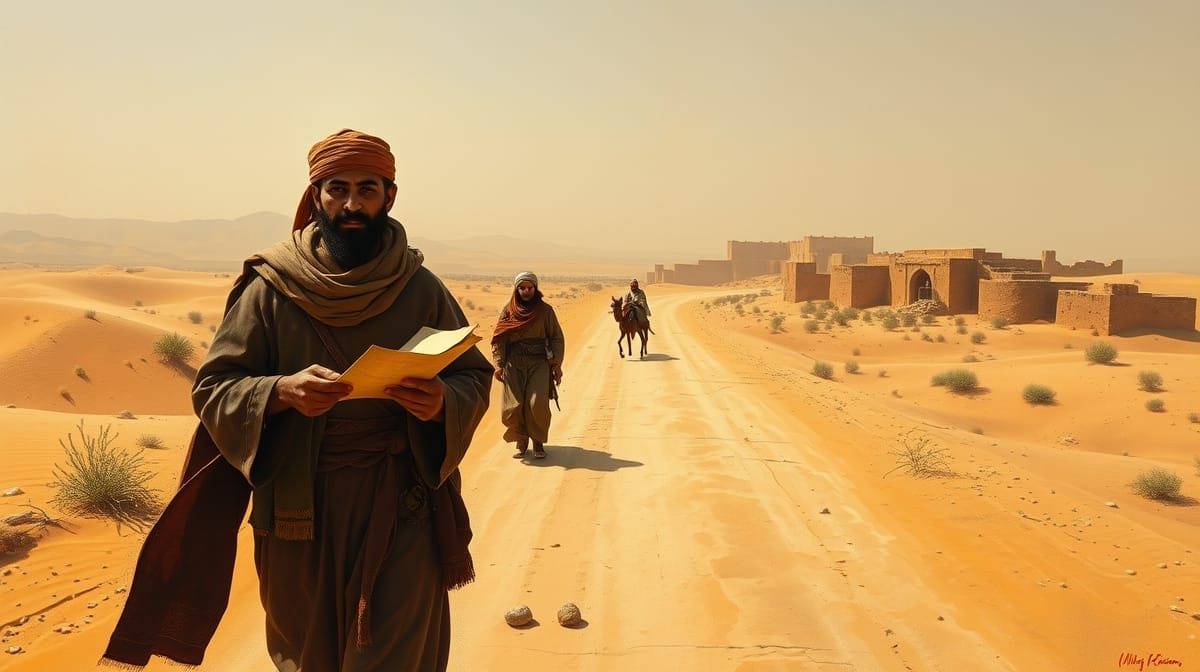
The poet al-Farazdaq, whom he met on the way, told him that the hearts of the people of Kufa were with him but their swords were with the Umayyads. According to the TDV Encyclopedia of Islam, when Husayn learned at al-Thalabiyya that Muslim had been killed, he wanted to turn back. At the insistence of Muslim’s relatives, however, he continued on his way. According to the encyclopedia, his cousin Abd Allah ibn Jafar had earlier obtained a guarantee of safety (aman) for him from the governor of Mecca and asked him to return. Husayn told his followers that anyone who wished could leave, and about seventy people, together with his family, remained with him.
Siege and Thirst at Karbala
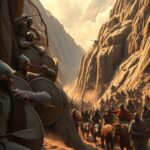
According to the encyclopedia, the small caravan reached Karbala on 2 Muharram 61 (2 October 680). Al-Hurr ibn Yazid, who had been shadowing the caravan with a force of 1,000 men, reported the situation to the governor. Ubayd Allah demanded that the caravan be forced to camp in a waterless and defenseless place. Umar ibn Sad was also sent against Husayn with his army.
Husayn told the envoy that the people of Kufa had invited him and that he wished to go back. According to the encyclopedia, Ubayd Allah demanded that allegiance to Yazid be put to him and that, if he refused, the caravan be cut off from the water. By some estimates Husayn offered to turn back, to go to Yazid in person and pledge allegiance, or to go and fight in a frontier region. Through the incitement of Shimr ibn Dhi al-Jawshan, however, these offers came to nothing.
10 Muharram: How Did the Karbala Event Unfold?
According to the TDV Encyclopedia of Islam, Husayn and those with him spent the night of 9 Muharram in prayer, worship and asking forgiveness. The next day Husayn addressed Umar’s army and called on them to be fair. Moved by this speech, al-Hurr ibn Yazid repented of what he had done and went over to Husayn’s side.
According to the encyclopedia, the battle began when Umar ibn Sad shot the first arrow. Husayn’s small force of twenty-three horsemen and forty foot soldiers quickly dwindled. Exhausted by heat and thirst, Husayn was attacked from every side on Shimr’s orders and martyred. Umar ibn Sad, however, prevented the killing of his son Ali Zayn al-Abidin, who lay sick in bed.
What Happened After the Event?
After the Karbala event, according to the encyclopedia, the bodies of the martyrs were buried the next day by villagers of al-Ghadiriyya from the Banu Asad tribe. Husayn’s severed head and the captives were sent to Damascus. Yazid outwardly expressed grief and cursed Ubayd Allah. The encyclopedia, however, judges that this grief was not sincere, noting that had he truly been saddened he would have removed those responsible from office.
After being held in Damascus for a few days, the captives were sent to Medina with an escort. According to the encyclopedia, once freed, they visited the grave at Karbala on their way back to Medina. According to the encyclopedia, where Husayn’s head was buried is disputed; the strongest possibility is the Baqi Cemetery in Medina. Sulayman ibn Surad, leader of the Kufans who had invited him, later also visited the grave and felt the shame of having left him without help.
The Place of Karbala in Historical Memory
The Karbala event gave a new meaning to the day of Ashura. According to the TDV Encyclopedia of Islam, 10 Muharram became a day of mourning for the Shia. This mourning was observed with state ceremonies under the patronage of the Shiite Fatimid state and later became a tradition in Iran. In the Sunni world, fasting on Ashura and cooking aşure (Noah’s pudding) continued as a widespread tradition.
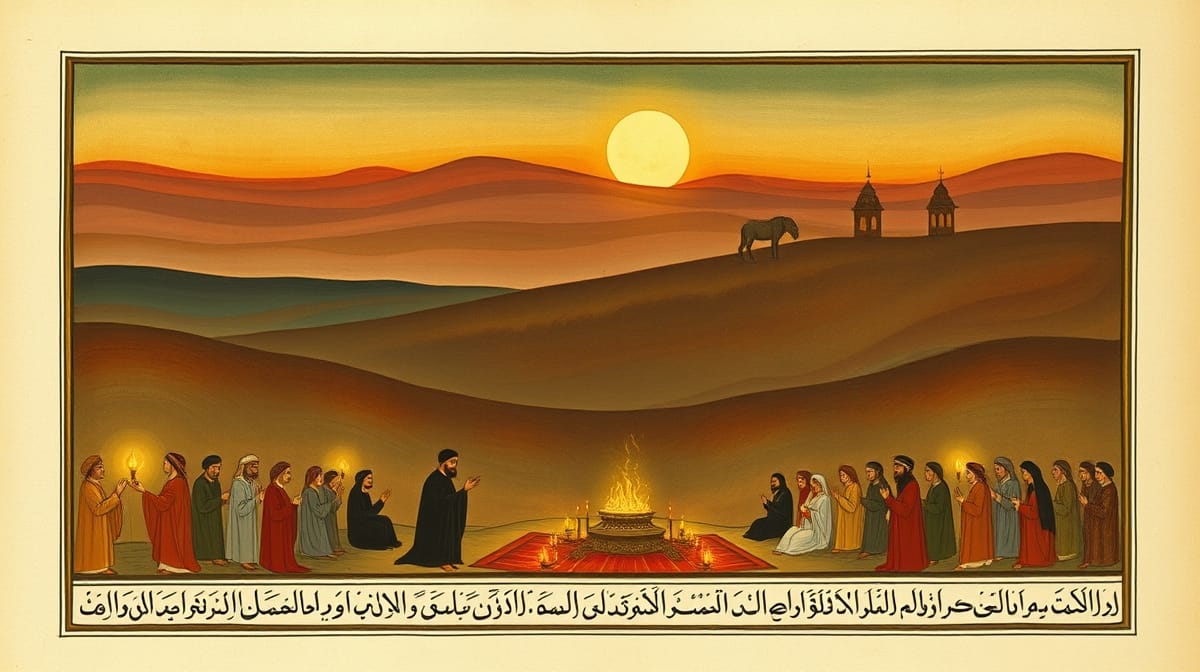
The shrine at Karbala remained an important place of pilgrimage for centuries. According to the encyclopedia, the Abbasid caliph al-Mutawakkil had the shrine destroyed in 850–851, but it was soon rebuilt. After taking Baghdad in 1534, Suleiman the Magnificent visited Karbala and had the Husayniyya canal repaired. Murad III also had the shrine rebuilt in 1583. According to the encyclopedia, in April 1801 the Wahhabis plundered the city and damaged the shrine.
We described the Abbasid period in our article on the Abbasid era, and Suleiman’s Baghdad campaign in Why was Suleiman remembered as the Magnificent? For the Ottoman-Safavid struggle in the region, see also the Ottoman-Iranian wars.
Frequently Asked Questions
When did the Karbala event take place?
It took place on 10 Muharram 61, that is, 10 October 680.
How many people were martyred in the Karbala event?
According to the TDV Encyclopedia of Islam, members of Husayn’s family and about seventy fighters were martyred along with him.
Why did Husayn not pledge allegiance to Yazid?
He opposed the transformation of the caliphate into a monarchy passed from father to son. Figures such as Abd Allah ibn al-Zubayr and Abd Allah ibn Umar had also refused to pledge allegiance.
Where is Karbala today?
It is in Iraq, about 100 km southwest of Baghdad. Today it is the center of the province of the same name.
What is the link between Ashura and Karbala?
The event took place on the day of Ashura, that is, 10 Muharram. For this reason the day became a day of mourning for the Shia.
Conclusion
The Karbala event is the martyrdom of Husayn, who had refused to pledge allegiance to Yazid as caliph, together with his family and some seventy companions, while he was on his way in answer to the Kufans’ invitation. The Kufans’ breaking of their word, the cutting off of the water and the rejection of the offers of compromise made the tragedy inevitable. The event became the symbol of the struggle against the transformation of the caliphate into a monarchy. 10 Muharram left a deep mark on the memory of Muslim societies.