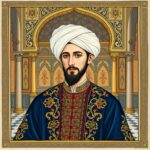
The Young Ottomans were dissident Ottoman intellectuals who, in the last years of the Tanzimat era, demanded a constitution, a parliament and liberty. According to the TDV Encyclopedia of Islam, they saw liberty, a constitution and the opening of an assembly called the şura-yı ümmet (council of the community) as indispensable for the salvation of the state. Their opposition was aimed less at the sultan than at the strict rule of Grand Vizier Âli Pasha.
Quick Summary
- The movement was influential between 1865 and 1876.
- Its main demands were a constitution, a parliament, freedom of the press and a responsible government.
- Its leading figures were Namık Kemal, Ziya Bey (later Pasha) and Ali Suavi.
- The newspapers Muhbir and Hürriyet (Liberty) were published in London.
- Their demands were partly realized by the Kanun-ı Esasi proclaimed on 23 December 1876.
Contents
- Who were they?
- Why did the opposition arise?
- What did they want?
- Consultation and liberty
- The idea of the homeland and Ottomanism
- How was the society founded?
- The years in Europe
- The return and the Kanun-ı Esasi
- Did they succeed?
- Frequently asked questions
Who Were the Young Ottomans?
The TDV Encyclopedia of Islam defines this circle as a dissident group formed by Ottoman intellectuals against the government between 1865 and 1876. According to the encyclopedia, these intellectuals represented a current of thought that saw liberty and a constitution as indispensable for the salvation of the state. They can also be seen as the empire’s first “ideologues” with a definite set of views. In the sources the group is also called the New Ottomans (Yeni Osmanlılar).
The encyclopedia, however, adds an important caveat: the people named together did not share a common body of thought. Whether the group had a coherent structure, or was a formal organization at all, is also debated. Most of its members were leading writers of the period, which is why the movement became a subject of literary history as much as of political history. We introduced the movement’s members separately in our article Who were the Young Ottomans?
Why Did Opposition Arise in the Tanzimat Era?
The Tanzimat had changed the language of the state, but the power of decision lay in the hands of a small circle of bureaucrats. According to the TDV Encyclopedia of Islam, the internal turmoil and foreign interventions that followed the Reform Edict of 1856 made it unavoidable to carry out the reforms under a firm administration. Under those conditions Âli Pasha and Fuad Pasha regarded liberal and constitutional movements as dangerous. It was precisely at this point that the opposition of these intellectuals emerged.
According to the encyclopedia, the opposition was directed at the government rather than at the ruler. Its chief target was Âli Pasha, who held the administration in his own hands, especially after Fuad Pasha’s death in 1869. Strict control over the newspapers and decisions to close them also deepened the discontent. We examined the intellectual background of the period in our article on the effects of the French Revolution on the Ottoman state.
What Did the Young Ottomans Want?
The demands of the Young Ottomans gather around a few basic concepts. According to the TDV Encyclopedia of Islam, these were liberty, fundamental laws (nizamat-ı esasiye) and the opening of an assembly called the şura-yı ümmet. In their view the sultanate should not be abolished, but its power should be limited by law. The government, too, should work within an accountable order instead of acting by arbitrary decisions.
- Constitution: written fundamental laws that bind the rulers.
- Parliament: the participation of the people’s representatives in decisions.
- Freedom of the press: newspapers able to inform the public and to criticize the government.
- Legal security: guarantees of life, property and honor against arbitrary rule.
- Ottomanism: the union of Muslim and non-Muslim subjects around a common homeland.
What Did Consultation and Liberty Mean?
The key concept of the movement was meşveret, which means that a ruler makes decisions by consulting others. The Young Ottomans took this concept from the Islamic political tradition and tried not to present constitutional government as a foreign idea. In this way they explained the idea of a parliament through the concepts of shura (consultation), justice and accountability.
For them, liberty was not merely individual freedom; it meant legal security against oppression and arbitrary rule. The encyclopedia also offers a critical assessment here. In its view, the intellectuals of the period saw a constitution and liberty as direct products of civilization, and they did not sufficiently ask whether these ideas would suit a multi-religious and multinational empire.

The Idea of the Homeland and Ottomanism
For these intellectuals, the homeland (vatan) was a political home in which rights and shared responsibility were lived. Namık Kemal’s play Vatan yahut Silistre (The Homeland, or Silistra), staged in 1873, carried this feeling to a wide audience. According to the TDV Encyclopedia of Islam, the thirty-eight-month exile in Famagusta that followed this success turned him into a hero. The movement defended the union of Muslim and non-Muslim subjects around a common law, that is, the idea of Ottomanism.
This idea also matched the Tanzimat goal of an Ottoman nation. According to the encyclopedia, the leaders of the Tanzimat planned first to unite the citizens around the idea of preserving the empire, and then to accustom them to government through local administrations. The encyclopedia regards this path as a more realistic reform policy. We described the position of non-Muslims in our article on the Ottoman millet system.
How Was the Society Founded?
According to the TDV Encyclopedia of Islam, when, where and by whom the society was founded is disputed, because the sources contradict one another. Ebüzziya Tevfik links its founding to an outing in the Belgrade Forest in 1865, or to a meeting in a private house. Kaya Bilgegil, however, established that the actual society was founded in Europe in 1867. The group that formed in the Belgrade Forest was called “meslek”, in the sense of “mission”. Its founders are said to include Mehmed Bey, son of Sağır Ahmed Bey and nephew of Grand Vizier Mahmud Nedim Pasha.
According to the encyclopedia, in June 1867 a plan by some members to storm the Sublime Porte and kill Âli Pasha came to light. When the plan was exposed, Mehmed, Nuri and Reşad Beys fled abroad and were sentenced to death in absentia. The encyclopedia also notes that the plan did not rest on any serious preparation.
The Years in Europe: Muhbir and Hürriyet
Namık Kemal, Ziya Bey and Ali Suavi faced harsh government measures because of their writings. According to the encyclopedia, they went to Europe at the invitation of Mustafa Fazıl Pasha, who had lost his right of succession in Egypt, and arrived in Paris on 30 May 1867. The pasha had called for reform in an open letter addressed to Sultan Abdülaziz, and he also supported the dissidents with money.
According to the encyclopedia, at a meeting on 30 August 1867 Mustafa Fazıl Pasha founded a society called Jeune Turquie with a thirteen-article charter. He set aside 300,000 francs a year for the society’s activities.
According to the encyclopedia, Muhbir, which Ali Suavi launched in London on 31 August 1867, became the voice of the dissidents. The first issue of the weekly Hürriyet (Liberty) appeared in London on 29 June 1868. Namık Kemal and Ziya Bey ran the paper together until September 1869. Its hundredth and last issue was published in Geneva on 23 June 1870.

The press was the movement’s real strength. According to the encyclopedia, liberal-minded intellectuals had gathered around Tasvir-i Efkar, the paper Şinasi launched in 1862, and Namık Kemal had joined it as well. We looked at Namık Kemal’s writing separately in our article Namık Kemal: the powerful voice of liberty.
The Return, Midhat Pasha and the Kanun-ı Esasi
When Mustafa Fazıl Pasha made peace with the sultan, the dissidents fell into financial hardship and drifted apart one by one. According to the encyclopedia, Namık Kemal returned to Istanbul on 24 November 1870. Ziya Bey had been forced to close the paper and move to Switzerland after a complaint by the Ottoman embassy in London; he came back in 1871, taking advantage of the general amnesty proclaimed after Âli Pasha’s death. Ali Suavi returned in November 1876.
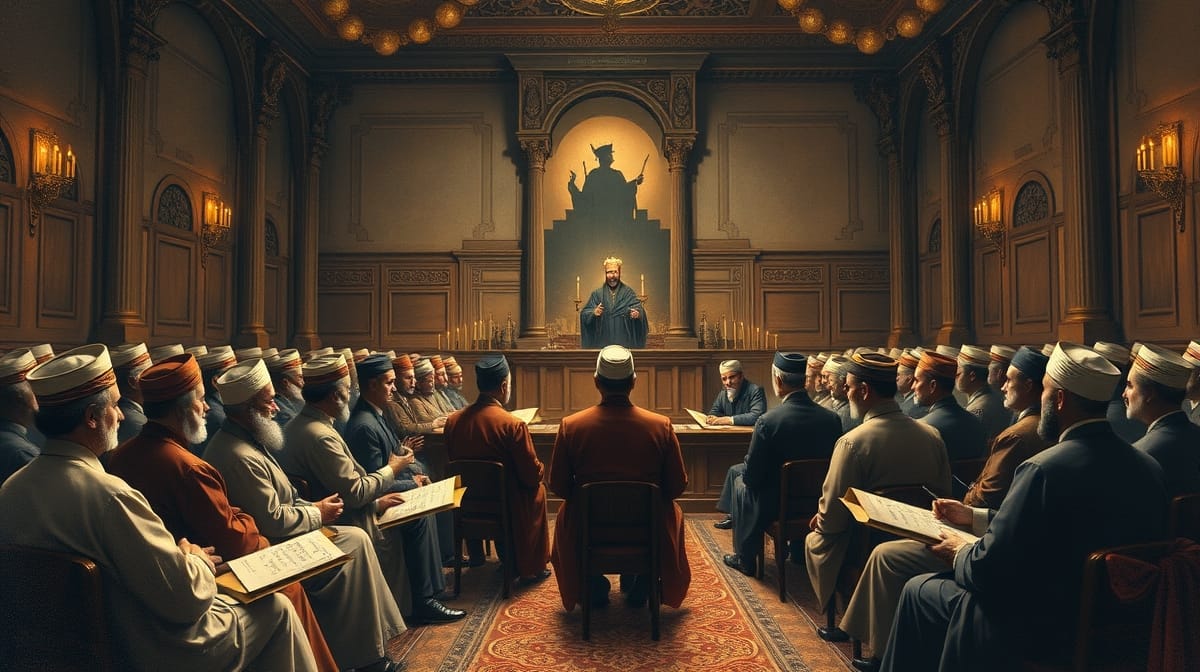
According to the encyclopedia, the leading figures of the movement gathered around Midhat Pasha from his first grand vizierate in July 1872 onward. On 30 May 1876 Abdülaziz was deposed. Then, on 23 December 1876, the Kanun-ı Esasi was proclaimed, and in this process the Young Ottomans played their historical role. We described the later developments in our article on democratization movements in the Ottoman state.
Did the Young Ottomans Succeed?
According to the TDV Encyclopedia of Islam, during their years in Europe they neither managed to become a political party nor reached agreement among themselves. The encyclopedia writes that they came together by chance and drifted apart one by one. Their importance lies in their demands for liberty, a constitution and a parliament, and in the fact that their successors, the Young Turks, repeated these demands word for word. We compared the two generations in our article on the differences between the Young Ottomans and the Young Turks.
In short, the movement was weak as an organization but influential as an idea. The concepts it used, such as liberty, homeland, nation and parliament, nourished the political language of later generations. We discussed the other currents of the period in our article on Ottoman intellectual currents.
Frequently Asked Questions
When did the Young Ottomans emerge?
According to the TDV Encyclopedia of Islam, they were influential between 1865 and 1876. The society proper was founded in Europe in 1867.
What was the most important demand of the Young Ottomans?
A constitution and a parliament. They saw liberty and the şura-yı ümmet as indispensable for the salvation of the state.
Where was the newspaper Hürriyet published?
Its first issue appeared in London on 29 June 1868; its last issues were published in Geneva.
Are the Young Ottomans the same as the Young Turks?
No. The Young Ottomans were the dissidents of Abdülaziz’s reign, while the Young Turks emerged in the reign of Abdülhamid II.
Why was Namık Kemal exiled?
He was exiled to Famagusta after the enthusiasm stirred by Vatan yahut Silistre. According to the TDV Encyclopedia of Islam, the exile lasted thirty-eight months.
Conclusion
The Young Ottomans were dissident intellectuals who saw a constitution, a parliament and liberty as the way to save the Ottoman state. Through the concept of meşveret they tied these ideas to the Islamic political tradition, and they made the press their most effective tool. Although they lacked unity of views and a strong organization, their demands found a response in the Kanun-ı Esasi of 1876. The concepts they used also shaped the political language of later generations.