The short answer to the question of what effects the French Revolution had on the Ottoman Empire is: nationalism, Western-style reforms and new alliances in foreign policy. According to the TDV Encyclopedia of Islam, the Ottomans did not at first greet the revolution of 1789 with alarm. But the idea that nations should determine their own destiny fueled revolts in the Balkans and accelerated the empire’s disintegration.
Quick Summary
- At first, the French Revolution of 1789 caused the Ottoman government little concern.
- The revolution’s idea of “the self-determination of nations” fed Balkan nationalism.
- Selim III carried out the Nizam-ı Cedid reforms while Europe was preoccupied with war.
- The first permanent Ottoman embassies opened in London, Paris, Berlin and Vienna.
- Napoleon’s occupation of Egypt in 1798 pushed the Ottoman state into an alliance with Britain and Russia.
Contents
- The short answer
- What was the Revolution of 1789?
- The first Ottoman reaction
- The spread of nationalism
- Selim III and the Nizam-ı Cedid
- Permanent embassies
- The Egyptian campaign and new alliances
- Long-term effects
- Frequently asked questions
What Were the Effects of the French Revolution on the Ottoman Empire?
The effects can be grouped under three headings. The first is the spread of the idea of nationalism in a multinational empire. The second is Selim III’s European-style military and administrative reforms. The third is the new balance in foreign policy that began with the Egyptian campaign. Some of these effects appeared immediately, others only over the years.
What Was the Revolution of 1789?
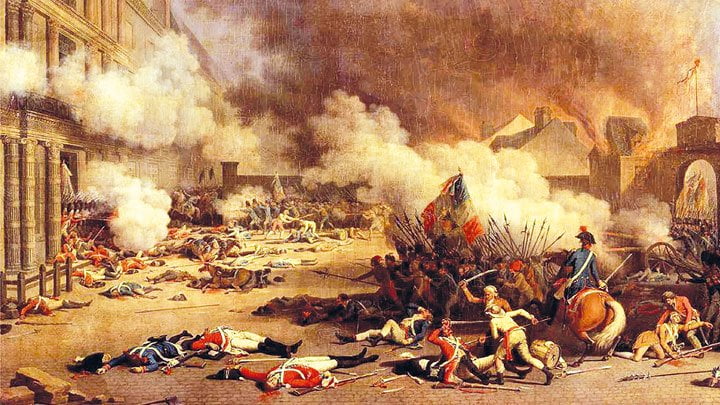
The French Revolution began as a revolt against absolute monarchy and the privileged classes. According to the TDV Encyclopedia of Islam, on 20 June 1789 the representatives of the people declared themselves a constituent assembly and resolved to draw up a constitution. The people of Paris rose up to support the assembly. The date of 14 July 1789 was later proclaimed a national holiday.
According to the encyclopedia, on the night of 4 August 1789 the constituent assembly abolished all privileges and the institution of feudalism. Shortly afterward the Declaration of the Rights of Man and of the Citizen was adopted. The constitution that had been prepared was accepted on 14 September 1791. From 1792 onward, the revolution also opened a period of general European war.
How Did the Ottomans Receive the French Revolution?
Even before the revolution, France had been the main source of Ottoman military modernization. According to the TDV Encyclopedia of Islam, Baron de Tott fortified the Dardanelles against the Russian fleet in 1770. He also contributed to the founding of the Imperial School of Military Engineering. The ideas on army reform of the ambassador Choiseul-Gouffier, who came to Istanbul in 1784, were well received, and Grand Vizier Halil Hamid Pasha brought new experts from France.
According to the encyclopedia, while still heir to the throne, Selim III corresponded with King Louis XVI of France. He sent İshak Bey to France to study the state of Europe, the techniques of war and naval installations. This closeness laid the groundwork for cooperation during the years of the revolution as well.
According to the TDV Encyclopedia of Islam, the French Revolution did not occupy the Ottoman state for a long time, as it was then at war with Austria and Russia. After the treaties of Sistova (1791) and Jassy (1792), events were followed more closely. The restriction of the king’s powers, and even his deposition and execution, did not worry the Sublime Porte.
The encyclopedia states the reason plainly: the most important cause of the revolution was class difference, something unknown in Ottoman society. For this reason, unlike in the European states, the revolution was received with satisfaction among the Ottomans. The only worry was that France might be weakened, for France had long been one of the Ottomans’ closest friends in Europe.
How Did Nationalism Spread to Ottoman Lands?
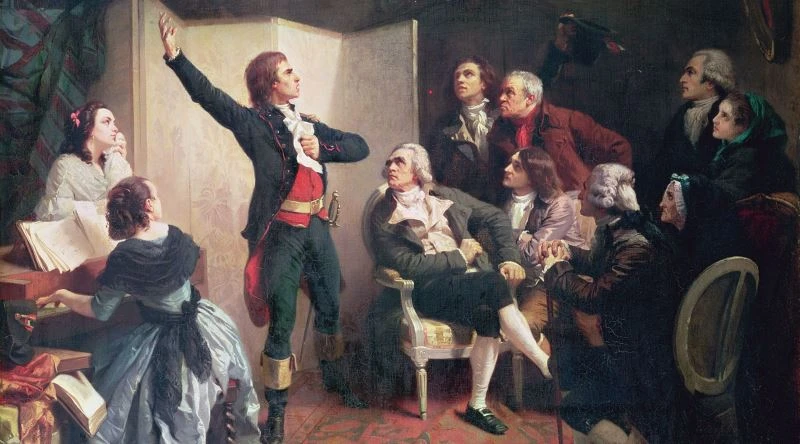
According to the TDV Encyclopedia of Islam, nationalism is generally accepted to have developed after the revolution of 1789. According to the encyclopedia’s entry on France, the revolution’s most important message was the principle of “the self-determination of nations.” The significance of this principle became clear when France seized the Ionian Islands in 1797 and began inciting the Greeks to seek independence.
The Ottoman state was a multireligious and multilingual empire. The traditional order, which organized communities on the basis of religion, began to strain under the idea of the nation. We described this order in our article on the Ottoman millet system.
The first major breakaways in the Balkans came at the beginning of the nineteenth century. According to the TDV Encyclopedia of Islam, the Serbian revolt led by Karađorđe (Kara Yorgi) began in 1804. At first a reaction against the oppression of the Janissaries, the revolt gradually took on a nationalist character. In 1821 the Greek revolt broke out, first in Wallachia and Moldavia and then in the Morea. In 1830 the Ottoman state was forced to recognize the Greek state.
The chain of breakaways stretched into the early twentieth century. We discussed the end of this process in our article on the Balkan Wars.
Selim III and the Nizam-ı Cedid
The wars unleashed by the French Revolution also created an unexpected opportunity for the Ottoman state. According to the TDV Encyclopedia of Islam, the European states’ preoccupation with France created favorable conditions for Selim III’s reforms. The collapse of the royal order had left many officers and technical experts without work. Selim III did not hesitate to employ them in the army, the navy and the schools of engineering.
Nizam-ı Cedid means “new order.” According to the encyclopedia, in the reign of Selim III the term was used in the sense of renewing all civil and military institutions according to the needs of the age. A new army trained in the European manner was formed, and military experts were brought from the West. Schools of engineering where foreign languages were taught were opened, and books were translated from Western languages.
According to the encyclopedia, a school of engineering for training army officers was founded in 1795, and a printing press was set up there in 1797. Large barracks were built at Levent and Üsküdar. In March 1805, inspired by the Prussian model, Selim III also attempted to introduce compulsory military service for young men aged twenty to twenty-five. When general discontent arose, however, he had to abandon this attempt.
These reforms did not last long. According to the encyclopedia, Selim III was deposed in May 1807 after the revolt led by Kabakçı Mustafa. Even so, the path he had opened was not closed, and the reforms continued more forcefully under Mahmud II. We described the continuation of this process in our article on the reform movements of the sultans.
Permanent Embassies and a New Diplomacy
European states had kept permanent envoys in Istanbul for centuries. According to the TDV Encyclopedia of Islam, the Ottomans, however, did not adopt the practice of establishing permanent embassies in European capitals until the late eighteenth century. In the reign of Selim III, permanent embassies were opened in London (1792) and in Paris, Berlin and Vienna (1797). These embassies were also used to learn about Europe and to find experts.
According to the encyclopedia, Moralı Seyyid Ali Efendi was ambassador in Paris from 1797 to 1802. Thanks to his efforts, the damaged relations were repaired by the peace concluded in 1802. According to the encyclopedia, the weak point of the new embassies was their interpreters. During Ali Efendi’s embassy in Paris, the embassy’s Greek interpreter, Godrika, worked for France.
Napoleon’s Egyptian Campaign and New Alliances
According to the TDV Encyclopedia of Islam, with Bonaparte’s rise France began to pursue an expansionist policy in the East. Napoleon occupied Egypt on 1 July 1798. The Ottoman state formed an alliance with Britain and Russia and drove the invaders out of Egypt. The old friendship thus quickly turned into hostility.
The most famous front of this war was Acre. The fortress defended by Cezzar Ahmed Pasha forced Napoleon to retreat in 1799. We described this siege in our article on the army that defeated Napoleon at Acre. According to the encyclopedia, France was forced to make peace and leave Egypt in 1802.
According to the encyclopedia, the success of the small number of regular troops sent to the battlefields also demonstrated the value of the new army. But the Napoleonic era left Ottoman diplomacy with bitter lessons as well. In the secret articles of the Treaty of Tilsit in 1807, France agreed to partition Ottoman lands with Russia if necessary. When a new agreement leaving Wallachia and Moldavia to Russia was made in 1808, relations deteriorated badly and the Sublime Porte drew closer to Britain.
The Long-Term Effects of the French Revolution
The ideas of the French Revolution also influenced Ottoman intellectuals throughout the nineteenth century. The concepts of equality, liberty and constitution became part of the debates of the Tanzimat and Constitutional eras. The Gülhane Edict of 1839 proclaimed that all subjects were equal before the law. In 1876 the first Ottoman constitution, the Kanun-i Esasi, was adopted.
These effects, however, were not direct imitation. Ottoman reformers tried to adapt the institutions they took from the West to their own tradition of statecraft. The main aim of the reforms was often to keep the state standing. Even so, the wave of nationalism strained the multinational structure of the empire throughout the nineteenth century.
Frequently Asked Questions
In short, what were the effects of the French Revolution on the Ottoman Empire?
The spread of nationalism, the reforms of Selim III, the opening of permanent embassies and the shifting alliances brought by the Egyptian campaign.
Which was the most important effect of the French Revolution on the Ottoman Empire?
Nationalism is usually cited. This idea accelerated the disintegration that began with the Serbian and Greek revolts.
In whose reign was the Nizam-ı Cedid established?
In the reign of Selim III. Some texts wrongly attribute it to Mahmud II; Mahmud II continued the reforms later.
How did the Ottomans receive the French Revolution?
According to the TDV Encyclopedia of Islam, unlike the European states, they received it with satisfaction. The only worry was that France might be weakened.
When did Napoleon occupy Egypt?
On 1 July 1798. France was forced to leave Egypt in 1802.
Conclusion
The question of what effects the French Revolution had on the Ottoman Empire cannot be answered in a single sentence. At first the revolution did not worry the Ottomans and created a favorable environment for Selim III’s reforms. But the idea of the self-determination of nations fueled revolts in the Balkans. Napoleon’s Egyptian campaign also broke the old friendship and reshaped Ottoman foreign policy.









2 thoughts on “What Are the Effects of the French Revolution on the Ottoman Empire?”