
What the Palestinians did to Ottoman soldiers is one of the most debated topics of the First World War. The documents do not show that the people of Palestine rose up collectively against the Ottoman army. The revolt against the Ottomans was launched in 1916 in the Hejaz by Sharif Hussein. A significant part of the Palestinian Arabs, meanwhile, served as soldiers in the Ottoman army throughout the war.
Quick Summary
- Palestine remained under Ottoman rule for about four centuries after the Battle of Marj Dabiq in 1516.
- The Arab Revolt was launched not by Palestinians but by Sharif Hussein, the emir of Mecca.
- The widely shared claim about “15,000 soldiers” has not been confirmed by documents.
- The British took Beersheba on 31 October 1917 and entered Jerusalem in December 1917.
- By September 1918 the whole of Palestine had come under British occupation.
- On the Palestine front, disease and deprivation also caused the deaths of many soldiers.
Contents
- Palestine under Ottoman rule
- The First World War and the Palestine front
- Who started the Arab Revolt?
- Common claims and the documents
- The days of retreat
- Common mistakes
- Palestine after the war
- Frequently asked questions
Palestine under Ottoman Rule
According to the TDV Encyclopedia of Islam, Palestine came under Ottoman administration in the reign of Selim I after the Battle of Marj Dabiq in 1516. Suleiman the Magnificent had the walls of Jerusalem rebuilt. The walls and gate of the Dome of the Rock were also renewed in this period. These works are still among the symbols of Jerusalem today.
Ottoman rule was interrupted only between 1831 and 1840. According to the encyclopedia, in this period the region passed into the hands of İbrahim Pasha, son of Muhammad Ali Pasha of Egypt. In 1840 Palestine returned to Ottoman administration with the help of Britain and Austria. Jerusalem, for its part, was a mutasarrıflık (district) directly attached to Istanbul between 1872 and 1917.
According to the encyclopedia, the Land Code of 1858 aimed to register land in the names of the farmers. The villagers, however, were reluctant because of concerns about taxes and military service. This shows that conscription had long been a sensitive issue in the region.
The First World War and the Palestine Front
During the war, Palestine became the center of the front the Ottomans opened against the British in Egypt. According to the TDV Encyclopedia of Islam, the Minister of the Navy, Cemal Pasha, was appointed commander of the Fourth Army. Ottoman forces gathered at Beersheba on 7 January 1915 and marched on the Suez Canal. The First Canal Offensive in February 1915 and the Second in July 1916 did not achieve the desired results.
With mobilization, many young men from Palestine were also drafted into the Ottoman army. In 1915 a great locust plague struck the region. During the war years a severe famine hit Syria and Lebanon. These hardships deeply affected both the people and the army.
The British went on the counteroffensive in 1917. According to the encyclopedia, there were three major battles before Gaza. Ottoman forces won the first two, and the British won the third. The British army under General Allenby captured Beersheba on 31 October 1917.
A new army group was formed to defend Jerusalem, but it did not succeed. Ottoman troops evacuated the holy city without a fight on the night of 8–9 December. According to the encyclopedia, Allenby entered Jerusalem on 11 December 1917. By September 1918 the whole of Palestine had fallen to the British. We described the loss of Jerusalem in detail in our article In which war was Jerusalem lost?.

Who Started the Arab Revolt?
The question of what the Palestinians did to Ottoman soldiers is often confused with the Arab Revolt. According to the TDV Encyclopedia of Islam, the leader of the revolt was Sharif Hussein, the emir of Mecca. In 1915–1916 Hussein corresponded with the British High Commissioner McMahon. In these letters he was promised an independent Arab state. The revolt began in the Hejaz in 1916.
According to the encyclopedia, Britain and France had at the same time signed the secret Sykes–Picot Agreement dividing the region between them (16 May 1916). British Foreign Secretary Balfour also issued, on 2 November 1917, the declaration supporting the establishment of a Jewish homeland in Palestine. The encyclopedia notes that 90 percent of Palestine’s population was Arab at the time. After the war, the San Remo Conference (1920) placed Palestine under the British Mandate.
These developments show that the Arabs too were deceived by British promises. On the other hand, Cemal Pasha’s harsh attitude provoked a reaction among Arab intellectuals. According to the encyclopedia, eleven Arab nationalist leaders were executed by court-martial on 21 August 1915 and twenty-one in May 1916. These executions shook confidence in the government in some Arab circles.
What the Palestinians Did to Ottoman Soldiers: Claims and Documents
The most widely shared claim about what the Palestinians did to Ottoman soldiers is that the eyes of 15,000 Ottoman soldiers were gouged out. No reliable archival document or contemporary record supporting this claim is known. Investigations by fact-checking platforms have also shown that the claim is unfounded. It is also striking that such a large event left no trace in the military reports and memoirs of the period.
The documents paint a more complex picture. A significant part of the Palestinian Arabs fought in the Ottoman army. Most of the local people did not join the revolt. Among the Arab officers in the Ottoman army, there were also those who served until the end of the war.
That said, there are some memoirs from the last year of the war. They describe certain Bedouin groups on the edge of the desert attacking retreating units. These incidents were specific to particular places and groups and cannot be attributed to an entire people.
You can find a broader assessment of the subject in our article Did Palestine betray the Ottomans?. Falih Rıfkı Atay, who served alongside Cemal Pasha, also describes the last years of the front in his memoir “Zeytindağı” (The Mount of Olives).
The Days of Retreat
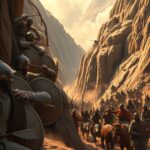
Ottoman soldiers on the Palestine front faced extremely harsh conditions in 1917–1918. Hunger, epidemics and lack of supplies wore the units down. Transport behind the lines was weak, and a large number of soldiers died of disease. The army’s supply depended largely on the railways, and the Hejaz Railway was frequently attacked during the Arab Revolt.
The great British offensive of September 1918 broke the front. This offensive, which the British called Megiddo, is known in Turkish sources as the Battle of Nablus. The Yıldırım Army Group under Liman von Sanders suffered heavy losses, and tens of thousands of soldiers were taken prisoner. Mustafa Kemal Pasha, commander of the Seventh Army, withdrew his units north toward Aleppo. The rest of the army held this line until the Armistice of Mudros.
This overall picture should be kept in mind when what the Palestinians did to Ottoman soldiers is discussed. Most of the soldiers were lost to battle, disease and captivity. We discussed the general outcome of the war in our article on the collapse of the Ottoman Empire.
Common Mistakes
Some factual errors appear frequently in texts written on this subject. For example, Halil Pasha is presented as the commander of the Palestine front. Halil Pasha in fact served on the Iraq front and defeated the British at Kut al-Amara in 1916. On the Palestine front, commanders such as Cemal Pasha, the German generals Falkenhayn and Liman von Sanders, and Mustafa Kemal Pasha held command.
Another mistake is the claim that the uprising of 1834 was directed against the Ottomans. That year Palestine was under the rule of Muhammad Ali Pasha, the governor of Egypt. The peasants’ revolt was against the forced conscription and disarmament imposed by İbrahim Pasha’s administration. The uprising was suppressed by İbrahim Pasha’s forces. There is no link between this event and what the Palestinians did to Ottoman soldiers.
To understand the other fronts of the war, see also our articles on the Gallipoli Campaign and the Caucasus front.
Palestine after the War
According to the encyclopedia, a military administration was established in Palestine with Allenby’s occupation. All civilian posts were filled by British military officials. The Jewish population rose from 38,754 in 1914 to 58,728 in 1918. The Arabs feared that the British would hand the region over to the Jews. This process, which began with the Mandate, marked the beginning of the Palestine question that continues today.
Frequently Asked Questions
Are there documents on what the Palestinians did to Ottoman soldiers?
No reliable document is known that confirms a collective attack or the “15,000 soldiers” claim. There are, however, memoirs of certain Bedouin groups attacking retreating units.
Is what the Palestinians did to Ottoman soldiers the same as the Arab Revolt?
No. The Arab Revolt was launched in the Hejaz in 1916 by Sharif Hussein, the emir of Mecca. Most of the people of Palestine did not join this revolt.
Did Palestinians fight in the Ottoman army?
Yes. With mobilization, many people from Palestine were also drafted into the army and fought on various fronts.
When did Jerusalem pass out of Ottoman hands?
The British army entered Jerusalem in December 1917. Ottoman troops had evacuated the city without a fight. Allenby’s official entry into the city was on 11 December 1917.
Which commanders served on the Palestine front?
Cemal Pasha, Kress von Kressenstein, Falkenhayn, Liman von Sanders and Mustafa Kemal Pasha were the front’s most important commanders.
Conclusion
Popular accounts of what the Palestinians did to Ottoman soldiers often do not match the documents. The revolt against the Ottomans was launched in the Hejaz by Sharif Hussein, and most of the people of Palestine did not join it. The attacks that occurred during the retreat were limited to particular groups. The main causes of the losses on the Palestine front were war, disease and deprivation.
1 thought on “What the Palestinians Did to Ottoman Soldiers”