For the Ottoman state, the Gallipoli Campaign, known in Turkey as the Battle of Çanakkale, was not merely a defensive success that protected Istanbul. It wrecked the Entente Powers’ plan to force the Straits, extended the empire’s ability to stay in the war, raised the army’s morale, brought new military leaders to the fore and became a critical turning point that directly shaped the diplomatic, military and political balances of the First World War.
Quick Summary
- The strong defense of the Straits prevented the direct occupation of Istanbul.
- The Entente fleet called off its major naval operation after heavy losses.
- The landings turned into grueling battles that lasted for months.
- Confidence in the Ottoman army’s morale and defensive capacity grew.
- Mustafa Kemal’s military reputation rose markedly at the front.
Contents
- Why was the Gallipoli Campaign a strategic turning point?
- The strategic importance of the Straits and Istanbul
- Why did the naval attack of 18 March fail?
- How did the land battles shape the Ottoman defense?
- Political and diplomatic consequences of the campaign
- The limits of the victory and the continuation of the war
- Social memory and military legacy
- Conclusion
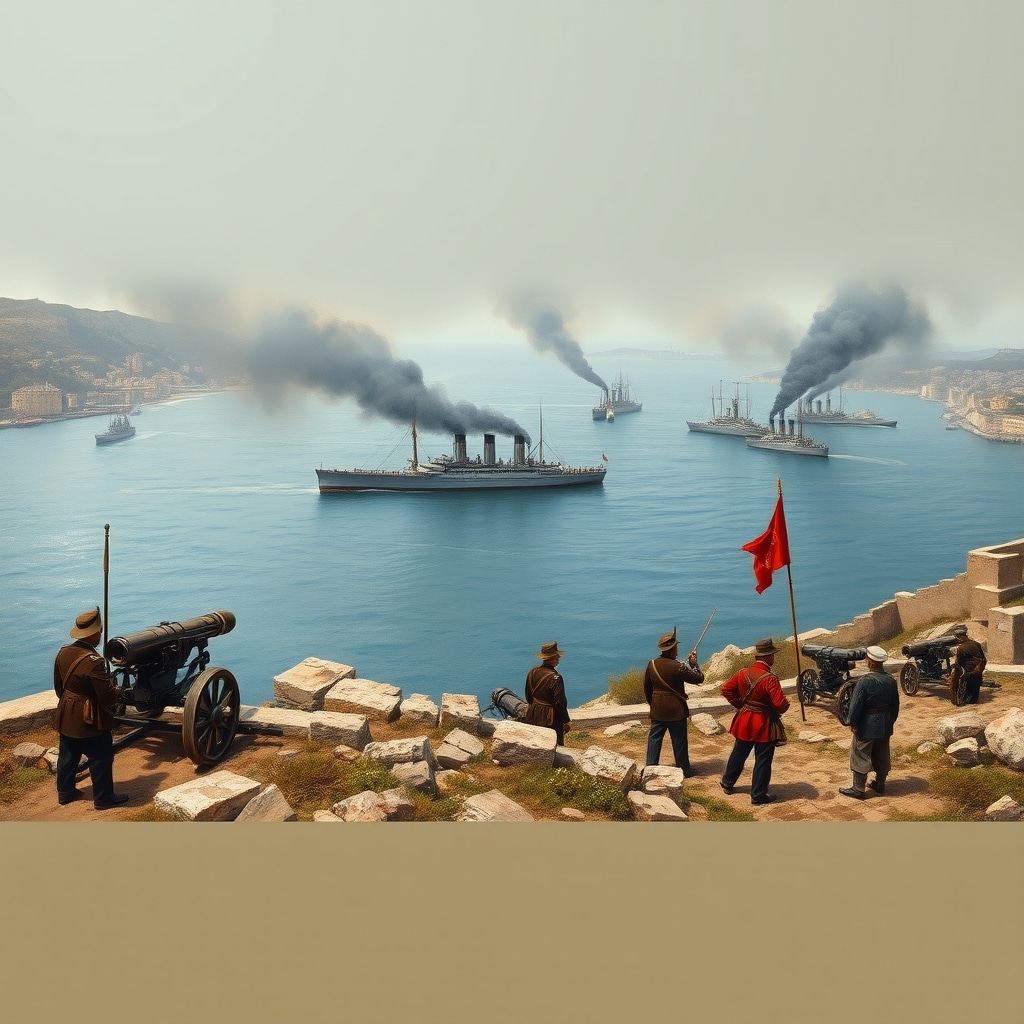
Why Was the Gallipoli Campaign a Strategic Turning Point?
In 1915, the Gallipoli Campaign showed that Ottoman defensive strength was more effective than expected. The Entente Powers aimed to pass through the Dardanelles, reach Istanbul and knock the state out of the war. This goal was not achieved. The front thus became a zone of resistance that affected the course of a global war.
Zekeriya Kurşun’s assessment in the TDV Encyclopedia of Islam shows that the operation served several aims for Britain and France. Establishing a secure link with Russia was one of them. They also wanted to relieve the pressure created by the Ottomans and to influence the choices of the Balkan states. The Gallipoli front was therefore not just a local struggle.
From the Ottoman point of view, the first reason it was a turning point was the protection of the capital and the Straits. The second was that it was a defensive success of great symbolic value, won after a long period of defeats. Considering the devastating effects of the Balkan Wars on the Ottomans, the importance of this shift in morale becomes even clearer.
The Strategic Importance of the Straits and Istanbul
The Dardanelles connect the Aegean Sea with the Sea of Marmara. The sea route that leads to Istanbul through the Marmara begins here. The area was therefore a key passage for the seaward defense of the Ottoman capital. From the time of Mehmed II onward, the fortifications around the strait reflected this strategic importance.
During the First World War, the significance of the Straits grew even further. Russia’s sea link with its allies was limited. Britain and France wanted to open this route to deliver military and economic support to Russia. In addition, putting Istanbul under pressure could have triggered political collapse within the Ottoman government.
Yet the defense did not rely on fortresses alone. Minefields, coastal batteries, mobile artillery units and careful positioning were used together. The mines laid by the minelayer Nusret became one of the decisive factors in the naval operation of 18 March 1915. This integrated defense offered a strong example of combining terrain and technology in modern warfare.
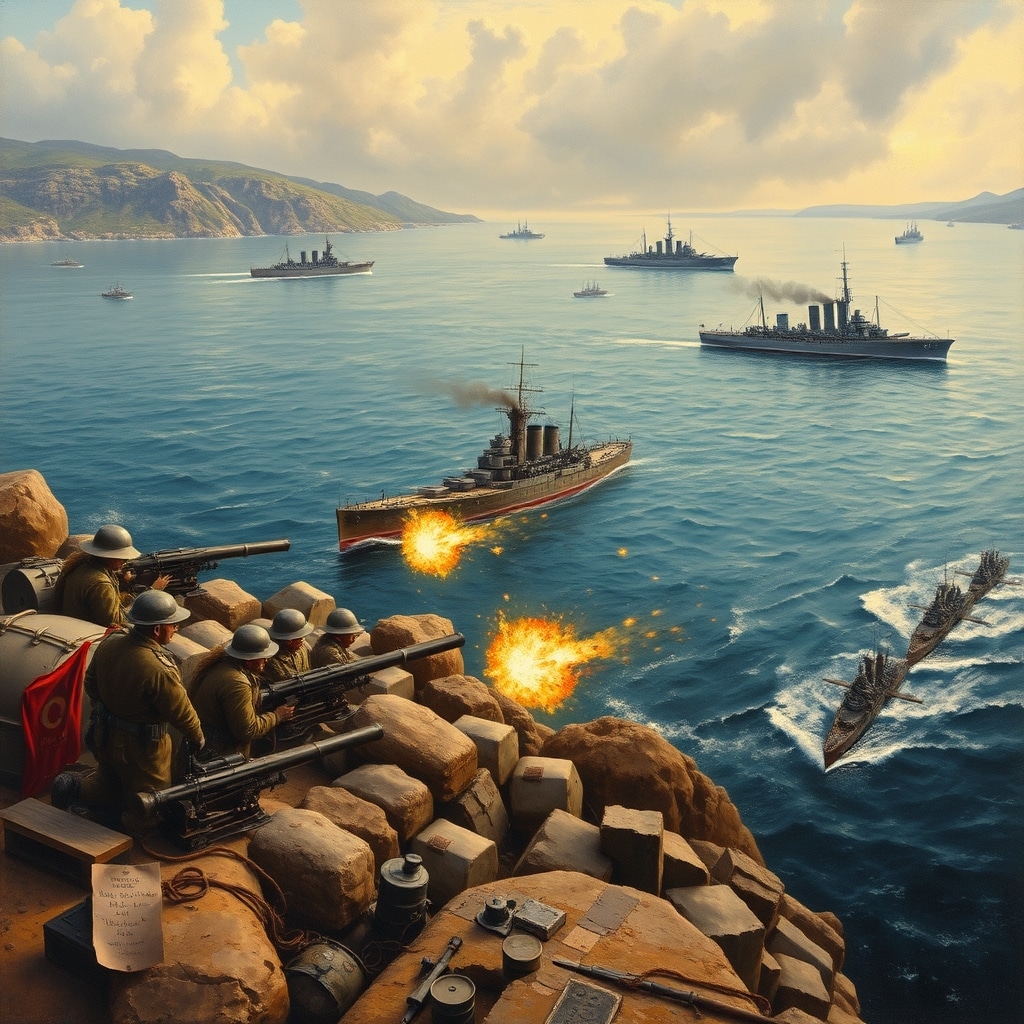
Why Did the Naval Attack of 18 March Fail?
The Defenses the Fleet Faced in the Gallipoli Campaign
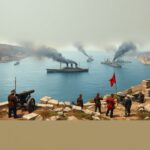
On 18 March 1915, the Entente fleet launched a major attack to force the strait. Heavy battleships aimed to silence the coastal forts. However, artillery fire, minefields and the difficulty of maneuvering in the narrow waterway broke the momentum of the attack. Bouvet sank, and Irresistible and Ocean were also lost.
This failure meant more than the loss of ships. It became clear that naval power alone could not open the road to Istanbul. The Entente command then turned to seizing the peninsula with ground troops. The struggle thus entered a new and bloodier phase.
In examining the Ottoman defense, Edward J. Erickson stresses that command, firepower and the use of terrain must be assessed together. The defenders were not superior everywhere. Even so, they gained time at critical passes and managed to upset the enemy’s plan. This shows that a defensive war cannot be explained by numbers alone.
How Did the Land Battles Shape the Ottoman Defense?
The 25 April Landings and the First Resistance in the Gallipoli Campaign
On 25 April 1915, Entente forces landed at several points on the Gallipoli Peninsula. Seddülbahir (Cape Helles) and Arıburnu (Anzac Cove) became the main battlegrounds. The aim was to break through the coastal defense and neutralize the strait’s forts from the land side. However, Ottoman units quickly established lines of resistance.
At Arıburnu, the initiative taken by Mustafa Kemal, commander of the 19th Division, was of critical importance. He rapidly directed his units to the threatened sector and limited the Anzac advance. His interventions around Conkbayırı (Chunuk Bair) prevented the defense from collapsing. This success marked an important turn in his military career.
Still, the front was not just the story of a few commanders. The overall command structure of the Fifth Army, the units’ capacity to hold out and the supply effort were also decisive. The system under Liman von Sanders at times produced controversial decisions. Even so, rapid responses at division and regiment level kept the defense standing at many critical moments.
Anafartalar and the War of Attrition in the Gallipoli Campaign
In the summer months, the fighting turned into a grueling war of attrition. In August 1915, the Suvla landing and the Anafartalar operation aimed to produce a new breakthrough. Entente forces wanted to push inland. However, the defensive lines were re-established and the expected strategic result was not achieved.
Trench warfare created extremely harsh conditions for the soldiers. Water shortages, disease, heat, cold and constant artillery fire drove up casualties. This front made the wearing character of modern industrial war tangible for Ottoman society. Transport and medical services behind the lines also became part of military endurance.
This experience should be assessed within the empire’s wider military structure. The organization and historical development of the Ottoman army help explain the institutional continuity seen at the front. Other theaters of the same war faced different problems; the reasons for opening the Caucasus front complete this broader picture of the war.
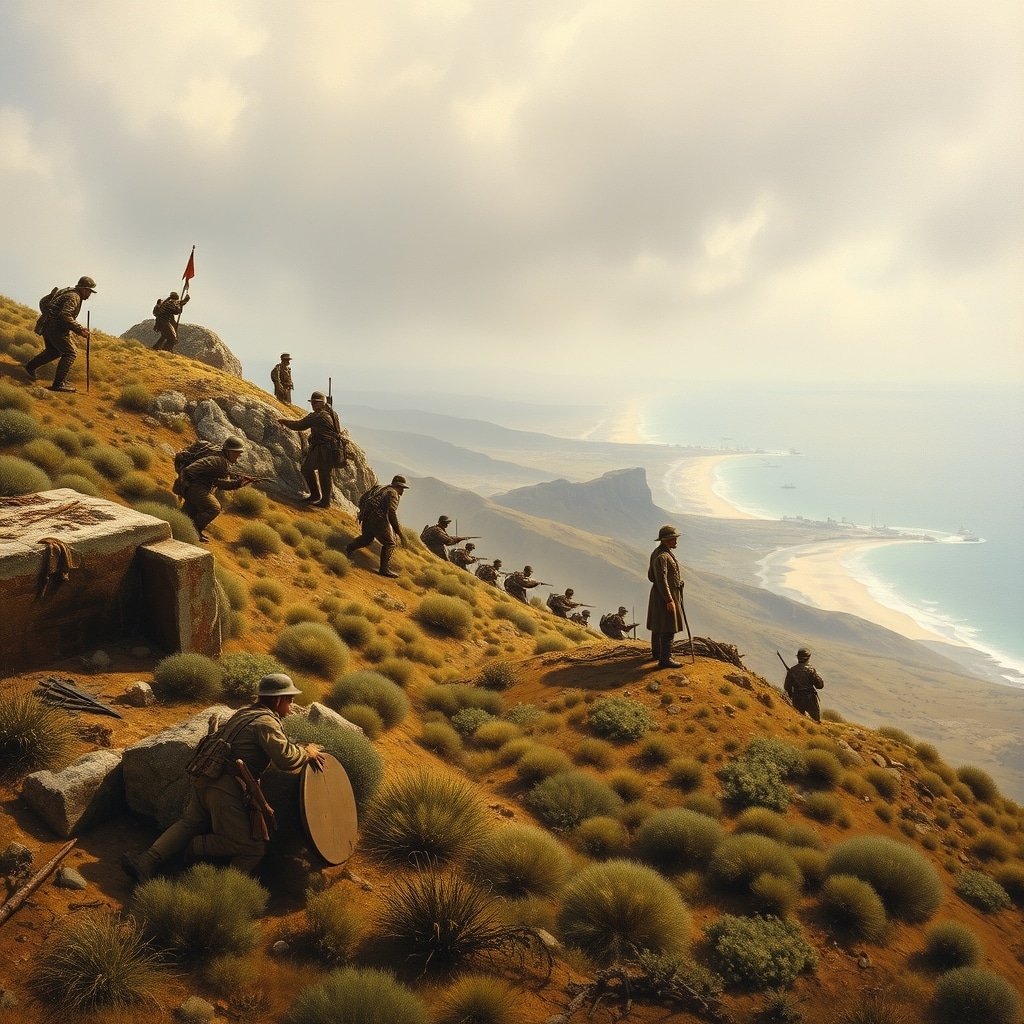
Political and Diplomatic Consequences of the Gallipoli Campaign
Resistance at the Straits upset the Entente Powers’ calculation that they could quickly knock the Ottomans out of the war. Direct military pressure on Istanbul eased. An uninterrupted sea link with Russia could not be established either. Each of these outcomes affected the overall diplomatic balance of the war.
Still, the outcome on this front does not by itself explain the Russian revolutions of 1917. Russia’s domestic politics, economy, losses at the front and social crises formed a much wider set of causes. Nevertheless, the failure to open the Straits removed an opportunity to ease Russia’s problems with outside links. Historical causation should be assessed within this broader framework.
The success also influenced the calculations of the Balkan states. Bulgaria entered the war on the side of the Central Powers in the autumn of 1915. This choice cannot be attributed solely to the outcome at Gallipoli. However, the Entente’s failure to pass the Straits was an important factor in shaping perceptions of power in the region.
The Limits of the Victory and the Continuation of the War
Defending the Straits did not mean that the Ottoman state gained the upper hand on every front. In the same period, the empire was fighting across vast areas such as the Caucasus, Iraq, Sinai–Palestine and later the Hejaz. Manpower and transport capacity were under constant strain. A local victory could not, therefore, turn the overall balance of the war on its own.
Moreover, the experience gained here was carried to other theaters. Experienced officers and units served on different fronts. But the long war continued to drain economic resources. Problems of provisioning, transport and health grew especially severe in the final years of the war.
This distinction does not diminish the historical importance of the victory. On the contrary, it shows more clearly what the success changed. The defense of the Straits prevented the fall of Istanbul in 1915 and defeated the Entente strategy. But it did not remove the empire’s structural problems or the cost of a war fought on many fronts.
Social Memory and Military Legacy
The impact of the Gallipoli Campaign on Ottoman society went beyond its military results. Many families lost relatives at the front or had to care for the wounded. The loss of educated young men became a frequently discussed issue in later years. However, popular accounts of casualty figures are not always equally reliable.
The Gallipoli battles nevertheless became one of the most powerful symbols of shared sacrifice and defense in collective memory. Soldiers’ letters, memoirs, poems and official narratives nourished this memory. Mehmet Âkif Ersoy’s poetic tribute to the fallen further strengthened the place of the Gallipoli Campaign in cultural memory.
The reputation Mustafa Kemal earned at the front also had long-term consequences. His command experience and public recognition became more visible in the years that followed. This was not the sole cause of the National Struggle. But it was an important step in building his standing as a leader.
The Ottoman state was defeated at the end of the war and signed the Armistice of Mudros in 1918. This victory therefore did not prevent the empire’s final defeat. Even so, it prevented a rapid collapse of the state in 1915 and prolonged the war. The process of the Ottoman Empire’s collapse is important for understanding the difference between this success and the defeat of 1918.
Conclusion
In conclusion, the Gallipoli Campaign was a turning point for the Ottoman state that produced military, political and psychological effects at the same time. The failure to force the Straits protected Istanbul, disrupted Entente plans and lifted defensive morale. The victory did not cancel the overall defeat in the war; its real importance lies in changing the strategic balance of 1915 and creating a lasting historical memory.
Sources
- Zekeriya Kurşun, TDV Encyclopedia of Islam, entry “Çanakkale Muharebeleri”.
- Edward J. Erickson, Gallipoli: The Ottoman Campaign (2010).
- Turkish General Staff, Birinci Dünya Harbi’nde Türk Harbi: Çanakkale Cephesi Harekâtı.
- Turkish Historical Society, institutional publications on Gallipoli and the First World War.