The Ottoman harem system was not merely a domestic living space within the palace but was also regarded as part of the broader social order and state structure. The private section of the Ottoman palace where women resided was called the harem, and over time this structure evolved into an institution with its own rules and functioning. The Ottoman harem system, though often misunderstood in popular accounts, was in fact an important part of palace education and order.
The harem was not simply a community made up of the sultan’s wives. It also included concubines, senior attendants (kalfas), trainers (ustas), the valide sultan, and female officials responsible for the care of the princes. These women underwent various forms of training and were raised in a manner suited to palace life. The Ottoman harem system ensured that women brought into the palace were trained within a specific discipline.
Women serving in the harem were not merely individuals providing service; they also gained knowledge in fields such as literature, music, and calligraphy. Women in the harem were subject to a system of promotion, and those with talent could rise all the way up to the position of valide sultan. The Ottoman harem system is also notable for being the environment in which the sultan’s children were raised.
What Was the Purpose of the Harem in the Ottoman Empire?
The Ottoman harem was defined not merely as a space where the sultan spent time with his wives, but also as a center of education and administration. The main purpose of the harem was to train the women brought into the palace within a disciplined structure and ensure they were raised in a manner suited to palace life and its requirements. In this respect, the Ottoman harem served as an institution that facilitated women’s education and participation in social life.
Women in the harem were selected from among concubines brought from various regions. These individuals were trained in accordance with palace rules and gained knowledge in various fields. Education in religion, language, music, handicrafts, and protocol held particular importance. Women who succeeded in their training were promoted to higher ranks, and some came to be counted among the sultan’s favorites.
The Ottoman harem was also the place where the sultan’s children were born and raised. The education of the princes began in the harem during their early years and later continued in specialized centers outside the palace. In this respect, the harem undertook an important role in ensuring the continuity of the Ottoman dynasty. The main purposes of the Ottoman harem were as follows:
- Ensuring the education of women
- Preserving the continuity of order within the palace
- Carrying out the initial education process of the princes
- Ensuring the training of women who would serve the sultan
- Contributing to the sustainability of the dynasty
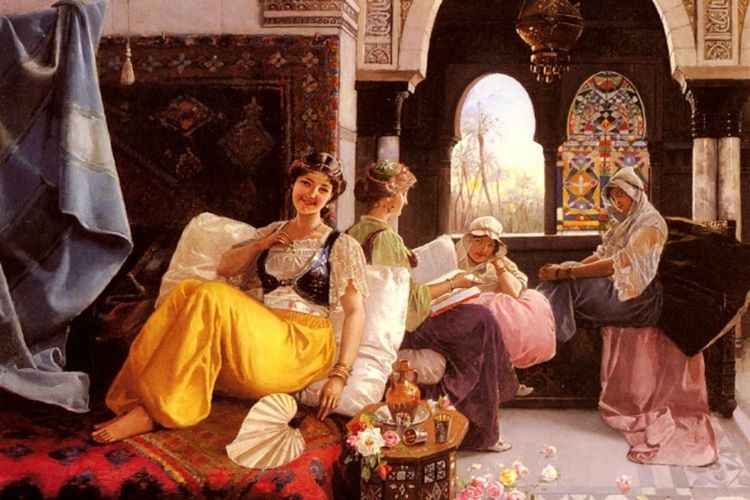
How Many Women Were in the Ottoman Harem?
The number of women in the Ottoman harem varied from period to period. The sultan’s personal preferences, the political conditions of the era, and the general structure of the palace directly influenced the number of women in the harem. The harem population increased significantly in particular during the reigns of Suleiman the Magnificent, Murad III, and Mehmed IV.
In some periods the harem housed between 300 and 500 women, while at other times the number approached 1,000. However, not all of these women were wives of the sultan. Women in the Ottoman harem consisted of concubines, servants, senior attendants (kalfas), trainers (ustas), and trained individuals serving in various roles. Duties were assigned meticulously, ensuring that every woman held a specific position.
For women seeking to rise within the harem system, level of education, conduct, and sense of discipline were of great importance. Those among the sultan’s favorites were individuals of refined manners who caught the sultan’s attention. Among these, some married the sultan, while others bore children and were granted the title of sultan.