The Ottoman Empire holds a central place in world history because, for roughly six centuries, it built a vast political order linking Anatolia, the Balkans, the Middle East, North Africa and the Eastern Mediterranean, and because it permanently shaped the European balance of power, the politics of the Islamic world, trade routes, urban life and cultural exchange.
Quick Summary
- For six centuries it sustained a long-lived imperial order across three continents.
- The conquest of Istanbul profoundly changed European and Mediterranean politics.
- The state governed diverse religions and communities through flexible institutions.
- Trade routes, cities and charitable endowments shaped economic life.
- Its modernisation efforts still directly influence the institutions of later states.
Table of Contents
- Why Did the Shift from Principality to Empire Matter?
- Why Is the Ottoman Empire Important in World History?
- How Were Government and Social Order Sustained?
- How Did the Economy, Trade and Cities Make an Impact?
- How Did Military Power and Diplomacy Affect Europe?
- What Is the Importance of the Cultural, Scientific and Architectural Legacy?
- Why Are Modernisation and the Final Era Decisive?
- Conclusion
Why Did the Shift from Principality to Empire Matter?
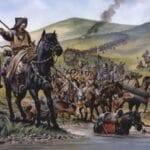
The principality emerged in the late thirteenth century as a small frontier beylik in north-western Anatolia. The dynamic environment along the Byzantine border, the ethos of gaza, local alliances and flexible methods of conquest all made expansion easier. Halil İnalcık stresses that explaining the foundation period through military success alone is inadequate. In his view, the social and political conditions of frontier society were equally decisive.
Under Orhan Gazi, the capture of Bursa and the crossing into Rumelia fundamentally changed the principality’s direction. A permanent sphere of dominance in the Balkans then took shape under Murad I and Bayezid I. The Interregnum that followed the Battle of Ankara tested the state’s resilience. Mehmed Çelebi’s restoration of central authority after that crisis was an early sign of continuity.
How did a frontier principality become a lasting state?
Conquest alone did not lie behind this durable growth. The central government combined the tax order, the timar system and local administration in newly acquired lands. It also refrained from abolishing existing social structures in conquered regions all at once. This flexibility produced a balance between centre and province that was at times tense yet workable.
The details of the foundation period can be followed more closely through the legends and historical realities of the Ottoman foundation. The administrative experience gained in the early period laid the groundwork for the imperial institutions of later centuries. For this reason, looking only at the peak era is not enough to understand the empire’s place in world history.
Why Is the Ottoman Empire Important in World History?
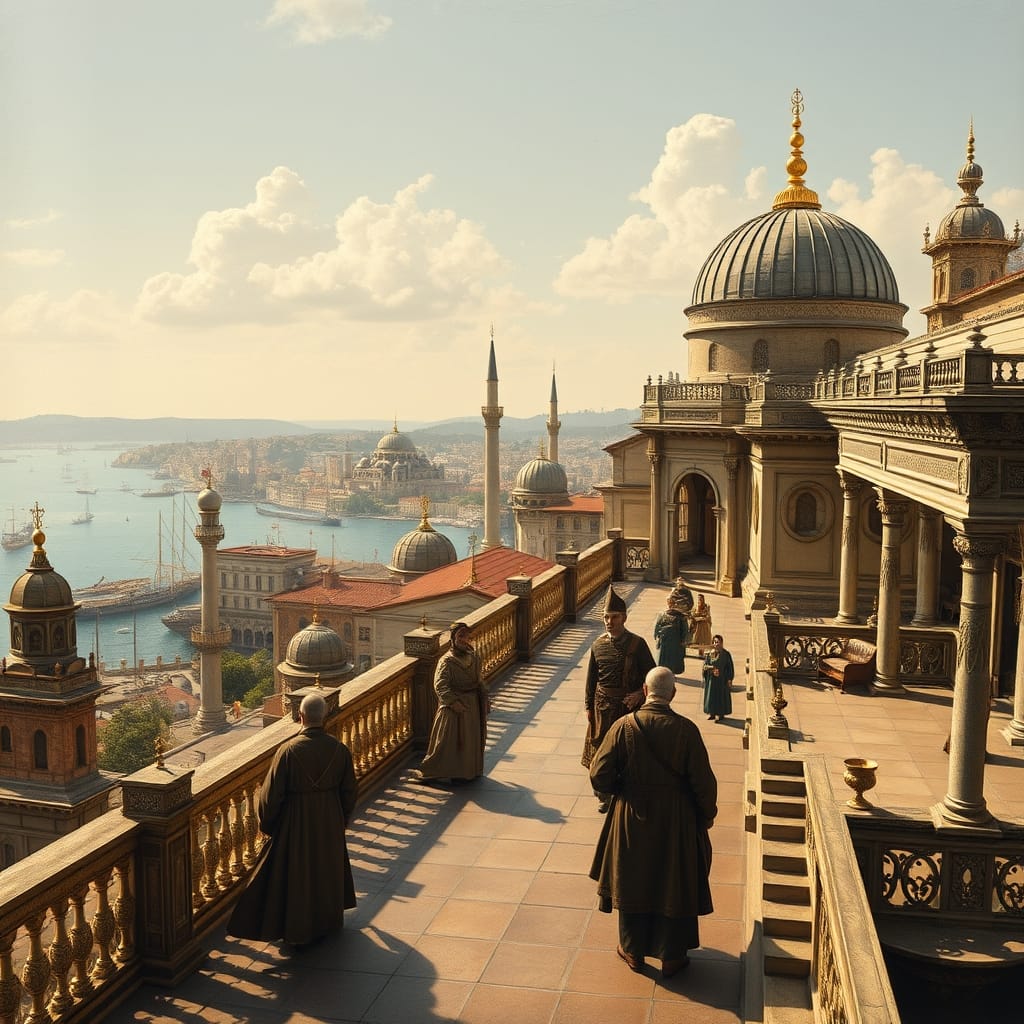
The state occupied an extraordinary geopolitical position because it controlled most of the transitional zones between Europe and Asia. The Balkans, the Black Sea, the Eastern Mediterranean and the Middle East were united around a single political centre. This allowed the state to be decisive in both land and naval politics.
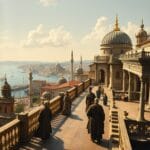
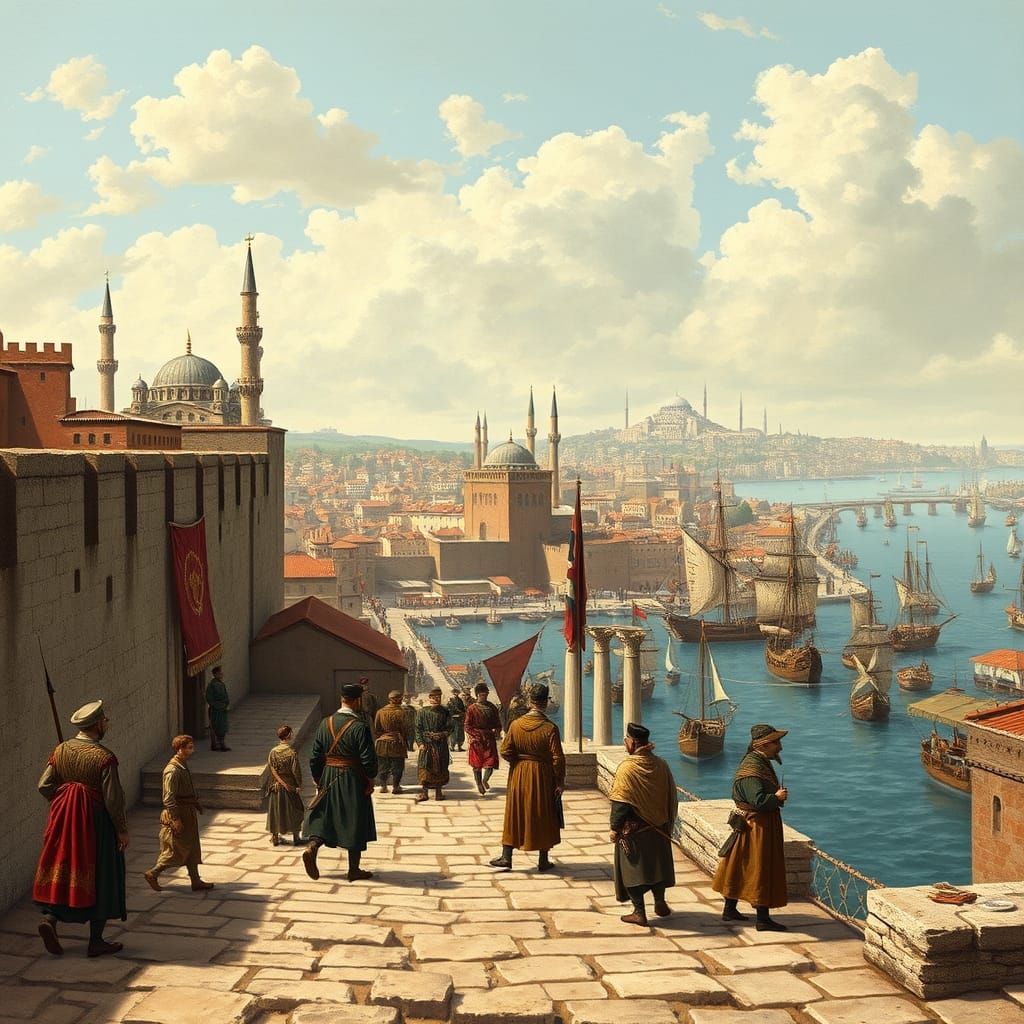
The conquest of Istanbul in 1453 is the most powerful symbol of that transformation. By turning the Byzantine capital into the centre of his realm, Mehmed the Conqueror raised the imperial claim to a new level. The city soon became a hub of administration, trade, craft production and culture. The consequences of the conquest of Istanbul that changed world history show this geopolitical rupture in detail.
Why is the conquest of Istanbul considered a global turning point?
The conquest ended the political existence of the Eastern Roman Empire. It also strengthened the state’s central link between the Balkans and Anatolia. For the European powers, it confirmed the reality of a strong and enduring eastern empire. For this reason 1453 cannot be assessed merely as one city changing hands.
In the sixteenth century the sphere of dominance stretched from Hungary to Iraq and from Algiers to Yemen. Under Suleiman the Magnificent, the state was a great power able to contend with the Habsburgs and the Safavids at the same time. Victories such as Preveza in the Mediterranean increased naval supremacy. The state thus became an actor that European diplomacy and Mediterranean rivalry constantly had to take into account.
How Were Government and Social Order Sustained?
The empire’s longevity rested on strong central institutions working together with local practice. The Imperial Council, the palace organisation, the kadis and provincial governors each carried out distinct duties. In law, sharia rules and the sultan’s customary regulations operated side by side. This structure created an administrative space that could vary according to the needs of different regions.
Why was the empire so long-lived?
The empire did not try to make its various ethnic, linguistic and religious communities uniform. The state’s priorities were the tax order, public security and political loyalty. Non-Muslim communities were able to preserve their own religious institutions and certain internal arrangements. Even so, this system did not amount to modern civic equality; legal and fiscal status could differ from group to group.
The historical framework of the millet structures that became more pronounced in the nineteenth century is examined in detail under the Ottoman millet system and the rights of non-Muslims. Suraiya Faroqhi’s work likewise shows that imperial society was not a single-centred structure. City, village, guild, congregation and family networks were the everyday carriers of the state order.
One of the key institutions of this social fabric was the charitable endowment. Endowments played a decisive role in financing mosques, madrasas, fountains, public kitchens, bridges and health buildings. A substantial share of public services could therefore be maintained through resources independent of the state budget. The role of the Ottoman endowment system in social welfare and urban life clearly demonstrates the importance of this institutional legacy.
How Did the Economy, Trade and Cities Make an Impact?
Imperial territory formed one of the crossroads of the great trade networks between Europe and Asia. Cities such as Istanbul, Bursa, Edirne, Salonica, Aleppo, Cairo and Izmir took on important roles in regional economies. Silk, spices, grain, textiles and various craft goods circulated through these networks. The state drew revenue from commerce through customs duties and market supervision.
Halil İnalcık and Donald Quataert show that treating the Ottoman economy as a static structure is misleading. Over the centuries the economic system adapted to wars, demographic change and shifts in the direction of global trade. From the sixteenth century onwards the rise of Atlantic commerce created new pressures. Yet Eastern Mediterranean and overland trade did not lose their importance overnight.
How did trade networks affect the world economy?
By controlling major land and sea routes, the state influenced prices, customs and security. Venice, Genoa, Ragusa and later powers such as France and England built close relations with these markets. The capitulations were initially instruments that encouraged diplomacy and commerce. In time they turned into privileges that increased the economic influence of European states.
In the cities, guilds were an important part of the productive and occupational order. Fixed-price regulations aimed to supervise the cost of certain essential goods. Market order was also handled together with the control of measures and quality. This economic organisation shows that daily life in imperial cities was governed within a social, not merely a commercial, framework.
How Did Military Power and Diplomacy Affect Europe?
The military system developed in the early period around timariot cavalry and infantry units. The kapıkulu corps and the Janissaries became the core elements of the central army. The effective use of firearms and siege technology provided a major advantage, especially in the fifteenth and sixteenth centuries. The military structure nonetheless had to adapt over time to changing techniques of warfare.
How did the state influence European politics?
Through its wars with the Habsburgs, Venice, Poland-Lithuania, Russia and other powers, the empire was part of the European balance of power. The diplomatic rapprochement with France was the product of a shared opposition to the Habsburgs. That relationship shows that religious difference did not eliminate interest-based politics between states. Ottoman diplomacy was therefore not outside the European system but directly within it.
In the seventeenth and eighteenth centuries the terms of military competition changed. States such as Austria and Russia developed more effective armies and administrative structures. The central government likewise turned to new techniques, engineering knowledge and regular troops. This transformation became more visible in reform programmes such as the Nizam-ı Cedid at the end of the eighteenth century.
What Is the Importance of the Cultural, Scientific and Architectural Legacy?
The empire’s significance cannot be measured by wars and diplomacy alone. In centres such as Istanbul, Bursa, Edirne, Damascus, Cairo and Sarajevo, different cultural traditions came together. Architecture, calligraphy, illumination, tilework, literature and music produced a broad palace and urban culture. This output combined the traditions of the Islamic world with Byzantine, Persian and Balkan influences in new forms.
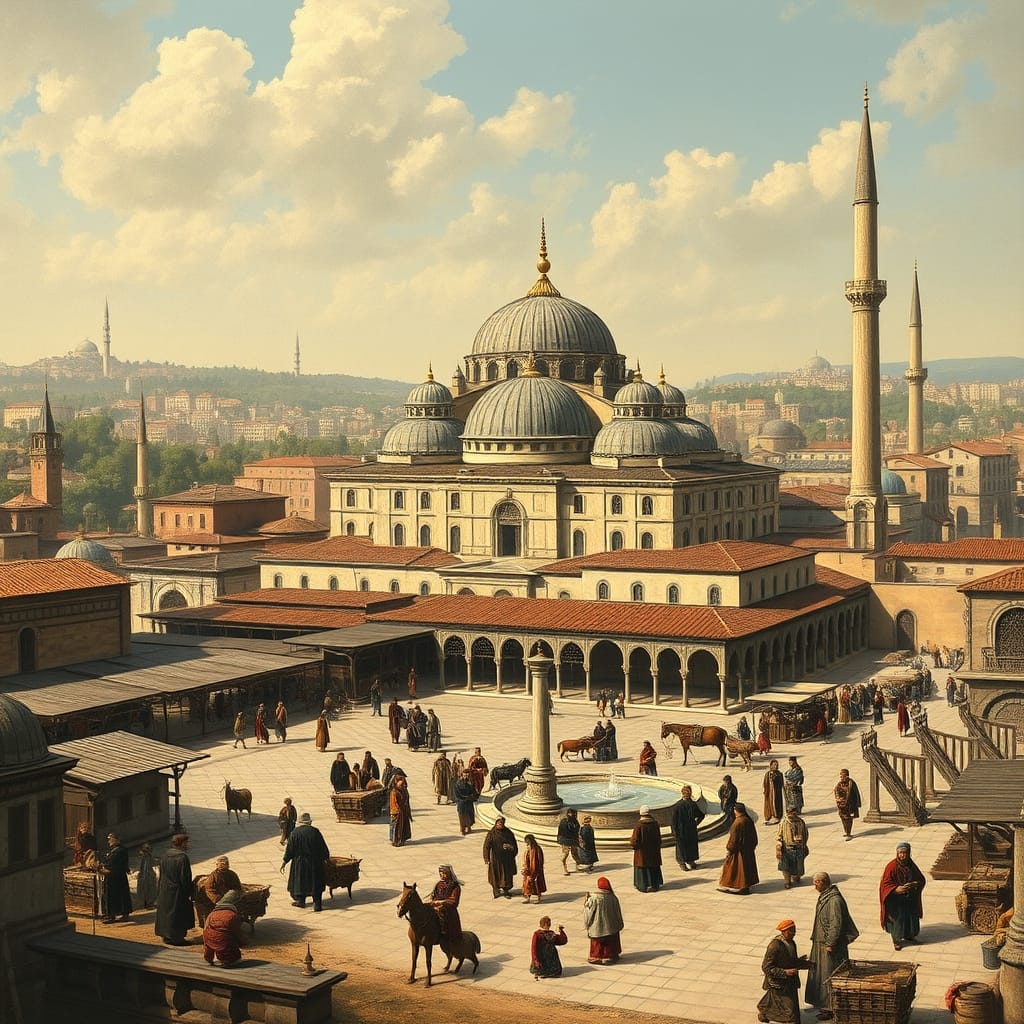
The sixteenth-century works of Mimar Sinan produced the finest examples of classical Ottoman architecture. The Süleymaniye and Selimiye complexes were not places of worship alone. The madrasas, public kitchens and social buildings around them also ordered urban life. Architectural heritage is therefore an important source for understanding the social and institutional structure of the state.
Why is the cultural legacy still visible?
Across its wide geography the empire left roads, bridges, caravanserais, bathhouses, mosques, markets and distinctive housing fabrics. Many cities in the Balkans, Anatolia and the Middle East still carry these historical layers today. Mutual cultural influences can also be seen in cuisine, music, language and everyday custom. This heritage belongs not to a single nation but to the shared history of many societies.
In science and education, madrasas were significant institutions. In the tradition of astronomy and mathematics, figures such as Ali Kuşçu contributed to the intellectual life of Istanbul. Works of historiography, geography and medicine were also produced in court circles. The development of these fields nevertheless varied from period to period and cannot be explained by a single line of progress.
Why Are Modernisation and the Final Era Decisive?
From the end of the eighteenth century the central government accelerated reform in the face of military defeats, fiscal pressure and the growing power of European states. Under Mahmud II the Janissary corps was abolished and the central state was reorganised. The Edict of Gülhane then opened a new era of administrative and legal reform in 1839 (see TDV Encyclopaedia of Islam, Tanzimat). The institutions of a modern bureaucracy thus developed in a more systematic fashion.
This transformation was not merely a process of imitating the West. Ottoman administrators pursued the preservation of existing institutions, the strengthening of central authority and competition with European states all at once. The Edict of Gülhane and the beginning of Ottoman change offers an important framework for understanding the underlying logic of these reforms.
Why does the empire’s final century matter for world history?
In the nineteenth century, nationalism, great-power rivalry and economic dependency deeply affected the empire. Independence movements in the Balkans led to the emergence of new states. At the same time, concepts such as constitution, parliament, citizenship and education moved to the centre of political debate. These developments shaped both the imperial elite and the cadres of the nation states that followed.
The First World War was the last great rupture in this long transformation. After the war, political sovereignty came to an end and new state orders were established in the former territories. Even so, the empire’s administrative boundaries, institutions and social legacy continued to influence the modern history of the Middle East and the Balkans. The collapse of the Ottoman State and its causes examines this final era in greater detail.
Conclusion
With its longevity, its multi-continental structure and its experience of governing different societies within a single political order, the empire is one of the most influential in world history. The legacy it left in war, diplomacy, trade, law, urbanisation and culture is still visible across a wide geography. In short, the importance of the Ottoman Empire stems not only from its past greatness but also from the institutions and historical questions it passed on to the modern world.
Sources
- Halil İnalcık, The Ottoman Empire: The Classical Age 1300–1600.
- Caroline Finkel, Osman’s Dream: The Story of the Ottoman Empire 1300–1923.
- Suraiya Faroqhi, Subjects of the Sultan: Culture and Daily Life in the Ottoman Empire.
- Halil İnalcık and Donald Quataert, An Economic and Social History of the Ottoman Empire.
- TDV Encyclopaedia of Islam, the entry on the Ottomans.
- TDV Encyclopaedia of Islam, the entry on the Tanzimat.
- TDV Encyclopaedia of Islam, the entry on Mimar Sinan.
- Publications and archival sources of the Turkish Historical Society.