The Tanzimat Edict, proclaimed at Gülhane on November 3, 1839, was a reform text that aimed to secure life, property, and honor in the Ottoman Empire, establish regular taxation, fair military service, and a more equal administration before the law; for this reason, it is regarded as a symbol of the state’s transition from the classical order to the search for modernization.

Quick Summary
- It is the fundamental reform document proclaimed at Gülhane in 1839.
- It placed the security of life, property, and honor under state guarantee.
- It promised regular procedures in taxation and military service.
- It strengthened the idea of a more equal administration before the law.
- It is accepted as the political beginning of Ottoman modernization.
Contents
- What Was the Tanzimat Edict?
- The Context in Which the Edict Was Proclaimed
- Main Articles and Promises
- Change in Law, Taxation, and Military Service
- Its Impact on the Relationship Between Society and the State
- Results and Historical Significance
What Was the Tanzimat Edict?
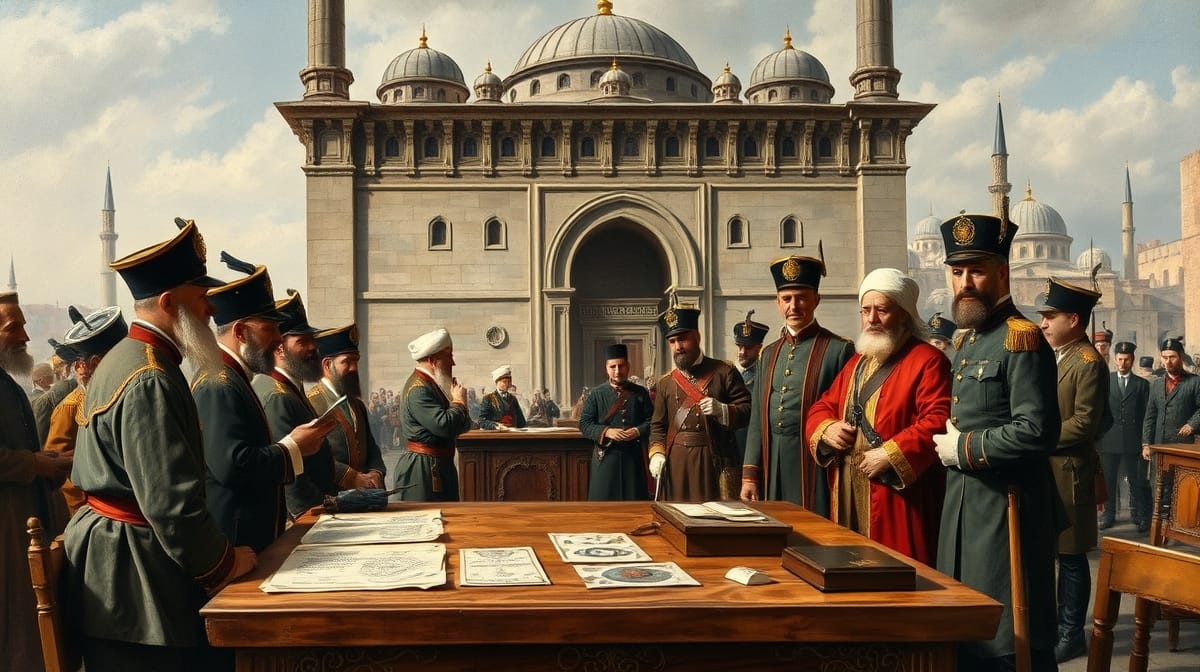
The edict, officially known as the Gülhane Hatt-ı Hümayunu, was proclaimed during the reign of Sultan Abdülmecid. Its text was prepared by Mustafa Reşid Pasha, the powerful statesman of the period, and read aloud in Gülhane Park. The edict declared that Ottoman administration would henceforth operate according to more orderly laws.
This document was not a constitution. Nor was it prepared by an assembly elected by the people. Nevertheless, it showed that the duties of the state could be limited by the will of the sultan. In this respect, it marked an important threshold in terms of democratization movements in the Ottoman State.
According to Halil İnalcık, the Tanzimat period was connected with the Ottoman search to strengthen central administration. In other words, the issue was not merely imitating the West. The state wanted to prevent disintegration and keep its subjects within a common legal order.
The Context in Which the Edict Was Proclaimed
The 1830s brought severe crises for the Ottomans. The revolt of Mehmed Ali Pasha, the governor of Egypt, shook the state. In addition, European powers began to act more effectively in Ottoman domestic politics. For this reason, the administration in Istanbul sought security both at home and abroad.
The reforms of Mahmud II prepared the ground for the edict. The abolition of the Janissary Corps, the establishment of the new army, and the strengthening of the bureaucracy were parts of this process. To understand this background, the topic Who Were the Janissaries, and What Did They Do? is also important.
On the other hand, the ideas of equality and citizenship that spread after the French Revolution were also influential. The question of non-Muslim subjects was on the agenda of European diplomacy. This context should be considered together with the effects of the French Revolution on the Ottoman State.
During which sultan’s reign was the Tanzimat Edict proclaimed?
The edict was proclaimed during the reign of Sultan Abdülmecid. However, the preparation process extended back to the final years of Mahmud II. Abdülmecid was a young sultan, and he sought to secure legitimacy by embracing the new order.
Mustafa Reşid Pasha was the architect of the language of reform. His experience in European diplomacy was reflected in the style of the text. Even so, the edict cannot be regarded solely as a product of foreign pressure. The need for internal security, fiscal order, and central authority was decisive.
Main Articles and Promises
The edict’s most striking promise was the security of life, property, and honor. The state declared that no one would be punished without trial. It also developed a new language against the arbitrary use of confiscation.
The tax system also stood at the center of the text. Taxes were to be determined according to everyone’s means. In addition, the injustices caused by the tax-farming system were to be reduced. This goal carried direct meaning for the people in the provinces.
The issue of military service was another fundamental topic. The edict sought to bind military service to fixed terms and rules. In this way, the state wanted both to regulate the army and to protect the productive population. This balance was not easy to establish.
The spirit of the edict can be seen in the effort to strengthen the sultan’s promise of justice through a legal order.
What were the articles of the Tanzimat Edict?
The articles of the Tanzimat Edict were not like numbered legal articles in the modern sense. However, the main promises can be clearly identified. Security of life, security of property, the inviolability of honor, fair taxation, and regular military service were foremost among them.
In addition, the idea of public trial in courts gained strength. It was desired that the relationship between crime and punishment be based on law. As a result, the aim was to reduce arbitrary conduct in administration.
Change in Law, Taxation, and Military Service
The Tanzimat reforms gave rise to new institutions in the field of law. The Supreme Council of Judicial Ordinances played an important role in this process. New criminal and commercial regulations also came onto the agenda. The state made written rules more visible.
The works of Ahmed Cevdet Pasha are valuable for understanding the period’s search in law and administration. Cevdet Pasha was a statesman who emphasized that reforms should not remain only on paper. He especially valued the balance between law and tradition.
The goal in taxation was to provide regular revenue to the central treasury. However, practice in the provinces did not always yield the expected result. Local power holders, tax collectors, and old habits slowed change. Nevertheless, the idea of tax justice became permanent.
The search for order in military service faced similar problems. The state wanted everyone to serve in the army for a fixed period. Yet the census, registration system, and provincial oversight were weak. For this reason, the reforms developed over time.
Why was the Tanzimat Edict proclaimed?
The Tanzimat Edict was proclaimed against the danger of the state’s disintegration. First, the aim was to strengthen central authority. It was also intended to show European powers that the Ottoman Empire was capable of reform.
In addition, it was desired to increase the loyalty of Muslim and non-Muslim subjects to the state. A shared language of security and law came to the fore for this purpose. Even so, this idea of equality was not received in the same way by every segment of society.
Its Impact on the Relationship Between Society and the State
The edict declared that the sultan had granted certain guarantees to his subjects. This created a new discourse in the relationship between state and society. Administration now explained justice not only through tradition but also through written commitment.
This change closely concerned the different religious groups in Ottoman society. The legal status of non-Muslims was discussed more frequently. Especially with the Reform Edict, this debate moved to a new stage. For this connection, the article The Tanzimat and Reform Edicts in the Ottoman Empire is complementary.
However, the edict did not solve all problems in society. Local notables, provincial bureaucracy, and financial difficulties challenged the reforms. In addition, some Muslim subjects viewed the language of equality as a loss of traditional status. For this reason, the process moved forward amid debate.
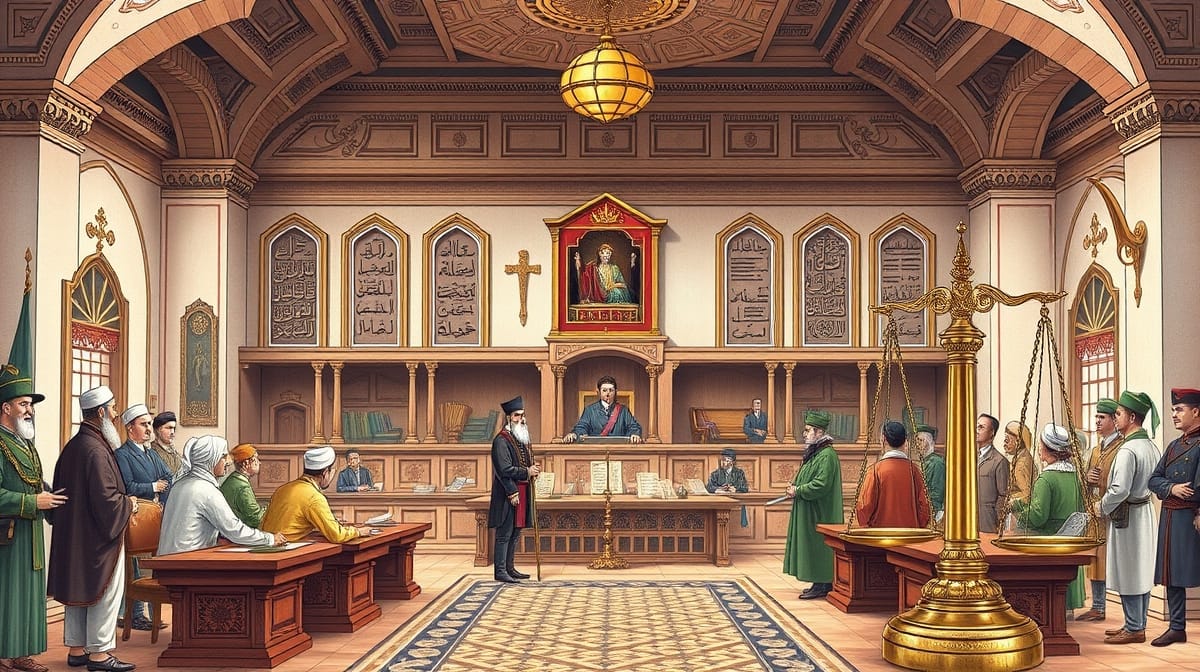
As a result, the Tanzimat was not merely a document issued from the palace. It was also the beginning of a new idea of Ottomanism. This idea aimed to keep different communities under the shared roof of the state. Yet in the age of nationalism, this goal became difficult.
Results and Historical Significance
The edict became one of the symbolic texts of Ottoman modernization. It established a new language in the fields of law, taxation, military service, and administration. It also showed more clearly the state’s responsibility to provide guarantees before the people.
This process opened the door to later reforms. The Reform Edict, provincial regulations, educational reforms, and constitutional debates developed along this line. For this reason, it should also be read within the context of Ottoman sultans and reform movements.
On the other hand, the impact of the edict was not unlimited. The implementation of reforms required financial resources and strong oversight. Ottoman-Russian rivalry, the Balkan questions, and European diplomacy narrowed this space. What You Need to Know About the Ottoman-Russian Wars helps explain this pressure.
Caroline Finkel treats Ottoman modernization as a long search for adaptation. This perspective prevents the edict from being seen as a miracle on its own. Nevertheless, the document clearly reveals the state’s will to renew its own order.
What is the place of the Tanzimat Edict in Ottoman history?
The Tanzimat Edict represents the search for a transition from the classical imperial order to a modern state based on law. This transition was not a completed success. Yet it was a powerful sign that the understanding of administration had changed.
In conclusion, the Tanzimat Edict is the fundamental document that describes the beginning of change in the Ottoman Empire. With this text, the state put its promises of justice, security, and order into writing. For this reason, the edict is remembered as one of the most important reform turning points in Ottoman history.
Sources
- Ahmed Cevdet Pasha, Tarih-i Cevdet.
- Halil İnalcık and Donald Quataert, An Economic and Social History of the Ottoman Empire.
- Caroline Finkel, Osman’s Dream.
- Kemal H. Karpat, Ottoman Population 1830-1914.
- TDV Encyclopedia of Islam, Tanzimat entry.










4 thoughts on “What Was the Tanzimat Edict? The Beginning of Change in the Ottoman Empire”