The Treaty of Passarowitz was a historic turning point which, in 1718, made the Ottoman Empire’s military and diplomatic rupture with Europe after Karlowitz more visible; through strategic losses such as Belgrade and Temeşvar, it permanently accelerated the Ottoman shift from conquest-centered politics toward the pursuit of balance, negotiation, and renewal.
Quick Summary
- It was signed in 1718 and ended the war with Austria and Venice.
- Belgrade, Temeşvar, and Banat were ceded to the Habsburgs.
- The Ottomans regained the Morea, but Balkan defenses weakened.
- The treaty significantly accelerated Tulip Era diplomacy.
- The peace of 1718 strengthened the idea of the balance of power in Ottoman politics.
Contents
- The Definition and Historical Framework of the Treaty
- The Road to the Treaty: The Background of the War
- Territorial Losses and Balkan Defense
- Diplomacy and the Tulip Era
- Why Was It a Turning Point?
- Long-Term Consequences and Historical Legacy
- Conclusion
What Was the Treaty of Passarowitz?
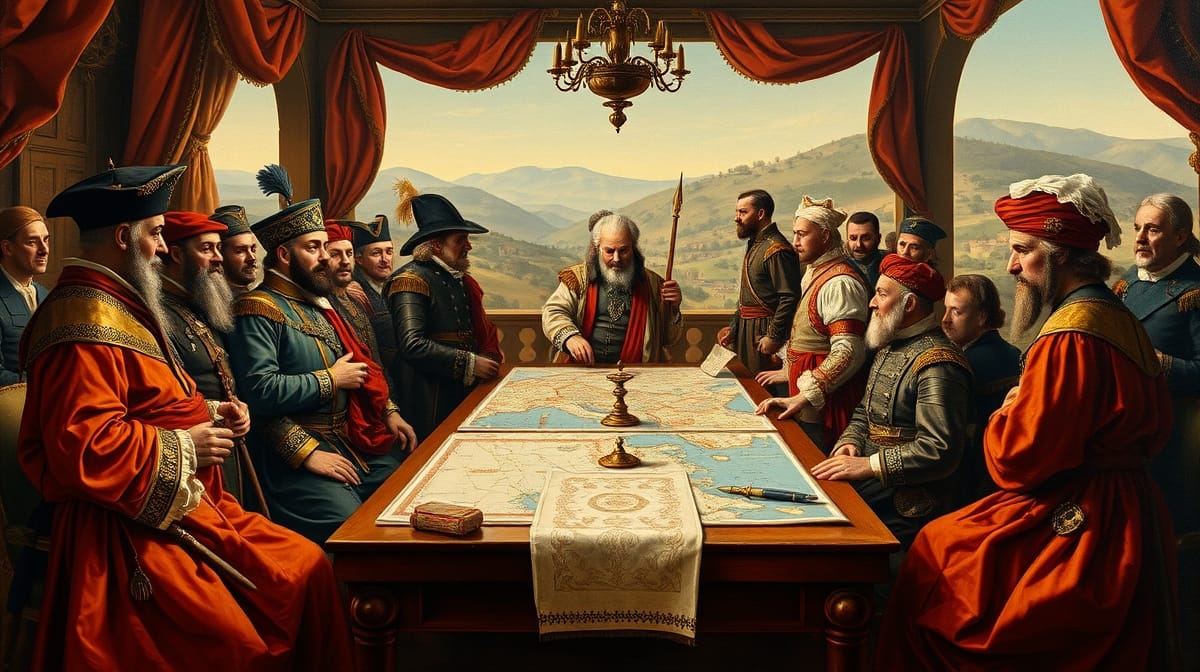
This treaty was signed on July 21, 1718, near Požarevac in present-day Serbia. The parties were the Ottoman Empire, Habsburg Austria, and the Republic of Venice. The treaty turned the outcome of the 1716-1718 wars into a legal text. It also inaugurated a new era of realism in Ottoman diplomacy.
It would be incomplete to read this treaty merely as a document of defeat. The Ottomans regained the Morea from Venice. On the Austrian front, however, they suffered much heavier losses. The loss of Belgrade in particular created a deep void at the heart of Balkan defense.
İsmail Hakkı Uzunçarşılı evaluates this period as a stage in which Ottoman military power struggled against Europe’s new techniques and forms of organization. Halil İnalcık, meanwhile, emphasizes the growing importance of the balance between frontier defense and diplomacy in Ottoman politics. For this reason, the Treaty of Passarowitz served as the second major warning after Karlowitz.
The Road to the Treaty: The Background of the War
With the Treaty of Karlowitz in 1699, the Ottoman Empire had accepted its first major territorial loss. Yet Ottoman statesmen preserved the hope of recovering these losses. The reconquest of the Morea from Venice in 1715 created morale in palace and military circles. But this success also accelerated a new conflict with Austria.
The Battle of Petrovaradin in 1716 was a heavy defeat for the Ottomans. Grand Vizier Damat Ali Pasha lost his life in the battle. Key centers such as Temeşvar and Belgrade then came under Austrian pressure. These developments gave rise to serious debates about the Ottoman military organization.
In Europe, meanwhile, wars were no longer won by courage alone. Trained infantry, artillery units, and logistical organization had become more decisive. The Ottoman army was still a great power. Yet the results on the fronts showed that older methods were no longer sufficient on their own.
The process leading to Passarowitz was a test for the Ottomans not only on the battlefield, but also in mentality.
Territorial Losses and Balkan Defense
When the Treaty of Passarowitz is mentioned, the first issue that comes to mind is the territories ceded to Austria. The Ottomans lost their claims over Banat, Temeşvar, Belgrade, northern Serbia, and Little Wallachia. Habsburg influence also expanded in some border regions. This fundamentally shook the defensive order along the Danube line.
The Treaty of Passarowitz and the Austrian Front
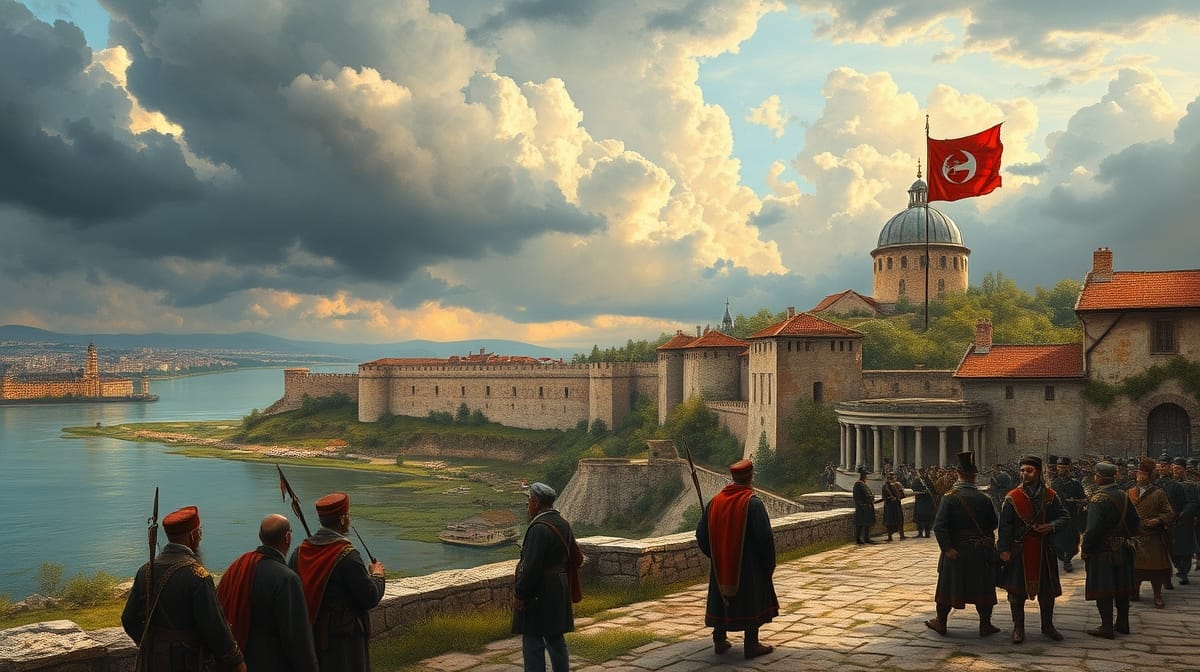
The losses on the Austrian front reduced the Ottomans’ strategic depth in the Balkans. Belgrade was not merely a city. It was a powerful military gateway at the confluence of the Danube and Sava rivers. For this reason, the loss of Belgrade caused great anxiety in Istanbul.
The loss of Temeşvar and Banat was similarly significant. This region functioned as a buffer between Central Europe and the Balkans. The strengthening of the Habsburgs there made the Ottoman frontiers more vulnerable. As a result, the state was forced to pursue a more cautious policy on the northwestern front.
The Treaty of Passarowitz and the Venetian Front
The picture on the Venetian front was rather different. The Ottoman Empire achieved an important success in the Mediterranean by recovering the Morea. Venice, for its part, retained some gains in Dalmatia. The treaty therefore produced a complex outcome that involved both gains and losses.
This complex picture pushed Ottoman policymakers toward a new calculation. Expanding on every front at the same time was no longer realistic. The central administration had to determine its priorities more carefully. At this point, the Ottoman Imperial Council and central administrative structure remained decisive in decision-making processes.
Diplomacy and the Tulip Era After the Treaty of Passarowitz
After the Treaty of Passarowitz, the Ottoman administration turned toward establishing order rather than waging war. The reign of Ahmed III and the period of Nevşehirli Damat İbrahim Pasha therefore acquired a different character. The process known as the Tulip Era cannot be explained only through entertainment and architecture. It was also a period of diplomatic observation and cultural contact.
The Paris embassy of Yirmisekiz Çelebi Mehmed Efendi was one of the symbols of this new mentality. The Ottoman administration now wanted to observe European courts more closely. Printing, engineering, urban life, and diplomatic protocol drew interest. The state also sought to make the work of gathering information more systematic.
Caroline Finkel notes that this period changed the Ottoman world’s view of Europe. This change did not mean imitation. It was rather an effort to understand the strength of the rival. In addition, the Treaty of Passarowitz became a symbol of the transition from military defeat to diplomatic learning.
Why Was It a Turning Point?
The first factor that made this treaty a turning point was that it made the impact of Karlowitz permanent. Karlowitz had shown that Ottoman expansion had stopped. Passarowitz revealed that this halt was not temporary. Thus, the state took defensive and balance-of-power politics more seriously in relation to Europe.
The second factor was that diplomacy became as important as war. The Ottomans had sent envoys before as well. In the eighteenth century, however, diplomacy became a more continuous and calculated instrument. This process laid the groundwork for closer relations with the European state system in the future.
The third factor was the clearer emergence of the need for internal reform. The army, finance, and frontier administration became subjects of debate at the same time. Older processes, such as the effects of the Age of Discovery on the Ottoman economy, had also increased this pressure. The problem was therefore not limited to defeat on the battlefield.
Finally, this treaty showed Ottoman elites the cost of underestimating Europe. This awareness did not immediately turn into comprehensive reform. Even so, it changed the mental threshold. The state now sought knowledge, diplomacy, and technical renewal in order to preserve its power.
Long-Term Consequences and Historical Legacy
Not every place lost at Passarowitz remained lost permanently. The Ottoman Empire recovered Belgrade with the Treaty of Belgrade in 1739. Yet this recovery did not erase the lesson left by 1718. Behind every victory there now stood a more fragile balance of power.
As emphasized in the TDV Encyclopedia of Islam, Passarowitz was an important threshold for eighteenth-century Ottoman diplomacy. The treaty demonstrated the necessity of managing military losses through diplomatic texts. It also made the language of negotiation with European states more distinct. This situation shaped the politics of the following century.
Especially in the nineteenth century, the Ottoman Empire tried to preserve its existence within the European balance of power. The distant consequences of this trajectory can be seen clearly in the process of the Crimean War and integration into European politics. The line stretching from Passarowitz to Crimea was not a straight one. Yet both show that Ottoman diplomacy was shaped by Europe-centered pressures.
The economic history approach of Halil İnalcık and Donald Quataert places this change within a broader framework. Military defeats must be understood together with financial resources and trade balances. After Passarowitz, the Ottoman world faced new rivals both on the battlefield and in the marketplace. For this reason, the turning point carried an economic meaning as well as a political one.
Conclusion
The Treaty of Passarowitz was a historic threshold that clearly revealed the Ottoman Empire’s loss of power in relation to Europe, while at the same time accelerating the search for diplomacy, observation, and renewal. The losses of Belgrade and Temeşvar shook the military order. The recovery of the Morea, however, kept the picture from being entirely bleak. As a result, this treaty became not so much a sign of collapse as a turning point that forced the Ottomans into change.
Sources
- İsmail Hakkı Uzunçarşılı, Osmanlı Tarihi.
- Halil İnalcık, Devlet-i Aliyye.
- Caroline Finkel, Osman’s Dream.
- TDV Encyclopedia of Islam, article on the Treaty of Passarowitz.
- Halil İnalcık & Donald Quataert, An Economic and Social History of the Ottoman Empire.