The Battle of Chaldiran took place in 1514 between Selim I and Shah Ismail, turning Ottoman-Safavid rivalry into a prolonged period of conflict over political borders, sectarian struggle, and control of Anatolia.
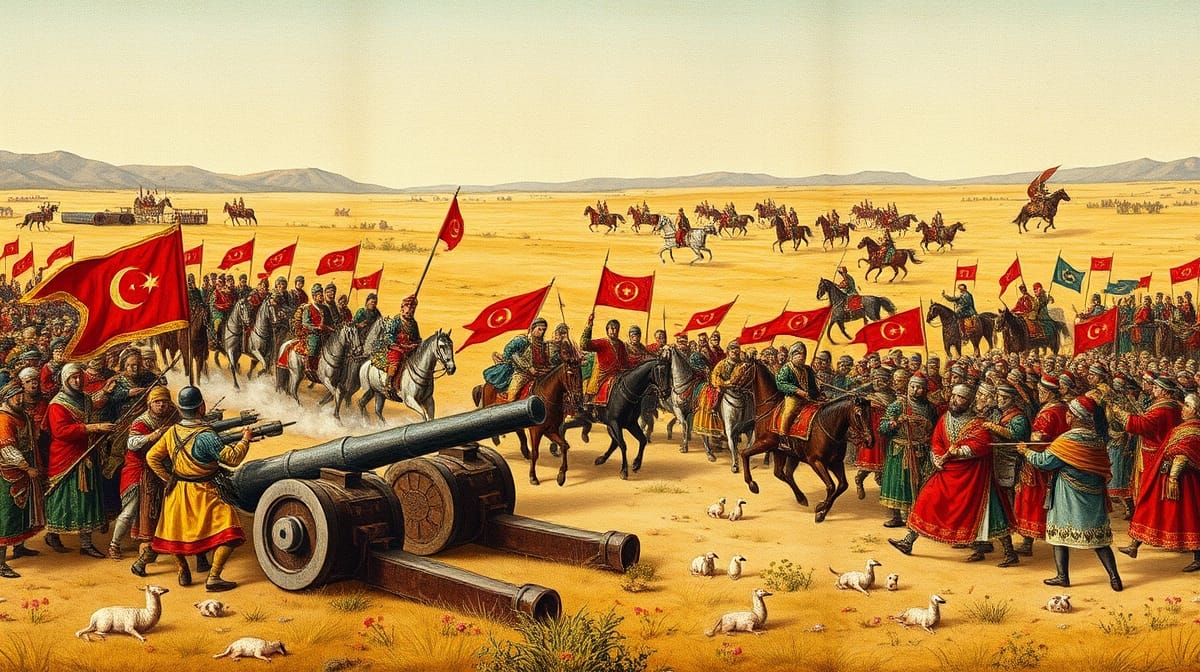
Quick Summary
- Chaldiran became a turning point in Ottoman-Safavid rivalry.
- At the heart of the war lay the struggle for control of Anatolia.
- Safavid propaganda caused serious concern for the Ottoman administration.
- The Ottoman army gained the upper hand on the battlefield through its superiority in firearms.
- The consequences influenced eastern frontier policy for a long time.
Contents
- Anatolia Before the War and the Rise of the Safavids
- Why Did the Battle of Chaldiran Break Out?
- The Aims of Selim I and Shah Ismail
- How Did the Battle of Chaldiran Take Place?
- The Beginning of the Ottoman-Safavid Struggle
- Consequences and Long-Term Effects
- Conclusion
- Sources
Anatolia Before the War and the Rise of the Safavids
In the late 15th century, while the Ottoman state was expanding in the west, a new power rose in the east. This power was the Safavid movement centered on Ardabil. Initially a religious-Sufi circle, the Safavids transformed into a political state under Shah Ismail. This transformation also established a new dynastic order in the Iranian lands.
Shah Ismail entered Tabriz in 1501 and proclaimed the Safavid State. He quickly gained influence over Azerbaijan, Iran, and Persian Iraq. In addition, he acquired strong spiritual authority over certain Turkmen groups in Anatolia. According to Halil İnalcık, this situation was not merely an external threat to the Ottoman central administration.
The Ottoman state regarded the establishment of political unity in Anatolia as a fundamental objective. The roots of this goal went back especially to the reigns of Bayezid I and Yıldırım Bayezid. In this context, Ottoman policies that secured Anatolian Turkish political unity laid the groundwork for eastern policy. Yet Safavid influence became a new factor that challenged this unity from within.
The Impact of Safavid Propaganda in Anatolia
Safavid propaganda resonated especially among nomadic Turkmen communities. Through his charismatic identity, Shah Ismail combined religious and political loyalty. For this reason, the Ottoman administration did not view the matter merely as a border dispute. At the same time, the problem of loyalty to central authority also grew.
Events such as the Shahkulu Rebellion caused serious upheaval during the reign of Bayezid II. This rebellion in 1511 showed how dangerous Safavid influence in Anatolia could become. İsmail Hakkı Uzunçarşılı regarded this episode as one of the important signs of Ottoman-Safavid tension. This atmosphere accelerated the road to Chaldiran.
Why Did the Battle of Chaldiran Break Out?
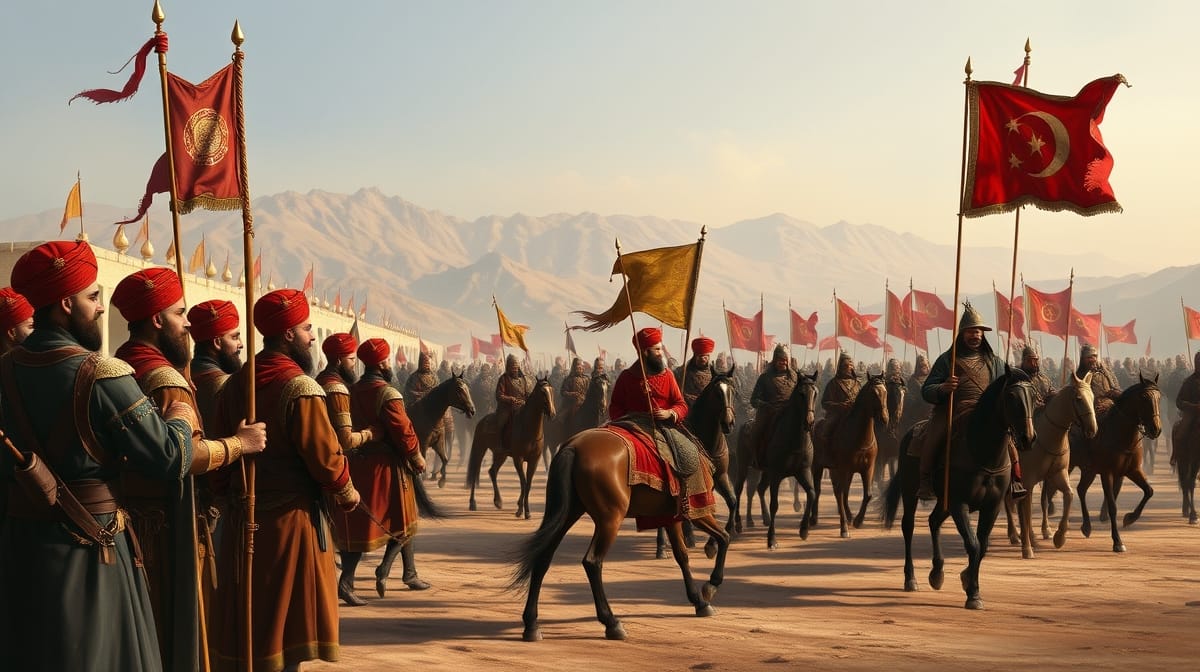
The Battle of Chaldiran cannot be reduced to a single cause. Behind the war stood political rivalry, sectarian division, and the struggle for dominance in Anatolia. In addition, the universal claims to sovereignty made by the two rulers sharpened the conflict. For this reason, the battle carried a broader meaning than that of a conventional frontier war.
The Battle of Chaldiran and Sectarian Conflict
When the Battle of Chaldiran is discussed, the sectarian issue often comes to the fore. The Safavids placed Shiism at the center of state identity in Iran. The Ottomans, by contrast, represented the Sunni political tradition. Yet sectarian division was not independent of political rivalry.
Selim I regarded Safavid influence as a direct threat to the Ottoman order. This was because such influence could weaken the sultan’s legitimacy in Anatolia. Shah Ismail, on the other hand, saw his followers in Anatolia as part of his own political project. As a result, the religious language of both sides became intertwined with state interests.
The Battle of Chaldiran and Control of Anatolia
The Battle of Chaldiran also determined under whose influence Anatolia would remain. The Ottomans sought to strengthen central authority in the eastern provinces. The Safavids aimed to expand westward through Turkmen tribes. This situation led the two states to compete for the same human resources.
In later centuries, this rivalry took the form of Ottoman-Iranian wars. To understand the long history of the issue, a general assessment of the Ottoman-Iranian wars is important. Chaldiran was only the first link in the chain. It was followed by the Treaty of Amasya, the order established by the Treaty of Zuhab, and frontier politics.
The Aims of Selim I and Shah Ismail
When Selim I came to the throne, he regarded the eastern question as a priority. After his struggle for power with his brothers, he consolidated central authority. He then pursued a harsh policy to break Safavid influence. Caroline Finkel evaluates Selim’s eastern campaign in the context of state security.
Shah Ismail was a ruler who had achieved great successes at a young age. Thanks to his Qizilbash warriors, he established authority over a vast geography. He also combined poetry, Sufism, and the image of rulership. This charisma placed him in a position distinct from that of conventional rulers.
The tension before Chaldiran shows that the two rulers were engaged in a struggle not only over territory but also over legitimacy.
First, Selim wanted to secure the eastern frontier. Second, he aimed to sever Safavid loyalty in Anatolia. Finally, he wanted to secure his rear before the future struggle with the Mamluks. This strategy reflected the long-term calculations of the Ottoman state mind.
Shah Ismail, meanwhile, pursued a tactic of withdrawal until open battle. He wanted to wear down the Ottoman army. Yet this strategy did not fully compensate for the weakness of the Safavid army on the battlefield. Firearms in particular played a decisive role in the fate of the battle.
How Did the Battle of Chaldiran Take Place?
The Battle of Chaldiran was fought on 23 August 1514 on the Chaldiran Plain, within the borders of present-day Iran. Selim I commanded the Ottoman army. Shah Ismail led the Safavid forces. The battle clearly revealed the difference between the military approaches of the two sides.
Military Order on the Battlefield of Chaldiran
The Ottoman army established a strong defensive line with artillery units and Janissaries. The use of firearms also gave the Ottomans a major advantage. The Safavid army, by contrast, had a more mobile structure based on cavalry charges. Yet this structure struggled against organized firepower.
At this point, the structure of the Ottoman military organization is important for understanding the outcome of the battle. The Ottoman army displayed superiority in terms of central command and discipline. The Janissaries and cannons limited the speed of the Safavid cavalry. For this reason, the battle quickly turned in the Ottomans’ favor.
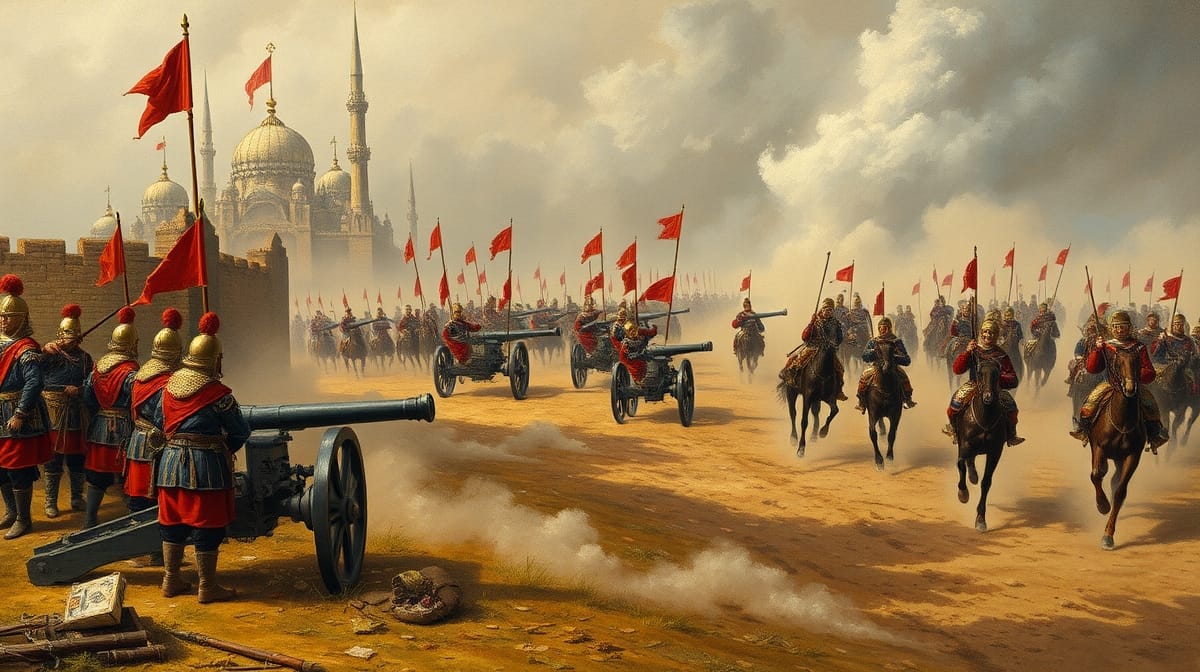
Shah Ismail fought bravely, but he was wounded and withdrew from the battlefield. The Ottomans won a major victory. Selim I then entered Tabriz. However, supply problems and the exhaustion of the Ottoman army prevented the campaign from advancing further.
The Entry into Tabriz and the Limits of the Campaign
The capture of Tabriz carried great symbolic value. The city was one of the centers of Safavid power. The Ottoman army obtained plunder and artisans there. Yet the aim of permanent occupation was not realized.
The main reason for this was the difficulty faced by the Ottoman army under the conditions of a long campaign. Soldiers were troubled by supply problems in the eastern geography. The approaching winter conditions also made further advance difficult. For this reason, Selim limited the victory to a strategic message.
The Beginning of the Ottoman-Safavid Struggle
The Battle of Chaldiran became the most important turning point that effectively began the Ottoman-Safavid struggle. There had already been tensions and rebellions. Yet Chaldiran brought the two states directly face to face. For this reason, the battle is regarded as the beginning of a long-term eastern policy.
After the battle, the Ottomans established stronger control in Eastern Anatolia. Erzincan, Bayburt, and the surrounding region became more open to Ottoman influence. In addition, the Dulkadirid issue was soon resolved in the Ottomans’ favor. Thus eastern and southeastern strategy entered a new phase.
The Safavids, meanwhile, suffered a major loss of prestige. Shah Ismail’s image of invincibility was shaken. This had a deep impact on Safavid political culture. Nevertheless, the Safavid State did not collapse and preserved its Iran-centered power.
The Transformation of the Sectarian Boundary into Politics
After Chaldiran, Ottoman-Safavid rivalry became more visible through sectarian language. The Ottomans placed stronger emphasis on Sunni identity within state ideology. The Safavids, meanwhile, consolidated Shiite identity within an Iran-centered state order. Thus the political boundary also acquired a sectarian meaning over time.
This development affected the balance of power in the Islamic world. The Ottomans dealt with the Habsburgs in the west, the Mamluks in the south, and the Safavids in the east. Selim’s campaigns against the Mamluks, in particular, became possible after eastern security had been secured. This framework reveals the great strategic transformation in Ottoman history.
Consequences and Long-Term Effects
The victory at Chaldiran gave the Ottomans military and political superiority. Yet this superiority did not completely end the Safavid question. On the contrary, a lasting pattern of rivalry emerged between the two states. For this reason, the effects of the battle extended into the 16th and 17th centuries.
The Ottoman state established a more cautious administration on the eastern frontier. Tribes, beys, and frontier fortresses were assessed within a new balance. The central administration also pursued stricter policies toward heterodox communities in Anatolia. This situation produced long-term consequences for the social structure.
For the Safavids, the battle revealed the need for military modernization. Their cavalry-heavy structure proved inadequate against Ottoman artillery and Janissaries. Nevertheless, the Safavids sought to strengthen their state order in later periods. The reforms of Shah Abbas’s reign may be regarded as a later reflection of this need.
Strategic Gains for the Ottoman State
After Chaldiran, the Ottomans gained psychological superiority in the east. Central authority in Anatolia also became stronger. This development influenced the state’s later directions of conquest. Security on the eastern front was especially important for the southern campaigns.
The Ottoman military structure displayed the strength of its classical age in this battle. Cannons, muskets, and a disciplined infantry system proved decisive. In this respect, Chaldiran demonstrated the importance of firearms in the Islamic world. For the dynamics of Ottoman expansion, the reasons for the rapid growth of the Ottoman Empire are also complementary.
A Political and Spiritual Breaking Point for the Safavids
On the Safavid side, the most important consequence was the shattering of Shah Ismail’s image of authority. The ruler, who had previously carried an aura of mystical invincibility, suffered a severe blow at Chaldiran. This situation created a new realism among Safavid ruling circles. Yet the foundations of the state in Iran continued to exist.
On the other hand, the battle did not bring a definitive peace between the Ottomans and the Safavids. Both sides continued their struggle for influence in the frontier regions. The Treaty of Amasya established a temporary balance in 1555. But the rivalry passed through different stages until the Treaty of Zuhab.
Conclusion
In conclusion, the Battle of Chaldiran was a major turning point that began the Ottoman-Safavid struggle and affected the fate of Eastern Anatolia. The battle combined sectarian rivalry with the question of political borders. It also demonstrated the superiority of the Ottoman military order. For this reason, the Battle of Chaldiran is regarded as one of the most decisive eastern campaigns in Ottoman history.
Sources
- Halil İnalcık, Devlet-i Aliyye.
- İsmail Hakkı Uzunçarşılı, Osmanlı Tarihi.
- Caroline Finkel, Osman’s Dream.
- TDV Encyclopedia of Islam, entry on the Battle of Chaldiran.
- Halil İnalcık and Donald Quataert, An Economic and Social History of the Ottoman Empire.