The Caliphate passed to the Ottomans as a result of the 1516–1517 Egyptian campaign, the end of Mamluk rule, the transfer to Istanbul of the claim to protection over the Hejaz, and Selim I’s strengthening of his position as a political-religious leader in the Islamic world; however, this transfer should be understood less as a single ceremony of succession than as a long-term process of legitimacy.
Contents
- How Did the Caliphate Pass to the Ottomans?
- Selim I and the Egyptian Campaign
- Historical Debates and the Question of Legitimacy
- The Ottoman State Structure and Religious Authority
- Consequences and Effects on the Modern Period
- Conclusion
How Did the Caliphate Pass to the Ottomans?
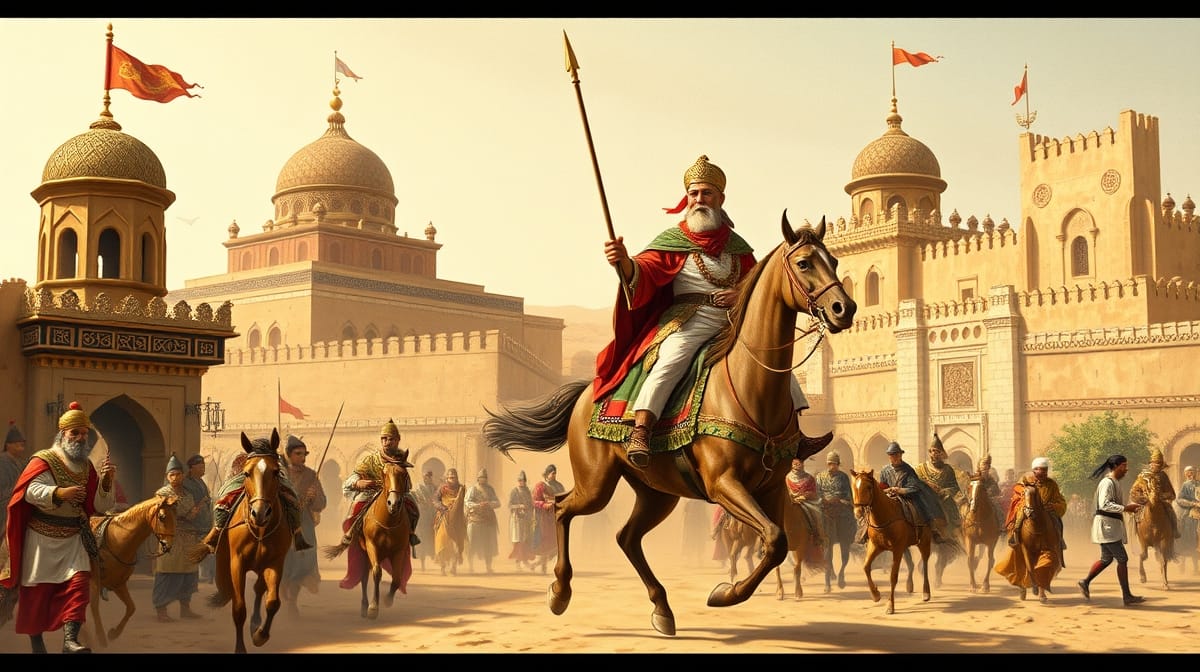
In Ottoman history, the question of the Caliphate is often summarized with the sentence, “Selim I conquered Egypt, and the last Abbasid caliph transferred the title to him”; yet from the perspective of historiography, the picture is more complex than this. With the capture of Cairo in 1517, the Mamluk Sultanate collapsed, the political protection of the symbolic caliph descended from the Abbasid line came to an end, and the allegiance of the Hejaz and the guardianship of the holy cities significantly increased the prestige of the Ottoman sultan.
The Abbasid caliphs who resided in Cairo during the Mamluk period represented an office with limited political power but high religious-symbolic value after the Abbasid Caliphate in Baghdad was destroyed by the Mongols in 1258. In practice, these caliphs lived in the shadow of the Mamluk sultans; they were important in terms of the language of the khutba, decrees, and legitimacy. The Ottoman conquest of Egypt meant that this symbolic legacy was redirected toward a new imperial center.
According to Halil İnalcık, in Ottoman political thought the sultan was not merely a dynastic ruler, but a figure approaching the type of universal sovereign who combined the ideals of gaza, law, justice, and the protection of Islam. For this reason, the claim to the Caliphate was not a simple title suddenly invented after 1517, but developed as a powerful dimension of Ottoman rulership ideology that opened onto the Islamic world.
Balance of Leadership in the Islamic World Before 1517
Even before the Egyptian campaign, the Ottomans were an important power in the Islamic world. The conquest of Istanbul in 1453 made Mehmed the Conqueror not only the master of the Eastern Roman legacy, but also a great ruler in the Muslim world. The conquest of Istanbul expanded the Ottoman political claim across the Mediterranean and the Balkans, while also strengthening the centralized state structure in Anatolia and Rumelia.
Nevertheless, in the late fifteenth century there was no single undisputed center of leadership in the Islamic world. The Mamluks possessed religious prestige through their influence over Cairo, Mecca, and Medina; the Safavids, meanwhile, established a Shiite empire in Iran and intensified Ottoman-Safavid rivalry. In this environment, the Ottomans’ turn eastward was not merely a matter of territorial expansion, but also a question of leadership over the Sunni political order.
Selim I and the Egyptian Campaign
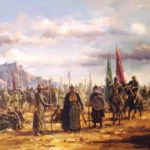
Selim I’s victories at Marj Dabiq in 1516 and Ridaniya in 1517 were among the strategic moves in Ottoman history that produced the fastest results. The defeat of the Mamluk army at Marj Dabiq opened the gates of Syria; after Ridaniya, Cairo came under Ottoman rule. This process enabled the empire to make a major leap toward the east and south during the Ottoman period of expansion.
After the conquest, Egypt, Syria, Palestine, and the regions connected with the Hejaz were brought under Ottoman administration. The Sharif of Mecca’s recognition of Ottoman rule and the transfer of the guardianship of the holy places to the Ottoman sultan were among the most important developments strengthening perceptions of the Caliphate. This was because the protection of Mecca and Medina signified not only military authority, but also spiritual authority in the Islamic world.
The Abbasid Legacy in the Claim to the Caliphate
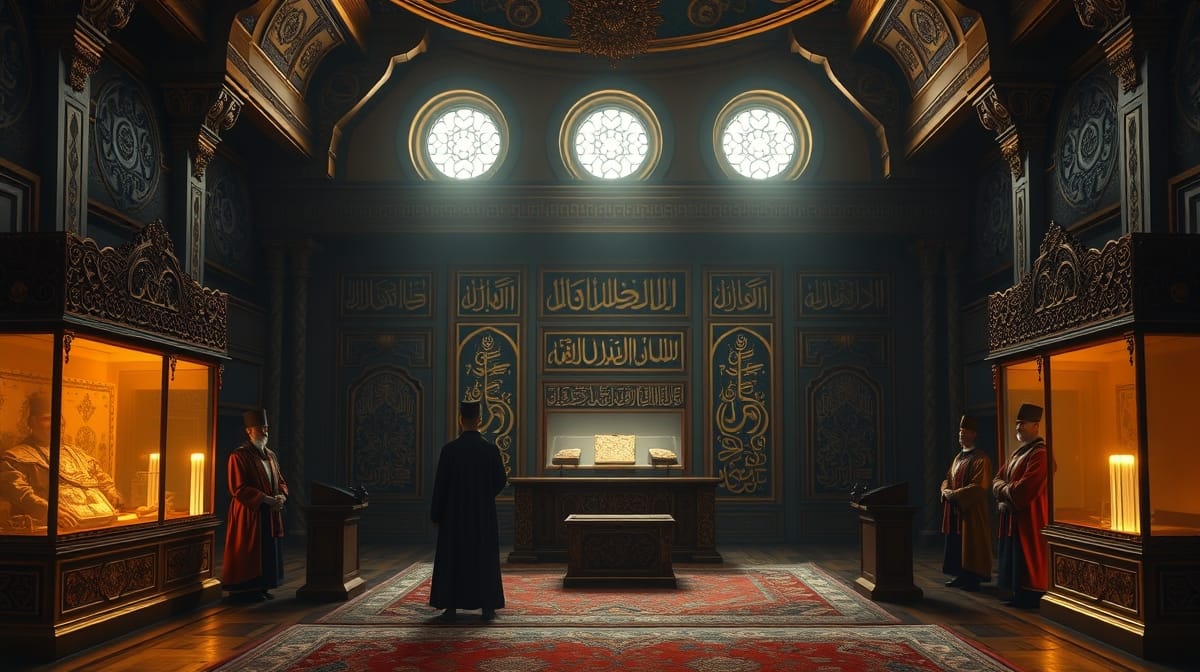
According to tradition, the last Abbasid caliph in Cairo, al-Mutawakkil III, transferred certain symbolic rights to Selim I. Modern historiography, however, treats this account with caution. As seen in the works of İsmail Hakkı Uzunçarşılı and the relevant entries in the TDV Encyclopedia of Islam, contemporary sources contain no detailed and definitive record of a “ceremony of transfer.” For this reason, the passage of the Caliphate is interpreted not merely as a legal ceremony, but as a combination of conquest, guardianship, and political legitimacy.
What matters here is that after 1517, the Ottoman sultan became the most powerful Sunni ruler in the Islamic world. The presence of a caliph descended from the Abbasid line made it possible to establish a symbolic connection with the past; yet the real foundation of Ottoman authority was military victory, administrative capacity, influence over the Hejaz, and the power to govern large Muslim populations.
The Caliphate and the Sacred Relics
The transfer of the sacred relics to Istanbul is also one of the important parts of this narrative. The relics preserved in Topkapi Palace strengthened the perception of the sultan as the protector of Islam. Yet the existence of the relics alone does not explain political authority; the decisive factor was the Ottomans’ establishment of a vast imperial mechanism that secured the holy cities and regulated the pilgrimage routes.
For this reason, the title used by the Ottoman sultans, “Hadim al-Haramayn,” meaning servant of Mecca and Medina, is especially important. This expression signified not only a claim to superiority, but also a responsibility of service and protection. In the Ottoman language of legitimacy, power, justice, and religious service were presented together.
Historical Debates and the Question of Legitimacy
The greatest debate over the Caliphate concerns whether there was an explicit, documented, and universally accepted transfer of office in 1517. The traditional narrative says that the last Abbasid caliph transferred the title to Selim I. However, the details of this event are limited in contemporary Ottoman and Arab sources. For this reason, many historians state that the transfer narrative was a political memory that gained strength in later centuries.
Caroline Finkel emphasizes that the Ottoman imperial idea did not rest solely on religious titles, but was nourished by dynastic continuity, military success, the ideal of justice, the tax system, and urban administration. Suraiya Faroqhi likewise shows that the Ottoman central order should be understood through everyday administration, trade, waqfs, and its relations with local societies. Within this framework, the Caliphate was not the state’s sole source of legitimacy, but part of a broader repertoire of legitimacy.
The authority of the Ottoman sultan in the Islamic world was strengthened not merely by the transfer of a title, but by the protection of the holy places, the security of pilgrimage routes, the defense of the Sunni order, and the continuity of imperial administration.
A Title or a Process?
From a historical perspective, the soundest approach is to see the issue as a “process” rather than a “single ceremony.” The year 1517 was a turning point; however, the way the Ottomans used this legacy changed over time. In the sixteenth century, the sultan’s power was expressed more through conquest, law, and sultanate, while in the eighteenth and nineteenth centuries the Caliphate became more visible as a diplomatic and political instrument.
Especially in relations with Russia and the European states, the Ottoman sultan’s spiritual influence over Muslim communities gained importance. The greater emphasis placed on the Ottoman claim to the Caliphate in foreign policy after the Treaty of Küçük Kaynarca is one typical example of this transformation. This issue is also important in the context of the Ottoman-Russian wars and Black Sea politics.
The Ottoman State Structure and Religious Authority
Religious authority in the Ottoman state was not a simple structure concentrated solely in the person of the sultan. The Sheikh al-Islam, the ulema, judges, madrasas, waqfs, and the central bureaucracy were the main elements of this sphere. The Imperial Council and the palace environment, as centers where political decisions were produced, operated in close connection with the language of religious legitimacy.
This structure became even more institutionalized during the reign of Suleiman the Magnificent. The fatwas of sheikh al-Islams such as Ebussuud Efendi show how the relationship between law and sharia was regulated in state administration. The reign of Suleiman the Magnificent was the period in which the classical model matured, with the sultan perceived both as a lawgiver and as the protector of the Islamic order.
How Was the Caliphate Used in Ottoman Rule?
The Caliphate was not a concept used with the same intensity in every period of Ottoman rule. In the sixteenth century, the sultan’s identities as “sultan,” “khan,” “padishah,” and “ghazi” were more visible, while the emphasis on the Caliphate became especially pronounced in periods when external threats increased. This shows that Ottoman political language could adapt according to needs.
Because the Ottoman sultans ruled different religious and ethnic communities across vast territories, they could not rely only on a language of leadership addressed to Muslims. The legal status of non-Muslim subjects, the provincial order, the tax system, and relations with local elites were integral parts of imperial politics. For this reason, religious authority proceeded together with administrative pragmatism.
Consequences and Effects on the Modern Period
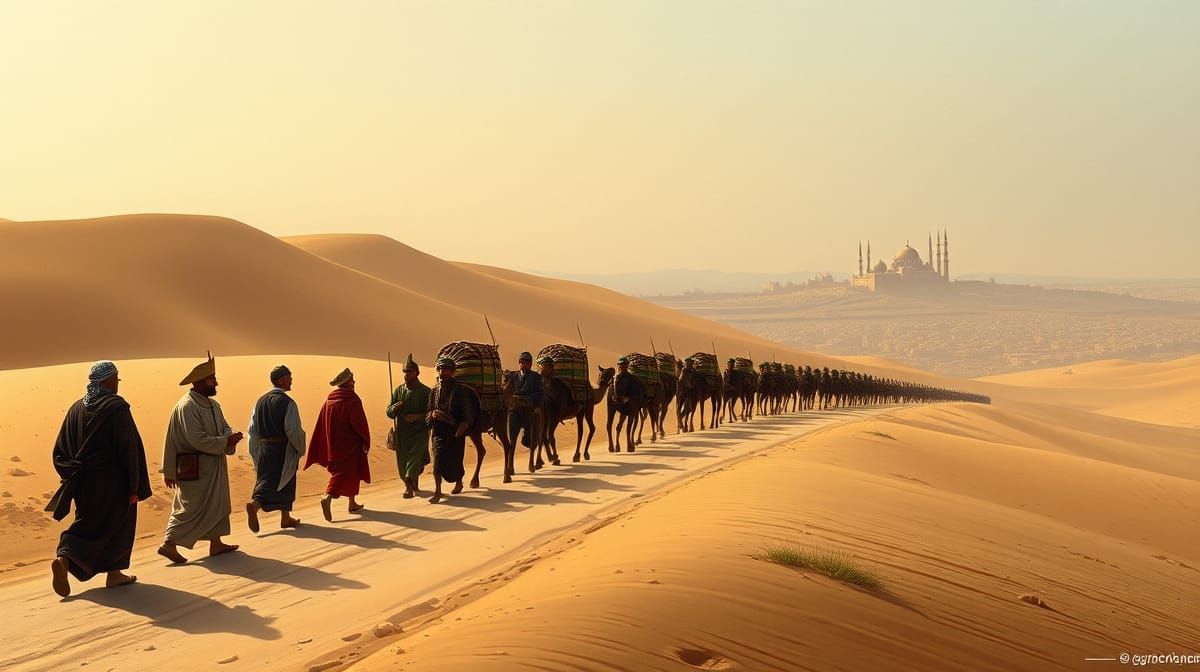
After 1517, the Ottomans ceased to be merely a state centered on Anatolia and the Balkans and became a great Islamic empire ruling the Arab lands, the holy cities, and important centers of the Eastern Mediterranean. This transformation expanded the fiscal, military, and administrative scale of the state. Egypt’s wealth, Syria’s strategic position, and the spiritual value of the Hejaz broadened the imperial vision.
Another result of this development was that the Ottoman sultans carried a more inclusive claim to leadership in the Islamic world. The leadership of the Ottoman sultans in the Islamic world became visible not only through titles, but also through the organization of the pilgrimage, waqf services, urban security, and diplomatic representation.
In the nineteenth century, the Caliphate acquired a new meaning under the pressure of imperial disintegration. During the reign of Abdulhamid II, caliphal politics came to the fore as a way of building ties with Muslim communities and producing spiritual solidarity in the face of European colonialism. As emphasized in the works of Kemal Karpat, in the age of modernization the Caliphate became not only a religious concept, but also a matter of international politics and identity.
In the final stage, the crises of the Ottoman State in the early twentieth century also affected this institution. The sultanate was abolished in 1922, and the Caliphate was ended by the Grand National Assembly of Turkey in 1924. This process should be evaluated in the context of the fall of the Ottoman State and the foundation of modern Turkey.
Lasting Impact
When looking at the issue today, it is necessary to avoid two extremes. The first is to assume that everything in 1517 was resolved indisputably and through a single ceremony. The second is to regard the Ottomans’ claim to leadership in the Islamic world as entirely invented after the fact. The historical reality lies between these two approaches: conquest, guardianship of the holy places, the Abbasid legacy, and political needs were all influential together.
Conclusion
The Caliphate passed to the Ottomans through a process opened by the conquest of Egypt, strengthened by the guardianship of the Hejaz, and gaining increasing diplomatic-political significance in later centuries; therefore, the issue should be understood not merely through a symbolic transfer ceremony attributed to Selim I, but together with the long-term Ottoman imperial search for legitimacy.
Sources
- Halil İnalcık, Devlet-i Aliyye.
- İsmail Hakkı Uzunçarşılı, Ottoman History.
- Caroline Finkel, Osman’s Dream.
- Suraiya Faroqhi, The Ottoman Empire and the World Around It.
- TDV Encyclopedia of Islam, Caliphate entry.