Mimar Sinan’s works brought Ottoman architecture to its peak through dome technique, spatial balance, urban aesthetics, and the külliye concept, establishing an enduring classical style from Istanbul to Edirne.
Quick Summary
- Sinan matured the classical style in Ottoman architecture.
- The Süleymaniye is the great urban külliye of his journeyman period.
- The Selimiye is the culmination of the search for the central dome.
- Külliyes united worship and social aid within the same plan.
- Mimar Sinan’s works deeply influenced later architects.
Contents
- Sinan’s Historical Position and the Classical Style
- Mimar Sinan’s Works and the Dome Revolution
- The Şehzade, Süleymaniye, and Selimiye Trio
- Külliye, City, and Waqf Order
- The Balance of Technique, Aesthetics, and Light
- Enduring Legacy and Conclusion
Sinan’s Historical Position and the Classical Style
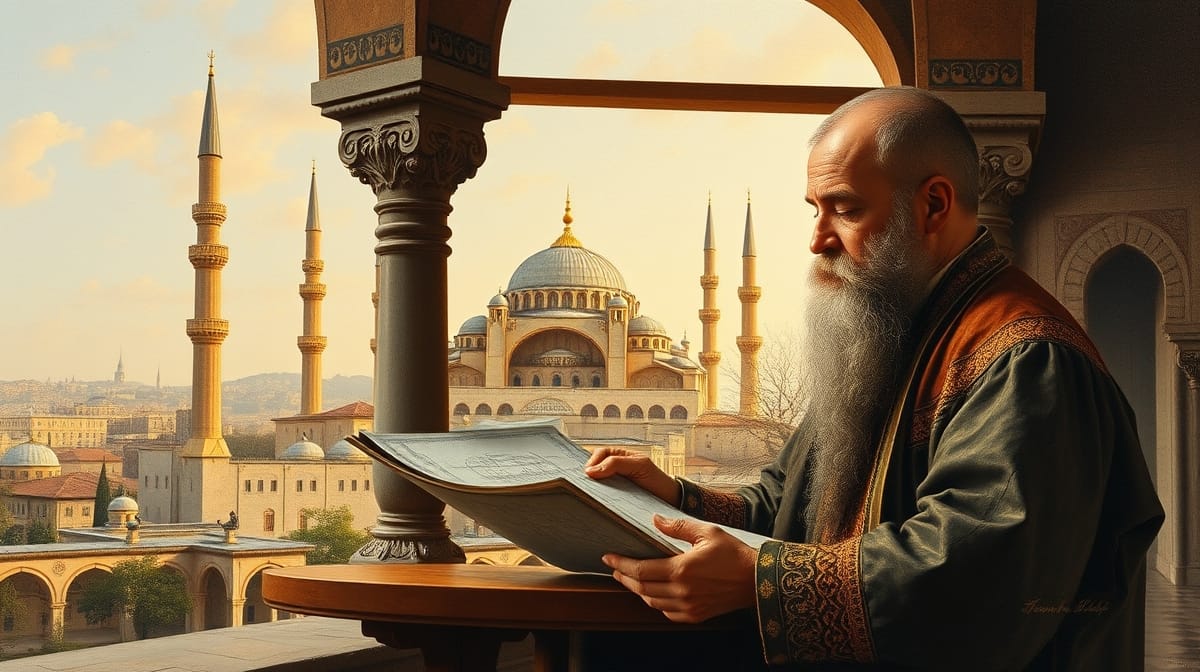
Mimar Sinan was not merely the most famous architect of Ottoman architecture. He was also a great artist who made the empire’s political power visible through the language of stone, dome, and space. According to the sources, he rose to the post of chief imperial architect in the 16th century. Thus, he shaped the architectural horizon of the reigns of Suleiman the Magnificent, Selim II, and Murad III.
Halil İnalcık’s assessments of the Ottoman classical age show that state order and artistic production matured together in this period. For this reason, Sinan’s architecture is not simply a collection of beautiful buildings. He united the power of central administration, the social function of the waqf system, and the rhythm of urban life within the same structure.
The fact that Istanbul gained a new identity as a capital after 1453 was especially decisive. To understand this transformation, it is also important to consider the transformative impact of the conquest of Istanbul on world history. Sinan did not set the Byzantine legacy against Ottoman taste. On the contrary, he reinterpreted them within a new classical language.
For this reason, Mimar Sinan’s works are associated with a narrative of “peak achievement.” Yet this peak did not emerge through a sudden rupture. The traditions of Bursa, Edirne, and early Ottoman Istanbul left Sinan a powerful legacy. Sinan carried this legacy further through proportion, balance, and bold engineering.
Mimar Sinan’s Works and the Dome Revolution
When Mimar Sinan’s works are mentioned, the dome is the first thing that comes to mind. Yet Sinan’s greatness does not lie merely in building larger domes. His real achievement was placing the dome at the center of a broad, luminous, and balanced interior space.
Earlier Ottoman mosques had used multi-domed or semi-domed arrangements. Sinan studied these systems carefully. He then organized supporting piers, arches, and buttresses within a more harmonious system. As a result, the prayer space appeared more spacious.
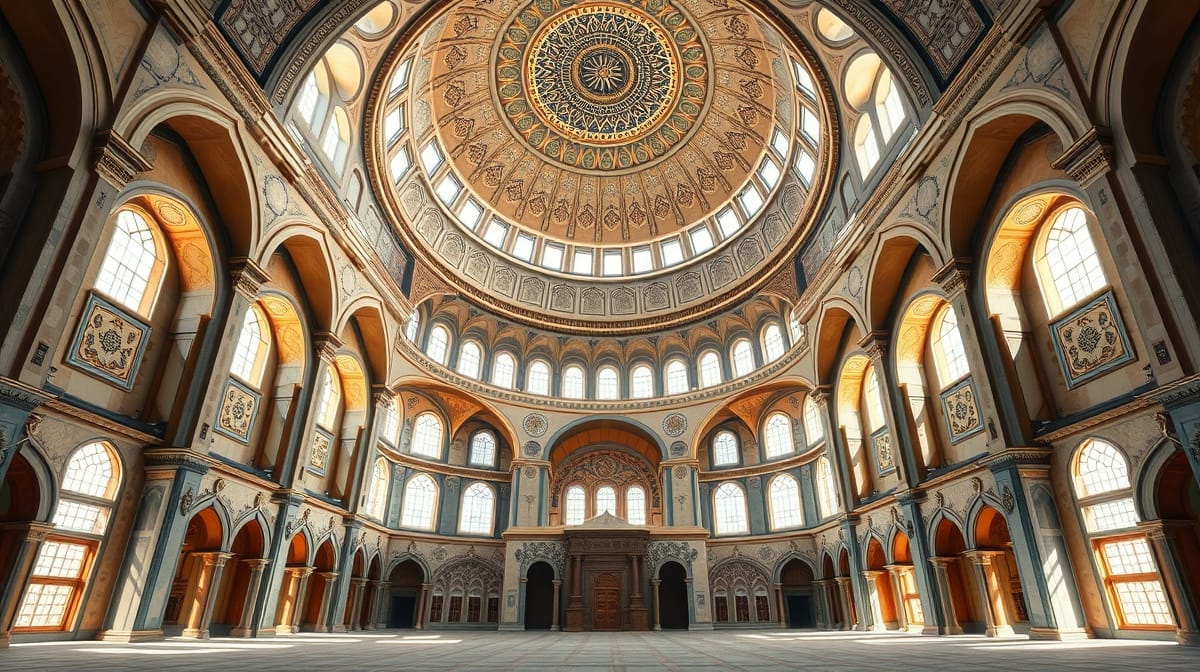
Moreover, in Sinan’s architecture, the dome is not merely a technical covering. The dome functions like a symbolic center opening toward the heavens. Light strengthens this center through rows of windows and arch intervals. For this reason, when visitors enter the building, they sense not the weight of stone but the openness of space.
Why do Mimar Sinan’s works appear more balanced?
Sinan does not make the elements of a building compete with one another. Dome, minaret, courtyard, portico, and interior rise within the same rhythm. In addition, ornamentation never overwhelms the main mass. Iznik tiles, calligraphic bands, and marble craftsmanship support the architectural order.
This balance reflects the mature taste of Ottoman art. From the outside, the building rises in a stepped composition. Inside, the central area appears calm and unified. As a result, Sinan succeeded in combining monumental scale with human perception.
The Şehzade, Süleymaniye, and Selimiye Trio
The classification of Sinan’s development into apprenticeship, journeymanship, and mastery is very well known. In this tradition, the Şehzade Mosque is regarded as his apprentice work, the Süleymaniye Mosque as his journeyman work, and the Selimiye Mosque as his masterpiece. These three buildings show the stages of architectural exploration within Mimar Sinan’s works.
The Şehzade Mosque and the first great balance among Mimar Sinan’s works
The Şehzade Mosque was built in Istanbul in the second half of the 1540s. It was commissioned in the name of Şehzade Mehmed, the son of Suleiman the Magnificent. The building attracts attention with its balanced plan, in which four semi-domes support the main dome.
In this mosque, Sinan powerfully expressed the idea of central space. The dome system, balanced from every direction, created a unified volume inside. At the same time, however, the building was part of a külliye. The madrasa, imaret, tomb, and other units united social life with worship.
Süleymaniye: A journeyman work and imperial architecture
The Süleymaniye Mosque was built between 1550 and 1557. It stands at the center of a great külliye that reflects the political and cultural ambitions of the period. The entries on Sinan and the Süleymaniye in the TDV Encyclopedia of Islam emphasize the building’s importance in both architectural and institutional terms.
The Süleymaniye is not merely a mosque. With its hospital, madrasas, imaret, bathhouse, library, and tombs, it establishes a grand urban order. In this respect, it is a powerful example of the relationship between mosques, madrasas, and social aid in the Ottoman waqf system.
On the other hand, the Süleymaniye’s position overlooking the Golden Horn was no coincidence. Sinan consciously placed the building within Istanbul’s skyline. The mosque’s stepped mass harmonizes with the city’s hills. Thus, architecture and topography meet within the same composition.
The Süleymaniye is one of the most effective buildings in Ottoman classical architecture in expressing the ideas of power, serenity, and order at the same time.
Selimiye: A masterpiece and the triumph of central space
The Selimiye Mosque was built in Edirne in the name of Selim II. It is generally dated to the years 1568-1575. In this building, Sinan carried the search for the central dome to its boldest level. The main dome rests on eight supporting piers.
In the Selimiye, the interior gains an extraordinary openness. The piers appear less dominant. The dome gathers the entire building into a single center. For this reason, the Selimiye is regarded as the brightest example of technical daring among Mimar Sinan’s works.
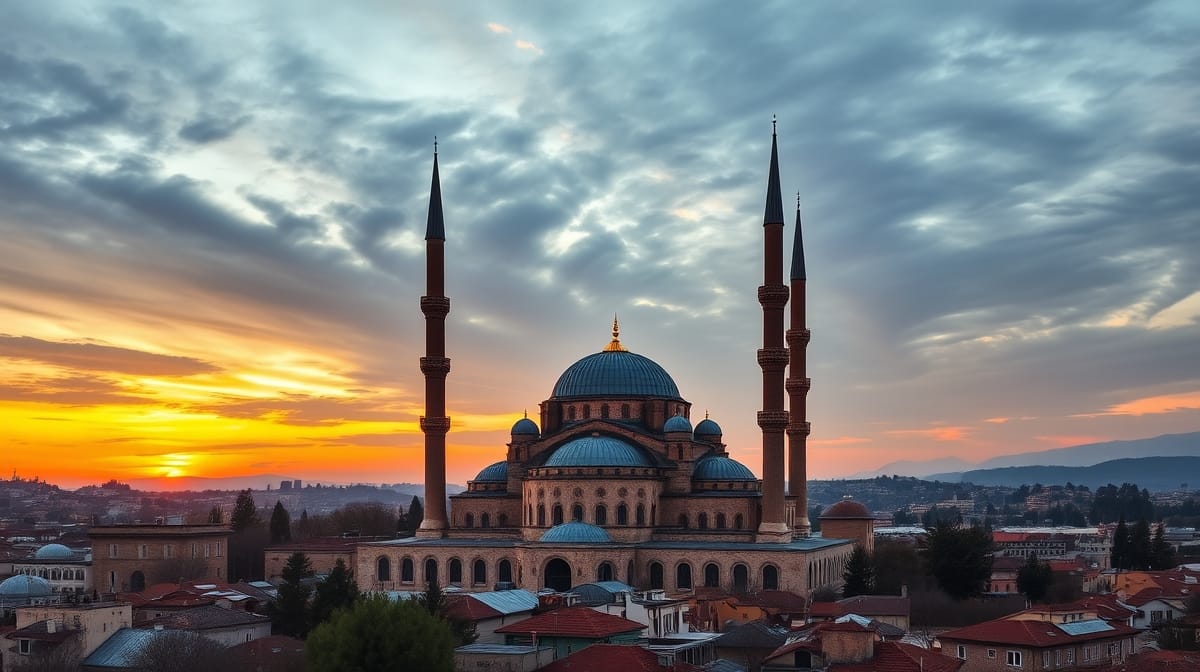
In addition, the minarets form a slender and lofty frame at the corners of the building. This arrangement prevents the mass from appearing heavy. In the Edirne skyline especially, the Selimiye is a powerful focal point even from a great distance.
Külliye, City, and Waqf Order
To understand Sinan’s architecture, it is not enough to look only at mosques. Mimar Sinan’s works form a broad corpus that includes bridges, bathhouses, madrasas, tombs, caravanserais, waterways, and palace buildings. This variety reveals the needs of Ottoman urban life.
Most major buildings in the Ottoman world were supported by waqfs. Waqf revenues sustained the mosque’s lighting, the imaret’s meals, and the madrasa’s education. As Suraiya Faroqhi emphasizes in her studies of city and society, Ottoman cities remained vibrant through these institutions.
In addition, the külliye system united architecture with social aid. The mosque became the center of worship. The madrasa produced knowledge. The imaret provided food for the poor. The bathhouse supplied cleanliness and a source of income. In this way, the building complex established a continuously functioning system within the city.
This system was also connected to the state’s understanding of governance. Just as the role of the Imperial Council in Ottoman state administration expresses the idea of central order, Sinan’s külliyes made the idea of order visible in the city. Here, architecture became the shared language of administration and society.
The Balance of Technique, Aesthetics, and Light
Mimar Sinan’s works combine technical mastery with aesthetic simplicity. Thanks to his military background, Sinan knew terrain, materials, and load-bearing systems well. Span in bridges, gradient in waterways, and structural balance in mosques all reveal his engineering intelligence.
Yet Sinan’s success cannot be explained by calculation alone. He carefully used the effect of light on space. Rows of windows lightened the dome drum. Light entering from the side walls softened the interior. Thus, the prayer space acquired a calm atmosphere.
In the Süleymaniye and Selimiye especially, light determines the spirit of the building. Shadow and brightness do not clash harshly. On the contrary, they make the central space beneath the dome more legible. This choice accords with the idea of measured splendor in Ottoman aesthetics.
Why does ornamentation not overshadow the architecture?
Tilework, calligraphy, and stone craftsmanship are powerful in Sinan’s buildings. Yet ornamentation does not suppress the main line of the architecture. Proportion, balance, and rhythm always come first. For this reason, the building preserves its serenity while displaying its richness.
Writing is also an important element in the Ottoman decorative tradition. On this subject, the types of script used for decorative purposes in the Ottoman period help explain architectural ornamentation. In Sinan’s spaces, calligraphy often creates a meaningful emphasis around the dome and mihrab.
Enduring Legacy and Conclusion
Mimar Sinan’s works established a powerful standard for Ottoman architects after his own time. In the great mosques of the 17th century, the influence of Sinan’s dome system, courtyard concept, and understanding of the urban skyline continued. Nevertheless, no building could endure if it remained merely at the level of imitation.
Sinan’s lasting legacy comes from his holistic conception of architecture. He did not treat the mosque in isolation. He considered the building together with the city, the waqf, the flow of people, and the representational language of the state. For this reason, his works express a civilizational order beyond stone.
Caroline Finkel’s general framework of Ottoman history clearly reveals the imperial confidence of the 16th century. Sinan translated this confidence into architectural language. Yet he did not do so through noisy display. On the contrary, he achieved it through measured splendor and mathematical balance.
In conclusion, Mimar Sinan’s works brought Ottoman architecture to its peak through the dome, light, urban order, and the külliye concept. They made imperial dignity visible in the Süleymaniye, technical mastery in the Selimiye, and social order in the külliyes. This legacy continues to live on as one of the strongest memories of Ottoman art.
Sources
- TDV Encyclopedia of Islam, Mimar Sinan entry.
- Halil İnalcık, Devlet-i Aliyye.
- İsmail Hakkı Uzunçarşılı, Ottoman History.
- Caroline Finkel, Osman’s Dream.
- Suraiya Faroqhi, Subjects of the Sultan.