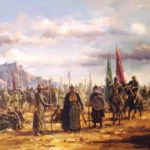
Nizam-i Cedid was a reform program introduced under Selim III that aimed to transform the Ottoman army through European-style training, discipline, financial resources, and technical innovations; although its success remained limited, it exposed the problems of the Janissary order, accelerated the search for stronger central authority, and paved the way for later military modernization.
Quick Summary
- Selim III was politically determined to renew the army along European lines.
- The new units were trained with regular modern drill and discipline.
- The Irad-i Cedid treasury financed the reforms with regular revenues.
- The Janissaries and interest groups fiercely opposed change.
- The 1807 revolt halted the program, but could not erase its lasting impact.
Contents
- What Is the Nizam-i Cedid?
- The Setting in Which the Reform Emerged
- The Establishment of the New Order in the Army
- Change in Finance and Administration
- Resistance and the Kabakçı Revolt
- Results and Historical Legacy
What Is the Nizam-i Cedid?
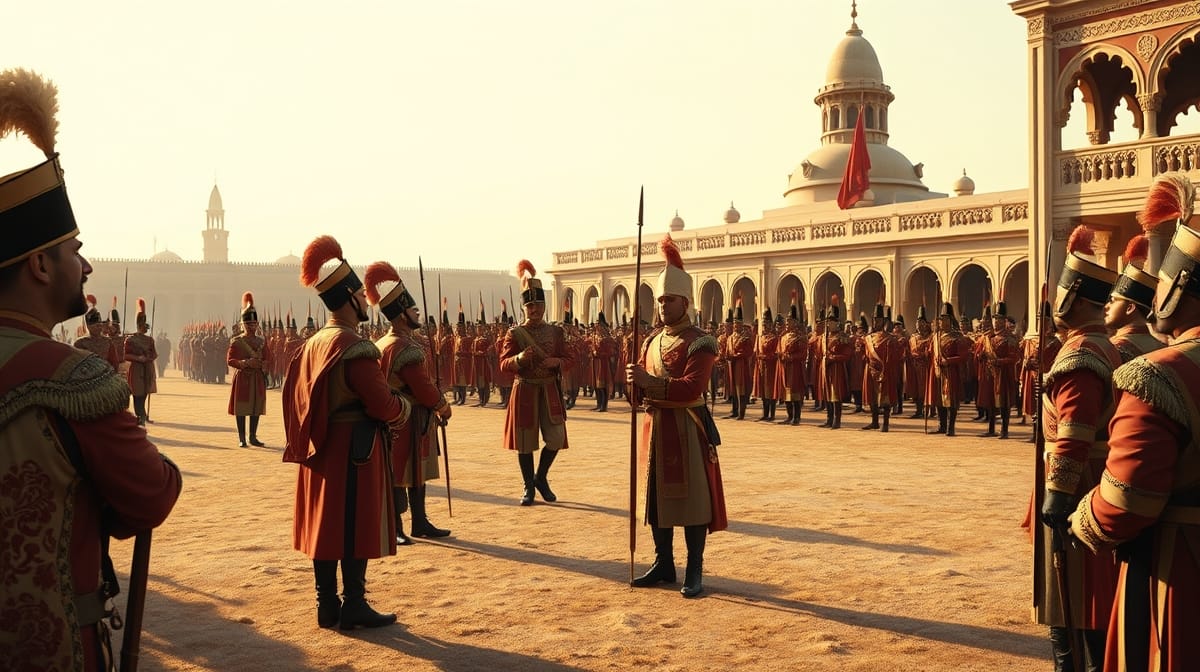
Literally, this term means “new order.” In Ottoman history, the expression refers especially to the military and administrative reforms of Selim III. Yet the concept was not merely a new infantry corps. It was also a broader quest for transformation in finance, diplomacy, education, and central authority.
When Selim III ascended the throne in 1789, the state was under the pressure of prolonged wars. Defeats on the Russian and Austrian fronts clearly showed that the classical military structure had weakened. For this reason, the sultan carefully examined the drill systems of European armies. According to Halil İnalcık, the need for reform arose not only from military defeats but also from the deterioration of the state’s fiscal and administrative balance.
This program marked an important threshold in Ottoman modernization. For the first time, the state did not limit itself to correcting the old corps. Instead, it moved toward establishing a separate force trained with new methods. This choice represented a radical break within the general structure of Ottoman military organization.
The main purpose of the Nizam-i Cedid army
The purpose of the Nizam-i Cedid army was to create a European-style regular infantry force. Soldiers were to follow fixed drill hours, disciplinary rules, and standardized weapons training. In addition, artillery support and the use of firearms would become more systematic. Thus, on the battlefield, orderly movement and unified command would replace scattered bravery.
This approach was not an innovation that began only in the barracks. The language of training, uniforms, rank system, and salary arrangements also fell within the scope of change. The drill grounds around Levent and Üsküdar in particular became symbolic centers of the new military order. Members of the old corps, however, saw this structure as a threat to their own positions.
The Setting in Which the Reform Emerged
In the late eighteenth century, the Ottoman Empire had to follow the balance of power in Europe closely. After the Treaty of Küçük Kaynarca, Russian pressure in the Black Sea increased. Moreover, the wars with Austria exposed serious weaknesses in frontier defense. This situation made military renewal an issue that could no longer be postponed.
Meanwhile, the French Revolution spread new ideas across Europe. The Ottoman administration followed the political effects of these ideas with caution. At the same time, however, the organizational strength of the French army also drew attention. To understand this context, the effects of the French Revolution on the Ottoman Empire are of particular importance.
Before making a decision, Selim III requested memoranda from statesmen. These reports discussed the deterioration of the army and possible solutions. İsmail Hakkı Uzunçarşılı notes that these memoranda are valuable for showing the reform mentality of the period. The sultan, after all, was not seeking traditional advice but a program that could be put into practice.
Diplomacy and information gathering
Behind the reform was also a new understanding of diplomacy. The Ottoman Empire moved toward gathering information by opening more permanent missions in European capitals. Embassy reports contained observations on military technology and state administration. These reports also enabled the Ottoman bureaucracy to read the outside world more systematically.
The way decisions were produced at the center also gained importance in this period. The tradition of the imperial council had lost its former weight, but the culture of consultation had not disappeared entirely. To see how the state made decisions, the tradition of the Imperial Council in Ottoman state governance provides useful background. Indeed, the new order was carried forward by a limited reformist cadre within the palace and the bureaucracy.
The Establishment of the New Order in the Army
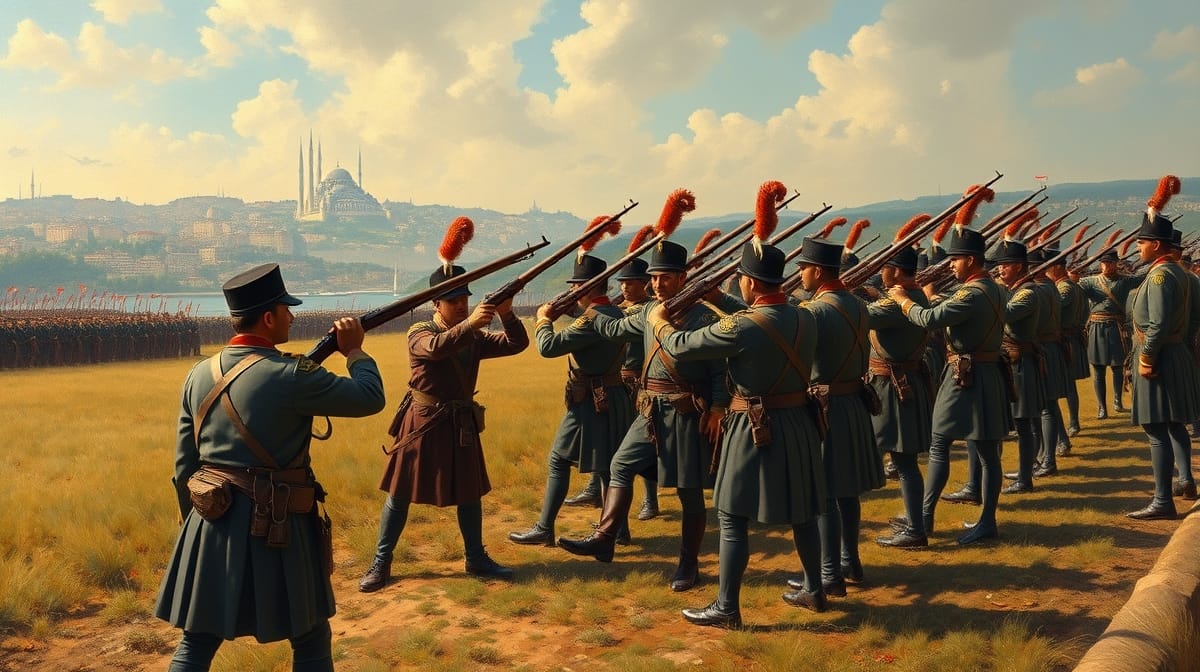
The Nizam-i Cedid initiative turned into concrete institutions in the early 1790s. The new units drilled according to European methods. Officers trained soldiers in formation, fire discipline, and maneuvering ability. This training differed sharply from the habits of the classical corps.
Uniforms and equipment also carried symbolic meaning in the new army. A uniform was not merely an outward appearance. It was also a sign of discipline, showing that soldiers were bound by the same rules. Alongside this, efforts were made to standardize the use of rifles, bayonets, and artillery.
Military educational institutions were also part of this transformation. The engineering school tradition revealed the need for technical knowledge. Cartography, artillery, and fortification knowledge were now regarded as indispensable elements of warfare. For this reason, institutions meaning military school in the Ottoman Empire held a special place in the modernization process.
The difference between the Nizam-i Cedid and the Janissary Corps
The difference between the Nizam-i Cedid and the Janissary Corps was not limited to training. The Janissary Corps had by then become deeply intertwined with broad artisan networks and urban politics. Many of its members did not in fact perform military service, but gained social and economic privileges through corps registration. This situation weakened its fighting power.
The new units, by contrast, were intended to be kept under control through salaries, roll calls, and drill regulations. For this reason, the new soldier was designed as an element directly supervised by the center. Yet this design disturbed the old balance of power. As a result, military reform soon turned into a social and political struggle.
The transformation of an army is not merely the renewal of weapons. Real change begins when discipline, finance, and the order of authority change together.
Change in Finance and Administration
A stable source of revenue was needed to establish the new army. For this reason, a special treasury called the Irad-i Cedid was created. This treasury was intended to cover the salaries, equipment, and training expenses of the reform units. Certain revenue sources were also tied directly to this structure.
Creating financial resources for the Nizam-i Cedid was the most sensitive aspect of the reform. New taxes and revenue arrangements affected local interests. Notables, some bureaucrats, and power holders in the provinces were disturbed by this change. Nevertheless, the center needed regular financing in order to sustain the reform.
Financial resources for the Nizam-i Cedid: Irad-i Cedid
The Irad-i Cedid was not merely a treasury. It was the state’s effort to protect the new military project from the disorder of the old fiscal system. Allocating revenues to a specific goal may be considered a practice close to a modern budgetary understanding. Under the conditions of the time, however, this structure generated broad opposition.
Writing about this period in the following century, Ahmed Cevdet Pasha emphasized the importance of the search for order. In his view, the problem was not limited to a single military corps. The state’s capacity to make decisions, collect revenues, and implement policies had weakened together. For this reason, reform could not remain a narrow barracks issue.
This fiscal order also aimed to strengthen central authority. If the center directly financed the new military force, it would become less dependent on intermediaries in the provinces. This goal, however, conflicted with the interests of the notables. That conflict became one of the basic problems of nineteenth-century reforms as well.
Resistance and the Kabakçı Revolt
Every reform creates its own opposition. Selim III’s program also soon met with strong resistance. The Janissaries believed that the new units would make their own existence unnecessary. Some members of the ulema and urban groups supported this anxiety as well.
The causes of opposition cannot be explained by traditionalism alone. The reform affected salaries, taxes, status, and daily livelihood networks. For this reason, the reaction was multilayered. In Istanbul especially, rumors grew around new uniforms and drill methods.
In 1807, the Kabakçı Mustafa Revolt broke out. The rebels targeted Selim III’s reformist cadre and deposed the sultan. Thus the Nizam-i Cedid came to an institutional end. Yet this ending did not eliminate the idea of reform.
Why did the Nizam-i Cedid face strong opposition?
The Nizam-i Cedid faced strong opposition because it touched the economic networks of the old order. The Janissaries were not only soldiers; they were also influential in the urban economy. Some statesmen also thought that the new treasury would reduce their own influence. For this reason, opposition developed on both ideological and interest-based grounds.
Those who defended the reform, however, knew that military defeat posed an even greater danger. In their view, the state could not withstand European armies with the old corps structure. Relevant assessments in the TDV Encyclopedia of Islam also treat this period as a process in which the dissolution of classical institutions intersected with the search for modern ones.

Results and Historical Legacy
The Nizam-i Cedid may appear to have been a short-lived institution. Yet its impact lasted longer than its own period. Alemdar Mustafa Pasha’s Sekban-i Cedid initiative in 1808 showed that this legacy remained immediately alive. Mahmud II’s abolition of the Janissary Corps in 1826 was also a harsher continuation of the same line.
This process shows that Ottoman modernization began in the military sphere and then spread into administration. The renewal of the army changed the tax system, educational institutions, and center-province relations. Later, the Tanzimat period carried this accumulation into broader legal and administrative reforms. Therefore, democratization movements in Ottoman modernization cannot be considered independently of the history of military reform.
Finally, this program carried both failure and success together. In the short term, it could not overcome opposition or protect Selim III. In the long term, however, it placed the idea of a modern army on the state’s agenda. For this reason, Nizam-i Cedid should be regarded as the first great laboratory of Ottoman military modernization.
Sources
- Halil İnalcık, The Ottoman Empire: The Classical Age.
- İsmail Hakkı Uzunçarşılı, Ottoman History.
- Ahmed Cevdet Pasha, Tarih-i Cevdet.
- Caroline Finkel, Osman’s Dream.
- TDV Encyclopedia of Islam, entry on Nizâm-ı Cedîd.