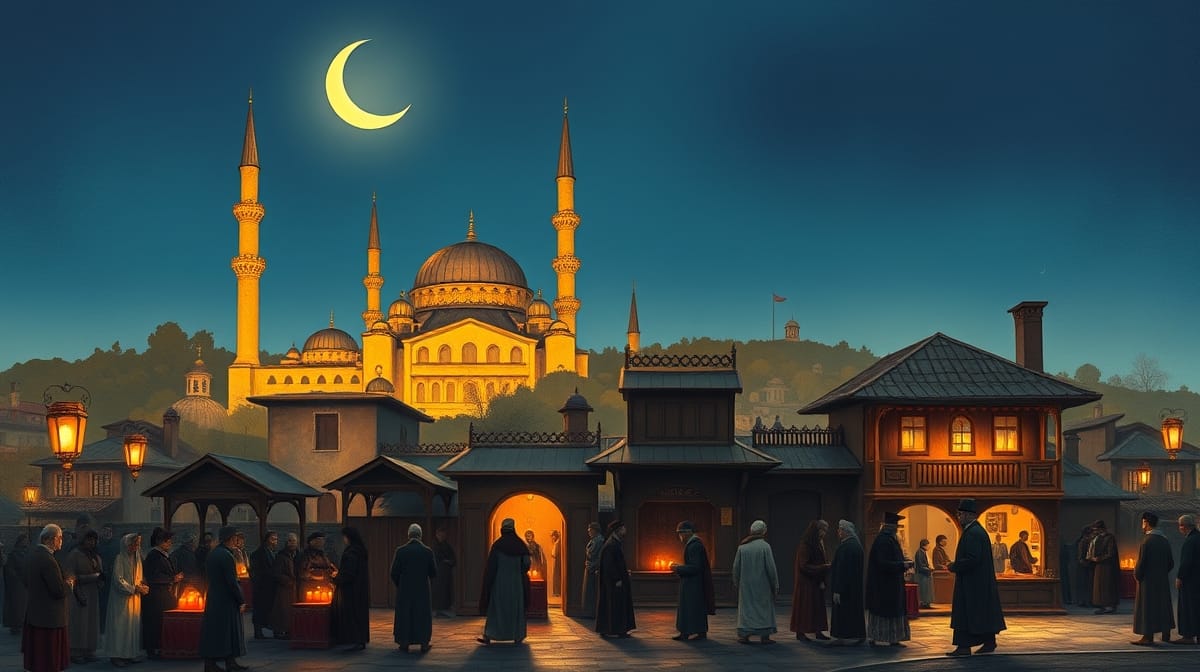
In the Ottoman Empire, Ramadan was a vibrant social season shaped by worship, hospitality, mutual aid, and nighttime entertainments extending from the palace to neighborhood streets.
Quick Summary
- Palace iftars brought state protocol together with a spiritual atmosphere.
- Mahyas gave mosque silhouettes a meaning unique to Ramadan.
- Waqfs regularly set up iftar tables for the poor.
- Neighborhood life came alive with tarawih, sahur, and visits.
- Eid al-Fitr was a time when social harmony became visible.
Contents
- How Did Life Change When Ramadan Arrived in the Ottoman Empire?
- Ramadan in the Palace: Iftar, Protocol, and the Mantle of the Prophet
- Mahyas, Mosques, and the City’s Nighttime Light
- Neighborhood Ramadan Life in the Ottoman Empire
- Charity, Waqfs, and the Culture of Imsak
- Entertainment, the Eve of Eid, and Eid Joy
- Conclusion
How Did Life Change When Ramadan Arrived in the Ottoman Empire?
In Ottoman cities, the month of Ramadan was not merely a religious period. It was also a powerful social season that changed the rhythm of daily life. Bazaars, mosques, mansions, and neighborhoods entered a new order. For this reason, Ramadan in the Ottoman Empire is remembered for urban culture as much as for worship.
Streets that grew quieter during the day became lively after iftar. Coffeehouses, meddah storytelling, orta oyunu performances, and visits animated the night. Even so, the true centers of Ramadan were the mosques. Tarawih prayers and sermons formed the people’s shared meeting spaces.
In her studies of Ottoman urban life, Suraiya Faroqhi emphasizes that neighborhoods, markets, and religious institutions functioned together. Ramadan was one of the most visible moments of this structure. In cities such as Istanbul, Bursa, Edirne, and Damascus in particular, the month was regarded as a season of both worship and social solidarity.
To understand this picture, it is also necessary to look at the structure of Ottoman society. The neighborhood order, guild relations, and waqf institutions were fundamental elements of daily life. On this subject, the article the main features of Ottoman social structure helps explain the social foundations of Ramadan culture.
Ramadan in the Palace: Iftar, Protocol, and the Mantle of the Prophet
In the palace, Ramadan was observed within a careful protocol and an intense religious atmosphere. At Topkapı Palace, iftar tables brought together state dignitaries and palace officials according to a particular order. In gatherings attended by the sultan, hospitality, dignity, and hierarchy appeared together. In this way, Ramadan in the Ottoman Empire also became an important part of palace etiquette.
Palace Etiquette at Ottoman Ramadan Tables
At palace iftars, food was not merely a means of satisfying hunger. It was also a symbolic stage representing the order of the state. As iftar time approached, preparations accelerated, and fasts were broken with the call to prayer. Dates, water, soup, and pilaf were among the foods found on the tables.
In his account of Ottoman palace organization, İsmail Hakkı Uzunçarşılı notes that ceremonies reflected the seriousness of the state. Ramadan ceremonies were the religious counterpart of this understanding. Moreover, the palace kitchen was a major institution that fed not only the dynasty but also large groups of officials.
During Ramadan, the visit to the Mantle of the Prophet held special importance. The sultan, together with leading figures of the state, would visit the sacred relics. This visit strengthened the Ottoman dynasty’s claim to legitimacy in the Islamic world. For this reason, palace Ramadan was a sphere in which religious reverence and political representation came together.
To understand the inner world of the palace, it is also important to know the order of the harem. Ramadan was also a time of worship and charity for dynastic women and the palace household. In this context, the article rules and daily order in Ottoman harem life offers a complementary framework.
Mahyas, Mosques, and the City’s Nighttime Light
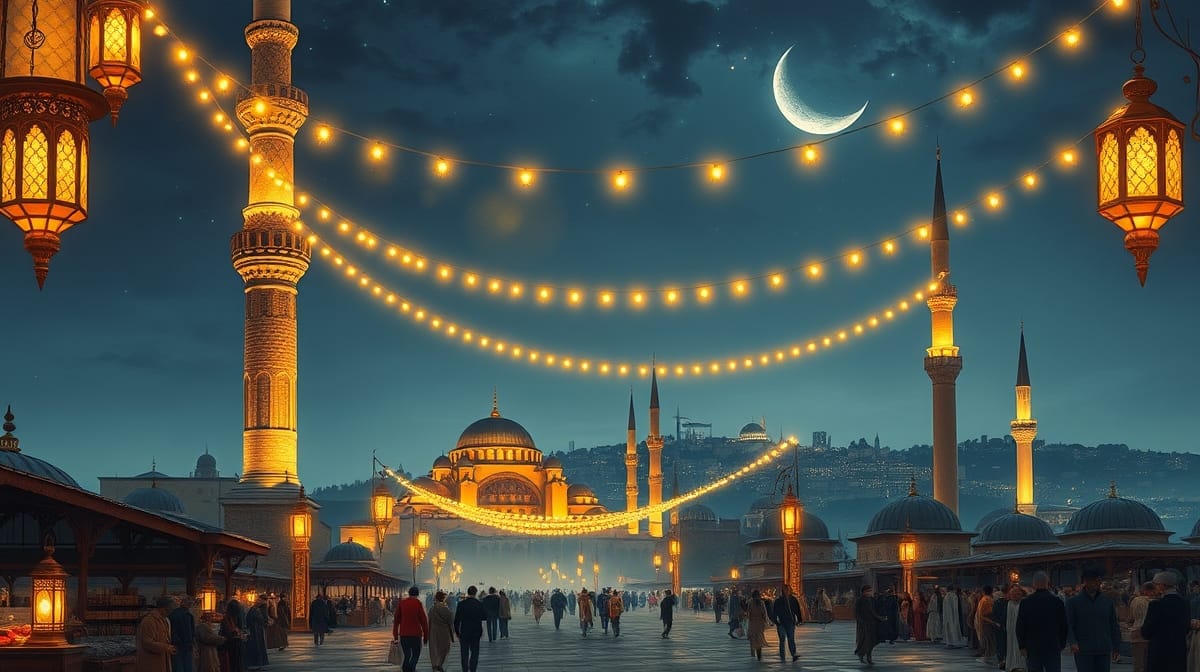
One of the most distinctive traditions associated with Ottoman Ramadan is the mahya. A mahya consisted of religious or moral messages written in oil lamps strung between minarets. The great imperial mosques of Istanbul took on a different identity on Ramadan nights through these illuminated inscriptions. Sultanahmet, Süleymaniye, and Fatih mosques in particular held an important place in the city’s memory.
What Did Ottoman Ramadan Mahyas Convey?
Mahyas often carried short and striking phrases. Expressions such as “Welcome, O noble month of Ramadan” reflected the people’s shared feeling. Some mahyas also conveyed moral messages about goodness, patience, and humility. For this reason, the mahya was not merely decoration but a form of public counsel.
Throughout Ramadan, mosques became centers of worship and learning. Sermons, Qur’an recitations, and tarawih prayers brought the people together in the same space. In addition, lamp lights added a powerful aesthetic quality to the city’s nighttime silhouette. For those interested in calligraphy and decorative culture, the article types of script used for decorative purposes in the Ottoman period also provides useful background.
On Ramadan nights, the mosque was not only a place of worship. It was also the heart of the city, a space of communication, and a shared memory.
Mahya masters combined technical skill with religious sensitivity. The arrangement of the lamps, the legibility of the writing, and the proportions between two minarets all required care. This tradition is regarded as one of the graceful examples of Ottoman urban aesthetics. As a result, mahyas were powerful signs that made the atmosphere of Ottoman Ramadan visible.
Neighborhood Ramadan Life in the Ottoman Empire
In neighborhoods, Ramadan noticeably strengthened relations among neighbors. Iftar preparations were made at home, and food was sent to neighbors. For children, the month was a source of both curiosity and joy. The drummers walking through the streets at sahur time reinforced the neighborhood’s shared sense of time.
Ottoman Ramadan Solidarity at Neighborhood Tables
Neighborhood tables during Ottoman Ramadan were a tradition that reduced the distance between rich and poor. Those with the means opened their doors to guests. In some mansions, even unknown travelers were welcomed for iftar. This practice powerfully demonstrates the understanding of hospitality in the period.
On the other hand, not every neighborhood enjoyed the same level of prosperity. For this reason, waqfs, imarets, and benefactors took on an important role. According to Halil İnalcık, the waqf system was one of the main supports of the Ottoman social order. Ramadan was one of the periods when these networks of aid were felt most intensely.
Children also had a special place within neighborhood culture. Children who fasted for the first time were praised within the family. Sometimes, through the practice known as “tekne orucu,” or a half-day fast, children went through a period of gradual familiarization. Thus Ramadan also became part of the transmission of culture between generations.
These aspects of daily life were also connected to Ottoman parks and social spaces. Post-iftar strolls, recreational outings, and conversations enlivened urban life. On this subject, the article the place of Ottoman parks and social facilities in urban life offers a broader perspective.
Charity, Waqfs, and the Culture of Imsak
During Ramadan, practices of charity, zakat, and fitra became more visible. People tried to look after the poor, orphans, travelers, and debtors. This understanding of aid was not limited to individual generosity. Waqfs gave social assistance a regular and institutional structure.
Imarets, madrasas, and charitable institutions around mosques offered food to those in need. Some waqf deeds included special allocations for Ramadan. In this way, aid went beyond personal intention and became a sustainable service. For this structure, the article the Ottoman waqf system and the tradition of social aid is directly relevant.
Ottoman Ramadan is also remembered for elegant practices that reduced debt and the feeling of embarrassment. The tradition of the zimem defteri, or debt ledger, is an example of this. Benefactors would pay off debts recorded in the ledgers of grocers or tradesmen. Often, the debtor did not know who had helped them.
The culture of imsak also regulated society’s shared time. Sahur drummers, oil lamps, and the activity around mosques supported this order. In periods when modern clocks had not yet become widespread, information about prayer times was announced through religious institutions and urban habits. Thus Ramadan became a powerful calendar that synchronized time across society.
Entertainment, the Eve of Eid, and Eid Joy
Ramadan nights made room for entertainment as well as worship. After iftar and tarawih, meddahs told stories in coffeehouses. Karagöz and Hacivat performances attracted particular interest among urban people. However, these entertainments were understood within a framework that did not disturb the respectful atmosphere of Ramadan.
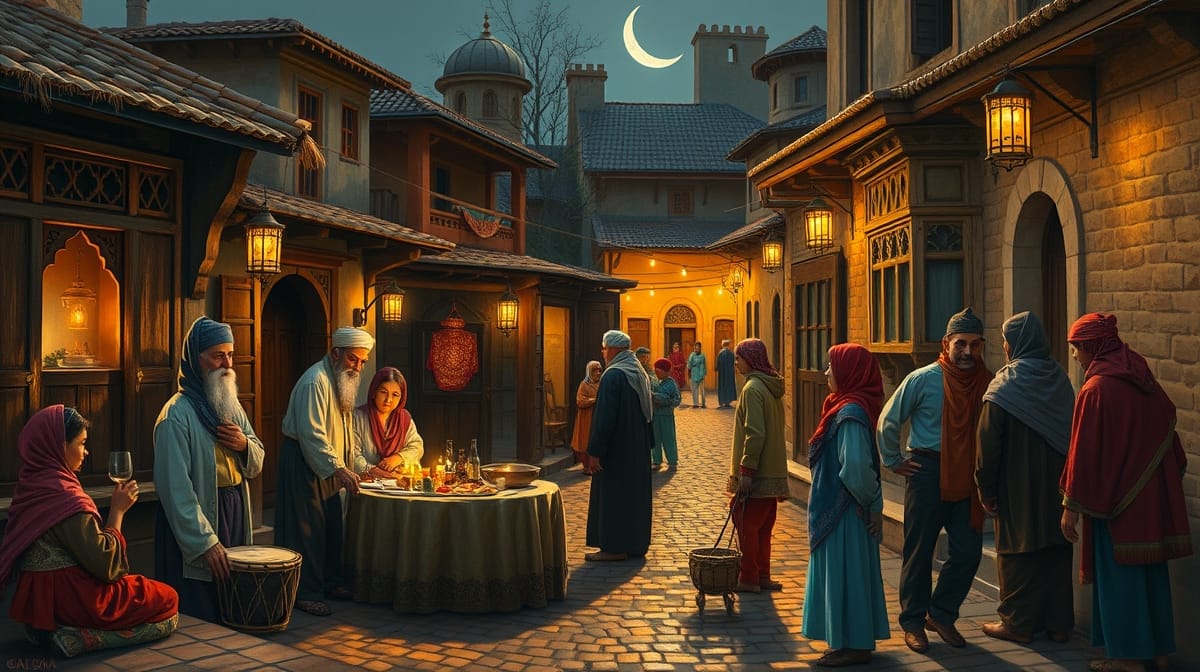
The eve of Eid was one of the busiest times for holiday preparations. Homes were cleaned, and new clothes were prepared for children. Kitchens became active with sweets, sherbets, and Eid offerings. In addition, cemetery visits recalled past generations.
On the morning of Eid, mosques filled up. After the prayer, the hands of elders were kissed, and relatives were visited. Children were given pocket money and sweets. These traditions were symbolic behaviors that strengthened family bonds and neighborhood relations.
When describing the Ottoman world, Caroline Finkel does not explain the state’s long life through military power alone. Social institutions, traditions, and shared rituals also held an important place in this continuity. From this perspective, Ottoman Ramadan is a special mirror reflecting the empire’s cultural resilience in daily life.
Conclusion
Ottoman Ramadan was a multilayered cultural world stretching from palace ceremonies to neighborhood tables. Worship, charity, aesthetics, and entertainment were experienced in a balanced way within the same month. Mahyas illuminated the city, waqfs supported society, and Eid renewed social ties.
Sources
- Halil İnalcık, The Ottoman Empire: The Classical Age.
- İsmail Hakkı Uzunçarşılı, The Palace Organization of the Ottoman State.
- Suraiya Faroqhi, Men of Modest Substance: House Owners and House Property in Seventeenth-Century Ankara and Kayseri.
- Caroline Finkel, Osman’s Dream.
- TDV Encyclopedia of Islam, Ramadan and related Ottoman entries.