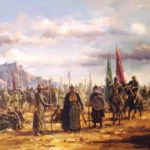
The founding of the Ottoman army began to take shape in the early years of the state. During the reign of Osman Gazi, the military structure consisted mostly of raiders and volunteer troops, which gradually became a systematic organization. During this process, the accelerating transition from a principality to a full state required the military order to be built on more solid foundations. In its earliest period, the Ottoman army was made up of warriors gathered from surrounding regions, and over time this structure became institutionalized.
In the process of founding the Ottoman army, the steps taken during the reign of Orhan Gazi proved decisive. It was during this period that the first regular troops were established and military groups known as the yaya (infantry) and müsellem (auxiliary cavalry) were formed. This organization responded to the Ottomans’ need to defend their expanding territory and carry out new conquests.
The Ottoman army did not consist solely of fighting units. It also had support units that handled logistics, engineering, and communication. As the state’s central structure strengthened, the army became more disciplined, with clearly defined roles. Soldiers were trained to be capable of serving in any corner of the empire. The founding of the Ottoman army unfolded as follows:
- The formation of the first units, made up of volunteer warriors
- The creation of yaya (infantry) and müsellem (auxiliary cavalry) soldiers during Orhan Gazi’s reign
- The establishment of the Janissary Corps alongside the devshirme system
- The addition of artillery, sipahi (cavalry), and akıncı (raider) units to the system
- The centralization of military training and duty assignments
Historical Development of the Ottoman Army
The development of the Ottoman army spans roughly six centuries and runs parallel to the state’s political history. In the founding period, the alperens (holy warriors), gazis, and nomadic Turkmen tribal warriors who gathered around Osman Gazi formed the core force. Starting in 1326, Orhan Gazi established the first regular yaya and müsellem units; during the reign of Murad I, between 1363 and 1365, the founding of the Janissary Corps gave birth to the professional kapıkulu (household) army. Under Mehmed the Conqueror, artillery and sapper units were developed; Şahi cannons were used in the 1453 siege of Istanbul, and the importance of engineering units in fortress conquests became evident.
In the classical period (Selim I – Suleiman the Magnificent – Selim II), the army was the decisive force in great victories such as Chaldiran (1514), Mohács (1526), and Preveza (1538). From the 17th century onward, the deterioration of the timar system, the devaluation of the ulufe (soldier’s pay), and the loss of discipline within the corps triggered a military crisis. The Nizam-ı Cedid (New Order) founded by Selim III in 1793, the Sekban-ı Cedid formed by Mahmud II in 1808, and the 1826 Eşkinci attempt eventually led to the abolition of the Janissary Corps and the establishment of the Asakir-i Mansure-i Muhammediye. After the Tanzimat reforms, the 1843 conscription law, the reforms of Goltz Pasha modeled on Germany, and eventually a modern Ottoman army that became one of the largest of its time during World War I, continued to exist until 1922.
Kapıkulu Corps: Infantry and Cavalry Classes
The classical Ottoman army was built on two main pillars: the central army (Kapıkulu) and the provincial army. The Kapıkulu Corps consisted of professional soldiers directly attached to the sultan, serving in Istanbul and receiving regular pay (ulufe). Among the infantry kapıkulu classes, the largest corps was the Janissary Corps; supporting it were the Cebeci Corps (weapons maintenance and supply), the Artillery Corps (casting and use of cannons), the Cannon Wagoners’ Corps (field artillery transport), the Bombardier Corps (mortars and hand grenades), and the Sapper Corps (digging tunnels beneath fortresses). Each corps had its own companies (orta) and officer hierarchy.
The mounted kapıkulu units, also known as the Altı Bölük Halkı (People of the Six Divisions), consisted of six classes: Sipah, Silahdar, Right Ulufeciler, Left Ulufeciler, Right Garipler, and Left Garipler. These cavalrymen were positioned on either side of the sultan in battle; the Sipah and Silahdar divisions held the privilege of carrying the sacred banner (sancak-ı şerif). The number of kapıkulu cavalry in the classical period was around 7,000-8,000. This central structure of the Ottoman army served a dual function, acting as both a disciplined military force and the state’s protocol and security institution, forming a permanent standing army model that had no equal in Europe for a long time.
Who Made Up the Ottoman Army?
The Ottoman army was built on a multi-layered system with different structures and roles. This structure evolved and diversified over time according to the state’s needs and geographic expansion. The foundation of the Ottoman army was initially formed by mounted units drawn from Turkish beys. These units played an important role in controlling conquered regions.
You may also be interested in the article Ottoman Expansion During the Reign of Orhan Gazi.
Growing needs over time made a more regular and disciplined military structure necessary. During the reign of Orhan Gazi, the first regular land units, called yaya (infantry) and müsellem (auxiliary cavalry), were formed. These units were used for both defensive and offensive duties.
The Ottoman army was made up not only of Turks but also of individuals from different ethnic and religious groups. Young men gathered through the devshirme system, after receiving palace training, joined the Janissary Corps. The Janissaries were among the units closest to the sultan, serving with direct loyalty. The people who made up the Ottoman army were as follows:
- Yaya and müsellem soldiers
- Janissaries trained through the devshirme system
- Timar-holding sipahis (cavalry)
- Akıncı (raider) units
- Artillerymen and sappers
- Azaps and cebecis
- Leventler (sailors) attached to the naval forces
Provincial Soldiers and Timar-Holding Sipahis
The backbone of the provincial army was formed by timar-holding sipahis. This system was based on the obligation to arm a certain number of mounted soldiers in exchange for revenue from conquered lands. In this three-tiered system consisting of timar (3,000-19,999 akçe annual income), zeamet (20,000-99,999 akçe), and has (100,000 akçe and above), a sipahi was required to maintain one fully equipped soldier called a “cebelü” for every 3,000 akçe of annual income. Toward the end of the classical period, the number of timar-holding sipahis stood at around 70,000-100,000; together with the cebelüs, this formed a land force exceeding 150,000 during wartime.
The chain of command in the provincial system was managed by sanjak governors (sancakbeyi) and, above them, provincial governors (beylerbeyi). Major provinces at the beylerbeyi level included Rumelia, Anatolia, Karaman, Diyarbakır, Damascus, Egypt, and Baghdad. When an imperial campaign (sefer-i hümâyun) was declared, the beylerbeyi would summon the sancakbeyis, who in turn would call up the timar-holding sipahis through the district (kaza) system. In addition, yaya and müsellem villages, derbentçis (pass guards), martoloses, and voyniks also performed specific duties within the provincial system. This multi-layered structure provided the balance that allowed the Ottoman army to draw soldiers from a vast geography while sustaining economic production in peacetime.
Auxiliary Forces and Akıncı Raiders
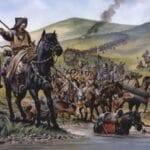
The most mobile elements of the classical Ottoman army were the akıncıs (raiders). Living along the frontiers and mostly of Turkmen origin, the akıncıs carried out advance reconnaissance, raids, and attrition operations on enemy territory. Among the most renowned akıncı families were the Mihaloğlus (descendants of Köse Mihal, influential in the Balkans), the Evrenosoğlus (in the Thessaloniki-Vardar region), and the Malkoçoğlus (on the Hungarian and Polish frontiers). The akıncıs received no regular pay and instead lived off their share of the plunder known as “pencik.” The heavy losses suffered in the 1595 raid by Michael the Brave, Voivode of Wallachia, significantly weakened the akıncı institution.
Other auxiliary forces included the Deliler (bold and daring cavalry units serving under pashas), Gönüllüler (volunteer warriors who joined of their own will), Beşliler (garrison troops of frontier fortresses), Yörükler (nomadic Turkmens who cleared roads and handled transport for campaigns in Anatolia and the Balkans), Müsellemler (regular mounted units), and Voyniks (Christian subjects who cared for the palace’s horses). Each of these units had a specific area of expertise; they carried out flexible duties that the kapıkulu and provincial armies could not perform themselves, forming the logistical backbone of military campaigns.
Who Was the Most Powerful Ottoman Soldier?
The phrase “the most powerful Ottoman soldier” may refer to different figures in different periods. However, many sources note that the soldiers serving in the Janissary Corps formed the backbone of the Ottoman military. Certain individuals from within these units stood out for their roles in battles and their military achievements.
One of the figures frequently mentioned in history and referred to as the most powerful Ottoman soldier is Malkoçoğlu Bali Bey. The Malkoçoğlu family was known in the Ottoman state both for its leadership of akıncı raiders and for holding high-ranking command positions. Bali Bey stood out particularly for his achievements and discipline during the Balkan campaigns.
When speaking of the most powerful Ottoman soldier, the name of Barbaros Hayreddin Pasha should also not be forgotten. As commander of the naval forces, he played a critical role in securing Ottoman dominance in the Mediterranean. Although not a member of the land army, his contribution to the overall structure of the Ottoman military was immense. The most powerful Ottoman soldiers were as follows:
- Malkoçoğlu Bali Bey
- Barbaros Hayreddin Pasha
- Janissary agas
- Akıncı beys
- Successful timar-holding sipahis
Discipline, loyalty, and training were among the fundamental requirements for every soldier serving in the army. Soldiers who successfully met these requirements rose to high positions over time. For this reason, the phrase “the most powerful Ottoman soldier” carries a meaning that encompasses not only physical strength but also skill and loyalty.
The Ottoman Navy and the Tersâne-i Âmire (Imperial Arsenal)
Ottoman seafaring began during Orhan Gazi’s reign when Karamürsel Bey built the first ships in the Sea of Marmara; the Gallipoli Shipyard was established during the reign of Bayezid I (the Thunderbolt). The real leap forward came under Mehmed the Conqueror, when the Galata Shipyard (Tersâne-i Âmire) on the Golden Horn became the main construction center after 1455. The commander at the head of the navy was called the “Kapudan-ı Derya” or “Kapudan Pasha,” who held an important place in protocol, ranking just after the grand vizier. In the classical period, the navy consisted of oared and sailed galleys, bastardas, and large galleons; each ship carried leventler (naval soldiers), azaps, and artillerymen.
The Ottoman navy reached its peak with Barbaros Hayreddin Pasha’s victory at the Battle of Preveza in 1538, which cemented Ottoman dominance in the Mediterranean. Although the 1571 defeat at Lepanto was a great loss, the navy was rebuilt in a short time. In the 18th century, following the 1770 raid at Çeşme, Cezayirli Gazi Hasan Pasha reorganized the navy and formed a modern fleet. During the reigns of Selim III and Mahmud II, steam-powered ships were introduced following the European model, and the Naval School (Bahriye Mektebi) was founded in 1773. This long naval legacy clearly demonstrates that the Ottoman army was a great power not only on land but also at sea.
Frequently Asked Questions
Who founded the Ottoman army?
The foundations of the Ottoman army were laid by Osman Gazi in 1299 with volunteer and tribal warriors; the first regular yaya and müsellem units were established by his son Orhan Gazi after 1326. During the reign of Murad I, between 1363 and 1365, the founding of the Janissary Corps gave birth to the professional kapıkulu army. Thus, each layer of the Ottoman military structure was systematically developed during the reigns of different sultans.
How many soldiers were in the Ottoman army?
The number of soldiers varied greatly from period to period. During the reign of Suleiman the Magnificent, the central kapıkulu army numbered around 30,000, timar-holding sipahis and cebelüs numbered 100,000-150,000, and akıncı and auxiliary units numbered around 30,000-40,000. The total mobilized wartime force exceeded 200,000. In the 17th century, the kapıkulu headcount rose to 70,000-100,000, though the actual number of active combatants was lower. In the modern period, approximately 2.8 million men were mobilized during World War I.
What is the difference between a timar-holding sipahi and a Janissary?
A timar-holding sipahi was a mounted, Turkish-Muslim soldier who served in the provincial army and lived off the income from his timar; he received no regular pay and returned to his timar after the campaign. A Janissary, on the other hand, was an infantry soldier of devshirme origin who received pay every three months and was stationed in the kapıkulu corps in Istanbul. A timar-holding sipahi was tied to agricultural production, whereas a Janissary was funded entirely from the central treasury. The chain of command and legal status of the two classes also differed.
When was the Ottoman navy founded?
The first nucleus of the Ottoman navy began to form in the 1320s, when Karamürsel Bey built a small fleet on the shores of the Sea of Marmara during Orhan Gazi’s reign. As an established shipyard, the Gallipoli Shipyard was built during the reign of Bayezid I, while the Galata Shipyard (Tersâne-i Âmire) was constructed under Mehmed the Conqueror after 1455. The golden age in which the navy gained real strength coincides with Barbaros Hayreddin Pasha’s tenure as Kapudan-ı Derya, particularly with the 1538 victory at Preveza.
When was the Ottoman army abolished?
The abolition of the classical Ottoman army occurred gradually. In 1826, Mahmud II disbanded the Janissary Corps and established the Asakir-i Mansure-i Muhammediye in its place; after the 1839 Tanzimat reforms, modern conscription laws were enacted, and after 1909 the army was restructured through German-backed reforms. Officially, the Ottoman Army came to an end in 1922 with the abolition of the sultanate; with the founding of the Republic of Turkey in 1923, it was renamed the Turkish Armed Forces.