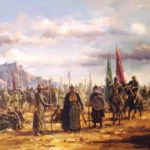
One of the most striking narratives in Turkish history, the summary of the Göktürk epic, is an important piece of cultural heritage that recounts the struggles, the search for independence and the understanding of statehood of the Turkic communities of Central Asia. The epics that emerged in the Göktürk period are not limited to tales of war; they also contain information about the origins, way of life and world of belief of the Turkic peoples. Frequently examined today in historical research and educational content, the summary of the Göktürk epic is sought out above all by those who wish to become acquainted with Turkic culture.
What Is the Accession Bonus? Enthronement Ceremonies in the Ottoman Empire and Their Meaning Our article on this subject may also interest you.
What Is the Göktürk Epic?
When the summary of the Göktürk epic is examined, it becomes clear that the epic took shape around the Göktürk Khaganate. The Göktürks are regarded as one of the first communities in history to use the name “Turk” as an official state name. For this reason the epics they left behind hold a distinct place in Turkish history.
In the epics, the following generally stand out:
- The struggle of the Turkic tribes for unity
- Enemy attacks
- The idea of rebirth
- Themes of deliverance and independence
- The grey wolf symbol
- The leadership qualities of the khagans
These are the elements that come to the fore.
The Ergenekon and grey wolf narratives in particular are among the best-known parts of the Göktürk epic tradition.
A Short Summary of the Göktürk Epic
To give a brief summary of the Göktürk epic: the Turkic tribes suffer heavy losses as the result of a great war. A small community that escapes the enemy raids goes on living for a long time in a hidden region. In most versions this region is called Ergenekon.
There the Turks multiply over the years, grow stronger and wish to regain their former might. Yet because they are surrounded by mountains, they cannot get out. Later they melt an iron mountain to open a pass and win their freedom. Thus begins the process of founding a powerful state once again.
This narrative represents the rise of the Turkic peoples after difficult times. That is why the idea of independence is treated so powerfully within the summary of the Göktürk epic.
Its Connection with the Epic of Ergenekon
In many sources, when the summary of the Göktürk epic is mentioned, the Epic of Ergenekon is recounted alongside it. This is because the Ergenekon narrative is one of the most important sections symbolising the renewed rise of the Göktürks.
In the Epic of Ergenekon:
- The Turks face the danger of annihilation after an enemy attack
- The survivors take refuge in a hidden valley
- They go on living there for many years
- As the population grows, the valley becomes too small
- A way out is opened by melting an iron mountain
- The Turks regain their independence
These events represent the idea of rebirth in Turkish history. For this reason, in history lessons and cultural studies the summary of the Göktürk epic is often taken up together with the Epic of Ergenekon.
The Importance of the Grey Wolf Motif
Within the summary of the Göktürk epic the figure of the grey wolf holds a considerable place. In Turkic culture the grey wolf is regarded as a sacred symbol that guides and shows the way.
Some versions relate that a child who survived a war was protected and raised by a she-wolf. It is then told that, as this lineage multiplied, the Turkic peoples regained their strength.
The grey wolf symbol:
- Strength
- Courage
- Freedom
- Guidance
- Turkic unity
These are seen among the important elements it represents.
For this reason the figure of the grey wolf holds a special place in studies of the summary of the Göktürk epic.
The Importance of the Göktürk Epic for Turkish History
Holding an important place in the oral narrative tradition of Turkic culture, the summary of the Göktürk epic helps us understand the way of life of earlier periods. Although the events in the epic are not accepted as historical documentation in the strict sense, they give valuable information about the mindset of the age.
The prominent aspects of the epic are as follows:
- It reveals the Turkic understanding of independence
- It treats the idea of unity and solidarity
- It brings the concept of leadership to the fore
- It carries elements of Turkic mythology
- It carries cultural memory into the present day
In these respects the summary of the Göktürk epic is regarded not merely as a story but as a piece of cultural heritage.
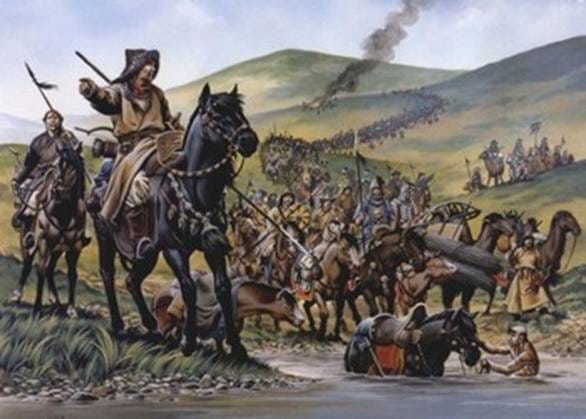
The Messages Conveyed in the Göktürk Epic
Certain shared messages stand out across the many versions of the summary of the Göktürk epic that have been examined. These messages are still considered important in Turkish historical narratives today.
The fundamental ideas conveyed in the epic are these:
- In hard times it is necessary to stand together
- One must struggle for independence
- The Turkic peoples have the strength to rise again
- Leadership and courage matter for a society
- A way out can be found even in the midst of despair
For this reason the summary of the Göktürk epic is seen not only as a text recounting past events but also as a cultural narrative that strengthens collective memory.
Among the most remarkable narratives of Turkish history, the summary of the Göktürk epic is an important epic that places independence, struggle and rebirth at its centre. Enriched by the Ergenekon and grey wolf motifs, these narratives are among the values of Turkic culture carried from the past to the present. Frequently examined today in educational content, historical research and cultural studies, the summary of the Göktürk epic remains one of the key sources for anyone wishing to understand the deep-rooted past of the Turkic peoples.
Sources
- İbrahim Kafesoğlu, Türk Millî Kültürü.
- Osman Turan, Selçuklular Tarihi ve Türk-İslâm Medeniyeti.
- Faruk Sümer, Oğuzlar (Türkmenler).
- TDV Encyclopaedia of Islam (DİA), relevant entries.